
You can change the clock on your nightstand in seconds. Persuading your body to follow it can take considerably longer. Anyone who has struggled with jet lag or felt wide awake long after bedtime knows that sleep follows an internal timetable. Deep inside the brain, a tiny structure called the pineal gland helps communicate that timetable through the hormone melatonin.
Its best-established job concerns the timing of sleep and wakefulness, but the pineal gland also has connections to reproductive hormones and seasonal changes. Here is what scientists know about its work, how its activity can differ between women and men, and the conditions associated with it.
What is the pineal gland, and what does it do?
The pineal gland is a small, pinecone-shaped organ near the center of the brain. Measuring roughly a third of an inch long, it belongs to the endocrine system, the collection of glands that release chemical messengers called hormones. Its principal hormone is melatonin.
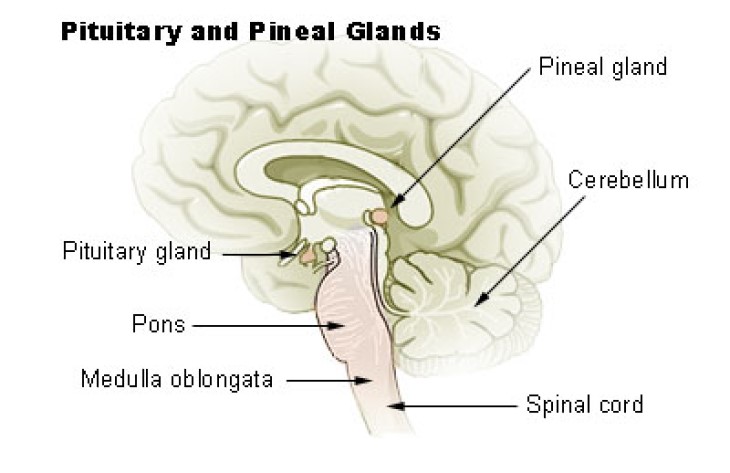
The gland works within a larger timekeeping system. Specialized cells in the eyes detect light and send information to the brain’s master clock, the suprachiasmatic nucleus. That clock communicates with the pineal gland through a series of nerve connections.
As darkness arrives, melatonin production normally increases. Daylight suppresses it, and artificial light at night can interfere with the signal. Melatonin effectively tells the body that its biological night has begun, helping coordinate the daily rhythms known as circadian rhythms.
This explains why melatonin is often called the “sleep hormone,” although it does not control sleep single-handedly. The timing of its release matters as much as the amount.
Melatonin levels are generally highest in childhood and tend to decrease with age, although the pattern varies between people. An age-related decline does not automatically mean that the gland is diseased or that supplements are necessary.
Does the pineal gland work differently in women and men?
Its fundamental job is the same in both sexes. The differences researchers have identified mostly involve melatonin levels and the timing of the body clock.
Some studies find higher nighttime melatonin levels in women. In one controlled study of 28 women and 28 men aged 18 to 30, women had a stronger melatonin rhythm, and their melatonin timing was earlier relative to their sleep schedule. This was a small study of young adults, so its findings should not be assumed to describe every age group.
The internal clock may also run slightly differently. Another laboratory study found that the average natural circadian cycle was about six minutes shorter in women than in men. A small daily difference can affect how the body synchronizes with daylight and may help explain some differences in preferred sleep timing. It does not mean that every woman is an early riser or every man a night owl.
Reproductive hormones complicate the picture. Hormonal status and hormonal contraceptives can influence melatonin measurements. Research into melatonin’s interactions with estrogen, progesterone, and testosterone is ongoing, and findings are not consistent enough to turn melatonin into a general treatment for “hormone imbalance.” There is also no established rule that women need more or less supplemental melatonin than men simply because of their sex.
Which conditions are connected to the pineal gland?
Some conditions directly affect the gland or nearby structures. Others involve the timing system in which melatonin participates. That distinction matters: having a sleep disorder or seasonal depression does not, by itself, mean that something is physically wrong with the pineal gland.
1. Circadian rhythm sleep disorders
These disorders occur when the body’s sleep schedule does not match the schedule a person needs to follow. Examples include:

- Delayed sleep-wake phase disorder: Sleepiness arrives unusually late, making it difficult to fall asleep and wake up at conventional times.
- Advanced sleep-wake phase disorder: A person becomes sleepy very early in the evening and wakes much earlier than desired.
- Non-24-hour sleep-wake rhythm disorder: Sleep timing gradually shifts around the clock. It is particularly common in people who are completely blind.
- Shift work disorder and jet lag: Work schedules or rapid travel put the internal clock out of step with the outside world.
Symptoms: Trouble sleeping at the required time, daytime sleepiness, exhaustion, poor concentration, and difficulty controlling mood. Sleepiness can also increase the risk of driving or workplace accidents.
Treatment: A consistent schedule, carefully timed light exposure, and sometimes melatonin or prescription medicines that act on melatonin receptors. Timing must fit the disorder. For example, morning light can help move sleep earlier, while appropriately timed evening light can move it later. A sleep specialist can help select the right approach.
Ordinary chronic insomnia deserves a separate mention. Difficulty sleeping does not establish a melatonin deficiency. Cognitive behavioral therapy for insomnia, or CBT-I, is usually the first treatment recommended for long-term insomnia. It addresses sleep habits and the thoughts and behaviors that keep sleeplessness going.
2. Seasonal affective disorder
Seasonal affective disorder, or SAD, is depression that follows a recurring seasonal pattern. It most often appears in fall and winter. Changes in daylight, circadian rhythms, serotonin, and melatonin are involved, but SAD is not simply a disease of the pineal gland.
Symptoms: Persistent low mood, loss of interest, low energy, and difficulty concentrating. Winter-pattern SAD can also bring oversleeping, increased appetite, carbohydrate cravings, weight gain, and social withdrawal. It is diagnosed more often in women than in men.
Treatment: Options include bright light therapy, psychotherapy adapted for seasonal depression, and antidepressants. Some people benefit from preventive treatment before their usual symptoms begin. Vitamin D may be considered when appropriate, but evidence for treating SAD with vitamin D is mixed. Taking melatonin on your own is not a substitute for assessing and treating depression.
3. Pineal cysts
A pineal cyst is a fluid-filled pocket within the gland. Most are benign, cause no symptoms, and are discovered accidentally during a brain scan performed for another reason.
In one study reviewing nearly 48,000 adults who had brain MRI scans, about 1% had a pineal cyst measuring at least 5 millimeters. Cysts were identified more often in women. Among those with follow-up imaging, most remained stable or became smaller. These figures describe people undergoing scans, rather than a random sample of the general population.
Symptoms: Usually none. Rarely, a cyst can obstruct the flow of cerebrospinal fluid, the fluid surrounding the brain and spinal cord. This can cause hydrocephalus and symptoms such as headache, vomiting, visual disturbance, or difficulty walking.
Treatment: A typical, incidental cyst in an adult often requires reassurance rather than treatment or repeated long-term scans. Follow-up depends on its appearance, the person’s age, and the clinical situation. If it obstructs fluid flow, neurosurgery may be needed.
Whether cysts without hydrocephalus cause symptoms such as headache or fatigue remains controversial. Surgery in these cases requires assessment by an experienced specialist because it carries risks and the cause of the symptoms may be uncertain.
4. Tumors in the pineal region
These tumors are rare and include several different diseases. Pineocytomas tend to grow slowly, while pineoblastomas are aggressive cancers. Other tumor types can develop in the same region.
Symptoms: A growing tumor may block cerebrospinal fluid flow or press on nearby structures. Possible symptoms include headaches, nausea, vomiting, abnormal eye movements, and problems with balance or walking.
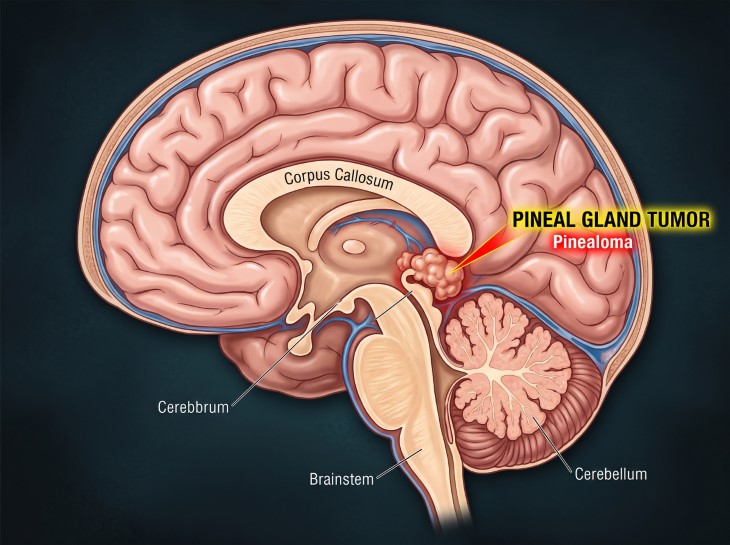
Treatment: The plan depends on the exact tumor type, its spread, and the patient’s age and health. For tumors arising from pineal tissue, surgery may obtain a diagnosis and remove as much tumor as safely possible. Radiation therapy or chemotherapy may also be needed. There is no single treatment or prognosis that applies to every pineal-region tumor.
Germ cell tumors require a distinct approach. These can occur near the pineal gland, particularly in young people, and CNS germ cell tumors are more common in males. Germinomas often respond well to radiation and chemotherapy; extensive surgical removal is not necessarily required. Other germ cell tumors may need different combinations of treatment. This is why identifying the tumor accurately is essential before deciding on care.
5. Hydrocephalus and Parinaud syndrome
Two complications help explain why a small growth in this location can cause substantial symptoms.
Hydrocephalus is a buildup of cerebrospinal fluid, sometimes caused by a blockage near the pineal gland. Treatment may involve a procedure to create an alternative fluid pathway or insert a drainage device, as well as treating the obstruction.
Parinaud syndrome occurs when pathways controlling eye movements in the upper brainstem are affected. A pineal-region mass is one possible cause, although other neurological conditions can produce it.
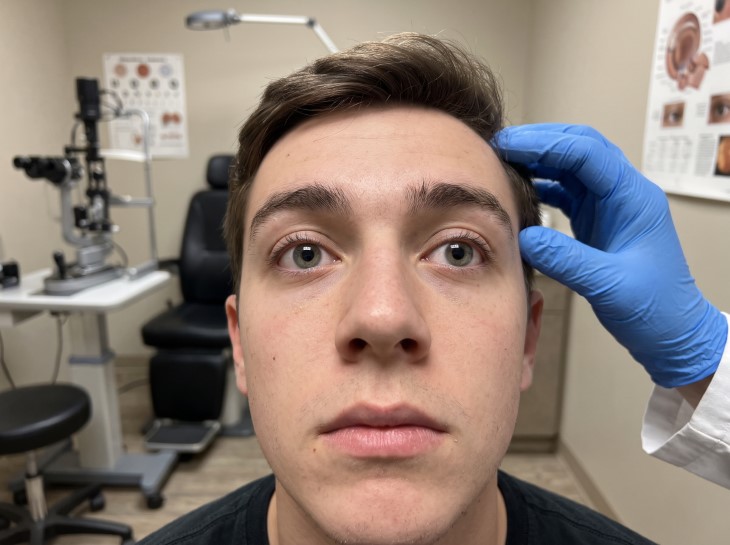
Symptoms can include difficulty looking upward, double or blurred vision, unusual jerking eye movements, and abnormal pupil responses. Treatment targets the underlying cause, such as a tumor or hydrocephalus. Persistent eye movement problems may require additional eye care or surgery.
6. Early puberty associated with certain tumors
Some germ cell tumors produce a hormone called human chorionic gonadotropin, or hCG, which can trigger unusually early sexual development, particularly in boys. Other tumors involving nearby hormone-regulating structures can also disturb puberty.
Symptoms: Unexpectedly early sexual development, sometimes accompanied by headache or vision problems.
Treatment: Doctors investigate the hormonal changes and their cause, then treat the tumor and any resulting endocrine problems. This is different from suggesting that ordinary variations in melatonin are a proven cause of early puberty. Most children with early puberty do not have a pineal tumor.
What about pineal gland calcification?
Calcium deposits in the pineal gland are common and tend to increase with age. Finding calcification on a scan does not, by itself, establish a disease or explain someone’s symptoms.
Researchers have investigated links between calcification, melatonin production, headaches, and conditions such as Alzheimer’s disease. Associations do not prove that calcification causes these conditions, and its clinical significance remains uncertain. There is no established “pineal detox” or “decalcification” treatment for preventing dementia or restoring sleep. Symptoms should be evaluated on their own merits.
How do doctors investigate a possible problem?
The investigation depends on the symptoms. For sleep difficulties, doctors usually begin with sleep patterns, medications, health conditions, and daily light exposure. A sleep diary or an actigraphy device that records activity can help. Specialists sometimes measure melatonin repeatedly under controlled conditions to assess its timing; a single measurement cannot describe the entire daily rhythm.
Suspected structural problems require a different approach, generally involving brain imaging. If a tumor is suspected, further testing may include tumor markers and, when appropriate, tissue sampling.
A new severe headache, repeated vomiting, new double vision, difficulty looking upward, or new problems with walking or alertness require prompt medical assessment. Sudden or rapidly worsening neurological symptoms warrant emergency care. These symptoms have many possible causes and should not be self-diagnosed as a pineal problem.
Should you take melatonin?
Melatonin can help with selected sleep timing problems and jet lag, but it is not a universal sleep remedy. Possible side effects include sleepiness, dizziness, headache, and nausea, while the effects of long-term use are less certain.
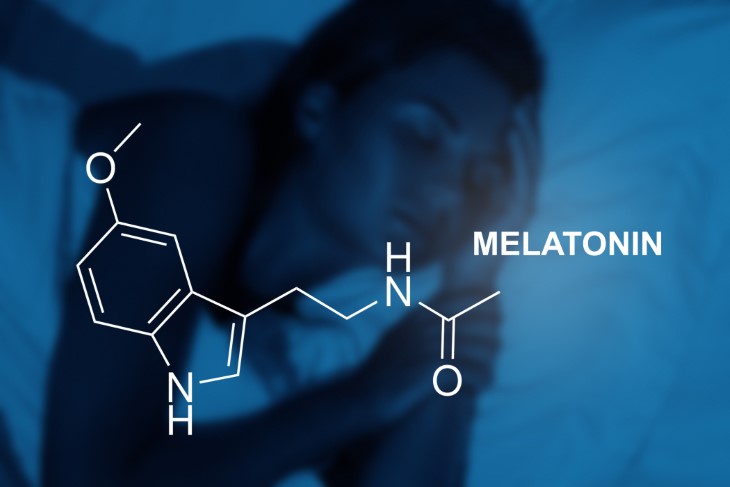
In the United States, melatonin is sold as a dietary supplement and is regulated differently from prescription medicines. Product quality can vary, and supplements can interact with medications. Discuss regular use with a clinician or pharmacist, particularly if you take other medicines or have ongoing health conditions.
For everyday support of the body clock, practical habits remain useful: keep a regular waking time, get daylight during the day, reduce bright light before bed, and maintain a quiet, dark sleeping environment. Persistent sleep difficulties deserve assessment rather than an assumption that the pineal gland needs “boosting.”