
Some old people can remember things just as well as those nearly half their age. Due to their ability to stay sharp in old age, scientists have nicknamed them “super-agers.”
Several months ago, researchers discovered at least one physical basis for these differences that has to do with the thickness of the outer layer of their brains. However, in a small study published in October in the Journal PLOS One, Researchers decided to take a look at whether there was a social side to these differences as well.

Sure enough, after analyzing 31 super-agers over the age of 80 as well as 19 cognitively average people of the same age, they found that the super-agers tended to have more satisfying and high-quality relationships than their normal peers.
Emily Rogalski, an associate professor of cognitive neurology at Northwestern’s Feinberg School of Medicine and lead author of the study, stated that “you don’t have to be the life of the party, but this study supports the theory that maintaining strong social networks seems to be linked to slower cognitive decline.”
To come to their conclusions, the researchers had all the participants complete a standard questionnaire designed to assess their general happiness and level of life satisfaction. Despite getting similar scores to their peers, the super-agers stood out in terms of how they evaluated their friendships with others.
Rogalski goes on to state that “it’s not as simple as saying if you have a strong social network, you’ll never get Alzheimer’s disease. But if there is a list of healthy choices one can make, such as eating a certain diet and not smoking, maintaining strong social networks may be an important one on that list.”
Thanks to other research, scientists were already aware that the brains of super-agers were different – physically speaking – from normal brains belonging to people of the same age group. They’re slightly larger, especially in the outer cortex – the part of the brain that consists mostly of gray matter and is rich in neurons. However, what scientists didn’t know until a few months ago was whether that was because super-agers had bigger brains to begin with or if they were somehow protected from the decay that comes with aging.
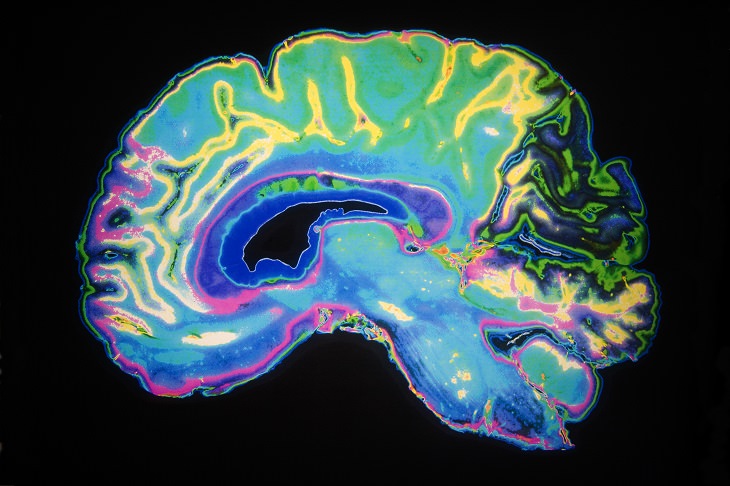
After comparing the brains of 24 super-ager men and women to those of 12 of their normal peers using MRI, the researchers found the answer came down to age-related shrinkage. Over the course of this 18-month study, the scientists saw the brains of the average study participants atrophy at more than twice the rate of the brains of the super-agers.
Together, the two recent findings add several important new pieces to the puzzle of what makes a super-ager – and provides insight into how age and social networks may affect the brains of regular people as well.
As we age, the gray matter in our brains – the stuff we rely on for seeing, hearing, processing emotions, learning new information, and exerting self-control – shrinks and degrades. So too does the brain’s white matter, which contains the complex web of twisting fibers that carry information across different parts of the brain.
A 2014 study published in the journal Nature Communications suggested that in some elderly people, white matter may act as a backup generator that can fire up when grey matter runs down. However, if this doesn’t occur, then the person experiences the typical effects of aging – fuzzy memory, difficulty learning new skills, and a harder time paying attention.
Super-agers are rare, but some research suggests that there are things we can all do to stay sharp as we age. This includes getting regular exercise, maintaining strong bonds with friends and family, quitting or not smoking, and making the effort to learn new things.
So, if you’ve been meaning to meet up with some old friends or have been putting off joining that yoga class, there’s definitely no time like the present!
Source: sciencealert
Images: depositphotos
Related Articles:
Here's How You can Live Much Longer
Four Vaccinations You Need After 50
Study Finds There’s No Age Limit to Start Strength Building Exercises

Here's Why You Should Hold Your Partner's Hands More Often
A recent study has revealed that holding hands with a loved one could help ease pain. Find out more here!
Meat from a Lab or a Plant: Is This What Lies Ahead?
It might sound weird, but the meat you consume in the future might come from a plant, or lab, eliminating the need to slaughter animals. Find out more here.
5:04
Ever Wondered How Hormones Work? Well, Wonder No More...
Ever wondered how hormones work? Well, wonder no more as this informative TED-Ed video explains all!
5:50
Why Do We Sometimes Hallucinate? Find Out Here!
In this informative TED-Ed video, Elizabeth Cox details the science of hallucinations.
These 15 Things Have All Strongly Been Linked to Cancer
When it comes to deaths in the US, cancer is second only to heart disease. Here are 15 known and suspected carcinogens.
Sticking to One Doctor Could Help Prolong Your Life!
Keeping the same doctor rather than switching between different ones has a noticeable effect on mortality rates. Find out more here.
14:58
Why IS Fentanyl So Dangerously Addictive?
In this video, we break down what opioids really do to your brain and body, what using them actually feels like, and why so many people are dying from Fentanyl overdoses.
5:50
The Rise of the Machines: Can Humanoid Robots Help Us?
Will humanoid robots change the way we work forever?
3:39
Magic is Only A Vibration Away With This Great Experiment
All it takes is some sand, a metal plate and carefully toned vibrations from a speaker to create stunning and complex patterns. This video shows you the amazing results!
These 18 Photos Capture the Universe Like Never Before!
See the universe in a new light with these astonishing photos.
8:28
Could These Signals Be A Sign of Extraterrestrial Life?
Scientists have recently picked up on a mysterious radio signal from space, and it could mean a lot - maybe even a sign from extraterrestrial life forms.
Are You Ready to Learn About the Expanse of the Universe?
If you have an interest in the unknown, then look no further than these 15 unbelievably facts discovered about space
Stunning 2024 Images from the James Webb Space Telescope
Marvel at the new images revealed by the James Webb Space Telescope.
Whoa! Who Knew the Human Body Was Capable of So Much?
Have a look at these 17 intriguing facts about the human body that we can practically guarantee will leave you in awe.
What is the Troxler Effect and How Does it Affect You?
Learn about Troxler's effect and the optical illusions it creates in life.
The Most Remarkable Medical Breakthroughs of 2024
Here’s a look at some breakthroughs in medical innovation this year.
12:34
The World You See Doesn't Really Exist...
his video reveals how your brain constructs reality instead of simply perceiving it.
The Wildest Meteorites Ever Found on Our Planet - 15 Pics
Check out 15 of the most fascinating meteorites ever found on earth.
7 Overlooked Scientists Who Should Be Household Names
Meet seven scientists who never got the credit they deserved.
Science Proves: These 10 Bible Stories Probably Did Happen
The Bible describes many seemingly supernatural cases, but today, science can show that they might have indeed happened.
50:02
Take a Trip Through the Universe and Witness its Beauty
Since its launch, the Hubble Telescope returned images of unprecedented beauty of a dynamic and changing universe. Take a look!
11:28
India Built a Monster Dam That Controls the Weather!
The Polavaram Dam doesn't just control floods - it moves water between regions and much more!
5:01
The Truth About Folding Phones You Need to Know
Don’t buy a foldable without knowing this first.
34:33
Is China Number 1 in Global Technology?
In this video, we’ll take a closer look at the new developments hitting the market — and what they could mean for the future of transportation.
20 Peculiar Microscope Photos That You Really Must See
An unseen world exists at our fingers, and thanks to these wonderful micrographs, we can get a glimpse into that dimension.
8:11
Fascinating: What is the Deepest Hole Humanity Has Dug?
This video explains how low humanity has dug down so far.
56:12
What's the Largest Thing in the Universe?
In this video, we look into some of the mightiest structures in the known universe.
15 Beautiful Carl Sagan Quotes on the Stars and the Cosmos
A look at some profound quotes on the universe by famous astronomer and cosmologist Carl Sagan.
Alzheimer's: What Recent Breakthroughs Have Taught Us
Now, you can discover 4 new studies that show how to do this in ways you haven’t heard of.
7 Discoveries of Albert Einstein that Changed the World
The 7 biggest discoveries of Albert Einstein and how they changed the world forever.
10:11
10 Smart Home Gadgets You Didn’t Know You Needed
If you’ve ever wanted a smarter, more efficient home, these 10 gadgets might be exactly what you need.
13 Forgotten Phone Designs That Were Too Odd to Survive
From pen-shaped dialers to phones that clipped onto your clothes, here’s a look at the most unusual phones ever made.
20:04
Emotions Explained: The Science Behind How We Feel
Neuroscientist and psychologist Dr. Richard J. Davidson answers some fascinating questions about emotions you would never expect.
10 Fascinating Facts About the Subconscious Mind
10 facts about the way the subconscious mind works
42:14
Physicist Michio Kaku: The Universe in a Nutshell...
Physicist Michio Kaku explains the fundamental nature of our universe
TRIVIA: 25 Shocking Differences Between the Sexes
Did you know that there are some vast differences between the sexes? These 25 scientific facts will probably come as a big surprise to you, they did to me.
15:34
This Stunning Video Visualizes the Size of the Universe
This video visualizes the number of galaxies in the world, giving you a look into the true size of our enormous universe.
1:44
You Won't Believe What the Human Body Does in One Minute
How much do you think it is capable of doing in a single minute? Watch this video and you'll have your answer!
Let's Learn All About Your White Blood Cells
White blood cells (WBCs) are the part of your immune system which is responsible for fighting infection. Learn all about them here!
Science History: 17 Math Equations that Changed the World
In this article, we'll journey through 17 of these monumental formulas, demystifying the symbols to reveal the revolutionary ideas they contain and the immense impact they have had on the course of history.
These 14 Forgotten Robots Promised So Much...
This collection showcases 14 cool vintage robots that were supposed to change everything.

4:45
Woah! Learning to Play Music Has This Effect on Your Brain
Learning how to play an instrument can do wonders for our brain...here's how!
Nobody Believed These 5 Scientists, But They Were Right
These 5 scientists were shamed and ousted, or rudely ignored, although years later, their "crazy" theories turned out to be true...
5:50
Why Do We Sometimes Hallucinate? Find Out Here!

In this informative TED-Ed video, Elizabeth Cox details the science of hallucinations.
16:26
Neanderthals Had Strength and Skills Beyond Our Limits
Neanderthals possessed truly exceptional, almost unbelievable, traits.
5:22
Why Do You See Colors When You Rub Your Eyes?
Explore the science of afterimages, the visual illusions that linger in your vision following exposure to bright lights or images.
2:17:01
Astronomy: What is Beyond the Edge of the Universe?
In this video, we explore what modern astronomy reveals about the universe’s boundaries—if they even exist.
To enable your Ad-Free Subscription, please fill the fields below
Your subscription was successful, now you can enjoy an ad-free experience!! Note: To make sure you get no ads, please make sure to log in to your account. If you are logged in already, then refresh the page. The subscription can be cancelled at any time.