Could a Computer Ever "Run" a Human Brain? Scientists Just Took a Big Step
It sounds like science fiction — but it just happened in a real laboratory. American researchers have successfully created a complete digital simulation of a fruit fly's brain, and then connected it to a virtual body. The result? A simulated fly that walks, stops, and grooms itself — not because anyone programmed those movements, but because the digital brain figured them out on its own.
The company behind the breakthrough is called Eon Systems. Their researchers didn't just build a computer model that mimics fly behavior — they mapped the actual neural network of the fly's brain and reproduced it digitally, neuron by neuron. That simulated brain was then hooked up to a virtual fly body inside a physics engine — a kind of digital world that replicates real-world forces like gravity, friction, and joint movement.
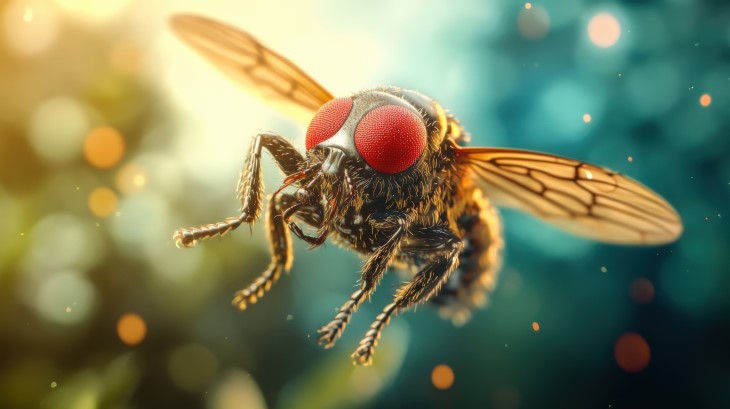
What makes this remarkable is the distinction from ordinary artificial intelligence. Most virtual creatures in computer simulations are trained using machine learning — essentially, they're taught what to do through trial and error. This fly wasn't trained at all. Its behaviors emerge directly from the simulated brain processing information, exactly as a real brain would.
This achievement builds on decades of smaller steps. Back in 2014, researchers simulated the nervous system of a tiny roundworm called C. elegans — but that creature has only 302 neurons. A fruit fly's brain contains roughly 140,000 neurons, and its complete neural "wiring diagram" (called a connectome) was only fully mapped in 2023 after years of painstaking work. Eon Systems used that map as their blueprint.
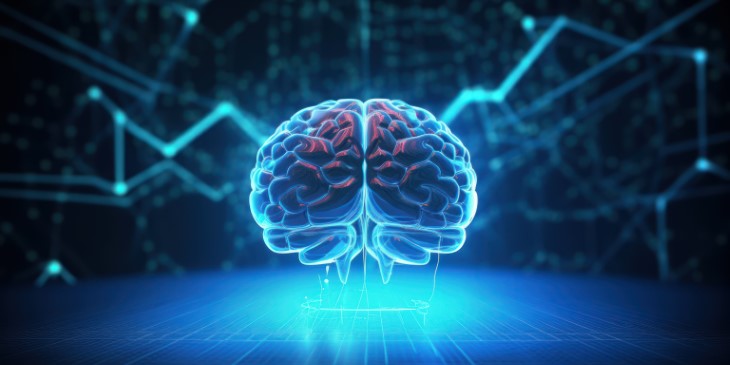
The team's next target is considerably more ambitious: a digital mouse brain, which contains around 70 million neurons. That's roughly 500 times more complex than the fly — and a significant leap toward the ultimate goal that researchers in this field rarely say out loud but always have in mind: a simulation of the human brain, with its 86 billion neurons.
Billionaire Elon Musk, whose own company Neuralink is working on brain-computer interface technology, spotted the news and responded with a single word: "Wow."
For scientists studying consciousness, aging, and neurological disease, this line of research opens extraordinary possibilities. A working digital brain could eventually allow researchers to test treatments for Alzheimer's or Parkinson's in a simulated environment before ever touching a human patient. And further down the road — much further — it raises questions humanity has barely begun to grapple with: if a mind can run on biology, could it one day run on silicon?
For now, a tiny virtual fly walking across a computer screen is quietly suggesting that the answer might be yes.

11:43
The Future of Augmented Reality?
This incredible concept video by Infinity, am augmented reality software platform that is about to open to the market...
6:38
This Technology Could Help Us Get More Deep Sleep!
In this informative TED-Ed video, Dan Gartenberg talks about the brain benefits of deep sleep and how we can get more of it!
The Musical Test That Could Detect Dementia Early
Researchers have developed a promising new approach: using music to detect the early signs of cognitive decline.
15:02
The Inner Workings of How Your Mind Identifies Beauty!
Ever wondered what it is that makes something look beautiful to you? If so, you're about to find out right now in this enlightening TED-Ed video.
Breakthrough Aging study: The Secrets of the "Super-Agers"
Age 80, Memory of a 50-Year-Old: Scientists Just Cracked the Secret of "SuperAgers"
17:00
Fascinating: I Spent an Entire Week in Virtual Reality
This man decided to answer the question: What happens when you spend a week in virtual reality?
Remembering the Life and Wisdom of Stephen Hawking
Stephen Hawking possessed one of the greatest minds the world has ever seen, but was also impaired by a debilitating disease. Here are his life ant times.

Phone Overheating? Use Our Guide to End The Problem!
Is your cell phone overheating? If so, read this handy guide, which will help pinpoint the source of the problem and offer a solution for fixing it.
4:20
Ever Wondered About How Our Minds Retain and Lose Memories?
Ever wondered why you can remember something from 20 years ago, but have difficulty remembering what you had for lunch the other day? Learn why here.
10 Fascinating Facts About the Subconscious Mind
10 facts about the way the subconscious mind works
World-Famous Psychological Experiments That Shocked Us
The human mind is a most intricate thing. It also has some quirks and idiosyncrasies that are both incredible and a little uncomfortable. Read on for more.
Here Are the 16 Oldest Household Objects in the World
If you think ancient life is remote, these pre-historic household items will make you think again. Just look at how old they are!
5:28
Just How Small is an Atom? - Fascinating!
Just how small are atoms? And what's inside them? The answers turn out to be astounding...
6:15
K2-18b: The Exoplanet That Might Host Alien Life
Astronomers have detected signs of posisble life in the atmosphere of exoplanet K2-18b.
6 Signs That Someone is Listening on Your Cellphone Calls!
With technology advancing all the time, there is the ever-increasing chance of our phones being tapped. Here are 6 signs that your phone could be tapped.
This is How to Activate Your Brain's Ability to Learn
A recent study has shown that overlearning might improve performance in a particular task by altering the chemicals in the brain that "lock" in training.
Science Lesson: 10 Fiery Facts About the Sun You Must Know
Learn some fascinating and little-known facts about the Sun in this article.
4:26
Despite Looking Similar, Cats Are MORE Diverse Than Dogs!
Who's more diverse, cats or dogs? This video answers this question once and for all, the it might surprise you...
18:14
Are These Vintage Kitchen Gadgets Any Good?
Will any of the vintage kitchen gadgets stand the test of time or outperform their contemporary alternatives?
5:17
How Exactly Do We Hear? All is Revealed Here!
In this informative TED-Ed video, Douglas L. Oliver explains the complete science behind hearing.
8 Biggest Mysteries Still Surrounding the Human Body
Although modern science has revealed much about the human body, there are some things that still remain unknown. Here are the 8 biggest mysteries about it.
These Are the Miracles That Happen in Our Bodies Every Day
There is a lot that happens inside our bodies every single day. Did you know any of these facts?
5:14
Earth 2125: A Vision of the Future of Our Planet
Exploring what Earth could look like in 2125 reveals exciting potential.
NVIDIA CEO Reveals Which Degree Is Worth Studying
Electrical Engineering, Computer Science, or Physics? Nvidia's CEO has a surprising answer to which area should be studied nowdays.
19:39
Lecture: What is the Future of Humanoid Robots?
Get ready to meet the humanoid partners that will redefine how we live and work.
9:09
Protective Measures: How Our Body Reacts to a Tattoo
In this video, we’ll explore the microscopic war raging beneath your skin, where millions of your cells make the ultimate sacrifice to lock that ink in place, turning a defense mechanism into lifelong art.
5:39
Why Are Your Ears Ringing? The Causes Explained
Nearly 15% of the human population worldwide are plagued by this strange sensation, but most people don't know the causes behind ringing in the ears...
8:12
How Humans Helped Cats Take Over the World
The relationship between humans and cats goes back as far as 9,500 years. How did it al start? And how did humans help cats essentially take over the world?
4:51
Watch These Chinese Robots Amaze the World
In this video, you're going to see just how far these robots can go, as they've been programmed with some truly amazing dance moves,
Superwood: A New Material That Could Replace Steel
After decades of relying on steel—a material that produces nearly two tons of CO2 for every ton manufactured—builders may soon have access to something far more sustainable and surprisingly stronger: Superwood.
Alzheimer's: What Recent Breakthroughs Have Taught Us
Now, you can discover 4 new studies that show how to do this in ways you haven’t heard of.
13:55
WATCH: What Is the Fingerprint of God's Creation?
The golden pattern, describes the mathematical code of the universe. Is this the scientific evidence of God's will and plan?
36:24
Ever Wonder How a Steel Locomotor Works?
Let’s take a closer look at the engineering behind these compact workhorses.
9:54
Neo: The New Tele-Robot that "Cleans" Your Home
Neo is a new robot that has great capabilities and is designed to clean your home. Sounds perfect right? Well, there's a catch.
Blood Test Breakthrough Transforms Leukemia Diagnosis
This research demonstrates that rare circulating stem cells in blood carry the same diagnostic information as bone marrow samples, enabling doctors to identify disease progression months before clinical symptoms appear.
Study Shows Seniors Still Grow New Brain Cells Daily
A new study shows that even the elderly keep on growing new brain cells, which could be the breakthrough the scientific community was waiting for...
Chronically Late? What Science Has to Say About You
There are 8 positive things that science says about late people that we all need to know.
11:40
6 Of the Earliest Known Parasites Ever Found
Get to understand and learn about the earliest parasites discovered by scientists.
Science: Can Plants That Come Back From the Dead Save Us?
These extraordinary organisms may hold the key to solving one of the world's most urgent problems: feeding a growing population on a warming, drying planet.
The Newest Innovations in Brain Surgery and the Near Future
Here is a clear, friendly look at the most exciting recent breakthroughs, followed by what experts expect in the decade ahead.
2:01
What Does the Appendix Actually DO?
Dr. Berg explains, in this video, all about the appendix and what it actually does in our body.
11:02
Ever Wonder What Ancient Egyptian Sounded Like?
Researchers have used all the information we know to create what they think it may have sounded like.
What Your Phone Habits Say About Your Mental Health
These phone habits might indicate underlying anxiety—and paying attention to them could help you better understand your mental health.
58:37
Science: Here's Everything We Know About Pluto
Join us as we unravel the mysteries of far off Pluto, 3.7 billion miles from our Sun.
5:41
Witness the Leading New Electronic Devices of 2026
The experts at CNET and PCMag were on the floor, and they've got their favorites. Let's dive in.
10:46
12 SUPER COOL Military Inventions You’ve Never Seen
Check out this list of amazing new military innovations. They will transform warfare in the near future!
Hubble Telescope: 35 Years of Incredible Photos
Exploring 35 years of reality-changing, universe-enhancing photos that opened the sights of outer space to us all.
To enable your Ad-Free Subscription, please fill the fields below
Your subscription was successful, now you can enjoy an ad-free experience!! Note: To make sure you get no ads, please make sure to log in to your account. If you are logged in already, then refresh the page. The subscription can be cancelled at any time.