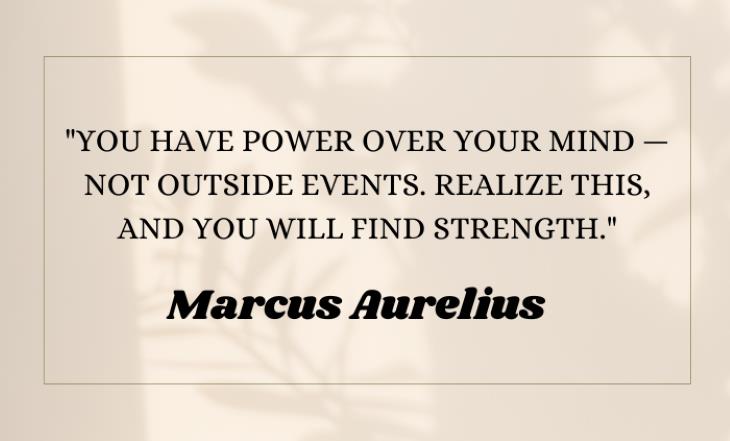
Marcus Aurelius (121–180 AD)
Roman emperor from 161 to 180 and the last of the so-called Five Good Emperors, Marcus Aurelius ruled through war on the Danube frontier and a devastating plague. Amid all this he kept a private notebook of philosophical reflections, written in Greek and never meant for others to read. Published later as the Meditations, it remains the most intimate Stoic text we have - a working ruler reminding himself to stay just, patient, and unshaken. He is the enduring image of the philosopher-king who actually held power.
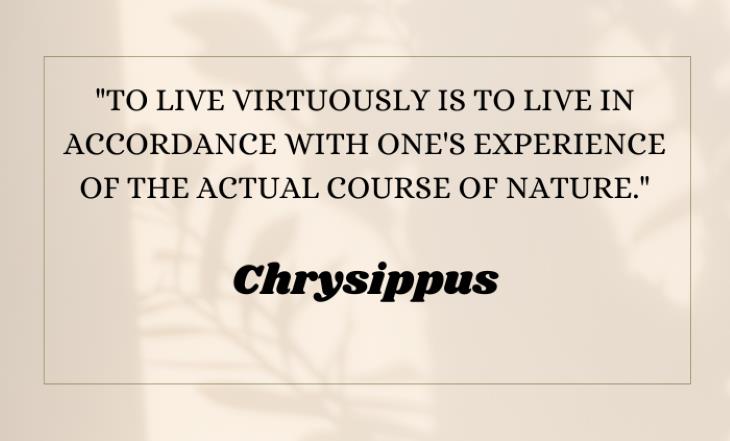
Chrysippus of Soli (c. 279 – c. 206 BC)
The third head of the Stoic school and its great systematizer, Chrysippus turned Stoicism into a rigorous, comprehensive philosophy spanning logic, physics, and ethics. Ancient writers credited him with more than seven hundred books and coined the saying, "Without Chrysippus, there would be no Stoa." His work in propositional logic was centuries ahead of its time. Almost none of his writing survives intact, but his framework became the backbone of Stoic thought that later Romans inherited. He reportedly died laughing at his own joke about a wine-drunk donkey.
Musonius Rufus (c. 20/30 – c. 101 AD)
Sometimes called "the Roman Socrates," Gaius Musonius Rufus was a leading Stoic teacher of the first century and the master under whom Epictetus studied. He insisted that philosophy was for living, not lecturing, and held strikingly progressive views for his era - arguing that women were as capable of philosophical study as men. Repeatedly exiled by hostile emperors, he kept teaching regardless. His lessons survive as lecture summaries recorded by students, covering everything from diet and marriage to how one should endure hardship without complaint.
Zeno of Citium (c. 334 – c. 262 BC)
The founder of Stoicism, Zeno came from Citium in Cyprus and was, by tradition, a merchant who turned to philosophy after surviving a shipwreck that cost him his goods. In Athens he studied under the Cynic Crates and others before opening his own school. He taught in the Stoa Poikile, the "Painted Porch" of the Athenian agora - and it is from that colonnade, the stoa, that Stoicism takes its name. Austere and widely respected, he laid down the ethical foundations his successors would expand into a full system.
Cato the Younger (95–46 BC)
Marcus Porcius Cato was less a philosopher than a living demonstration of Stoic conviction. A Roman senator famed for incorruptible integrity and unbending principle, he became the fiercest defender of the dying Republic against Julius Caesar. He left no philosophical writings, yet later Stoics - Seneca especially - held him up as the model of the sage under pressure. After Caesar's decisive victory, Cato chose suicide at Utica rather than accept a pardon or live under one-man rule. His death made him a lasting symbol of liberty and principled defiance.
Seneca (c. 4 BC – 65 AD)
Lucius Annaeus Seneca, born in Roman Spain, was a statesman, dramatist, and the most eloquent Stoic prose stylist. Enormously wealthy and politically entangled, he served as tutor and advisor to the emperor Nero - a relationship that eventually cost him his life when Nero ordered him to die for an alleged conspiracy. His Letters to Lucilius and moral essays turn Stoic principle into practical counsel on time, grief, anger, and mortality. Critics note the gap between his riches and his teachings; his writing survives that tension undimmed.
Epictetus (c. 50 – c. 135 AD)
Born a slave in Phrygia, Epictetus became one of Stoicism's most influential teachers after gaining his freedom. He wrote nothing himself; his student Arrian preserved his lessons as the Discourses and the pocket-sized Enchiridion (Handbook). His central teaching is the dichotomy of control - distinguishing sharply between what is up to us (our judgments and choices) and what is not (everything else). Blunt, funny, and demanding, he taught that freedom is an inner condition available even to a former slave, and impossible for a slave to his own passions.
Cleanthes (c. 330 – c. 230 BC)
The second head of the Stoic school, Cleanthes succeeded Zeno and held the succession together for over thirty years. A former boxer of modest means, he famously worked nights hauling water to fund his days studying philosophy - earning a reputation for slow but relentless dedication that outlasted quicker minds. He gave Stoicism its religious and poetic dimension, most memorably in his Hymn to Zeus, the longest continuous Stoic text to survive from the early school. Devoted to duty to the end, he reportedly died by voluntarily refusing food.
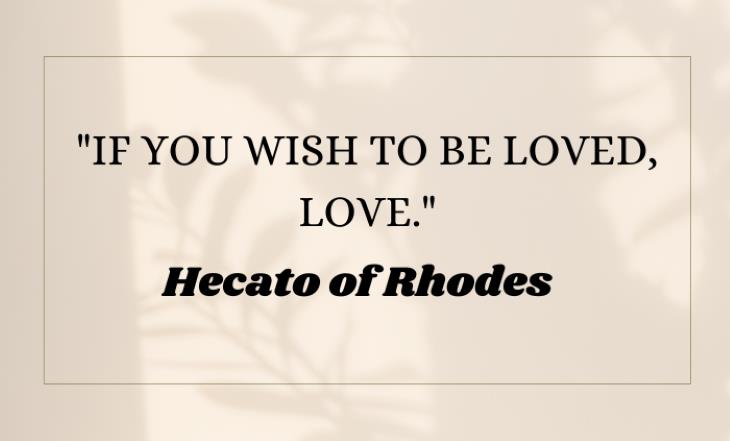
Hecato of Rhodes (fl. c. 100 BC)
A student of Panaetius, Hecato was a prominent Stoic of the middle school and a prolific writer on ethics, though none of his work survives intact. What we know comes mostly through Seneca and Diogenes Laertius, who quote him on practical moral questions - the nature of benefits and gratitude, whether the good life can be taught, and how virtue relates to everyday duties. He is best remembered for a handful of aphorisms Seneca preserved, including the observation that learning to be one's own friend marks real philosophical progress. His focus was resolutely practical.