
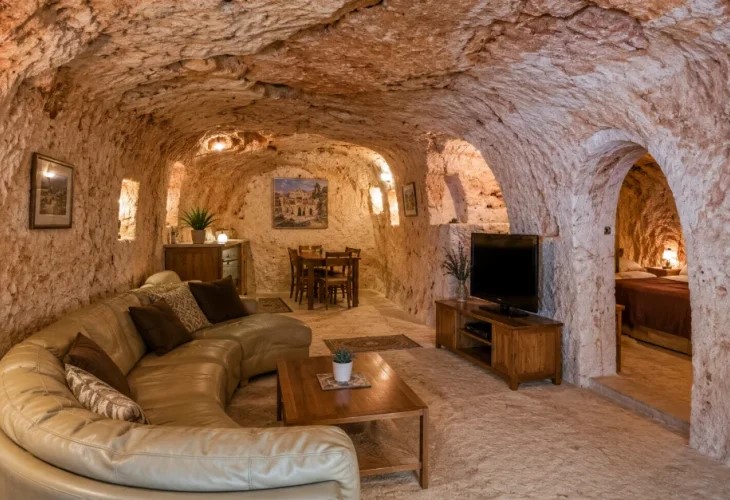
When we picture a house, we picture windows, a garden, and a roof against the sky. But in the remote town of Coober Pedy, in the baking heart of the South Australian desert, thousands of people have chosen a completely different sort of home. They live underground, in cool, quiet rooms carved directly into the rock, in what may be the most extraordinary town on earth. It is a place where you can worship in an underground church, sleep in an underground hotel, and browse an underground bookshop, all to escape a sun so fierce that life on the surface becomes almost unbearable. Here is the remarkable story of how it came to be, and what it is like. With the climate getting hotter every year, will other towns around the world start doing the same?
The story begins in 1915. A 14-year-old boy named Willie Hutchison was out prospecting in this harsh, empty country with his father, who was searching for water. Instead of water, young Willie found something far more valuable: opal, the beautiful, shimmering gemstone that flashes with rainbow color. His discovery set off a rush. Word spread, and hopeful miners began pouring into the desert to seek their fortunes in the ground.
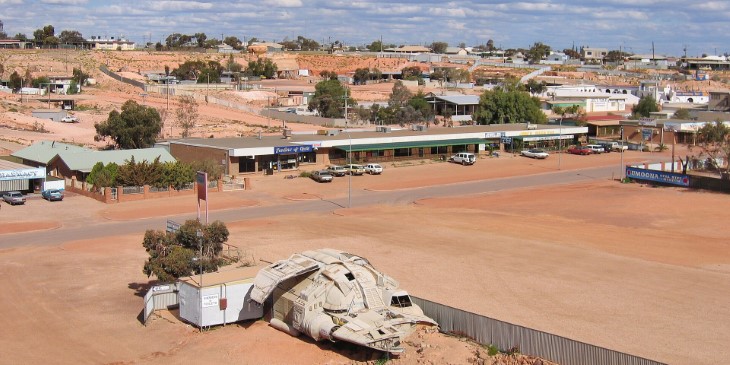
The town that grew up around the diggings was first known as the Stuart Range Opal Field, and was officially given the name Coober Pedy in 1920. The name comes from an Aboriginal term, kupa piti, often translated as "white man's hole," a fitting description for a place defined by burrowing into the earth. The local Aboriginal people, who had lived in this land for thousands of years long before the miners arrived, also know the area as Umoona, which beautifully means "long life."
At first, the miners built their homes above ground, as people do. But they soon found the climate almost impossible to bear. This is one of the hottest, driest corners of Australia, where summer daytime temperatures average around 99 degrees Fahrenheit (37 degrees Celsius) and regularly climb well past 104 degrees Fahrenheit (40 degrees Celsius). The desert nights, especially in winter, can turn bitterly cold. Building above ground meant roasting by day and shivering by night.
The solution came from an unexpected place. Many of the early settlers were soldiers returning from the First World War, men who had spent years living in the trenches of France and had become experts at digging in. It is widely believed they were the ones who first thought to make their homes beneath the surface, in dwellings that came to be known as "dugouts." Down in the rock, they discovered, the temperature stayed wonderfully steady all year round, and the idea quickly caught on.
The principle is beautifully simple. A thick layer of rock overhead acts as natural insulation, shielding the rooms below from the scorching sun and the cold night alike. While the surface bakes at over 100 degrees, a dugout holds a comfortable, constant temperature of around 73 degrees Fahrenheit (23 degrees Celsius), day and night, summer and winter, with no air conditioning or heating required at all. In a world increasingly worried about energy bills, these desert miners solved the problem a century ago, simply by moving indoors and downward.
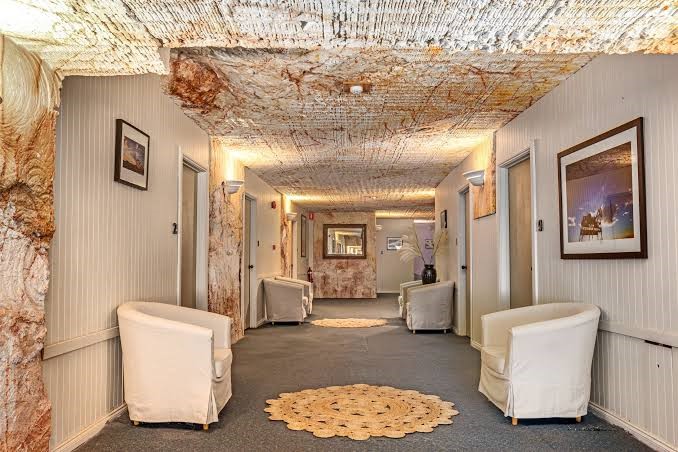
Step inside a dugout and you may be surprised. From the outside, many look modest, revealing little more than a doorway in a hillside and a few ventilation pipes poking up above. But behind that entrance lie spacious, comfortable homes, with living rooms, kitchens, and often several bedrooms, all wired for electricity and lit warmly despite having no windows. For the price of an ordinary house above ground, a resident can simply dig their own home into the rock, adding a new room whenever they please. Now and then, a lucky homeowner even finds a seam of opal glittering in a wall while excavating, turning the very act of building into a treasure hunt.
Coober Pedy sits in profound isolation, roughly 530 miles (850 kilometers) north of Adelaide, a drive of some nine hours across the empty outback. It is home to a population of around 2,500 people, a strikingly international mix drawn from as many as 45 different nationalities, all brought together by the lure of opal. Something like half of them, by many estimates more, live underground in dugouts.
The scale of the mining that surrounds the town is hard to imagine. The desert for miles around is pockmarked with the mounds and shafts of countless diggings. By the end of the 1990s, it was estimated that more than 250,000 mine shaft entrances dotted the area. This is, quite simply, the opal capital of the world, thought to produce around 70 percent or more of the entire globe's supply of the precious stone. Local legend holds that a few quiet millionaires live among the townsfolk, though they tend to keep it to themselves, lest everyone rush to dig near their claim.
What makes Coober Pedy so astonishing is that it is not merely a scattering of underground houses. Over the decades, an entire town has taken shape below the ground. Among the underground wonders you can visit are:
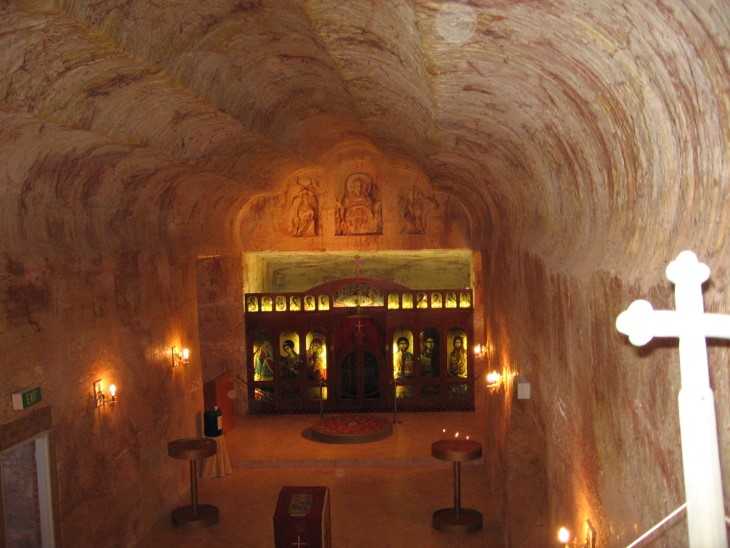
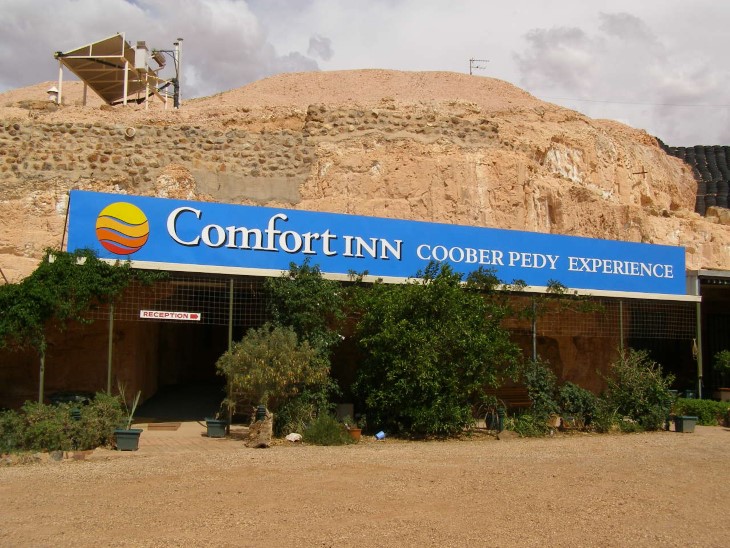
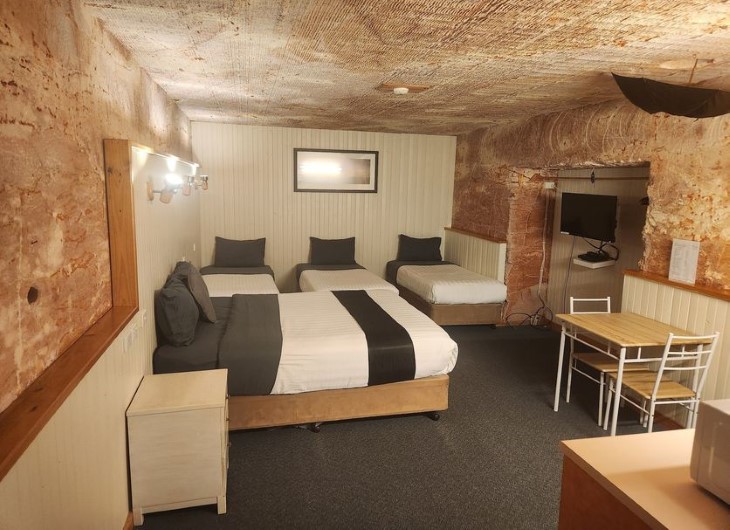
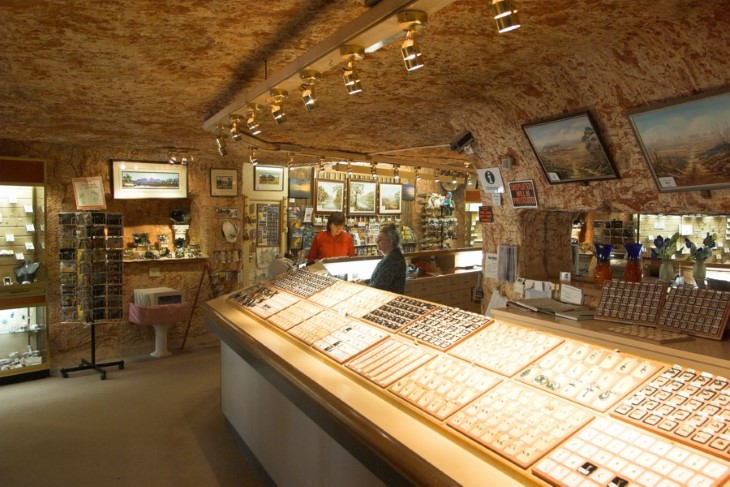
Life in such an unusual place breeds unusual customs, and Coober Pedy is full of delightful surprises:
The country around Coober Pedy is so stark, strange, and beautiful that filmmakers have long treated it as a ready-made alien world. Its rust-colored plains and jagged rock have stood in for post-apocalyptic wastelands and distant planets in movies including Mad Max Beyond Thunderdome, Pitch Black, and the beloved Australian film The Adventures of Priscilla, Queen of the Desert.
Just outside the town lie the Breakaways, a range of colorful, flat-topped hills that seem to break away from the desert floor and blaze orange and gold at sunset. Nearby runs part of the famous Dog Fence, built to keep dingoes from the sheep country to the south, and stretching so far that it is one of the longest fences ever built, longer even than the Great Wall of China. Small wonder that people often say a visit here feels like stepping onto the surface of Mars.
For all its harshness, Coober Pedy has grown a warm and resilient community over the past century. Those 45 nationalities have brought their languages, their traditions, and their cooking, so that in this tiny, remote desert town you can sit down to a hearty Serbian, Greek, or Italian meal, a rich cultural stew you would never expect in the middle of the outback. People here have learned not to fight the brutal land, but to live cleverly within it, and to look out for one another while they do.