
Age 80, Memory of a 50-Year-Old: Scientists Just Cracked the Secret of "SuperAgers"
What if your brain could stay sharp, clear, and quick well into your 80s — not despite your age, but almost as if time simply forgot about you? For a rare and fascinating group of people known as "SuperAgers," that's exactly what happens. And now, a landmark study published in the prestigious journal Nature has finally revealed why.

SuperAgers make up less than 5% of the population. They're people over 80 who remember everyday events and personal memories with the same vivid detail as someone in their 50s. For decades, scientists have wondered what sets these remarkable individuals apart. The answer, it turns out, is hiding deep inside their brains — and it's more exciting than anyone expected.
Their Brains Are Still Building
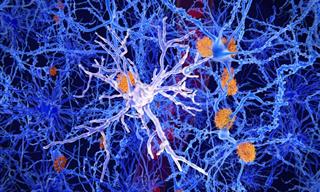
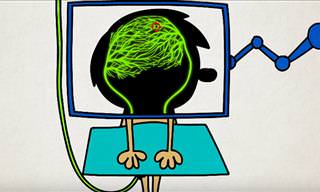
The key discovery: SuperAgers' brains are generating new nerve cells, called neurons, at nearly twice the rate of their peers. This process — known as neurogenesis — takes place in the hippocampus, the brain's memory hub, and it appears to be the secret ingredient behind their extraordinary mental staying power.

The research was led by Prof. Orly Lazarov of the University of Illinois Chicago College of Medicine, alongside colleagues from Northwestern University and Washington University. Her team analyzed nearly 356,000 individual cell nuclei from brain tissue samples representing several groups: young adults, healthy older adults, SuperAgers, people with early-stage Alzheimer's, and those with full Alzheimer's disease.
The contrast was striking. In Alzheimer's patients, the number of young, newly forming neurons had dropped sharply. In SuperAgers, those same neurons were thriving — painting a picture of a brain that somehow maintains a kind of biological resilience others lose with age.
"This is a major step forward in understanding how the human brain processes cognition, creates memories, and ages," said Prof. Lazarov. "Determining why some brains age more healthily than others can help create treatments for healthy aging, cognitive resilience, and the prevention of Alzheimer's disease and related dementia."
The "Locked Pages" Discovery
But the team didn't stop at counting neurons. Using a cutting-edge genetic technology that examines how the brain's DNA is actually used — not just what genes are present, but which ones are "open" and available — they uncovered something even more revealing.

Think of your DNA as a massive cookbook for running your brain. What the researchers found is that cognitive decline doesn't usually start because the recipes get erased. It starts because invisible biological "paper clips" seal pages together, making entire sections of instructions unreadable. The cells quite literally lose the ability to access the instructions for creating new neurons.
Even more striking: this "page-locking" appeared in people who were in the earliest, silent stages of pre-Alzheimer's — before any obvious symptoms had emerged. That means this discovery could one day serve as an early biological warning signal, helping doctors detect Alzheimer's risk long before the disease takes hold.
What You Can Do Starting Today
The researchers are careful to note that lab findings don't translate into overnight lifestyle fixes. The study also had limitations — it relied on tissue samples taken at a single point in time rather than tracking living brains over the years. Still, the implications are powerful and clear.

Everything that supports your overall health — managing chronic conditions, eating well, staying physically active — also protects your brain's ability to stay young. But one factor stands out above the rest: mental challenge.
And scientists aren't talking about another Sunday crossword. Your brain thrives on novelty and genuine effort. That means picking up a new language at 75. Navigating somewhere unfamiliar without GPS. Swapping passive TV time for strategy games — chess, Scrabble, or a board game with the grandkids. Trying a recipe you've never made before from a cuisine you don't know well. Diving into a lively, stimulating conversation that actually makes you think.
The common thread? It has to be new and it has to be hard. Your brain, it turns out, absolutely hates routine — and loves a good challenge. Give it one, and you just might be on your way to joining the most exclusive club in the world.