Here is something most of us never think about: right now, at this very moment, you are carrying somewhere between 8 and 12 viruses in your body. You caught them years or even decades ago, and they never fully left. Instead, they went quiet, tucked away in your cells, kept in check by your immune system. Most of the time they cause no trouble at all, and you would never know they were there.
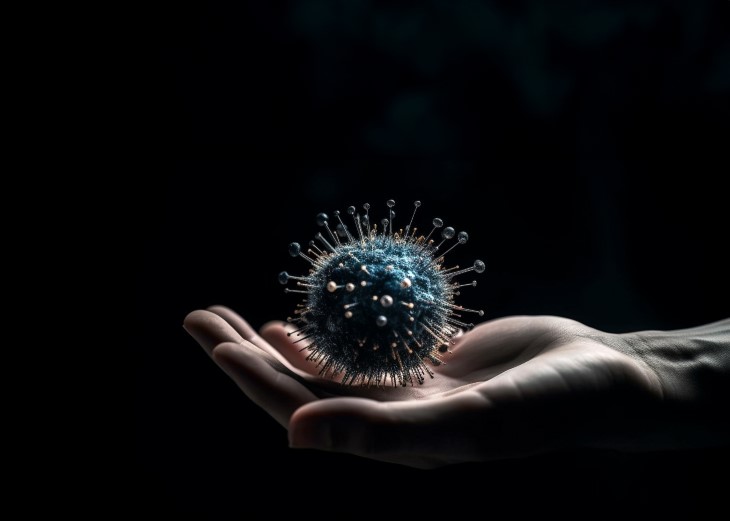
One of the most familiar examples is the virus behind mononucleosis, often called "mono" or the "kissing disease," which many people picked up as teenagers. That virus, known as Epstein-Barr, doesn't disappear after you recover. It simply goes to sleep. And it turns out it can wake back up.
A large new study followed more than 1,150 patients who were hospitalized with COVID-19, tracking them closely during their illness and for a full year afterward. What the researchers found sheds new light on these hidden passengers, and on why some people get so much sicker than others.
These dormant viruses are a bit like embers in a fireplace that has burned down. They look cold and settled, but under the right conditions they can flare back to life. Doctors have long known that heavy stress on the body, things like major surgery, serious infections, or critical illness, can be enough to fan those embers.
The researchers wanted to know exactly what happens with these sleeping viruses when the body is fighting a severe case of COVID. So they used advanced testing to look for signs that the viruses were not just present, but actively switched back on and multiplying.
The results were striking. Almost half of the hospitalized patients showed at least one dormant virus reactivating during their illness. Two groups of viruses stood out. The first was the herpesvirus family, which includes Epstein-Barr, cytomegalovirus (a common virus most of us carry without symptoms), and the virus responsible for cold sores. The second was a lesser-known group called anelloviruses, which are so common that they live quietly in an estimated 80 to 90 percent of all people.
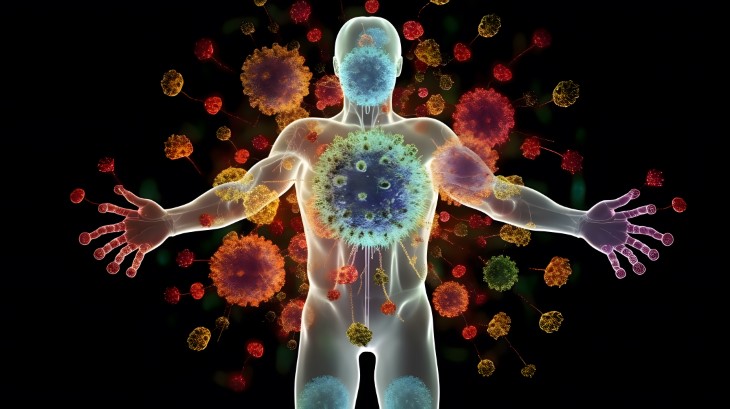
Interestingly, these viruses did not all wake up at the same time. Epstein-Barr tended to reactivate early, right around the time patients were admitted to the hospital. Others, like cytomegalovirus and the cold sore virus, tended to stir later, roughly three weeks into the illness. It was as if each virus had its own timing, its own moment to emerge.
The study found a clear pattern: patients who were more severely ill were more likely to have these viruses reactivate. Among the most critically ill patients, those whose dormant viruses woke up were more likely to have poorer outcomes.
It is important to be careful here, and the researchers themselves are very clear about this. Finding that two things happen together does not prove that one causes the other. The reactivated viruses might be adding fuel to the fire, or they might simply be a sign of how hard the body is struggling. At this stage, no one can say for certain. What the study shows is that the two travel together, closely and consistently.
Here is the finding that genuinely challenges what doctors believed. For years, the assumption was that dormant viruses only reactivate in people whose immune systems are weakened, such as organ transplant recipients or patients undergoing chemotherapy. Those are people whose defenses are deliberately lowered.
But this study found reactivation happening frequently in people with perfectly normal, healthy immune systems. The trigger seemed to be the severe illness itself and the intense, body-wide inflammation that came with it, not a broken immune system. In other words, this may be a far more common and widespread phenomenon than anyone realized, and it may deserve attention in many more situations than doctors previously thought.
When these viruses reactivated, the researchers saw higher levels of the body's inflammatory signals, the chemical messengers your immune system releases when it is fighting hard. Some of these same signals have already been tied to more severe COVID. This adds weight to the idea that awakened viruses may not just be innocent bystanders. They may actually intensify the inflammation already underway, though more research is needed to know for sure.
The study also reached into the murky territory of long COVID, the lingering symptoms that can persist for months or even years after the original infection. Long COVID is thought to affect somewhere between 10 and 30 percent of people who catch the virus, and researchers are still working hard to understand why it happens.
One notable finding: the anelloviruses, those extremely common quiet passengers, were more likely to still be active during recovery in patients who reported ongoing physical problems like fatigue and difficulty with everyday physical function. This does not prove these viruses cause long COVID, but it points to them as a promising lead worth chasing. Given that these same viruses have been loosely linked to chronic fatigue conditions in the past, scientists are keen to dig deeper.
You might reasonably wonder what to do with all this. The honest answer is that this is early science, and there is no action to take at your kitchen table today. But there is real reason for optimism about where it leads.
The encouraging part is that medicine already has tools that fit this puzzle. There are established tests that can detect these very viruses, and there are antiviral medications already in use for the herpesvirus family, with more being studied. That means if future research confirms that treating these reactivated viruses helps patients recover better, the treatments and tests may largely already exist, ready to be put to a new purpose.
For now, the biggest takeaway is a shift in understanding. Our bodies are not simply battling one invader at a time. We each carry a quiet, complex community of viruses, and severe illness can stir them from their sleep, even in the healthiest among us. Learning to recognize and manage that hidden activity could one day become a valuable new way to help people through serious illness and its long aftermath.