
There is a quiet that feels comforting to come home to after a busy day, and there is a quiet that leaves you waiting for someone to break it. The phone sits on the counter, the TV hums in the background, and on paper, everything is fine: the fridge is stocked, the kids called earlier in the week, and the next doctor’s appointment is already on the calendar. And yet, there is no one around to share a small moment that happened this morning. No one to ask a follow-up question, listen to the answer, or simply sit nearby for no particular reason.
Loneliness in older age can easily hide behind an orderly life. It is not reserved only for those without family, nor does it automatically vanish by moving closer to adult children. Sometimes it arrives after a sudden loss; other times it creeps in slowly, as social ties fade and reasons to leave the house dwindle. The term “the silent epidemic” captures its scale and how easy it is to overlook, but one thing should be clear from the start: loneliness is not an inevitable consequence of aging, and practical steps can be taken to ease it.

You can be alone without feeling lonely, and you can feel lonely in a room full of people. This distinction is essential. Social isolation describes an objective state of having few social contacts, interactions, or support networks. Loneliness is the subjective feeling of a gap between the social connection you want and the connection you actually experience. The number of visitors on any given week does not tell the whole story of what is happening inside.
Public health experts and psychologists often distinguish between emotional loneliness-the absence of a close, intimate confidant-and social loneliness-the lack of an engaging community or broader peer group. Someone might attend community classes every week and still miss having that one person they can confide in without filtering their words. Another person might enjoy a close relationship with their daughter, yet miss having a group of peers who share their lived experiences and generational references. This distinction is practical: it clarifies what kind of support or connection is actually needed.
A family visit can bring immense joy without ever filling the silence left by a lost partner. An engaging lecture might stimulate the mind, but it will not create belonging if you arrive alone, sit alone, and drive home alone. The useful question is rarely just “How many people did you see this week?” but rather, “Was there someone you truly felt connected to?”
In the United States, this struggle is widespread. According to reports from the National Academies of Sciences, Engineering, and Medicine (NASEM) and the U.S. Surgeon General’s Advisory on Social Connection, roughly one in four community-dwelling Americans aged 65 and older is considered socially isolated, and more than one-third of adults aged 45 and older report feeling lonely.
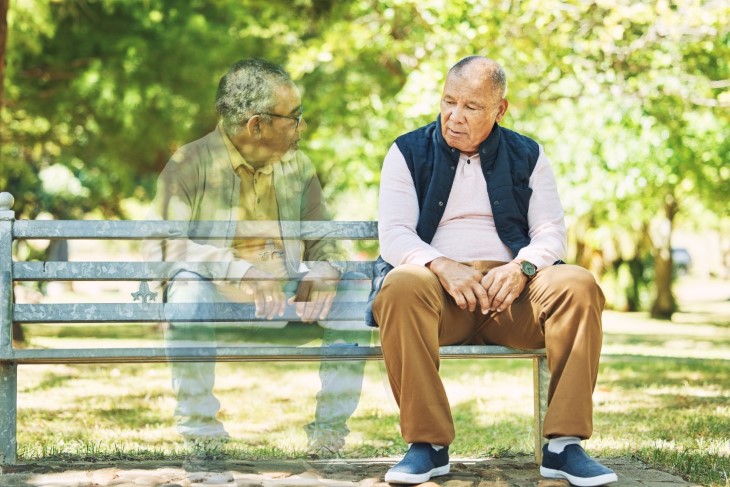
U.S. Census data also highlights an important demographic reality: among Americans aged 65 and older, women are significantly more likely than men to be widowed-nearly 30% of older women compared to roughly 10% of older men-and around 27% of older adults live completely alone.
Yet the landscape of aging in America is not uniformly grim. Federal surveys consistently show that the vast majority of older adults report high levels of general life satisfaction. Satisfaction and loneliness are not strict opposites. One can appreciate family, take pride in a home, and feel grateful for life, while still experiencing a painful ache of isolation during quiet hours.
One of the most profound drivers of loneliness is the loss of lifelong companions. The loss of a spouse, sibling, or long-time friend takes away more than shared meals; it takes away shared history, unspoken understanding, and routines built over decades. Retirement can suddenly strip away daily interactions and a sense of purpose. Added to this are chronic health conditions, fixed-income constraints, or downsizing to an unfamiliar neighborhood.

Consider someone who spent decades greeting the same colleagues each morning. They were not all close confidants, but there were morning hellos, shared jokes, and casual hallway chats. After retiring, it is entirely possible to cherish the newfound freedom while simultaneously grieving the loss of dozens of daily micro-connections. You do not have to return to work to fill that gap, but acknowledging the loss is essential.
Often, the barriers are straightforward and logistical: a lack of reliable public transit or driving cessation, events held in inaccessible venues, or neighborhood walkability issues. The U.S. Centers for Disease Control and Prevention (CDC) identifies limited transportation, hearing and vision loss, mobility impairments, and financial stress as major risk factors for isolation. In such cases, well-meaning advice like “just get out more” ignores the structural obstacles preventing someone from leaving the house in the first place.
Physical changes can also quietly push people away from gatherings they want to attend. Untreated hearing loss is a major culprit: struggling to follow rapid conversations in a noisy restaurant is exhausting, often causing people to decline the next invitation. From the outside, it looks like disinterest; in reality, it is sensory fatigue. The National Institute on Aging (NIA) underscores how sensory and mobility limitations directly impair social engagement.
Identifying the exact obstacle helps: Is the restaurant too loud? Is transportation needed? Is there comfortable seating? If a bustling Thanksgiving dinner feels overwhelming, an hour-long coffee with two relatives might be far more enjoyable. Adapting the setting to the person works far better than pressuring them into spaces that no longer suit their needs.
There are internal barriers as well, none of which represent personal failure. Thoughts like “I don’t want to be a burden,” “Everyone is too busy,” or “You can’t make new friends at my age” can turn a healthy desire for connection into quiet withdrawal. Loneliness easily creates a self-reinforcing loop: feeling disconnected leads to hesitation, avoiding social situations limits opportunities, and the sense of isolation deepens.
If you call an old friend and they do not pick up, thinking “They must be tied up right now” leaves the door open to try again; assuming “They don’t care to talk to me” slams it shut. While positive thinking alone will not erase grief or real-world obstacles, professional support can help untangle genuine rejection from self-protective anxiety.
Depression and anxiety further complicate matters. Mental health professionals emphasize that loneliness and depression frequently feed into each other, exacerbated by chronic pain, grief, and declining health. Persistent withdrawal is not just "part of getting older," and it should never be dismissed as an inevitable personality trait.

Building a social circle from scratch is tough because major life transitions often strike simultaneously. Long-term networks thin out just as physical stamina, driving ability, or fixed budgets make networking harder. Furthermore, built-in social engines-like workplaces or raising school-age children-are no longer part of daily life. This does not mean the ability to connect is lost; it simply means connection must now be cultivated intentionally rather than casually absorbed.
Expectations can also weigh heavily on new acquaintances. Someone met at a local library book club cannot instantly replace a friendship of forty years. New relationships need room to start small: learning a name, remembering a detail from last week, or sitting next to the same person twice. A new connection does not need to replace the past to carry genuine value today.
Addressing loneliness is also a matter of preventive healthcare. The CDC and the U.S. Surgeon General warn that prolonged social isolation carries health risks on par with smoking up to 15 cigarettes a day, significantly elevating the risk of cardiovascular disease, stroke, type 2 diabetes, cognitive decline, dementia, depression, and premature death. These are population-level risks, not a guaranteed personal outcome, but they underscore a clear truth: meaningful human connection belongs in routine healthcare discussions right alongside exercise, sleep, and nutrition.
A practical starting point is asking: What kind of connection is missing, and what specifically stands in the way? Missing an intimate confidant, lacking peers for shared hobbies, and being homebound by physical limitations require entirely different solutions.
For those looking to take a manageable step this week:
Turn vague intentions into concrete invitations. Instead of “We should catch up sometime,” try: “Are you free for coffee next Tuesday morning at ten?” A specific invitation is easier to respond to and makes rescheduling straightforward if the time does not work.
Anchor social time to personal interests. Someone who loves gardening might join a community garden or master gardener workshop; an avid reader might check out a local library discussion group. Shared tasks take the pressure off small talk and eliminate the awkwardness of wondering how to break the ice.
Ask for targeted assistance. Instead of expressing a general reluctance to leave home, ask family or friends for a specific favor: “I’d like to check out the local senior center, but I don’t want to walk in alone the first time. Could you come with me for thirty minutes?”
Give new settings time without long-term commitments. An awkward first visit is not a verdict. Try attending three times before deciding whether the group is a good fit, checking: Do I feel comfortable around these people? Is the environment manageable? Is there someone here I'd like to talk to again?
Leave room for giving back. Volunteering through local food pantries, literacy programs, or animal shelters restores a sense of agency and purpose. Meaningful relationships are not built solely on receiving support; they flourish when sharing humor, hard-earned knowledge, and empathy.
Loved ones play a pivotal role, but support works best when it starts with active listening. Before signing an older parent up for community programs, ask open-ended questions: “What parts of your day feel the quietest?” “Is there an old friend you’ve lost touch with that you miss?” or “What makes getting out of the house stressful right now?” The answers often reveal barriers that family members never realized existed.
It is also vital that visits do not degenerate into a rapid-fire wellness audit: Did you take your pills? Did you eat lunch? Did you call the repairman? Concern is natural, but adults need conversations that honor their intellect and identity. Ask for their advice on a problem, talk about current events, or share a funny story from work. An older adult remains an individual with distinct taste, humor, and opinions-not simply a care recipient to manage.
When offering time, consistency matters far more than grand gestures. A reliable twenty-minute phone call every Sunday afternoon or a regular bi-weekly lunch does far more good than promising open-ended availability that rarely materializes.
Across the U.S., several established networks and programs exist to support connection and independent living:
Eldercare Locator & Area Agencies on Aging (AAA): Contacting the national Eldercare Locator (eldercare.acl.gov or 1-800-677-1116) connects individuals to their regional Area Agency on Aging. AAAs coordinate local senior center programming, congregate meal sites, adult day health services, and subsidized transportation options.
Village to Village Network: In hundreds of communities nationwide, grassroots "Villages" run by neighbors and volunteers provide social events, vetted vendor referrals, and volunteer rides for daily errands, helping members stay engaged while aging in place.
AmeriCorps Seniors & Senior Corps RSVP: Programs like the Foster Grandparent Program, Senior Companions (where volunteers provide visits and respite to fellow older adults), and RSVP offer structured, purpose-driven volunteer paths matched to individual capabilities.
Local Public Libraries & Parks and Recreation: City and county recreation departments routinely run low-cost or free daytime enrichment, fitness classes (like SilverSneakers or gentle yoga), and interest clubs designed for older adults.
Friendly Visiting and Telephone Reassurance: Organizations like Meals on Wheels frequently pair meal drop-offs with regular safety checks and friendly visits, while services like DOROT offer volunteer-led phone and video companionship.
When loneliness persists, impairs daily routines, disrupts sleep or appetite, or manifests alongside severe anxiety or depression, consulting a primary care physician, geriatric social worker, or licensed mental health professional is a critical next step. Starting the conversation can be as direct as: “I’ve been feeling deeply isolated lately, and I’m having trouble breaking out of it on my own.”
Not every empty chair can be replaced, and certain losses stay with us for life. Yet room remains for new warmth, curiosity, and companionship alongside memory. Often, it begins with a single recurring phone call or an introduction where someone simply remembers your name next week. The human need to be seen, listened to, and welcomed never expires with age-and it deserves a central place in life at every stage.