A team of researchers from the university of Boston have reported their results to the New England Journal of Medicine, in which a new clinical trial successfully tested an artificial pancreas.
This test involved using a device implanted in type 1 diabetes patients that received both insulin and Glucagon (a hormone that elevates the blood sugar levels). To their delight, the device passed their expectations for its ability to automatically regulate blood sugar levels (preventing the 'sugar dump'), while also adjusting for both adults and teens, who require a larger amount of insulin.
"There is no treatment today capable of giving the results we've seen," says Dr. Edward Damiano of the University of Boston's Bio-Medical school of Engineering, and Head Researcher.
Protecting diabetes patients during the night
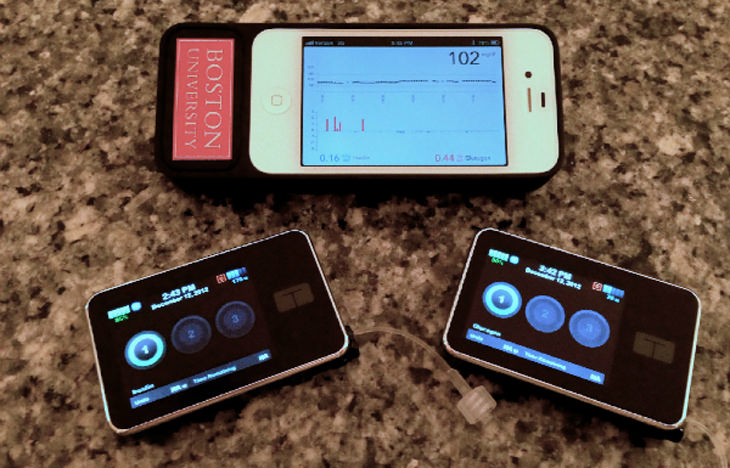
Ed has a personal stake in this. His 15-year-old son, David, has type 1 diabetes, and often his blood sugar drops in the middle of the night while sleeping, which can be deadly. This is why he and a colleague developed the 'bionic pancreas'. The device uses a sensor, an iPhone app and a special pump to deliver two materials: insulin, to lower blood sugar levels; and glucagon, which raises it. The pump, according to Damiano, works 24/7. "This is a relentless device, it doesn't take a vacation, it never goes to sleep," he adds.
Watch a video about the Bionic Pancreas' creation:
Protecting diabetes patients during the night
Ed has a personal stake in this. His 15-year-old son, David, has type 1 diabetes, and often has blood sugar drops, in the middle of the night while sleeping, which can be deadly. This is why he and a colleague developed the 'bionic pancreas'. The device uses a sensor, an iPhone app and a special pump to deliver one of two materials: Insulin, to lower the blood sugar levels, and glucagon, which raises it. The pump, according to Damiano, works 24/7. "This is a relentless device, it doesn't take a vacation, it never goes to sleep," he adds.
Ariana Koster has had type 1 diabetes since she was 11, and she is now getting outfitted for a bionic pancreas for the next phase of testing. "Just not having to worry about diabetes during the night is going to feel wonderful," she says.
Phase two of the test began yesterday and will take a year to complete. If all goes well, the device will be available to the public within 4 years. As for type II diabetes, the researchers believe it's definitely possible that it will help them as well, something they hope to look into during this year of testing.
Three parts
The bionic pancreas is made of three parts: two pumps, about cellphone size, that pump insulin and glucagon by need, and an iPhone wired to continuously monitor glucose levels. The components can be kept in a pocket or a fanny pack, and connect with three little needles that go under the skin, usually in the area of the belly.
The main advantage of the device, say the researchers, is its ability to free the patient from worrying about their disease all the time, and especially going to sleep without knowing if their blood sugar levels will drop to dangerous lows during the night.

Ariana Koster has had type 1 diabetes since she was 11, and she is now getting outfitted for a bionic pancreas for the next phase of testing. "Just not having to worry about diabetes during the night is going to feel wonderful," she says.
Phase two of the test began yesterday and will take a year to complete. If all goes well, the device will be available to the public within 4 years. As for type 2 diabetes, the researchers believe it's definitely possible that it will help them as well, something they hope to look into during this year of testing.
Three parts
The bionic pancreas is made of three parts: two pumps, about cellphone size, that pump insulin and glucagon by need, and an iPhone wired to continuously monitor glucose levels. The components can be kept in a pocket or a fanny-pack, and connect with three little needles that go under the skin, usually in the area of the belly.
The main advantage of the device, say the researchers, is its ability to free the patient from worrying about their disease all the time, and especially going to sleep without knowing if their blood sugar levels will drop to dangerous lows during the night.
The Musical Test That Could Detect Dementia Early
Researchers have developed a promising new approach: using music to detect the early signs of cognitive decline.
Scientists Create a Human Heart in a Lab
After a new breakthrough in the United States, it looks like scientists will be able to grow synthetic hearts in the coming years. Take a look.
This Study Shows Where People Need to Be Touched
Touching is vital for human development in children, and it's also vital for the strength of familial and romantic relationships. Learn more here.
Study Finds a Painless Way to Monitor Blood Sugar Levels
A new study found that continuous glucose monitors improve blood sugar control and quality of life in diabetes patients - pain-free.
Alcohol Linked To More Cancer Types Than Previously Known
A new study found a clear correlation between alcohol consumption and more types of cancer than previously known.
This Study May One Day Help Treat Chronic Stress And PTSD
A recently discovered protein in the brain (p11) can be linked to both depression and stress and has the potential to help future treatments
4:11
This Video Will Show You Where We Are in the Universe!
Where is our galaxy in the known universe? This video will fly with you to ever-larger destinations, showing you our little planet's cosmic address from a very large viewpoint.
9:54
Neo: The New Tele-Robot that "Cleans" Your Home
Neo is a new robot that has great capabilities and is designed to clean your home. Sounds perfect right? Well, there's a catch.
I Bet You Didn't Have a Clue About These Human Body Facts!
The human body is the most complex machine known to mankind, but I bet you don't know these 10 amazing facts about it...
1:08
Boston Dynamics New Robot Can Move Almost Like a Human
Watch the latest in robotics in this video.
20:04
Emotions Explained: The Science Behind How We Feel
Neuroscientist and psychologist Dr. Richard J. Davidson answers some fascinating questions about emotions you would never expect.
Why It's So Hard to Get People to Change Their Stance
You feel that your knowledge is broader because you've read and researched a lot on the topic, but the other side still isn't convinced, even when you present facts and statistics. Why isn't that enough?
20 Peculiar Microscope Photos That You Really Must See
An unseen world exists at our fingers, and thanks to these wonderful micrographs, we can get a glimpse into that dimension.
These Materials are Strange Enough to Boggle Your Mind...
There are some materials in this world that totally defy scientific convention. From metals that melt in your hand, to a solid lighter than air, take a look.
10:11
10 Smart Home Gadgets You Didn’t Know You Needed
If you’ve ever wanted a smarter, more efficient home, these 10 gadgets might be exactly what you need.
7:56
These 6 Chemical Reactions Changed the Course of History
Although we rarely pay much attention to the chemistry that constantly surrounds us, these 6 reactions changed history.
9:34
Was Roman Concrete Really Superior to Our Own?
How did Ancient Romans make such durable concrete that it still lasts today?
Science News: AI-Designed Drugs Move to Human Trials
Isomorphic Labs, is positioning itself to begin human clinical trials of medications designed entirely through artificial intelligence, marking a potentially transformative shift in how we develop life-saving treatments.
1:44
You Won't Believe What the Human Body Does in One Minute
How much do you think it is capable of doing in a single minute? Watch this video and you'll have your answer!
Space Looks Breathtaking in These Amazing Photographs
There are some absolutely stunning photographs of space out there today, You won't believe how incredible it is!
6:15
K2-18b: The Exoplanet That Might Host Alien Life
Astronomers have detected signs of posisble life in the atmosphere of exoplanet K2-18b.
20:32
History: Did the Trojan War REALLY Happen?
The Trojan War, the most famous of the ancient wars, fought by thousands of men for ten long years on the beaches of the famed city of Troy. Was all that real?
10 Tech Products You Must Double-Check Before Buying
Beware! These tech products are most commonly faked.
10 Obscure Inventions by World Famous Inventors
We’d like to bring your attention to 10 lesser-known inventions of famous figures in history, which will reveal a new and different side of these inventors to you.
Hubble Telescope: 35 Years of Incredible Photos
Exploring 35 years of reality-changing, universe-enhancing photos that opened the sights of outer space to us all.
Will We Ever Solve Our Universe's Most Complex Mysteries?
Here are 8 of the biggest unsolved mysteries from the world of physics.
22:52
Will AI Take Your Jobs? An Expert Explains the Future
Gonzaga University's AI professor Graham Morehead some of our most pertinent questions related to AI.
38:55
What Happens the Deeper You Go Underground?
What happens when pressure pushes matter beyond the limits of what we thought possible?
5 Puzzling Mysteries That Science Finally Managed to Solve
These weird occurrences have puzzled humanity for decades, if not centuries. Finally, scientists solved them & the solutions are exciting...
1:48
Boston Dynamic's Robot Does Some Incredible Things...
Boston Dynamics shows us again what her lead robot can do.
3:02:59
Like Science Mysteries? Enjoy This Giant Compilation!
In this video, we unravel the greatest unsolved mysteries of physics.
A Quantum Leap? Revolutionary Technique Discovered
Scientists at Singapore University have developed a groundbreaking manufacturing method powered by artificial intelligence that may revolutionize how we understand and create quantum materials at the atomic level.
Alzheimer's: What Recent Breakthroughs Have Taught Us
Now, you can discover 4 new studies that show how to do this in ways you haven’t heard of.
5:17
How Exactly Do We Hear? All is Revealed Here!
In this informative TED-Ed video, Douglas L. Oliver explains the complete science behind hearing.
8:10
Taller Doesn't Mean Bigger - the True Size of Skyscrapers
If you were to compare skyscrapers by area rather than height, which skyscraper would end up on top?
1:14:42
Documentary: How Did Our Universe Come From Nothing?
Can “nothing” truly become “something”? In this video, we’ll dig into this mind-bending question.
4:20
Ever Wondered About How Our Minds Retain and Lose Memories?
Ever wondered why you can remember something from 20 years ago, but have difficulty remembering what you had for lunch the other day? Learn why here.
4:57
Fascinating: How Does Our Digestive System Work?
This video explains how the human digestive system does its daily.
11:15
These Paradoxes Continue to Mystify Scientists
Take a look at 7 scientific paradoxes that may never get solved.
How AI Is Fixing Problems Humans Struggle With
Here’s how AI is quietly reshaping the world in ways that actually matter.
10:46
Neat Life Hacks To Help You Remember Things Better
A lot of us tend to forget the simplest things at times. This video provides some neat tips to help boost your memory.
42:14
Physicist Michio Kaku: The Universe in a Nutshell...
Physicist Michio Kaku explains the fundamental nature of our universe
This New Blood Pressure Drug Could Be a Game-Changer
Zilebesiran, an investigational drug that is showing profound success in late-stage clinical trials is offering hope for millions who struggle to keep their blood pressure in check.
11:02
Ever Wonder What Ancient Egyptian Sounded Like?
Researchers have used all the information we know to create what they think it may have sounded like.
5:50
The Rise of the Machines: Can Humanoid Robots Help Us?
Will humanoid robots change the way we work forever?
The First Valentine's Day Was Not That Long Ago...
Let us take you on a fun history lesson with these 10 first-ever things that started way back in history and remain to this day.
12 Earliest Versions of Tech Inventions We Use Every Day
Witness the evolution of 11 popular devices we use all the time by looking at how they all started...
To enable your Ad-Free Subscription, please fill the fields below
Your subscription was successful, now you can enjoy an ad-free experience!! Note: To make sure you get no ads, please make sure to log in to your account. If you are logged in already, then refresh the page. The subscription can be cancelled at any time.