Do you know your typhoons from your hurricanes, or which volcanic eruptions shook the modern world? Let’s find out if you can weather the storm and claim that top score!
Our planet is a dynamic, ever-changing force, but sometimes its power unleashes sheer devastation. From the volatile fault lines of the Pacific Ring of Fire to the sweeping plains of America’s Tornado Alley, natural disasters shape our geography, history, and societies. This 13-question challenge will test your knowledge of history’s most infamous environmental crises across North America, South America, Europe, and East Asia. Do you know your typhoons from your hurricanes, or which volcanic eruptions shook the modern world? Let’s find out if you can weather the storm and claim that top score!
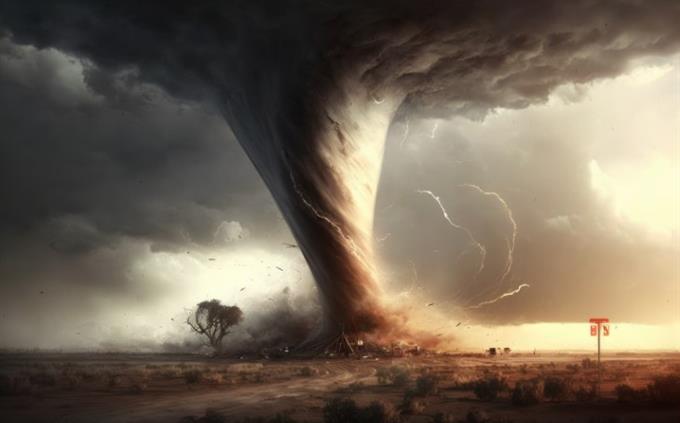
Which region of the United States is famously known as "Tornado Alley" due to its high frequency of tornadoes?
The Pacific Northwest
New England
The Florida Peninsula
The Great Plains
What year did the Eyjafjallajökull volcanic eruption disrupt European air traffic?
2016
2010
2002
2024
In 2005, which Category 5 hurricane caused catastrophic flooding in New Orleans after the city's levees failed?
Hurricane Andrew
Hurricane Katrina
Hurricane Sandy
Hurricane Ian
The 1985 Nevado del Ruiz eruption caused a deadly lahar in which South American country?
Colombia
Chile
Peru
Argentina
In 1960, the strongest earthquake ever recorded in human history (magnitude 9.5) struck near which South American city?
Lima, Peru
Quito, Ecuador
Valdivia, Chile
Bogota, Colombia
The "Great Flood of 1953" was a devastating storm surge that struck the North Sea, prompting the construction of massive storm surge barriers in which country?
Norway
Denmark
Portugal
The Netherlands
The catastrophic 2011 Tohoku earthquake in Japan triggered what type of secondary disaster that caused the Fukushima nuclear accident?
A massive volcanic eruption
A massive tsunami
A widespread firestorm
A sinkhole collapse
What is the primary cause of the destructive "Santa Ana winds" that rapidly spread wildfires in Southern California?
High pressure over the Great Basin forcing air downslope toward the coast
Tropical depressions forming in the Pacific Ocean
Cold fronts moving down from Canada
Jet stream fluctuations over the Rocky Mountains
Japan sits at the intersection of several tectonic plates, making up a highly volatile segment of which global geographic zone?
The Alpine-Himalayan belt
The Mid-Atlantic Ridge
The Ring of Fire
The Great Rift Valley
What is the fundamental difference between a "natural hazard" and a "natural disaster"?
Hazards are caused by humans; disasters are caused by nature.
Hazards happen quickly; disasters take years to form.
A hazard is the potential threat, while a disaster is the actual event causing significant human/economic loss. D)
There is no difference; the terms are interchangeable.
In 1998, which country was especially devastated by Hurricane Mitch?
Honduras
Belize
Panama
Costa Rica
Which European country is the most seismically active, frequently suffering from earthquakes due to its location on complex fault lines in the eastern Mediterranean?
France
Germany
Greece
Sweden
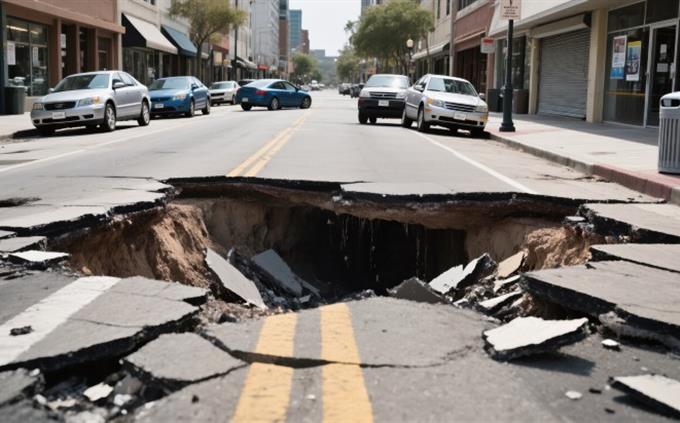
Which US state is the most susceptible to sinkholes due to its karst topography (underlying limestone)?
Texas
Florida
Ohio
Arizona
Safe Zone
It looks like you got caught in the storm! While you might know a few basic facts about major historical events, your geographic survival skills could use a little tuning. Natural disasters are complex phenomena driven by shifting tectonic plates and volatile atmospheric pressure. Don't worry—even seasoned meteorologists had to start somewhere. Take this opportunity to review the correct answers, learn about the planetary forces at play, and try again. Stay safe and keep exploring!
Impressive effort! You clearly have a strong grasp of global geography and a solid understanding of major environmental hazards. You easily identified famous volcanic eruptions and regional storm patterns across different continents. A few tricky questions about specific tectonic boundaries or historical dates might have thrown you off course, but you certainly know how to read a weather radar. With just a little more study on the exact science behind these phenomena, you’ll easily achieve a perfect score!
Sensational job! You navigated this high-stakes quiz like an absolute expert, mastering everything from the subduction zones of South America to the complex wind patterns of North America. Your deep understanding of seismology, meteorology, and historical natural events proves you are truly in tune with the awesome power of our planet. Mother Nature has nothing on you—you clearly know how these systems work and how they impact human history. You earned a perfect, storm-proof score!
Subscribe and REMOVE ALL ADS
LOVE our articles but HATE our ads? For only $3.89 per month, enjoy a seamless, ad-free experience that lets you focus on what matters most — enjoying all of our content, uninterrupted. 🔒 100% Secure Payment 📅 Cancel Anytime, No Strings Attached Unlock a cleaner, faster browsing experience today and gain the freedom to navigate without visual clutter.
Ready for a Ad-Free experience? Upgrade now for just $3.89/month!
To enable your Ad-Free Subscription, please fill the fields below
Thank you for your subscription!
Your subscription was successful, now you can enjoy an ad-free experience!! Note: To make sure you get no ads, please make sure to log in to your account. If you are logged in already, then refresh the page. The subscription can be cancelled at any time.
This content is reserved for our members
Join Our Community for FREE and Enjoy:
Full and free access to ALL content.
The 'Daily Mail' service sends the highest quality and the most fascinating content directly to your inbox.
 Shai K.
5/24/2026
Shai K.
5/24/2026


 Go to BabaMail