
Approximately 30% of people over age 70 suffer from age-related macular degeneration (AMD) – a common condition that causes significant vision loss. Professor Anat Loewenstein, Head of Retina at the Eye Department, explains the diagnostic methods, the importance of early detection, and new treatments that are changing how we manage this disease.
Understanding Age-Related Macular Degeneration
Age-related macular degeneration affects the center of the retina – the area responsible for sharp vision – and is considered the most common cause of vision loss in older adults. It typically appears after age 50, with around 30% of people over 70 experiencing some form of the condition. As life expectancy increases, the prevalence of AMD continues to grow.
"The disease results from the aging process of the retinal layers and the supporting cells beneath them," explains Professor Loewenstein. "This isn't just a medical issue but also a family and social challenge, since many patients require ongoing assistance in managing the disease and treatment."
According to Professor Loewenstein, there are two main stages of the disease. "The first stage is 'dry' macular degeneration, where there are no abnormal blood vessels," she explains. "At this stage, yellow deposits accumulate under the retina – a byproduct of natural wear and tear in the photoreceptor cells, the light sensors in the outer layers of the retina." In other words, this is a natural aging process in the vision cells that gradually causes a decline in visual acuity over the years.
"These cells convert light energy into electrical signals that allow us to see," adds Professor Loewenstein. "Due to their intense activity, they are under constant strain, and like any cell in the body – they wear out and regenerate. The accumulation of cell debris is an integral part of the aging process."
The real challenge begins when the disease progresses to the second stage: "wet" macular degeneration. "This occurs when abnormal blood vessels grow under the retina, which leak fluid and blood into the retina – and the walls aren't strong enough to prevent this leakage," describes Professor Loewenstein. "Once there's blood or fluid in the retina, vision becomes impaired." The statistics are concerning: "10% of those with dry AMD progress to 'wet' AMD – we're talking about significant numbers."
It's worth noting that dry macular degeneration can also progress in another direction: in some cases, the condition worsens to geographic atrophy, where large non-functioning areas develop, causing substantial vision loss.
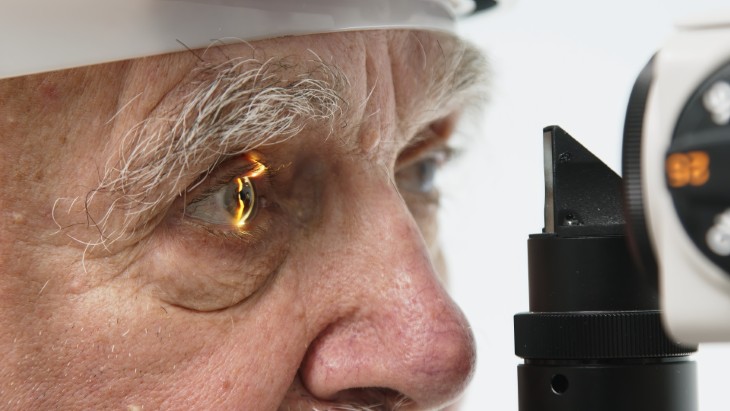
Until recently, AMD patients needed to visit the hospital for eye injections every month or two at most. This placed a heavy burden – not only on patients themselves, but also on family members, medical staff, and the entire healthcare system.
"People spend about ten hours on each treatment – from pre-treatment anxiety, through examinations, to post-treatment recovery," describes Professor Loewenstein. "Many come with a companion, since pupil dilation causes temporary blurring, and these are typically elderly patients."

The good news is that treatment for the "wet" stage of the disease continues to improve. Since 2006, eye injections have been available that slow disease progression. "You can compare their impact to penicillin – a treatment that completely changed patient prognosis," says Professor Loewenstein.
In recent years, new treatments have become available that only require injections 3-4 times per year. "This is a dramatic change that greatly eases the burden on patients, their families, and the entire system," she says. "Studies conducted for FDA approval found that these treatments are at least as effective as monthly injections – and sometimes even more so."
According to her, initial treatment includes injections of older-generation medications, and if adequate results aren't achieved after several injections – patients can switch to newer treatments, approved by all health maintenance organizations. "I have a patient who faints with every injection due to needle phobia," she shares, explaining that thanks to the new generation treatment given at a higher dose, he only needs an injection once every six months. "For someone like that, the difference between a monthly injection and twice a year is enormous."
Progress has also been made in treating "dry" AMD. "There's currently a new treatment approved by the FDA, " says Professor Loewenstein. "It doesn't improve vision, but it slows the growth rate of the degenerated area, which is an important achievement."
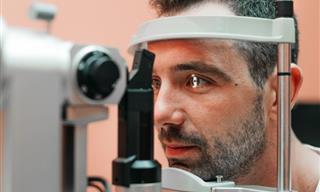
One of the most critical factors in managing the disease is early detection of the transition from "dry" to "wet" macular degeneration. Therefore, Professor Loewenstein's recommendation is "first and foremost, get examined by an eye doctor after age 50."
If early signs of dry AMD appear, it's important to be aware that this is a risk factor, and the doctor will determine your personal risk level based on the examination. "The most important thing is that if vision declines in one eye between examinations – you should get checked immediately," emphasizes Professor Loewenstein. "Unlike temporary pain or a sharp sensation, vision decline requires examination."
For those diagnosed with "dry" AMD, there are important preventive steps. "Taking specific vitamins reduces the risk of transitioning from dry to wet form by about 25%, according to research," she explains. "These vitamins are at higher doses than the daily recommendation, so they should only be taken with family doctor approval." Additionally, it's recommended to see an eye doctor 2-3 times per year.
Professor Loewenstein also recommends regular self-monitoring: "For people with dry AMD and risk factors, I recommend checking vision in each eye separately once a week, making sure you can read with the same clarity. The other eye sometimes compensates for the decline, and sometimes deterioration goes unnoticed."

Research results regarding success rates in reducing deterioration risk are encouraging. "There's a 95% chance of preserving vision and a 45% chance of achieving vision improvement," emphasizes Professor Loewenstein. However, she stresses that success depends on adhering to regular monitoring and following the treating physician's treatment guidelines.
"In cases requiring treatment, we typically start with monthly injections, then transition to another treatment given about 4 times per year," she adds. "It's essential to follow the instructions."
Another important aspect is maintaining a healthy lifestyle. "Today we look at the human body holistically," says Professor Loewenstein. "The disease is also related to blood flow, so what's good for the heart is good for macular degeneration too. Smoking worsens the disease and reduces treatment response, while moderate physical activity 4-5 times per week and a Mediterranean diet including nuts, fish, and olive oil – have been found in questionnaire studies to protect against age-related retinal degeneration."

Medicine continues to advance. "There are constant developments and new innovations," says Professor Loewenstein. "There are currently studies aimed at improving existing treatments – for both the dry and wet forms of the disease." Among other things, she mentions development of a home OCT device for self-monitoring between treatments, which has been approved in the United States, is about to begin commercial use, and is expected to change the monitoring routine in the future.
"It's important first of all to know about the disease's existence," concludes Professor Loewenstein. "Then you know you need to take the vitamins, monitor your vision, and if there's a decline – go immediately for an examination. Early detection and proper treatment can make all the difference in preserving vision and quality of life."