
A team of researchers at a Hong Kong university have developed an award-winning system that can detect a driver falling asleep at the wheel and send them alerts using a generic smartphone app.
The team at Hong Kong Baptist University, led by Professor Cheung Yiu-ming, clinched the two prizes at the 45th International Exhibition of Inventions of Geneva in April 2017. In addition, it has already submitted a patent in the US so that it can eventually market and sell the system.
How it Works

Most smartphones these days have the ability to capture video in real-time. The smartphone app developed by the HKBU team harnesses this ability to track and analyze the facial features of a driver, particularly the changes in eyelid and head position, which are both prominent symptoms of fatigue.
All drivers need to do to avail themselves of this additional level of safety is to mount their smartphone next to their steering wheel, with the front camera facing them. When the camera captures tell-tale signs of fatigue such as droopy eyelids, drowsiness or even nodding off, an alarm is automatically set off to awaken the driver. To ensure that the driver is alert once again, the alarm can only be turned off by voice or by hand.
No additional devices are required in order to operate the system, making it cost-effective, simple to operate and portable. It also supports online updates and can use a smartphone’s rear camera to record a journey on video.
The Significance of the Technology

According to US government statistics, some 31% of road accidents involving heavy vehicles in the USA involve fatigue. In addition, fatigue driving accounts for an astounding $3 billion in economic losses every single year.
Although this technology can be used by all drivers, it is especially applicable to those who drive for a living or operate machinery for very long working hours. Corporations will also be able to use the technology in their vehicle fleets, and insurance companies can also insist on their clients using it in their cars in order for an insurance policy to be granted.
Currently, fatigue driving detection systems can only be installed in a few luxury cars, but these systems require additional devices and sensors, making them non-portable, expensive and difficult to update. The system developed at HKBU does away with all these obstacles.
Awards
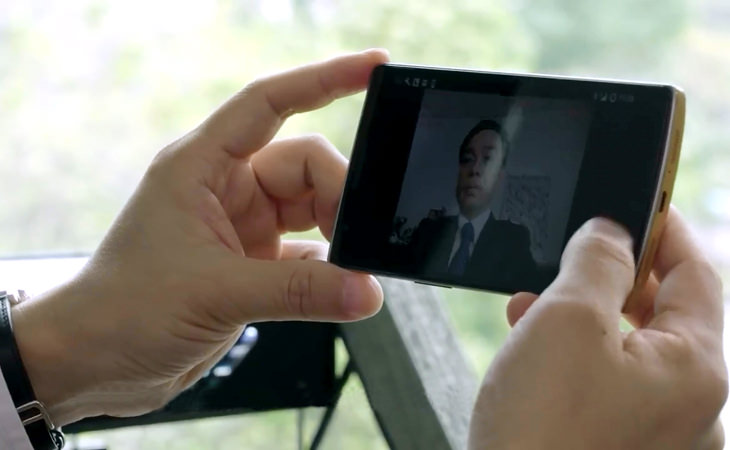
Professor Cheung’s team took home the Gold Medal with Distinction in the Computer Science Category, as well as the Swiss Automobile Club Prize at the 45th International Exhibition of Inventions of Geneva in April 2017.
Content Source: Science Daily
Image Sources: ResearchSea, Deposit Photos
5:03
Is It Possible to Power the Whole World with Just WIND?
IS it possible to create a world powered entirely by the wind? In this fascinating video, you will take a deep dive into the science of wind turbine technology...
8:10
Winter Hikers, Gather Round for the Best Tip of the Season
Here's how advanced snow hikers layer clothing in the winter.
5 World-Changing Medical Advances From the Past Decade
Perhaps the most important technological advancements are those related to healthcare. Here are 5 such incredible medical breakthroughs from the past decade.
7 Materials That May Change our Lives Forever!
The following 7 futuristic materials will change our lives forever.
11:53
These Cases Were Cold... Until Science Cracked Them
Technology and science aren't always about the future. Take a look at these cold cases that were solved only thanks to the advances of science.
With These Apps, You Get Unlimited Calls With Wi-Fi
Check out these great apps that will help you make free calls with Wi-Fi.
Is Microsoft's "AI Doctor" Better Than a Real Doctor?
A new study presents a committee of digital doctors achieving approximately 80% accuracy in complex medical diagnoses โ far beyond the average of general practitioners.
2:01
What Does the Appendix Actually DO?
Dr. Berg explains, in this video, all about the appendix and what it actually does in our body.
4:52
4 Super Technologies That Started Off as Failed Inventions
Check out how some of the great technological inventions of our time actually started off as failed projects.
Find Out How Some Elderly People Stay Sharp into Old Age
Some old people have better memories than people half their age. This could be the reason why...
8:44
What Does an Atom Really Look Like?
In this video, we'll try to visualize what an atom actually looks like.
8 Important Inventions That Were a Complete Accident
It might be interesting for you to learn that some very important scientific innovations were born as a result of an accident.
Remembering the Life and Wisdom of Stephen Hawking
Stephen Hawking possessed one of the greatest minds the world has ever seen, but was also impaired by a debilitating disease. Here are his life ant times.
10 Fascinating Psychological Facts You Should Know About
Psychology is the science of studying the individual and the things that make us, as humans, tick. These 10 psychological facts you've never heard of before will make for fascinating reading material.
16 Interesting Things We Bet You've Never Seen Before
Once we have finished school and learned all the necessary skills at work, it may seem that no further studying is necessary. 16 interesting photos you wish you had seen in textbooks at school.
These 11 Brain Facts Are Enough to Boggle Your Mind
When you consider the sheer complexity of the human brain, it's difficult to wrap your head around it. Learn these 11 fascinating facts about the human brain.
10 Nifty Tips and Tricks For Using Your Smartphone
Smartphones are so powerful, and that's why you might like know some of its functions. Here is a guide for things you can do on iPhones and Android Phones.
New Research Shows Eating Sweets Won't Make You Crave More
A groundbreaking new study challenges conventional wisdom, suggesting our preference for sweet tastes may be more stable than we think.
17:03
What is a Ballistic Missile and is Its Purpose?
Why is the ballistic missile so feared, and what exactly qualifies it as such - will all be explained in this informative video.
Hubble Telescope: 35 Years of Incredible Photos
Exploring 35 years of reality-changing, universe-enhancing photos that opened the sights of outer space to us all.
Let's Learn All About Your White Blood Cells
White blood cells (WBCs) are the part of your immune system which is responsible for fighting infection. Learn all about them here!
5:10
Science Lesson: A Simple Guide to Chaos Theory
This is the story of chaos theory, and how it transformed our understanding of reality.
This is How to Activate Your Brain's Ability to Learn
A recent study has shown that overlearning might improve performance in a particular task by altering the chemicals in the brain that "lock" in training.
10:19
What a Bullet Blast Looks Like Underwater!
The slow motion kings are back with incredible effects.
10:59
Fascinating Science: How Sand is Turned Into Glass
Have you ever looked through a window and wondered how it was made from simple beach sand? This video shows you that incredible process.
4:01
What Lies Within the Planet's Deepest Hole? Find Out Here
Learn all aboutย Russia's Kola Superdeep Borehole, which at a depth of around 12km, makes it the deepest hole that mankind has ever dug into our planet.
Enjoy This Fascinating Collection of NASA's Best Photos
Here are 15 of NASA's most amazing recent pictures, along with brief explanations of exactly what is going on in each one.
21:51
This Mind-Blowing Talk Explores the Nature of Reality
In this video, cognitive scientist, Donald Hoffman, attempts to answer this mind-blowing question in this incredible TED talk.
2:39
Discover 5 Cutting Edge Humanoid Robots in 2025
Watch the video to see which robots are leading the pack in intelligence, mobility, and impact.
Nobody Believed These 5 Scientists, But They Were Right
These 5 scientists were shamed and ousted, or rudely ignored, although years later, their "crazy" theories turned out to be true...
15:18
The Entire History of the Universe in One Year
Imagine compressing the entire 13.8-billion-year history of the cosmos into a single calendar year. In this cosmic calendar, the Big Bang erupts on January 1st, but our home planet and the Sun donโt even exist until late August.
5:56
What on Earth Is a Black Hole? This Video Explains All...
What on Earth are black holes, how do they affect us, and should we be at all worried about their existence? Find out here.
15:14
Incredible Story: This Woman Cured Her Own Cancer
When Croatian virologist Dr. Beata Halassy learned her breast cancer had returned for a third time, traditional medicine offered little hope. So, she took an extraordinary risk...
2:41
Trick-Mousing is Such Adorable Entertainment...
Mice are much cleverer than most people believe, and they easily respond to training, as long as you use positive reinforcement, or in other words - reward them frequently for their behavior with food.
Enjoy This Fascinating Collection of NASA's Best Photos!
Here are 15 of NASA's most amazing recent pictures, along with brief explanations of exactly what is going on in each one.
6 Signs That Someone is Listening on Your Cellphone Calls!
With technology advancing all the time, there is the ever-increasing chance of our phones being tapped. Here are 6 signs that your phone could be tapped.
8:12
How Humans Helped Cats Take Over the World
The relationship between humans and cats goes back as far as 9,500 years. How did it al start? And how did humans help cats essentially take over the world?
3:55
50 Years Later, We're Debunking the Moon Landing "Hoax"
How do we prove to people the moon landing was real? By answering their doubtful questions in this video.
10:50
Remarkable! This Is How the Universe Developed...
Watch this time lapse of the entire universe - starting with the big bang and culminating in the appearance of homo sapiens.
38:55
What Happens the Deeper You Go Underground?
What happens when pressure pushes matter beyond the limits of what we thought possible?
13:11
What's Directly Above And Below The Sun?
In this video, we explore the Sun's hidden poles, daring missions like Ulysses and Solar Orbiter, and the bold ideas scientists are weighing today.
25 Pics Showing How People in the Past Imagined the Future
Letโs see how the people of the past imagined the future and find out if their fun predictions came true with these 25 vintage pictures
14:13
Physics Explained Simply: From 0 to 7 Dimensions
Using physics, geometry, and Flatland-style experiments, discover why our universe is stranger than it appears - and why our brains struggle to see it.
Earth Is So Incredible: I Was Stunned by These 50 Facts
Here's a post that will explain to you just what's truly, scientifically amazing about our planet Earth. I'm gobsmacked.
Blood Test Breakthrough Transforms Leukemia Diagnosis
This research demonstrates that rare circulating stem cells in blood carry the same diagnostic information as bone marrow samples, enabling doctors to identify disease progression months before clinical symptoms appear.
7 Air Pollution Solutions That Will Help Us Breathe Easy
Let's take a look at some global initiatives that have been launched to reduce air pollution levels.
Science History: 17 Math Equations that Changed the World
In this article, we'll journey through 17 of these monumental formulas, demystifying the symbols to reveal the revolutionary ideas they contain and the immense impact they have had on the course of history.
To enable your Ad-Free Subscription, please fill the fields below
Your subscription was successful, now you can enjoy an ad-free experience!! Note: To make sure you get no ads, please make sure to log in to your account. If you are logged in already, then refresh the page. The subscription can be cancelled at any time.