
Most great philosophers have politely looked away from the subject of growing old. Simone de Beauvoir refused to. One of the most brilliant thinkers of the twentieth century, she turned her formidable mind directly onto old age, naming its indignities without flinching, and then offering a way of thinking about our later years that is not only honest but genuinely liberating. For anyone in the second half of life, her ideas are a tonic. Here is her story, the principles behind her thinking, and how they can enrich the way we live today.
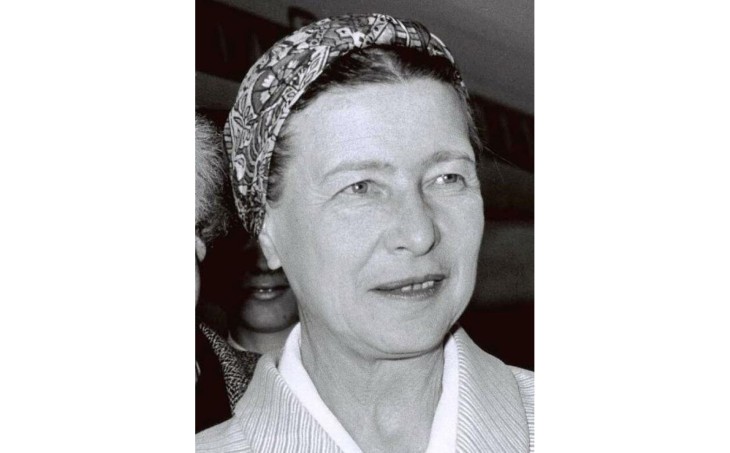
Simone de Beauvoir was born in Paris in 1908. A dazzlingly gifted student, she studied philosophy at the Sorbonne and, at just 21, became one of the youngest people ever to pass the fearsomely difficult national examination in philosophy. It was during her studies that she met the philosopher Jean-Paul Sartre, beginning a lifelong intellectual and personal partnership that would help shape the whole movement known as existentialism.
Their relationship was as unconventional as her thinking. The two never married and never shared a home, choosing instead to remain independent and devoted companions for more than fifty years, on terms they invented for themselves. It was a first, striking example of a principle that ran through her entire life: the refusal to simply accept the roles and expectations that society handed her.
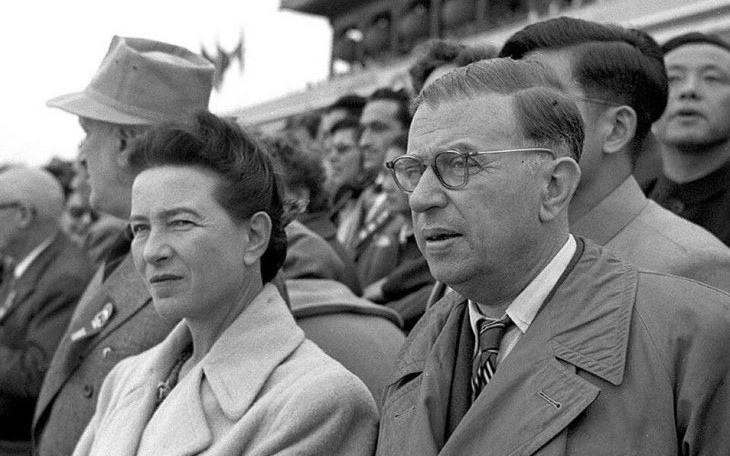
Simone de Beauvoir with Sartre in Beijing
Over her long career she became one of the defining writers of her century. Her 1949 book The Second Sex transformed how the world thought about women and is still read today. Her novel The Mandarins won France's most prestigious literary prize. She wrote acclaimed memoirs, novels, essays, and travel books. And though she often modestly declined to call herself a philosopher, she is now recognized as a profoundly original one. She died in 1986, having lived, by any measure, exactly the life she chose.
To understand her view of aging, it helps to grasp the one idea at the heart of everything she wrote. Beauvoir believed that human beings are not born with a fixed, finished nature. We are not simply "given," like a stone or a chair. Instead, we create ourselves, moment by moment, through the choices we make and the things we do. We are, in a word, free.
Her most famous line captures this perfectly. "One is not born, but rather becomes, a woman," she wrote, meaning that so much of who we are is shaped by our choices and our circumstances, not fixed at birth. And if we become ourselves through choosing, then the goal of a good life is what she called authenticity: to take hold of that freedom honestly, and to build a self and a life that are truly our own.
The opposite of this, she warned, is a kind of self-deception, hiding behind roles and excuses, telling ourselves "this is just how things are" or "this is simply what people like me do." To live authentically is to stop hiding, to own our freedom, and to keep actively shaping our lives rather than drifting along the path others expect of us.
In 1970, in her sixties, Beauvoir published a monumental study of old age. Just as she had once broken the silence around the lives of women, she now broke the silence around aging, and what she found made her angry.
Society, she argued, treats old age almost as a shameful secret. It pushes older people to the margins, quietly strips them of purpose and usefulness, and looks at them as somehow no longer fully themselves, as a different and lesser kind of person. She saw that much of the suffering of old age is not caused by the body at all, but by how cruelly a society chooses to treat its elders. She was naming ageism decades before the word was in common use, and anyone who has felt suddenly invisible or dismissed as they aged will recognize at once the truth of what she described.
It is a bracing, unflinching diagnosis. But it is only half of what she had to say, and the other half is where the hope lies.
Beauvoir's great insight was that the answer to a diminished old age is not to resign ourselves to it, but to keep on living with purpose. The one real solution, she wrote, so that later life does not become a hollow parody of what came before, is to go on pursuing ends and projects that give our existence meaning. She pointed to devotion to the people we love, to causes we believe in, and to work that engages us, whether creative, intellectual, or practical.
In other words, meaning in later life does not come from looking backward or waiting quietly for the end. It comes from continuing to reach outward and forward, toward goals and passions and people that matter to us. Remarkably, she even believed that old age holds the potential to bring us closer to an authentic life than any earlier stage, since by then we may be freer of the ambitions, appearances, and pressures that ruled our younger years, and freer to be who we truly are.
Beauvoir wrote in dense philosophical prose, but her ideas translate into a handful of clear, encouraging principles for living well in our later years. Here they are, with a few examples of what each can look like in practice:
History is full of people who prove her point. Anna Mary Robertson, better known as Grandma Moses, only took up painting in earnest in her late seventies, after arthritis made her beloved embroidery too painful, and went on to become one of America's most cherished artists, still at her easel at the age of 101. Laura Ingalls Wilder did not publish the first of her beloved novels until she was in her sixties. Their lives are exactly the argument Beauvoir was making: that the years ahead are not a slow fading, but fresh pages still waiting to be written.
Beauvoir did not merely theorize about all this. She lived it. She went on writing, thinking, traveling, and throwing herself into political and social causes right through her later decades, engaged with the world to the end and always on her own terms. Her life was itself the argument: that a person can keep creating meaning, keep choosing, and keep growing, at any age. Her gift to us is a rare combination of honesty and hope. She never pretended that aging is easy, and she was fierce about the ways society fails its elders. Yet her ultimate message is deeply empowering: growing older is not the end of our freedom, but can be one of its fullest expressions. We remain, to the very last, the authors of our own lives, free to pursue what gives us meaning and to become more truly ourselves. That is a philosophy worth carrying with us, at any age, and especially into the years so many others are too timid to face.