
Few names from the ancient world still carry the weight that Attila's does. More than fifteen centuries after his death, the very mention of him conjures images of thundering horsemen, burning cities, and an empire trembling before a single ruthless warlord. The Romans called him the Scourge of God, a punishment sent from the heavens for their sins. Yet behind the terrifying nickname was a real man, a shrewd politician and a gifted military commander who built one of the most feared empires of his age and very nearly brought Rome itself to its knees. Let us take a closer look at who Attila really was, separating the historical figure from the centuries of legend that grew up around him.
Who Were the Huns?
To understand Attila, we first need to understand the people he led. The Huns were a nomadic group who swept into Europe from the vast grasslands of Central Asia during the fourth century. Their exact origins remain a matter of scholarly debate, with some historians linking them to nomadic peoples who once threatened ancient China, though the connection is far from settled. What is certain is that they were superb horsemen and devastating archers, capable of firing arrows with deadly accuracy from the saddle at full gallop.
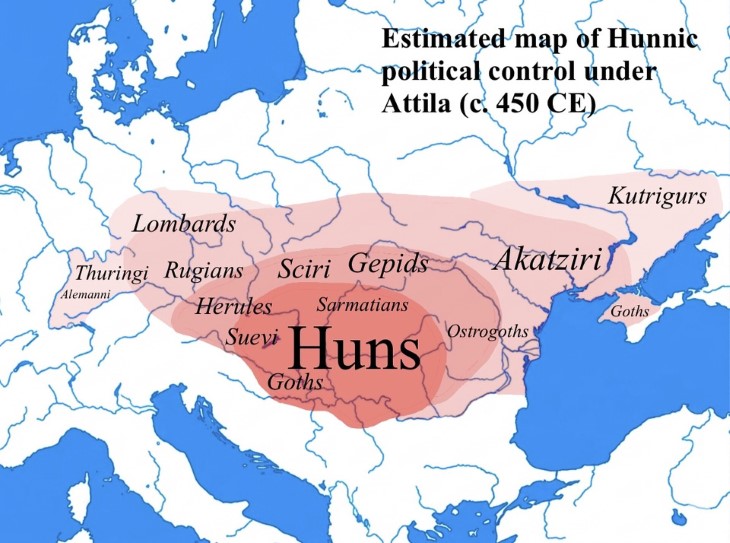
When the Huns arrived on the edges of Europe, they set off a chain reaction. Their advance pushed other tribes, such as the Goths, westward into Roman territory, contributing to the massive movements of peoples that would eventually help bring down the Western Roman Empire. By the time Attila came to power, the Huns had established themselves as a dominant force in the lands north of the Danube River, in what is roughly modern Hungary and the surrounding regions.
The Rise of Attila
Attila was born sometime around the year 406, into the ruling family of the Huns. His uncle Rugila led the Huns during Attila's youth, and when Rugila died around 434, power passed to Attila and his older brother Bleda, who ruled jointly. This shared kingship lasted for roughly a decade, and the brothers proved to be an aggressive partnership. Together they extracted enormous payments of gold from the Eastern Roman Empire in exchange for peace, and they expanded Hunnic influence across a huge swath of Europe.
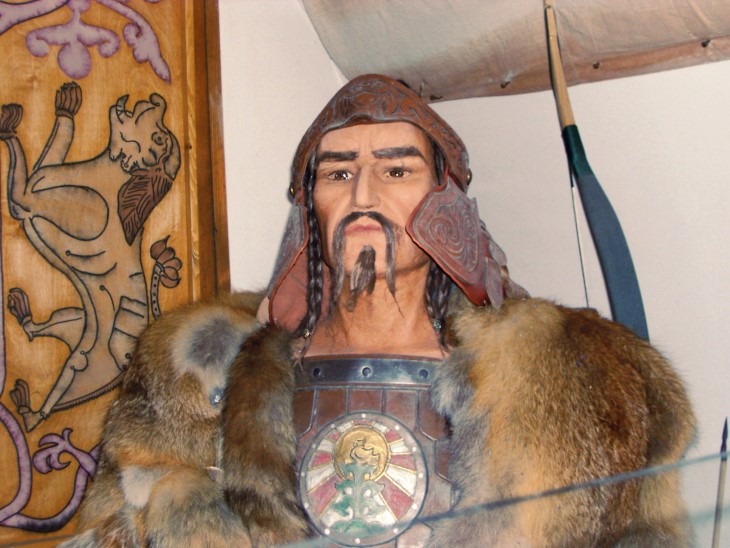
The joint rule came to an abrupt end around the year 445, when Bleda died. Many historians believe that Attila arranged his brother's death in order to rule alone, though we cannot be entirely certain of what happened. Whatever the truth, Attila emerged as the sole master of the Huns, and from that moment his ambitions grew bolder than ever. He now commanded an empire that stretched from the steppes of the east deep into central Europe, and he intended to use that power to dominate the Roman world.
A Master of War and Diplomacy
It would be a mistake to picture Attila as nothing more than a savage raider. He was, in fact, a sophisticated leader who understood the value of diplomacy, intimidation, and carefully calculated threats. He maintained a court that received envoys from across the known world, and we owe much of what we know about him to a Greek diplomat named Priscus, who visited Attila's camp and left behind a remarkable firsthand description.
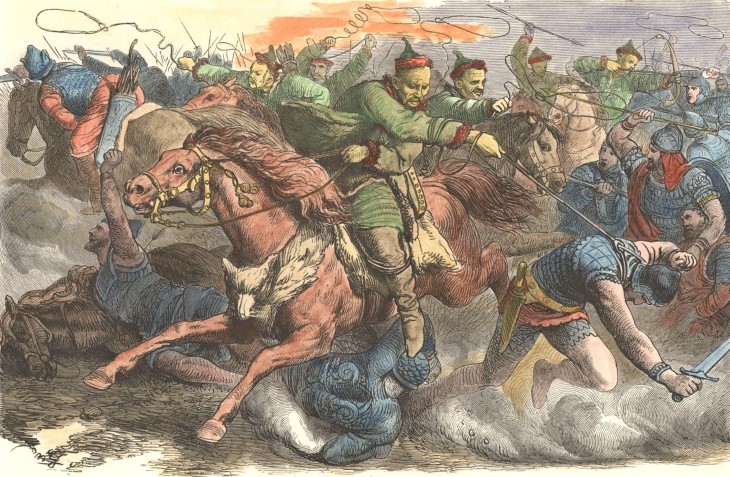
According to this account, Attila lived more simply than one might expect. While his followers feasted from silver and gold plates, Attila himself ate from a plain wooden plate and drank from a wooden cup, dressing without ornament even as those around him wore finery. He was described as a man of modest appearance, short and broad with a flat nose and a sparse beard, who walked with a proud bearing and carried himself with quiet authority. This blend of personal restraint and overwhelming power made him all the more formidable in the eyes of those who met him.
The Wars Against Rome
For years, Attila bled the Eastern Roman Empire dry through a combination of raids and extortion. He demanded ever larger tributes of gold, and when the emperors in Constantinople failed to pay or tried to negotiate, his armies descended on the Balkans, sacking cities and spreading terror. The Eastern Empire, exhausted and unable to defeat him in the field, often found it cheaper simply to pay him off.
Eventually Attila turned his gaze westward. In the year 451 he led a massive army into Gaul, the region we now know as France. His invasion sparked one of the most famous battles of the ancient world. A Roman general named Aetius assembled a grand coalition, uniting the forces of the Western Roman Empire with the Visigoths and other tribes who feared the Huns even more than they distrusted Rome. The two armies clashed at the Battle of the Catalaunian Plains, a brutal and bloody encounter that left thousands dead. Attila was checked, his advance halted, and he was forced to withdraw. It was a rare setback for the man who had seemed unstoppable, and it preserved Gaul from falling under Hunnic control.
The Invasion of Italy and the Famous Meeting
Undeterred by the reversal in Gaul, Attila invaded Italy itself the following year, in 452. His forces stormed into the northern part of the peninsula and destroyed the wealthy city of Aquileia so completely that it never fully recovered. Panic spread as the Huns pushed deeper, and it seemed that Rome itself might be next.
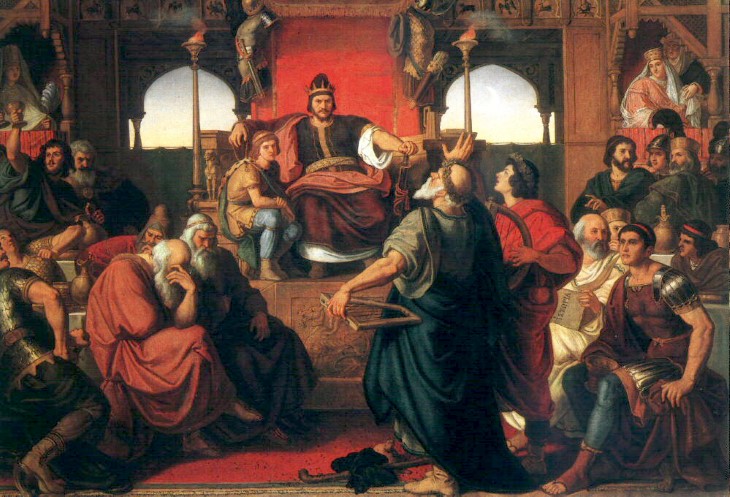
Then came one of the most legendary episodes in Attila's life. According to tradition, Pope Leo the First traveled north to meet Attila in person and persuaded him to spare the city and turn back. For centuries this meeting was celebrated as a miracle, the moment when faith turned away the sword. Historians today suspect the reality was more complicated. Attila's army was likely suffering from disease and hunger, supplies were running short, and reinforcements from the Eastern Empire were threatening his rear. Whatever the true reason, Attila withdrew from Italy, and Rome was spared.
A Sudden and Strange Death
Attila did not fall in battle, as one might expect of such a warrior. Instead, in the year 453, he died on his wedding night after marrying a young woman named Ildico. The accounts tell us that he had been celebrating heavily and suffered a severe nosebleed in his sleep, choking on his own blood. His followers were said to have mourned him in dramatic fashion, and legend claims he was buried in three coffins of iron, silver, and gold, with those who dug his grave killed afterward so that the location would remain forever secret.
His death proved to be the undoing of everything he had built. Without his iron will to hold the empire together, his sons quarreled over the inheritance, and the subject peoples rose in revolt. Within just a few years, the Hunnic Empire shattered and faded from history almost as quickly as it had risen.
The Darker Side of His Reign
It is important not to romanticize Attila. His campaigns brought immense suffering to ordinary people across Europe. Cities were burned, populations were enslaved, and entire regions were stripped of their wealth and left in ruins. His method of governing relied heavily on fear, plunder, and the threat of annihilation. The gold he extracted came at the cost of countless lives, and the destruction of places like Aquileia left scars that lasted for generations. To the people who lived through his invasions, he was not a colorful historical character but a genuine catastrophe.
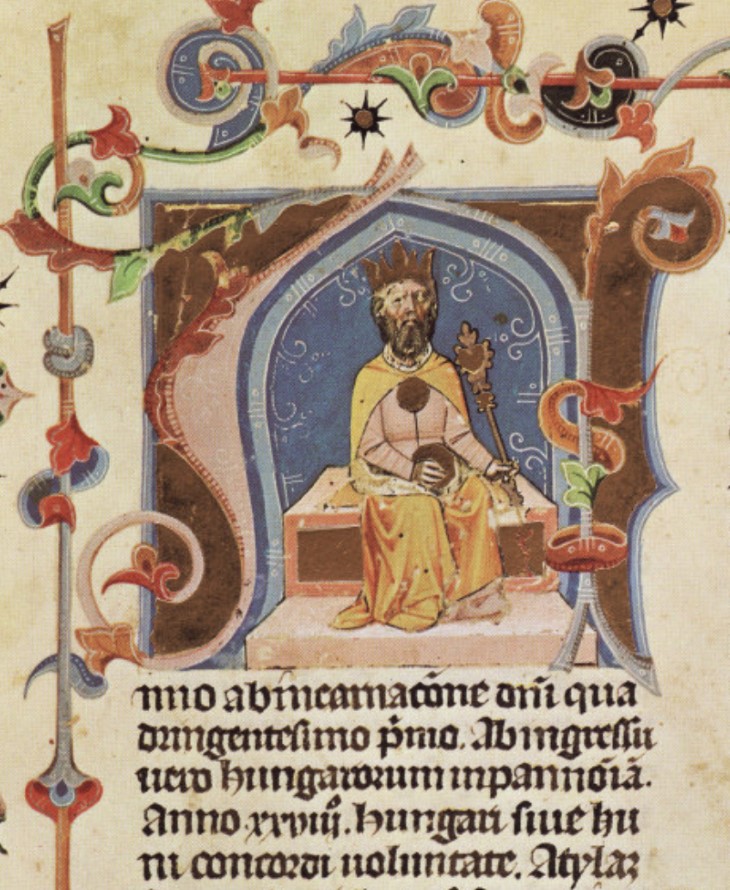
The Legacy of Attila the Hun
So how should we remember Attila the Hun? In Western memory, especially through Roman and later Christian sources, he became the ultimate symbol of barbarian menace, a figure of cruelty and chaos. Yet in other traditions his image is far more flattering. In Hungarian and certain other folk legends, he appears as a heroic and noble king, and the name Attila remains a popular and respected one in parts of Europe to this day.
What is undeniable is the scale of his impact. He accelerated the decline of the Western Roman Empire, reshaped the map of Europe through the great migrations his people set in motion, and left a mark on the imagination that has never faded. Writers, composers, and storytellers have returned to him again and again over the centuries, drawn to the drama of a man who rose from the steppes to make emperors tremble.
In the end, Attila was neither the cartoonish monster of legend nor the noble hero of folk tale. He was a brilliant and ruthless leader, a product of his violent age, who briefly held an enormous empire together through sheer force of personality and military genius. When he died, that empire died with him, but the legend of the Scourge of God lives on, as vivid and as fascinating as ever.