
Few countries on Earth carry as much history on their shoulders as Iran. For more than two and a half thousand years, the land we now call Iran has been home to mighty empires, brilliant poets, world-changing religions, and ordinary people living their lives between towering mountains and wide deserts. The story stretches from the dawn of recorded civilization all the way to today's headlines, and it is a story of remarkable highs, painful lows, and an identity that has somehow survived every conquest thrown at it. Let us take a journey through the long and fascinating past of this ancient land.
The Land Before Empire
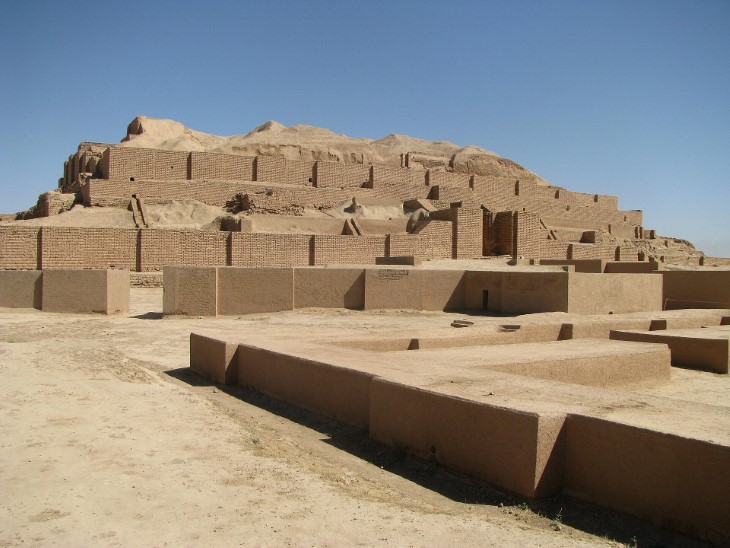
Long before there was a Persian Empire, the Iranian plateau was already buzzing with human activity. Some of the oldest farming villages in the world took root here, and by around 3000 BCE a sophisticated civilization called Elam had risen in the southwest, near the modern border with Iraq. The Elamites built cities, developed their own writing system, and traded with the great powers of Mesopotamia. They were neighbors and sometimes rivals of the Sumerians and Babylonians, and their culture lasted, in one form or another, for thousands of years.
Around 1500 BCE, a new group began arriving on the plateau. These were Indo-European peoples who spoke early forms of what would become the Persian language. Two of these groups, the Medes and the Persians, would go on to shape everything that followed. The Medes settled in the north and west, eventually forming a kingdom strong enough to help topple the feared Assyrian Empire. The Persians settled to the south, in a region the Greeks would later call Persis, which gave us the name Persia. For a long time the Persians lived in the shadow of the Medes, paying tribute and waiting. That arrangement was about to change in the most dramatic way imaginable.
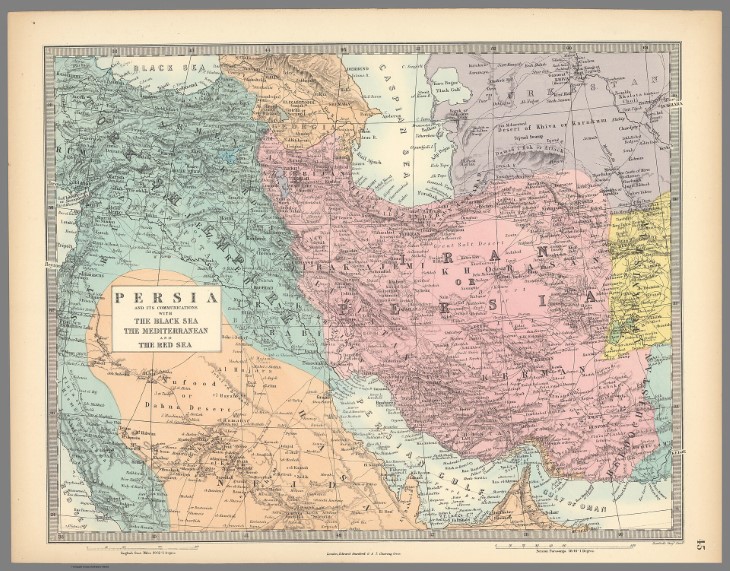
In the middle of the sixth century BCE, a Persian prince named Cyrus rose up against his Median overlords. Within a few short years he had not only defeated them but absorbed their kingdom into his own. He did not stop there. Cyrus went on to conquer the fabulously wealthy kingdom of Lydia in what is now Turkey, and then the legendary city of Babylon itself. By the time he was finished, Cyrus had built the largest empire the world had ever seen, stretching from the edges of India to the shores of the Mediterranean. This was the Achaemenid Empire, named after a distant royal ancestor, and it was something genuinely new in human history.
What made Cyrus remarkable was not only that he conquered so much, but how he chose to rule. Rather than crushing the peoples he defeated, he allowed them to keep their own customs, languages, and religions. When he took Babylon, he freed the Jewish people who had been held captive there and allowed them to return home and rebuild their temple in Jerusalem. A clay document known as the Cyrus Cylinder, which still survives today, records his policy of tolerance and is sometimes called one of the earliest declarations of human rights. For a conqueror, Cyrus left behind a reputation for mercy and wisdom that was almost unheard of in the ancient world.
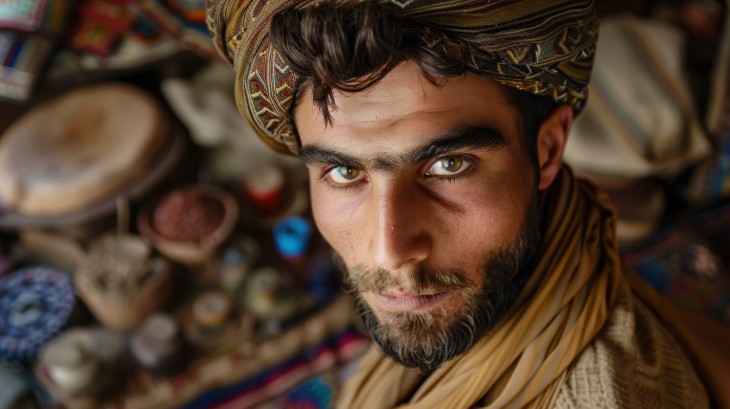
The empire reached its peak under later kings, especially Darius the Great and his son Xerxes. Darius organized the vast realm into provinces, built a network of roads that allowed messages to travel with astonishing speed, and constructed the magnificent ceremonial capital of Persepolis, whose ruins still take the breath away. At its height, the Achaemenid Empire may have governed close to half the people alive on the planet, an astonishing share of humanity ruled under one crown.
For all its grandeur, the Persian Empire is often remembered in the West for the wars it lost rather than the lands it won. In the early fifth century BCE, the Persians clashed with the small but fierce city-states of Greece. The battles of Marathon, Thermopylae, and Salamis became legends, and the Greeks managed to fend off the much larger Persian forces. These were dramatic events, though it is worth remembering that they took place at the far western edge of an empire that remained enormous and powerful for another century and a half.
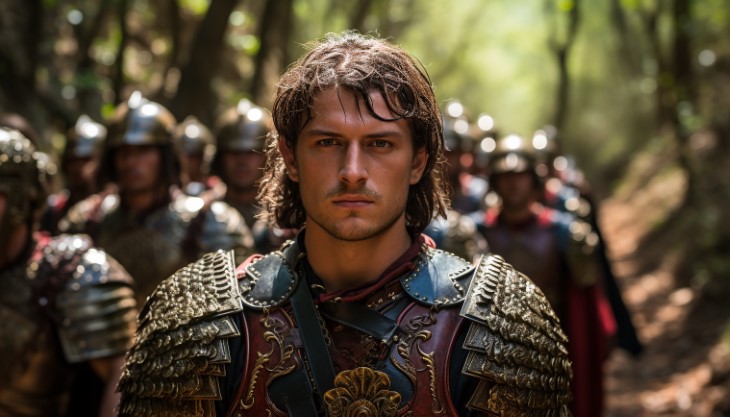
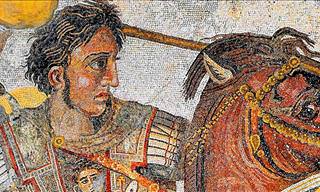
The real end came in 330 BCE, when a young Macedonian king named Alexander the Great swept across the empire with one of the finest armies the world had seen. He defeated the last Achaemenid ruler, Darius III, and in a moment that still stirs debate among historians, the great palace at Persepolis went up in flames. The Persian Empire had fallen, but Persian culture proved far harder to kill. After Alexander died young, his generals carved up his conquests, and the Iranian lands eventually came under a dynasty called the Seleucids.
Persian independence returned with the Parthians, a people from the northeast who built a new empire that lasted nearly five centuries. The Parthians were superb horsemen and archers, and they became the great rivals of the Roman Empire to the west. The two superpowers fought repeatedly, and the Parthians more than held their own, even handing Rome some of its most humiliating defeats. Through all of this, the threads of Persian identity, language, and tradition were carefully preserved.
In the year 224, a new dynasty overthrew the Parthians and ushered in what many consider the last great Persian empire of the ancient world. The Sasanian Empire was a deliberate revival of old Persian glory, and it lasted more than four hundred years. The Sasanians made Zoroastrianism, an ancient Persian faith centered on the struggle between light and darkness, the official religion of the state. They built grand cities, encouraged art and learning, and presided over a sophisticated society that influenced everything from architecture to clothing across the region.
For centuries the Sasanians were locked in a titanic struggle with the Roman and later Byzantine Empire. The two giants fought back and forth across the Middle East, gaining and losing the same territories again and again. By the early seventh century, both empires were exhausted, drained of soldiers and treasure by their endless wars. Neither one realized that a completely unexpected force was about to rise from the Arabian desert and change the entire region forever.
In the 630s, Arab armies inspired by the new religion of Islam burst out of Arabia with stunning speed. The weakened Sasanian Empire could not withstand them. After a series of decisive battles, the last Sasanian king was killed while fleeing, and by around 651 the empire that had stood for centuries was gone. Iran had been conquered, and over the following generations most of its people gradually adopted Islam, though the process was slow and never completely erased the older traditions.
Here is one of the most fascinating turns in the entire story. Although Iran was absorbed into a vast Arab caliphate, the Persians did not simply disappear into it. Instead, they transformed it. Persian administrators, scholars, and artists became the backbone of Islamic civilization. The Persian language survived and flourished, eventually written in a modified Arabic script. Persian ways of governing, Persian poetry, and Persian science all became central to the wider Muslim world. Far from being erased, Persian culture helped shape the golden age of Islam.
The centuries after the Islamic conquest produced an extraordinary flowering of Persian genius. In the great city of Baghdad and across the Iranian lands, scholars of Persian background made huge contributions to mathematics, astronomy, medicine, and philosophy. The very word algebra comes from the work of a scholar who lived and worked in this world. Persian physicians wrote medical encyclopedias that were studied in Europe for hundreds of years.
This was also the great age of Persian poetry, which remains beloved to this day. A poet named Ferdowsi spent roughly thirty years composing an enormous epic poem that retold the legends and history of the Persian kings, helping to preserve the national identity at a crucial moment. Later poets such as Rumi, Hafez, Saadi, and Omar Khayyam wrote verses of such beauty and depth that they are still quoted, translated, and treasured around the world today. For Iranians, these poets are not dusty figures from a textbook. They are living companions, recited at weddings, funerals, and quiet evenings at home.
Iran's location at the crossroads of Asia made it a tempting prize, and the centuries that followed brought wave after wave of invaders. Turkish dynasties, including the powerful Seljuks, ruled large parts of the region for generations. Then, in the early thirteenth century, came the most terrifying conquerors of all. The Mongols, led first by Genghis Khan and later by his grandson Hulagu, swept into Iran with overwhelming force. Cities were destroyed, irrigation systems that had taken centuries to build were wrecked, and the population in some areas dropped sharply.
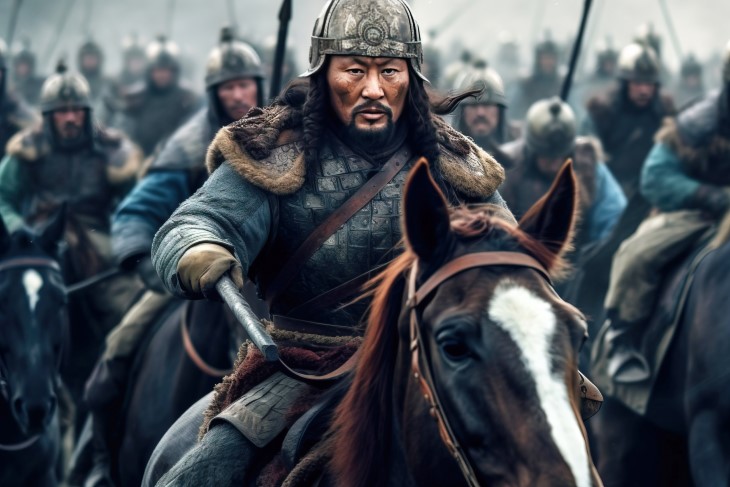
Yet even the Mongols, fierce as they were, eventually fell under the spell of Persian civilization. Their descendants who ruled Iran adopted Persian customs, sponsored Persian art and architecture, and converted to Islam. A later conqueror named Timur, known in the West as Tamerlane, brought another round of devastation, but he too patronized magnificent building and craftsmanship. Through all the destruction, Persian culture kept reasserting itself, absorbing the conquerors rather than being absorbed by them.
In the year 1501, a teenage leader named Ismail founded a dynasty that would define Iran's identity right up to the present day. The Safavids reunified the Iranian lands under a single Persian crown for the first time in centuries, and they made a momentous decision. They adopted Twelver Shia Islam as the official religion of the state and worked hard to convert the population to it. At the time, most of the surrounding Muslim world was Sunni, so this choice set Iran apart from its neighbors in a way that still shapes the region today. The deep Shia identity of modern Iran traces directly back to this period.
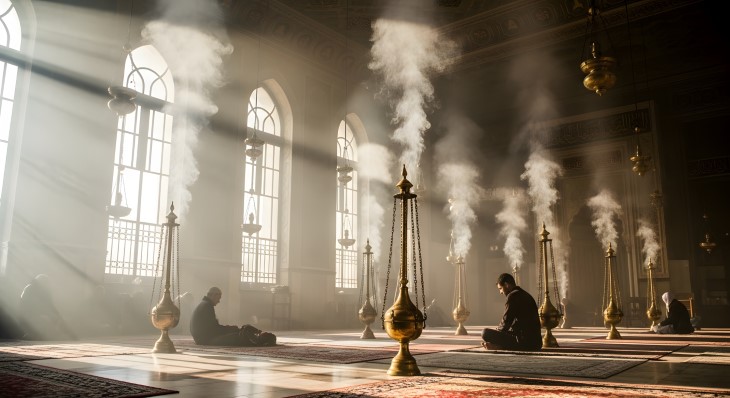
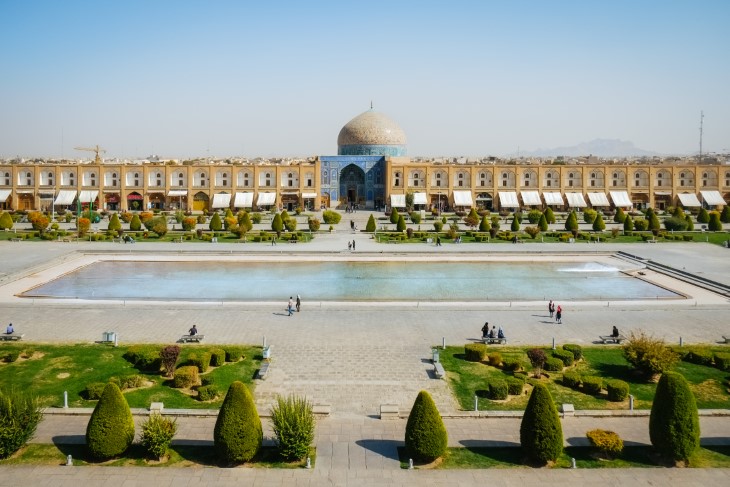
The Safavid era reached a glorious peak under Shah Abbas the Great around the turn of the seventeenth century. He moved the capital to the beautiful city of Isfahan and transformed it into one of the most stunning cities on Earth, filled with soaring mosques, elegant bridges, and a vast central square that still amazes visitors. The saying went that Isfahan was half the world. Persian carpets, miniature paintings, and tilework from this period are considered among the finest art ever produced anywhere. It was a confident, prosperous, and creative age.
The Safavid golden age did not last forever. After a period of instability, including the brilliant but brutal military campaigns of a conqueror named Nader Shah, a new dynasty called the Qajars took control in the late eighteenth century and ruled into the twentieth. The Qajar period was a difficult one. As the great European powers of Britain and Russia expanded their reach, Iran found itself squeezed between them. The country lost large territories in the Caucasus to Russia through a series of unfavorable wars and treaties, and foreign powers gained enormous influence over Iran's economy and resources.
By the early twentieth century, many Iranians were frustrated by weak and corrupt rule and by foreign meddling. This frustration boiled over into the Constitutional Revolution of 1906, when reformers forced the king to accept a constitution and a parliament. It was a landmark moment, one of the first such movements in the entire region, and it planted ideas about representative government and national sovereignty that would echo through the rest of the century. The revolution did not solve all of Iran's problems, but it showed that ordinary Iranians were no longer willing to be passive subjects.
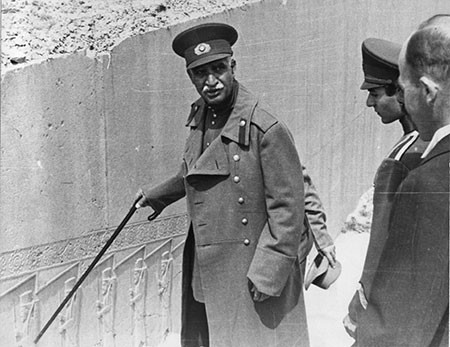
In 1925, a military officer named Reza Khan seized power and crowned himself shah, founding the Pahlavi dynasty. He was determined to drag Iran into the modern world as quickly as possible. He built roads and railways, established modern schools and a university, reformed the legal system, and pushed hard to reduce the influence of foreign powers and traditional clergy. He also changed the country's official name in international use from Persia to Iran, emphasizing the ancient Aryan and Persian roots of the nation.
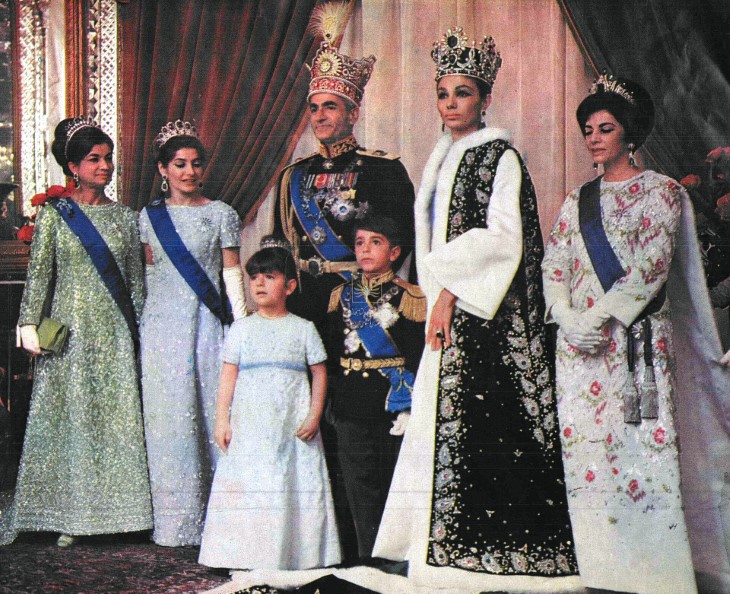
During the Second World War, the Allied powers, worried about his sympathies, forced Reza Shah from the throne and replaced him with his young son, Mohammad Reza Pahlavi. The new shah would rule for nearly four decades. A defining crisis came in the early 1950s, when a popular prime minister named Mohammad Mossadegh moved to take control of Iran's oil industry from foreign hands. In 1953, he was overthrown in a coup supported by foreign intelligence services, an event that left a deep and lasting bitterness among many Iranians who saw it as proof that outside powers would never let them control their own destiny.
The shah went on to pursue an ambitious program of modernization and land reform, sometimes called the White Revolution, funded by Iran's enormous oil wealth. Cities grew, women gained new rights and opportunities, and a modern middle class expanded. Yet the benefits were uneven, the gap between rich and poor remained wide, and the shah ruled with an increasingly heavy hand, relying on a feared secret police to silence opposition. Beneath the glittering surface, discontent was building among many different groups, from religious traditionalists to leftist students to ordinary people who felt left behind.
In 1979, that discontent erupted into one of the most consequential revolutions of the twentieth century. Millions of Iranians poured into the streets, united in their opposition to the shah even though they often wanted very different things for the future. At the center of the movement was an elderly religious leader named Ruhollah Khomeini, who had been exiled for years and who returned in triumph as the shah fled the country. Within months, the monarchy that had ruled Iran in one form or another for thousands of years was abolished, and Iran was declared an Islamic Republic.
The new system was unlike anything that had come before. It combined elected institutions, including a president and a parliament, with a powerful unelected religious leadership headed by a Supreme Leader who held ultimate authority over the state. Khomeini became the first to hold this position. The revolution dramatically reshaped daily life, law, and the country's relationship with the rest of the world. Relations with the United States collapsed almost immediately, especially after a group of students seized the American embassy in Tehran and held its staff hostage for more than a year.
The young republic was quickly tested by tragedy. In 1980, neighboring Iraq, led by Saddam Hussein, invaded Iran, hoping to take advantage of the chaos. The result was a brutal eight-year war that cost hundreds of thousands of lives on both sides and devastated cities and economies. Iranians of that generation still carry the memory of the sacrifices made during those years. The war finally ended in 1988 with the borders essentially unchanged, but the scars ran deep.
After Khomeini died in 1989, leadership passed to Ali Khamenei, who would hold the position of Supreme Leader for more than three decades. The years that followed saw Iran rebuild and modernize in many ways, with expanding universities, growing cities, and a young and increasingly educated population. At the same time, Iranian society often pulled in different directions, with periods of cautious reform alternating with periods of crackdown. Elections were real but tightly managed, and debates about how open or closed the country should be never went away.
In recent decades, Iran has frequently found itself at the center of international tension, especially over its nuclear program. Iran has long insisted that its nuclear work is peaceful, while many other governments have feared it could be used to build a weapon. In 2015, Iran reached a landmark agreement with world powers to limit its nuclear activities in exchange for relief from economic sanctions. That deal began to unravel a few years later when the United States withdrew from it, and the sanctions that followed put enormous strain on the Iranian economy.
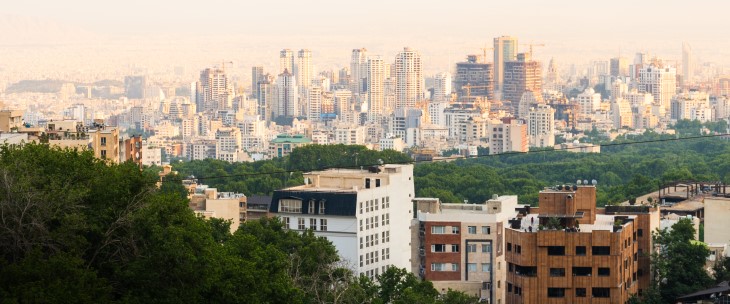
Inside the country, Iranians have repeatedly taken to the streets to demand change. There were large protests in 2009 over a disputed election, and further waves of demonstrations in the years since over economic hardship and social restrictions. A particularly powerful protest movement swept the country in 2022. Through it all, the gap between a young, connected, and often frustrated population and a conservative leadership has been one of the defining tensions of modern Iranian life.
The last few years have been especially turbulent. In 2024, after the sitting president died in a helicopter crash, Iranians elected Masoud Pezeshkian, a figure associated with the reformist camp who promised to ease tensions both at home and abroad. The following year brought open conflict. In June 2025, a roughly two-week war erupted in which Israel, later joined by the United States, struck Iranian nuclear sites and military targets, and Iran fired missiles in response before a ceasefire ended the fighting. The clash damaged parts of Iran's nuclear program and left the country in a weakened position.
The aftermath proved even more dramatic. Iran's currency collapsed, prices soared, and in late December 2025 large protests over the economy spread across all of the country's provinces. In early 2026, fighting flared once more, and in the course of it Iran's longtime Supreme Leader, Ali Khamenei, was killed. In March 2026, the country's Assembly of Experts selected his son, Mojtaba Khamenei, as the new Supreme Leader, while Pezeshkian remained president. A ceasefire was declared that spring, but the country entered a period of deep uncertainty, the most serious it had faced since the revolution itself. What comes next remains very much an open question.
Behind all these dramatic events are the people of Iran themselves, and their story is just as interesting. In the time of the ancient empires, the Iranian plateau supported a modest population by today's standards, though the empires as a whole ruled tens of millions across many lands. For most of history, Iran remained a largely rural country of farmers and herders, its numbers rising and falling with wars, droughts, and disease.
The real transformation came in the twentieth century. Iran's population was only around ten million or so at the start of the 1900s. By the time of the revolution in 1979 it had grown to roughly thirty seven million, and after the revolution the country experienced a remarkable baby boom. Then, in one of the most striking demographic shifts anywhere in the modern world, Iranian families began having far fewer children. Birth rates fell dramatically over just a couple of decades, the kind of change that took much longer in most other countries.
Today Iran is home to roughly ninety three million people, making it one of the most populous nations on Earth. It is a remarkably young country in spirit, with a large share of its people highly educated, deeply connected to the internet, and very aware of the wider world. The population is also wonderfully diverse. While ethnic Persians form the largest group, Iran is home to Azeris, Kurds, Arabs, Baluchis, and many others, each with their own language and traditions. Most Iranians are Shia Muslims, but there are Sunni communities as well as small populations of Christians, Jews, Zoroastrians, and others whose roots in this land stretch back thousands of years.
When you step back and look at the whole sweep of Iranian history, one quality stands out above all others. This is a civilization of extraordinary endurance. It has been conquered by Greeks, Arabs, Turks, and Mongols. It has seen empires rise to rule half the known world and then crumble into dust. It has weathered invasions, revolutions, and wars almost beyond counting. And yet through all of it, a distinct and proud Persian identity has survived, carried forward in language, poetry, art, faith, and the memory of a glorious past.
The Iran of today stands at another uncertain crossroads, as it has so many times before. Its people are heirs to one of the oldest continuous cultures on the planet, and whatever the future holds, that long inheritance is not likely to vanish. From Cyrus the Great freeing captives in Babylon to the poets whose verses are still recited in living rooms across the country, the threads that bind ancient Persia to modern Iran remain unbroken. It is a story thousands of years in the making, and it is far from over.