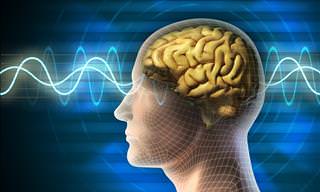

New experiments conducted on mice have indicated that restoring brain plasticity might hold the key to reversing age-related cognitive decline.
The experiments focused on inhibitory interneurons in the visual cortex. These sensory neurons have rarely been studied to date, however, they’re believed to be crucial to brain plasticity.
Mice at several key ages were used in the study, and this was important because the researchers wanted to track the decline in inhibitory brain cells as the mice aged. The research found that there was no significant age-related decline to speak of.
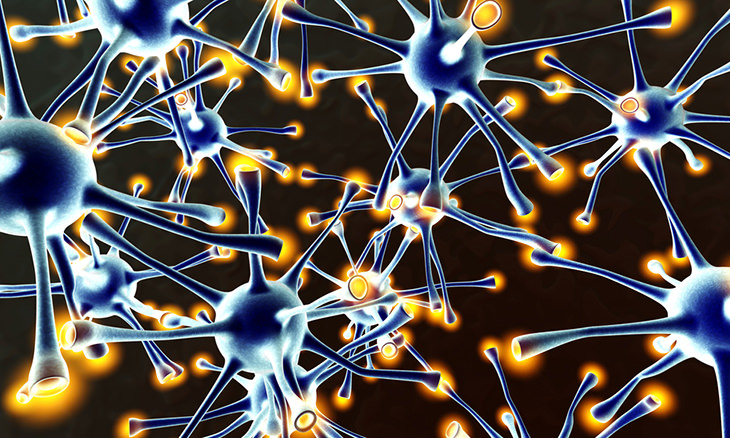
With that being said, the researchers did note a decline in several plasticity markers. The growth of dendrites, which are branches that connect neurons to each other, were observed to slow down progressively between the ages of three (when mice reach maturity) and 18 (when mice can be considered old) months. This is one of the key factors that prevents the brain from remodeling itself, thus reducing plasticity.
Another plasticity marker that was used for measurement is the stimulus-selective response potentiation. It essentially allowed the researchers to see how well the mice responded to visual stimuli, and they found that these responses declined with age. In fact, SRP measurements were solid for three months, but almost nonexistent by the time they reached nine months.
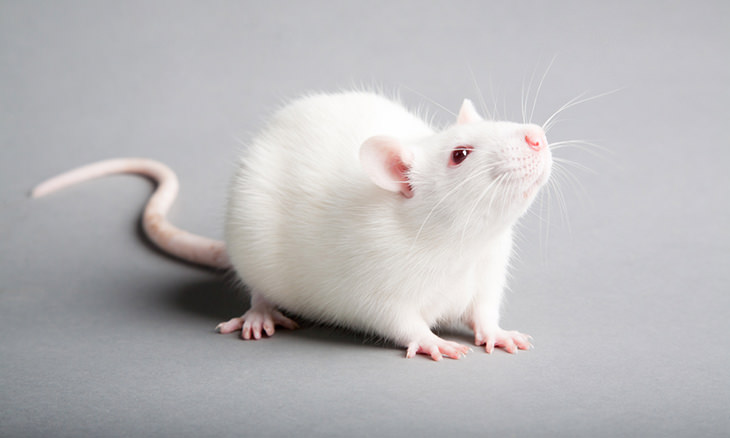
Last but not least, the researchers devoted the final part of the study to finding out whether plasticity reduction in the mice’s brains could be reversed. They used a drug called fluoxetine, which is more commonly known as Prozac, in three-month-old mice. They were treated with the drug for at least six months and displayed significant improvements in all plasticity markers.
"Our finding that fluoxetine treatment in aging mice can attenuate the concurrent age-related declines in interneuron structural and visual cortex functional plasticity suggests it could provide an important therapeutic approach towards mitigation of sensory and cognitive deficits associated with aging provided it is initiated before severe network deterioration," the researchers wrote.

Although the new hypothesis for normal age-related decline is compelling, using fluoxetine as a therapeutic agent isn’t especially practical. For instance, its side effects mean that it isn’t recommended for use by the elderly, and it would have to be administered at a young age, and for a very long time, for it to have any effect. The latter points are also based on the assumption that the drug’s effects on mice could be replicated in humans, which would take years of clinical trials to prove definitively.
Nevertheless, the study found that a decline in brain plasticity has the potential to be reversed, meaning that age-related cognitive decline we’ve come to accept as just part of getting older might actually be able to be managed in the future.
Images by Deposit Photos.

What is the Connection Between Dogs and a Long Life?
As if we need more proof that dogs are amazing, a new study confirms owning a dog is linked to living longer.
Forget Apples! It's an Egg a Day That Keeps the Doc Away!
According to new research, it could actually be an egg a day that keeps the doctor away.Find out more here!
Forget Apples! It's an Egg a Day That Keeps the Doc Away...
According to new research, it could actually be an egg a day that keeps the doctor away.Find out more here!
Marijuana Might Not Be As Harmless As Previously Thought..
Marijuana is being pushed as a harmless recreational drug around the world, but it might not be as harmless as previously thought thanks to this study.
Breakthrough Aging study: The Secrets of the "Super-Agers"
Age 80, Memory of a 50-Year-Old: Scientists Just Cracked the Secret of "SuperAgers"
Ancient People Knew About Astronomy Some 40,000 Years Ago!
A pair of British researchers recently decided to turn their attention to ancient art. What they found was remarkable - 40,000-year-old astronomical knowledge!
1:08
Boston Dynamics New Robot Can Move Almost Like a Human
Watch the latest in robotics in this video.
7:56
These 6 Chemical Reactions Changed the Course of History
Although we rarely pay much attention to the chemistry that constantly surrounds us, these 6 reactions changed history.
These Are the Miracles That Happen in Our Bodies Every Day
There is a lot that happens inside our bodies every single day. Did you know any of these facts?
Enjoy This Fascinating Collection of NASA's Best Photos
Here are 15 of NASA's most amazing recent pictures, along with brief explanations of exactly what is going on in each one.
Remembering the Life and Wisdom of Stephen Hawking
Stephen Hawking possessed one of the greatest minds the world has ever seen, but was also impaired by a debilitating disease. Here are his life ant times.

3:07
The Speed of Light Visualized in a Magnificent Video
Have you got the patience? Watch, in scale, just how long it takes light to travel from Earth to Mars
These Materials are Strange Enough to Boggle Your Mind...
There are some materials in this world that totally defy scientific convention. From metals that melt in your hand, to a solid lighter than air, take a look.
5:14
Earth 2125: A Vision of the Future of Our Planet
Exploring what Earth could look like in 2125 reveals exciting potential.
4:11
This Video Will Show You Where We Are in the Universe!
Whereย isย our galaxy in the known universe? This video will fly with you to ever-larger destinations, showing you our little planet's cosmic address from a very large viewpoint.
6:15
K2-18b: The Exoplanet That Might Host Alien Life
Astronomers have detected signs of posisble life in the atmosphere of exoplanet K2-18b.
12:34
The World You See Doesn't Really Exist...
his video reveals how your brain constructs reality instead of simply perceiving it.
2024's Biggest Breakthroughs in Science We Must Celebrate
These recent scientific breakthroughs could change the world.
Is Microsoft's "AI Doctor" Better Than a Real Doctor?
A new study presents a committee of digital doctors achieving approximately 80% accuracy in complex medical diagnoses โ far beyond the average of general practitioners.
I Never Knew These Stunning Facts About Our Universe
If you thought you understood the universe, you'll be completely floored by this insane facts.
Has Modern Technology Changed Our Cognitive Abilities?
Modern digital technology is everywhere and itโs changing how we think, how we behave and even how we feel about things.
Earth Is So Incredible: I Was Stunned by These 50 Facts
Here's a post that will explain to you just what's truly, scientifically amazing about our planet Earth. I'm gobsmacked.
38:55
What Happens the Deeper You Go Underground?
What happens when pressure pushes matter beyond the limits of what we thought possible?
21:51
What Will the Universe Look Like in 10 Quintillion Years?
These questions take us beyond science into the realm of imagination, as we contemplate the ultimate fate of our Universe and everything within it.
Whoa! Who Knew the Human Body Was Capable of So Much?
Have a look at these 17 intriguing facts about the human body that we can practically guarantee will leave you in awe.
4:45
Woah! Learning to Play Music Has This Effect on Your Brain
Learning how to play an instrument can do wonders for our brain...here's how!
2:03:03
Full Documentary: From First to Last Dinosaur
With stunning visuals and cutting-edge science, weโll bring their story to lifeโfrom their very first day to their last, a saga of survival, adaptation, and mystery.
9:54
Neo: The New Tele-Robot that "Cleans" Your Home
Neo is a new robot that has great capabilities and is designed to clean your home. Sounds perfect right? Well, there's a catch.
2:39
Discover 5 Cutting Edge Humanoid Robots in 2025
Watch the video to see which robots are leading the pack in intelligence, mobility, and impact.
9:03
24 Unbelievable Abilities Your Body Has
The human body is a complex and endlessly fascinating machine, and it might be even more sophisticated than you know...
21:25
How Every Nuclear Power Got Its Atomics
This video will explain how each nation earned the complex and controversial title of nuclear power.
Are You Ready to Learn About the Expanse of the Universe?
If you have an interest in the unknown, then look no further than these 15 unbelievably facts discovered about space
12 Steps That Help to Explain Einstein's Famous Theory
Have you ever wondered what Einstein's Theory of Relativity is all about? If you have, here is an easy-to-understand explanation!
Chronically Late? What Science Has to Say About You
There are 8 positive things that science says about late people that we all need to know.
TRIVIA: 25 Shocking Differences Between the Sexes
Did you know that there are some vast differences between the sexes? These 25 scientific facts will probably come as a big surprise to you, they did to me.
Hubble Telescope: 35 Years of Incredible Photos
Exploring 35 years of reality-changing, universe-enhancing photos that opened the sights of outer space to us all.
18:14
Are These Vintage Kitchen Gadgets Any Good?
Will any of the vintage kitchen gadgets stand the test of time or outperform their contemporary alternatives?
4:49
This Video Shows You a Different Way to Look at the World
Youโve heard of the fourth dimension but do you know what it is? This TED-Ed video helps uncover a bit of the mystery.
5 Puzzling Mysteries That Science Finally Managed to Solve
These weird occurrences have puzzled humanity for decades, if not centuries. Finally, scientists solved them & the solutions are exciting...
Chocolate Exposed! Here's What It Does to Your Brain!
Just what is it that makes chocolate so irresistible to so many people around the world? Find all of the answers in the article.
25 Pics Showing How People in the Past Imagined the Future
Letโs see how the people of the past imagined the future and find out if their fun predictions came true with these 25 vintage pictures
1:17
The Age of the Affordable Android Robots is Here...
Meet the Unitree R1 โ the game-changing humanoid robot that just shattered every price expectation in robotics.
How AI Is Fixing Problems Humans Struggle With
Hereโs how AI is quietly reshaping the world in ways that actually matter.
5:50
Why Do We Sometimes Hallucinate? Find Out Here!
In this informative TED-Ed video, Elizabeth Cox details the science of hallucinations.
New Research Shows Eating Sweets Won't Make You Crave More
A groundbreaking new study challenges conventional wisdom, suggesting our preference for sweet tastes may be more stable than we think.
20:32
History: Did the Trojan War REALLY Happen?
The Trojan War, the most famous of the ancient wars, fought by thousands of men for ten long years on the beaches of the famed city of Troy. Was all that real?
10:30
China's Crazy Plan to Dig a Canal in the Middle of EUROPE
China is setting out a plan to dig a canal through the middle of Europe in the nearest future, but why?
To enable your Ad-Free Subscription, please fill the fields below
Your subscription was successful, now you can enjoy an ad-free experience!! Note: To make sure you get no ads, please make sure to log in to your account. If you are logged in already, then refresh the page. The subscription can be cancelled at any time.