
Every night, while you are deep asleep and completely unaware of it, your brain runs a cleaning cycle. Fluid washes through the tissue, picks up the leftover debris of a day's thinking, and carries it out into the bloodstream so the liver and kidneys can dispose of it. Scientists believe this nightly rinse is one of the main reasons we need to sleep at all.
The trouble is that in people with Parkinson's disease, Alzheimer's disease and related conditions, this cleaning cycle does not run properly. Waste proteins build up. And now a team of researchers thinks they have found a way to switch the cleaning cycle on deliberately, in a person who is wide awake, using nothing more exotic than a mask and a controlled puff of carbon dioxide.
The Brain's Overnight Cleaning Crew
The system has a name: the glymphatic pathway. It works on a surprisingly mechanical principle. During deep sleep, the brain signals its blood vessels to widen and narrow in a slow, steady rhythm. That rhythmic squeezing acts like a pump. It pushes the cerebrospinal fluid that surrounds the brain deeper into the tissue, where it flushes through, collects waste, and then flows back out again carrying its cargo with it.
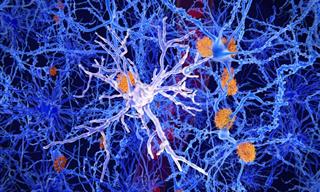
What gets carried away matters enormously. In Alzheimer's disease, the proteins that accumulate are amyloid beta and tau. In Parkinson's disease, it is alpha synuclein. Lewy body dementia involves a similar buildup. These are not exotic invaders; they are largely the ordinary waste products of busy brain cells. A healthy brain clears them out overnight. A struggling one does not.
A Vicious Circle That Feeds Itself
Here is where things get difficult. People with neurodegenerative conditions very often have disrupted sleep. And people with chronic sleep problems face a higher risk of developing neurodegenerative conditions. Each side of that equation makes the other worse.
If you cannot reach or hold deep sleep, the glymphatic pump never fully engages. Waste accumulates. As the disease progresses, sleep tends to get worse still. Patients can find themselves trapped in a loop that no amount of willpower can break.

Researchers had also noticed something specific about Parkinson's patients: their brain blood vessels respond sluggishly to changes in carbon dioxide. The vessels do not widen and narrow as readily as they should, which blunts the pumping action even when the person does manage to sleep.
The Idea Came from a Lesson About Head Injuries
The breakthrough started with something one of the researchers learned decades earlier as a medical student. Trainees were taught that when a patient arrives with a serious head injury, one emergency measure is to hyperventilate them. Rapid breathing lowers the carbon dioxide level in the blood, which causes the blood vessels in the brain to constrict, which lowers the pressure inside the skull and buys a few precious minutes.
That memory contained the key. If lowering carbon dioxide squeezes brain blood vessels shut, then raising it should open them up. And if you alternate the two, up and down, up and down, at the right tempo, you would be recreating exactly the pumping rhythm that drives the glymphatic system during deep sleep. No sleep required.
What the Researchers Actually Did

The team first needed to know the correct tempo. Using MRI brain scans, they studied 63 older adults, 30 of whom had Parkinson's disease and 33 of whom were healthy volunteers, to measure the natural rhythm at which brain vessels expand and contract during glymphatic clearance.
Then they tested whether they could reproduce it on demand. Participants breathed air containing a small amount of carbon dioxide, roughly 5 percent, for about 35 seconds at a stretch, alternating with ordinary room air. The technique has a technical name, intermittent hypercapnia, but in practice it looks like someone sitting quietly in a chair wearing a breathing mask.
The scans showed that the approach worked. In both the healthy volunteers and the Parkinson's patients, the alternating carbon dioxide triggered the vessel rhythm and moved cerebrospinal fluid into the brain tissue. The response was noticeably weaker in the Parkinson's group, which fits with what was already known about their blunted vascular reactions, but it was clearly there.
What Turned Up in the Bloodstream
The real test was whether anything actually came out of the brain. In a second, smaller experiment, a group of participants went through three ten minute sessions, about half an hour of treatment in total.
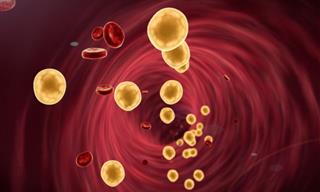
Afterward, blood tests showed higher levels of exactly the substances you would hope to see leaving: alpha synuclein, amyloid beta, phosphorylated tau, and other markers of brain cell activity and stress. The waste had moved out of the brain and into circulation, where the body could dispose of it. One participant who had signs of amyloid beta buildup showed a particularly strong rise after the sessions.
What struck the researchers most was how undramatic the whole thing was. A single half hour, with participants reporting no symptoms at all, was enough to shift measurable amounts of material out of the brain.
Why This Could Matter So Much
Compare it to what is currently available. The leading treatment for amyloid buildup in Alzheimer's disease uses monoclonal antibodies, which are engineered to target one particular type of protein fragment. Those drugs slow cognitive decline by somewhere between 27 and 32 percent over an 18 month period, which in practice means delaying the point at which someone needs memory care rather than stopping the disease. They are also expensive, require infusions, and carry real risks including brain swelling and bleeding.

The carbon dioxide approach, by contrast, appears to have very few side effects. Safety is built into the design: the concentration is low, and the person is breathing ordinary room air again every 35 seconds. It is also indiscriminate in a good way. Rather than targeting one protein, it flushes the whole system, which is why the researchers hope it might help across many different conditions rather than just one.
Building the Machine
A prototype device is now in development. Engineers are working on a control box that manages the timing of the gas delivery, and much of the design borrows from equipment that already exists, including breathing masks similar to those used with CPAP machines and gas delivery systems already installed in hospitals. There is no need to reinvent the basic hardware, only to control the rhythm precisely.
The first prototype is intended for further research rather than for home use. If the larger trials go well, the technology would then be licensed to companies capable of manufacturing and distributing it.
What We Still Do Not Know
This is early work, and it is worth being clear about the limits. The clearance experiment involved a small number of people. Nobody has yet shown that flushing these proteins out actually slows the progression of Parkinson's or Alzheimer's, or improves memory, movement or thinking. It is possible to move proteins around without changing the course of a disease.
Those are precisely the questions the next round of trials is designed to answer. Grant applications have been submitted for studies testing repeated sessions over longer periods, measuring effects on cognitive function, and working out practical details such as whether the time of day the treatment is given makes a difference.
Could Breathing Alone Do It?
There is one more thread worth watching. Slow, deep abdominal breathing naturally raises carbon dioxide levels in the blood. That raises an obvious question: could practices like yoga, tai chi and qigong, which all emphasize exactly that kind of breathing, produce some version of the same effect without any equipment at all?

The research team is actively investigating this, and has a second paper on the subject accepted for publication. It is far too early to promise anything. But it is a reminder that the mechanism at the heart of all this is not a drug or a machine. It is simply the rhythm of breathing, and the way it moves fluid through the tissue of the brain.
The researchers also see a longer term possibility beyond treating illness. If the technique proves safe and effective, a simple device might one day be used preventively, as a way of supporting brain health and reducing inflammation before problems ever begin.
The full study, titled "The influence of intermittent hypercapnia on cerebrospinal fluid flow and clearance in Parkinson's disease and healthy older adults," was published in npj Parkinson's Disease and can be read here