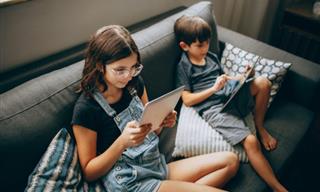

During the COVID-19 pandemic, millions of children went to school at a laptop. The results were measurable and grim. By the start of 2021–22, American students were about 4 months behind in math and 3 months behind in reading. In Poland, mathematics scores among secondary students dropped by a third of a standard deviation - more than a year's worth of education lost. These weren't just numbers: chronic absenteeism nearly doubled. Mental health suffered. Extracurricular activities disappeared entirely.
Now, as AI tutoring tools become cheaper and more personalized, a new question surfaces: Why bring kids back to school at all? AI can adapt to individual learning speeds. It never gets tired or frustrated. Chatbots can provide unlimited one-on-one tutoring at a fraction of a teacher's cost.
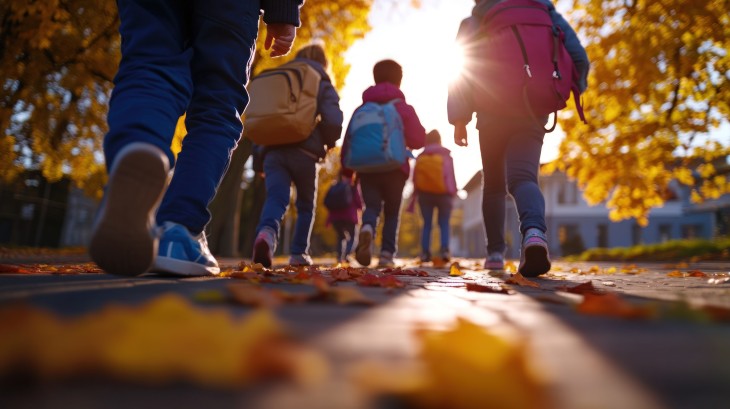
The answer, backed by research across education, neuroscience, and child development, is straightforward: AI is a supplement, not a substitute. For children under 16, traditional school does things that machines cannot - and the consequences of removing them are real and lasting.
Research from Harvard's Graduate School of Education found that while children showed comparable learning gains when interacting with AI versus humans, something critical was missing. Children engaged more deeply with humans. They steered conversations, asked follow-up questions, and shared their own thoughts - all markers of language development that AI still cannot fully prompt.
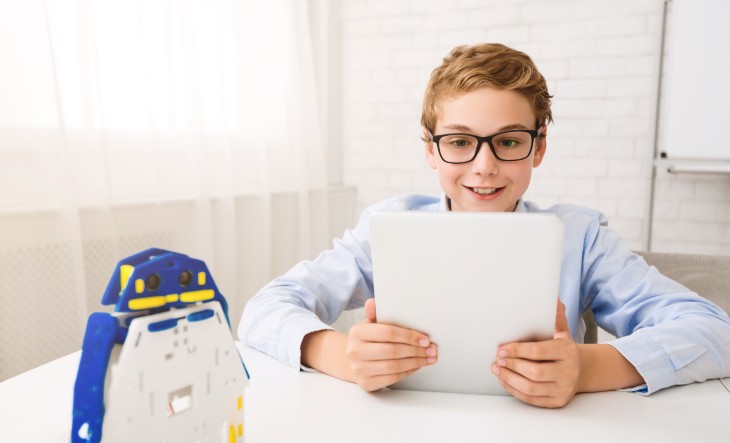
The difference matters more than it sounds. During video-based learning, the brain works harder to restore synchrony when there are minor delays. Facial expressions, body language, and the unpredictable turns of real conversation require the social processing that shapes a child's developing brain. Remote learning lowered work engagement, satisfaction, and responsiveness, while increasing depression and anxiety among students.
This isn't theoretical. When extracirricular activities disappeared during lockdowns, students lost an outlet to develop talents, manage stress, and connect with peers. Social-emotional learning - the ability to recognize emotions, manage them, and work with others - is foundational to academic success across life. A classroom provides something a chatbot never will: daily practice in navigating real social complexity.
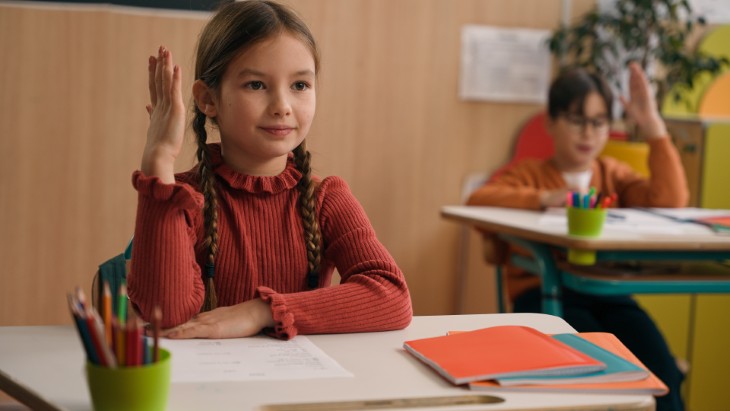
Teachers who use robots in education report that robots pose little threat to social-emotional development when deployed carefully. But the critical word is "carefully" - when robots are introduced more regularly and daily without human teacher involvement, new risks emerge. Traditional schools solve this automatically: they pair learning with constant human presence.
Research consistently shows that students engaged in hands-on learning are 1.5 times more likely to succeed in the classroom. The mechanism is neurological. When children build something, run an experiment, create art, or solve a physical puzzle, they engage a fourth learning style - kinesthetic - that classroom screens cannot replicate.
Consider a child learning about electricity. An AI tutoring app can explain circuits with perfect clarity. But when that same child physically builds a circuit with a battery, wire, and LED, something different happens in the brain. They experience failure in real time. They adjust. They see immediate results. This cycle of trial, reflection, and adjustment is where deep learning lives.
This matters especially for retention. Montessori students, who learn through hands-on engagement with materials, outperformed peers from traditional schools in academic outcomes, creativity skills, and self-reported well-being. These weren't wealthy private schools versus public ones - the comparison controlled for socioeconomic status. The difference was tactile, embodied learning.
AI can personalize what is learned. It cannot personalize how hands-on exploration feels. The physical effort of building, the frustration of problems that won't solve, the pride of completing something real - these are the scaffolding that motivation is built on.
One of AI's strengths is also its limitation: it provides answers. A child can ask a chatbot anything and receive a coherent, often correct response. But learning to think critically means learning to sit with uncertainty, to generate multiple solutions, to defend an argument against someone who disagrees.
Classroom learning prioritizes "depth over completion" - sustained, meaningful interaction where complexity is gradually introduced. A teacher asks a follow-up question that reframes the problem. A classmate proposes a solution the student didn't consider. These moments of productive friction are where critical thinking develops.
Students who engage in hands-on problem-solving are more likely to "think outside the box" and solve problems with greater innovation. In a school setting, a child might build a structure with limited materials and discover that their first idea won't work. They must iterate. They must explain their reasoning to others. They must argue why their approach is better than alternatives. AI can assist in this process, but it cannot replace the social negotiation that makes the thinking critical.
Research on early childhood education shows that younger children benefit from creative pedagogies - storytelling, robotics, hands-on discovery - that engage imagination. Older school students benefit from frameworks that encourage problem-solving in real-world contexts, allowing them to explore the societal and ethical impacts of ideas in their daily life. Neither is something a personalized AI app can provide in isolation.
AI accessibility tools help students with visual or hearing impairments convert content into usable formats. AI can identify learning gaps in real time, allowing teachers to address them before they compound. For students who need extra one-on-one time, tools like Brighterly math tutors show what that looks like in practice — a real tutor for the explanation, AI-supported practice for the repetition a single teacher managing 30 students can't provide alone.
School functions as a forcing mechanism. A child who might otherwise drift gets delivered to a room with 20 peers and an adult who is accountable for their progress. This matters more than it appears, especially for vulnerable children.
During remote learning, chronic absenteeism nearly doubled. Students who fall behind socioeconomically - those without quiet spaces, internet reliability, or parental supervision - fell further behind. The most vulnerable children were hit hardest by school closures, widening existing inequalities.
AI tutoring companies operate with a free-market model: a child engages only if a parent signs them up and pays, or if a school deliberately integrates the tool. By contrast, school attendance is not optional. This matters when we're talking about children whose parents are working two jobs or managing their own crises. School is the place where a teacher might notice a child is malnourished, withdrawn, or being hurt. It's where accountability is structural, not dependent on parental initiative.
This isn't an argument against AI in education. The evidence supports limited, teacher-supervised integration. Teachers who use AI to automate grading and lesson planning save an average of 6 hours per week - 39 days over a full school year. That time can be redirected to teaching, not administration.
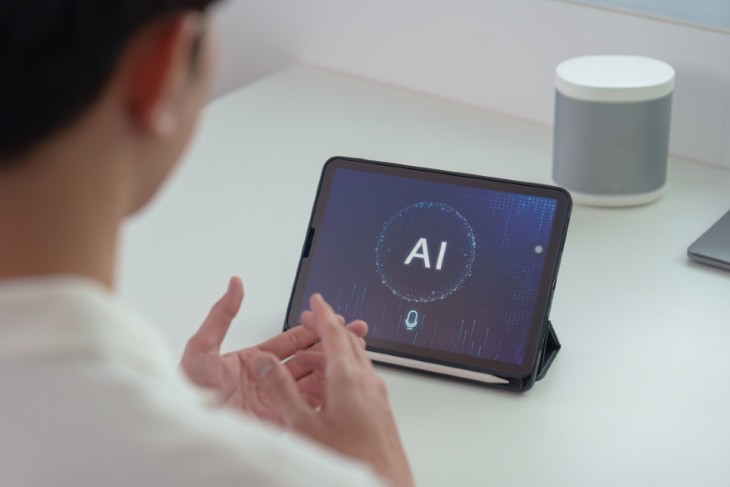
AI accessibility tools help students with visual or hearing impairments convert content into usable formats. AI can identify learning gaps in real time, allowing teachers to address them before they compound. For students with dyslexia or learning disabilities, AI-powered adaptive instruction can provide personalized scaffolding that a single teacher managing 30 students cannot.
In places where school access is impossible - like Afghanistan, where the Taliban barred girls from postprimary education - AI has digitized curricula and delivered lessons via WhatsApp. That's not a weakness of AI. That's the world recognizing that some education is better than none, and technology can fill certain gaps.
But these are gaps. They're not the full landscape of learning.
Recent comprehensive reviews, including research from Brookings Institution involving focus groups and interviews with students, parents, and educators across 50 countries, concluded that while AI has potential in education, it should supplement, not replace, traditional teaching. The research emphasizes that AI technologies should enhance foundational educational elements like phonetics and mathematics, not substitute for human instruction and hands-on engagement.

The evidence is clear: AI cannot fully replicate the learning gains from human conversations. It cannot provide the hands-on, embodied experiences that build retention and creativity. It cannot replace the social scaffolding that develops emotional regulation and peer relationships. It cannot guarantee that vulnerable children stay enrolled.
The question isn't "School or AI?" It's "How do we use AI to make school better?"
Teachers using AI can identify which students need extra support before they fall behind. Personalized exercises can free up classroom time for hands-on projects and discussion. Translation tools can break language barriers. Accessibility tools can open doors for students with disabilities. Time saved on administrative tasks can be redirected to mentorship and relationship-building, which research confirms are irreplaceable.
For children under 16, the goal is not maximum personalization or lowest cost. It's maximum development - academic, social, emotional, and physical. School provides structure, community, hands-on learning, and human accountability. AI provides scalability, personalization, and accessibility.
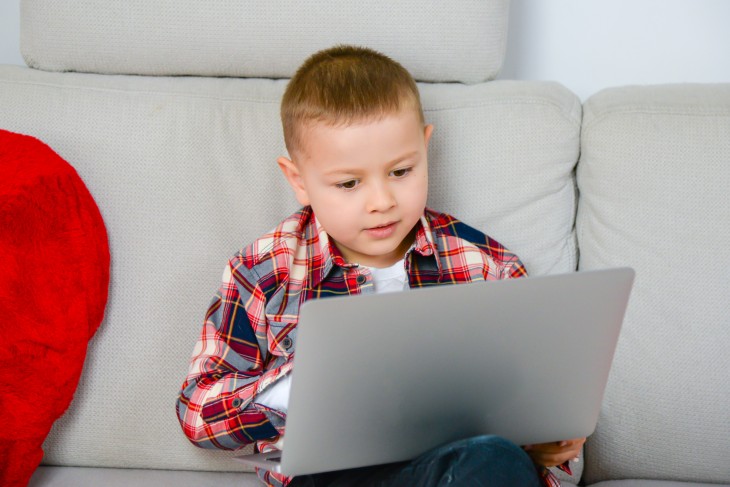
The pandemic taught us what education looks like without schools. Students fell behind in core subjects. Mental health suffered. Community fractured. The most vulnerable were hit hardest. These weren't failures of remote learning's technology. They were failures of technology deployed without the human infrastructure that makes development possible.
Children need both: the structure and community of school, paired with AI tools that make teaching more effective and learning more personalized. Neither replaces the other. The evidence is not speculative. It's already written in the learning losses that schools are still working to recover from.