
A team of researchers from the university of Boston have reported their results to the New England Journal of Medicine, in which a new clinical trial successfully tested an artificial pancreas.
This test involved using a device implanted in type 1 diabetes patients that received both insulin and Glucagon (a hormone that elevates the blood sugar levels). To their delight, the device passed their expectations for its ability to automatically regulate blood sugar levels (preventing the 'sugar dump'), while also adjusting for both adults and teens, who require a larger amount of insulin.
"There is no treatment today capable of giving the results we've seen," says Dr. Edward Damiano of the University of Boston's Bio-Medical school of Engineering, and Head Researcher.
Protecting diabetes patients during the night
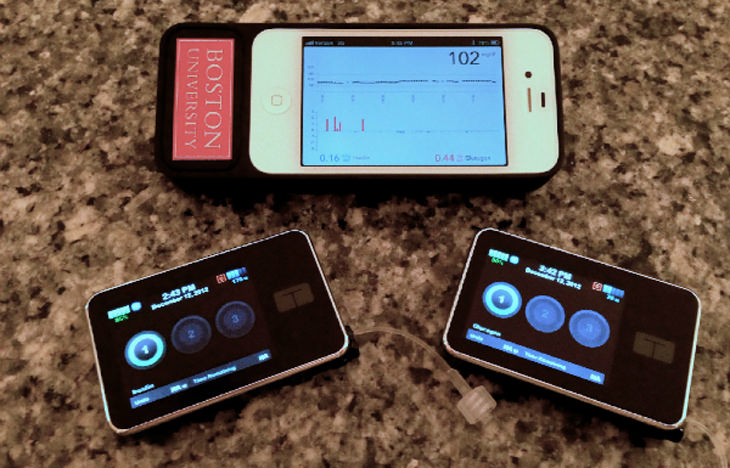
Ed has a personal stake in this. His 15-year-old son, David, has type 1 diabetes, and often his blood sugar drops in the middle of the night while sleeping, which can be deadly. This is why he and a colleague developed the 'bionic pancreas'. The device uses a sensor, an iPhone app and a special pump to deliver two materials: insulin, to lower blood sugar levels; and glucagon, which raises it. The pump, according to Damiano, works 24/7. "This is a relentless device, it doesn't take a vacation, it never goes to sleep," he adds.
Watch a video about the Bionic Pancreas' creation:
Protecting diabetes patients during the night
Ed has a personal stake in this. His 15-year-old son, David, has type 1 diabetes, and often has blood sugar drops, in the middle of the night while sleeping, which can be deadly. This is why he and a colleague developed the 'bionic pancreas'. The device uses a sensor, an iPhone app and a special pump to deliver one of two materials: Insulin, to lower the blood sugar levels, and glucagon, which raises it. The pump, according to Damiano, works 24/7. "This is a relentless device, it doesn't take a vacation, it never goes to sleep," he adds.
Ariana Koster has had type 1 diabetes since she was 11, and she is now getting outfitted for a bionic pancreas for the next phase of testing. "Just not having to worry about diabetes during the night is going to feel wonderful," she says.
Phase two of the test began yesterday and will take a year to complete. If all goes well, the device will be available to the public within 4 years. As for type II diabetes, the researchers believe it's definitely possible that it will help them as well, something they hope to look into during this year of testing.
Three parts
The bionic pancreas is made of three parts: two pumps, about cellphone size, that pump insulin and glucagon by need, and an iPhone wired to continuously monitor glucose levels. The components can be kept in a pocket or a fanny pack, and connect with three little needles that go under the skin, usually in the area of the belly.
The main advantage of the device, say the researchers, is its ability to free the patient from worrying about their disease all the time, and especially going to sleep without knowing if their blood sugar levels will drop to dangerous lows during the night.

Ariana Koster has had type 1 diabetes since she was 11, and she is now getting outfitted for a bionic pancreas for the next phase of testing. "Just not having to worry about diabetes during the night is going to feel wonderful," she says.
Phase two of the test began yesterday and will take a year to complete. If all goes well, the device will be available to the public within 4 years. As for type 2 diabetes, the researchers believe it's definitely possible that it will help them as well, something they hope to look into during this year of testing.
Three parts
The bionic pancreas is made of three parts: two pumps, about cellphone size, that pump insulin and glucagon by need, and an iPhone wired to continuously monitor glucose levels. The components can be kept in a pocket or a fanny-pack, and connect with three little needles that go under the skin, usually in the area of the belly.
The main advantage of the device, say the researchers, is its ability to free the patient from worrying about their disease all the time, and especially going to sleep without knowing if their blood sugar levels will drop to dangerous lows during the night.

The Whole Truth About GLP-1 Drugs for Heart and Brain
GLP-1 medications, widely prescribed for weight loss, show promise in improving brain and heart health, but may pose risks to the kidneys, pancreas, and gastrointestinal (GI) system.
The Musical Test That Could Detect Dementia Early
Researchers have developed a promising new approach: using music to detect the early signs of cognitive decline.
New Blood Test Screens for 20 Cancers With 99.4% Accuracy
Cancer detection may soon become much easier, as a new blood test has been developed that can accurately detect cancer 99.4% of the time
5 Fascinating Health Studies You May Have Missed!
Five medical studies that you may have missed, but may interest you...
Are Facial Cues Enough to Recognize Sickness in Others?
A recent study tried to find out if humans can pick out sick individuals correctly based on appearance only.
This New Blood Pressure Drug Could Be a Game-Changer
Zilebesiran, an investigational drug that is showing profound success in late-stage clinical trials is offering hope for millions who struggle to keep their blood pressure in check.
8:12
How Humans Helped Cats Take Over the World
The relationship between humans and cats goes back as far as 9,500 years. How did it al start? And how did humans help cats essentially take over the world?
10:31
Science Predicts These 10 Technologies Will Rule 2025
These upcoming tech innovations will reshape our world.
1:17
The Age of the Affordable Android Robots is Here...
Meet the Unitree R1 โ the game-changing humanoid robot that just shattered every price expectation in robotics.
10:59
Fascinating Science: How Sand is Turned Into Glass
Have you ever looked through a window and wondered how it was made from simple beach sand? This video shows you that incredible process.
10:30
China's Crazy Plan to Dig a Canal in the Middle of EUROPE
China is setting out a plan to dig a canal through the middle of Europe in the nearest future, but why?
Will We Ever Solve Our Universe's Most Complex Mysteries?
Here are 8 of the biggest unsolved mysteries from the world of physics.
3:02:59
Like Science Mysteries? Enjoy This Giant Compilation!
In this video, we unravel the greatest unsolved mysteries of physics.
12:34
The World You See Doesn't Really Exist...
his video reveals how your brain constructs reality instead of simply perceiving it.
21:24
James Webb Telescope: Redefining Our View of Space
Here's a brief look at all the amazing discoveries made by the James Webb Space Telescope so far.
50:02
Take a Trip Through the Universe and Witness its Beauty
Since its launch, the Hubble Telescope returned images of unprecedented beauty of a dynamic and changing universe. Take a look!
9:13
Want to Travel Quickly Through Space? Try Using a Wormhole
If you want to know what a wormhole is and how it is supposed to work, then you've come to the right place!
25 Pics Showing How People in the Past Imagined the Future
Letโs see how the people of the past imagined the future and find out if their fun predictions came true with these 25 vintage pictures
These Are the Miracles That Happen in Our Bodies Every Day
There is a lot that happens inside our bodies every single day. Did you know any of these facts?
4:51
Watch These Chinese Robots Amaze the World
In this video, you're going to see just how far these robots can go, as they've been programmed with some truly amazing dance moves,
14 Times Nature Inspired Groundbreaking Technology
Letโs explore 14 remarkable examples of how nature has shaped modern technology.
Science in 2025: 8 Developments That Could Change it All
Here are some of the most exciting trends in science and healthcare to keep an eye on.
3:07
The Speed of Light Visualized in a Magnificent Video
Have you got the patience? Watch, in scale, just how long it takes light to travel from Earth to Mars
4:01
What Lies Within the Planet's Deepest Hole? Find Out Here
Learn all aboutย Russia's Kola Superdeep Borehole, which at a depth of around 12km, makes it the deepest hole that mankind has ever dug into our planet.
21:51
What Will the Universe Look Like in 10 Quintillion Years?
These questions take us beyond science into the realm of imagination, as we contemplate the ultimate fate of our Universe and everything within it.
4:52
Neon Lights: a Beautiful Union of Science and Art
Neon signs are a beautiful blend or artistry and science, and knowing the history and the science behind them make them even more exciting
5:50
Why Do We Sometimes Hallucinate? Find Out Here!
In this informative TED-Ed video, Elizabeth Cox details the science of hallucinations.
15:34
This Stunning Video Visualizes the Size of the Universe
This video visualizes the number of galaxies in the world, giving you a look into the true size of our enormous universe.
Find Out How Some Elderly People Stay Sharp into Old Age
Some old people have better memories than people half their age. This could be the reason why...
4:11
This Video Will Show You Where We Are in the Universe!
Whereย isย our galaxy in the known universe? This video will fly with you to ever-larger destinations, showing you our little planet's cosmic address from a very large viewpoint.
I Never Knew These Stunning Facts About Our Universe
If you thought you understood the universe, you'll be completely floored by this insane facts.
10:11
10 Smart Home Gadgets You Didnโt Know You Needed
If youโve ever wanted a smarter, more efficient home, these 10 gadgets might be exactly what you need.
TRIVIA: 25 Shocking Differences Between the Sexes
Did you know that there are some vast differences between the sexes? These 25 scientific facts will probably come as a big surprise to you, they did to me.
4:49
This Video Shows You a Different Way to Look at the World
Youโve heard of the fourth dimension but do you know what it is? This TED-Ed video helps uncover a bit of the mystery.
1:08
Boston Dynamics New Robot Can Move Almost Like a Human
Watch the latest in robotics in this video.
22:52
Will AI Take Your Jobs? An Expert Explains the Future
Gonzaga University's AI professor Graham Morehead some of our most pertinent questions related to AI.
Why It's So Hard to Get People to Change Their Stance
You feel that your knowledge is broader because you've read and researched a lot on the topic, but the other side still isn't convinced, even when you present facts and statistics. Why isn't that enough?
8 Important Inventions That Were a Complete Accident
It might be interesting for you to learn that some very important scientific innovations were born as a result of an accident.
Has Modern Technology Changed Our Cognitive Abilities?
Modern digital technology is everywhere and itโs changing how we think, how we behave and even how we feel about things.
13:55
WATCH: What Is the Fingerprint of God's Creation?
The golden pattern, describes the mathematical code of the universe. Is this the scientific evidence of God's will and plan?
11:05
Science: Can AI Preserve Our Most Precious Memories?
Technologist Pau Aleikum Garcia talks about synthetic memories.
12 Steps That Help to Explain Einstein's Famous Theory
Have you ever wondered what Einstein's Theory of Relativity is all about? If you have, here is an easy-to-understand explanation!
What is the Troxler Effect and How Does it Affect You?
Learn about Troxler's effect and the optical illusions it creates in life.
16:26
Neanderthals Had Strength and Skills Beyond Our Limits
Neanderthals possessed truly exceptional, almost unbelievable, traits.
11:43
Learn While Laughing: The Incredible Tardigrade
If you love nature and you love laughing, this incredible series of nature videos are a great way to spend a few minutes.
12 Earliest Versions of Tech Inventions We Use Every Day
Witness the evolution of 11 popular devices we use all the time by looking at how they all started...
The 12 Game-Changing Inventions From 2024 You Missed
2024 was a ground-breaking year in terms of innovation. Here's a look at some of the key breakthroughs from the year.
To enable your Ad-Free Subscription, please fill the fields below
Your subscription was successful, now you can enjoy an ad-free experience!! Note: To make sure you get no ads, please make sure to log in to your account. If you are logged in already, then refresh the page. The subscription can be cancelled at any time.