Human beings are geared towards learning. We pick up information from all over the place, using our senses and our understanding to improve and better ourselves. Yet, people learn in different ways. Take our color test to find out whether you are a kinesthetic, auditory, reading/writing, or visual learner. Once you’ve got your result you’ll better understand how to improve your learning rate!
Choose a section of the image
Choose a sunset
Select a flower
Choose a feather
Select one color of paint
Depositphotos
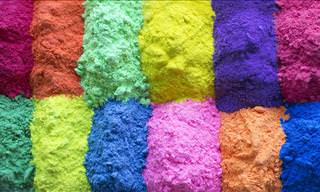
Choose one part from this image
Depositphotos
Select one ink color
Which part of the image most appeals to you?
Kinesthetic Learner
You are a "tactile" learner who needs to be in motion to truly understand. You learn by doing, touching, and experiencing things firsthand. Sitting still for a long lecture can feel like a chore because your brain craves physical engagement. You excel in labs, workshops, or any environment where you can use your hands. To improve your learning rate, try to incorporate movement into your study routine—like pacing while reciting facts—or use real-life examples and case studies to make abstract ideas feel more concrete. For you, practice doesn't just make perfect; it makes it permanent.
Your ears are your primary gateway to knowledge. You learn best through the rhythm of speech, tone of voice, and group discussion. You’re the type of person who remembers what someone said verbatim but might struggle to recall what they were wearing. Reading aloud is a powerful tool for you, as hearing the words helps solidify them in your memory. You benefit immensely from podcasts, oral presentations, and verbal repetition. If you’re stuck on a concept, try explaining it to someone else; the act of speaking the logic aloud often makes the "lightbulb" go off.
For you, the written word is king. you thrive on lists, manuals, and taking extensive notes. You are likely an avid reader who prefers text-based input over diagrams or videos. Your strength lies in your ability to translate abstract thoughts into coherent written summaries. To study effectively, try re-writing your notes into your own words or creating multiple-choice questions for yourself. You find clarity in the structure of a well-organized essay, and the physical act of typing or writing things down is often what cements the information firmly in your mind.
You process the world through your eyes. For you, a picture isn't just worth a thousand words—it’s the key to retention. You likely prefer charts, diagrams, and coded symbols to explain concepts rather than a long lecture. When you envision information, you see it spatially, often remembering where a specific sentence was located on a page. To maximize your potential, use highlighters, mind maps, and whiteboards. Replacing dense text with flowcharts will help you "see" the logic of a problem, making complex data much easier to digest and recall later.
Subscribe and REMOVE ALL ADS
LOVE our articles but HATE our ads? For only $3.89 per month, enjoy a seamless, ad-free experience that lets you focus on what matters most — enjoying all of our content, uninterrupted. 🔒 100% Secure Payment 📅 Cancel Anytime, No Strings Attached Unlock a cleaner, faster browsing experience today and gain the freedom to navigate without visual clutter.
Ready for a Ad-Free experience? Upgrade now for just $3.89/month!
To enable your Ad-Free Subscription, please fill the fields below
Thank you for your subscription!
Your subscription was successful, now you can enjoy an ad-free experience!! Note: To make sure you get no ads, please make sure to log in to your account. If you are logged in already, then refresh the page. The subscription can be cancelled at any time.
This content is reserved for our members
Join Our Community for FREE and Enjoy:
Full and free access to ALL content.
The 'Daily Mail' service sends the highest quality and the most fascinating content directly to your inbox.
 Tony A.
3/24/2020
Tony A.
3/24/2020











































 Go to BabaMail