

A recent study, published in Nature Ecology and Evolution claims that eyebrows that are mobile help people with non-verbal communication, which is one of the traits that make us the most advanced human species to ever exist. In contrast, the Neanderthals' jutting brow was used for displays of dominance and sexual attraction instead, similar to the function of a stag's antlers.
"Sexually dimorphic display and social signaling is a convincing explanation for the jutting brows of our ancestors," said Paul O'Higgins, senior author and professor of Anatomy at the University of York.
"Their conversion to a more vertical brow in modern humans allowed for the display of friendlier emotions, which helped form social bonds between individuals".
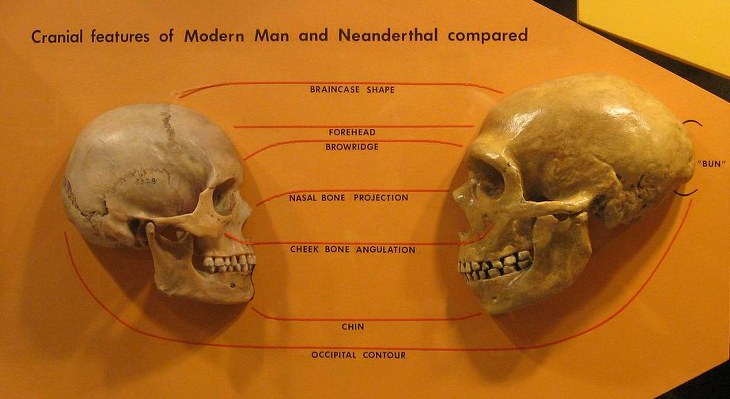
Around 100,000 years ago, human groups began to diversify their social networks, which is why it made evolutionary sense to prioritize emotional responses over violent adaptations. Scientists claim that it is around this point in history that human being began to develop smaller and flatter brow ridges, as well as the mobile eyebrows that we still have today.
According to co-author Penny Spikins from the Department of Archaeology at the University of York, "eyebrow movements allow us to express complex emotions as well as perceive the emotions of others."
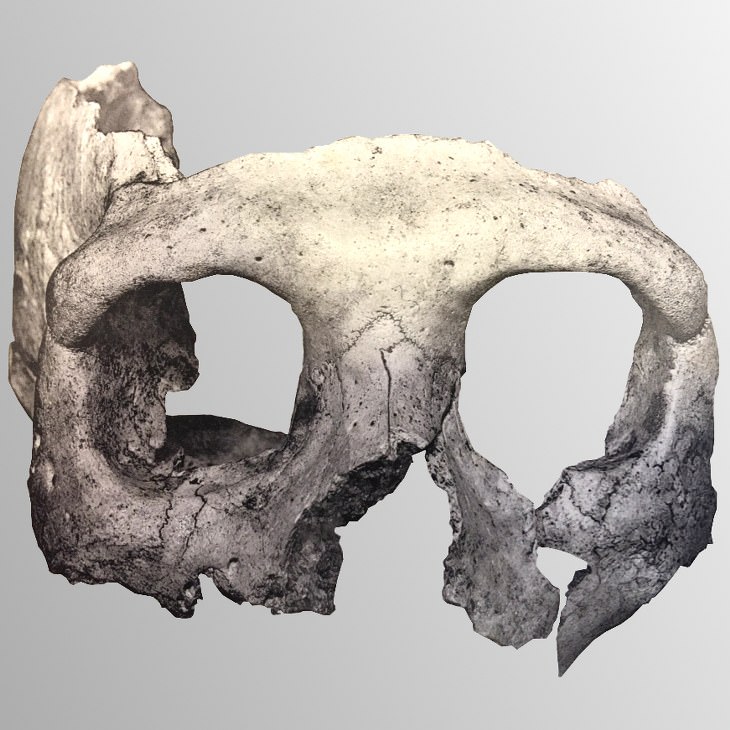
"A rapid "eyebrow flash" is a cross-cultural sign of recognition and openness to social interaction and pulling our eyebrows up at the middle is an expression of sympathy. Tiny movements of the eyebrows are also a key component to identifying trustworthiness and deception. On the flip side, it has been shown that people who have had botox which limits eyebrow movement are less able to empathize and identify with the emotions of others."
While this study is not a hundred percent conclusive, it does go to show that at some point in history, our ancestors decided to voluntarily self-domesticize in order to get on better with the people around them, which is something that modern humans can learn a lot from!

16 Remarkable Images That Showcase the World's Curiosities
This photo collection will take you on a tour through some incredible moments and places you haven't seen from this angle before!
20:22
Reviving Mammoths? Yes, It's Possible.
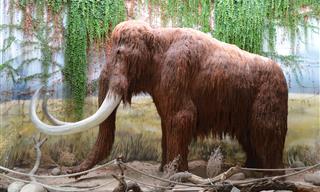
Scientists are currently working on a plan to revive the extinct mammoth. Yes, you hear right. But how is possible and would it impact our world?
9:09
Hypnotism: Science or Forgery?
His contemporaries called him a charlatan, but in the late 1880s, Dr. Anton Mesmer was onto something we now know as hypnotism.
17:49
Was There a Time a Day Lasted 10 Hours?
Eons ago, before the dinosaurs ever evolved, there was primordial life on Earth. What did it look like?
The World's Oldest Brewery Could Date Back 13,000 Years...
New research shows that beer may actually be an older invention than bread! Read all about it here...
Can Probiotics Improve Mental Health? Research Says YES
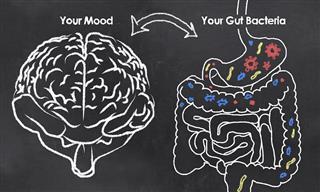
Studies repeatedly show that probiotics can be a potentially effective treatment for several mental health issues. This is what is currently known on the topic.
5:47
This Genius Child is a Better Calculator than a Computer
This ‘human calculator’ could likely outpace you entering the numbers into a calculator.
I Bet You Didn't Have a Clue About These Human Body Facts!
The human body is the most complex machine known to mankind, but I bet you don't know these 10 amazing facts about it...
8:12
The Tallest Statues Compared, Even Those Not Built Yet...
In this 3D animated size comparison, we showcase the tallest statues in the world alongside ambitious future projects.
7 Air Pollution Solutions That Will Help Us Breathe Easy
Let's take a look at some global initiatives that have been launched to reduce air pollution levels.
What Your Phone Habits Say About Your Mental Health
These phone habits might indicate underlying anxiety—and paying attention to them could help you better understand your mental health.
18:14
Are These Vintage Kitchen Gadgets Any Good?
Will any of the vintage kitchen gadgets stand the test of time or outperform their contemporary alternatives?
6:15
K2-18b: The Exoplanet That Might Host Alien Life
Astronomers have detected signs of posisble life in the atmosphere of exoplanet K2-18b.
Remembering the Life and Wisdom of Stephen Hawking
Stephen Hawking possessed one of the greatest minds the world has ever seen, but was also impaired by a debilitating disease. Here are his life ant times.
33:02
The Entire Story of Earth in 30 Minutes!
The story of our planet, from birth to the adult, ancient planet we see before us today - all in just half an hour.
8:12
How Humans Helped Cats Take Over the World
The relationship between humans and cats goes back as far as 9,500 years. How did it al start? And how did humans help cats essentially take over the world?
2:17:01
Astronomy: What is Beyond the Edge of the Universe?
In this video, we explore what modern astronomy reveals about the universe’s boundaries—if they even exist.
10 Fascinating Facts About the Subconscious Mind
10 facts about the way the subconscious mind works
2:06
Can Your Brain Get to Grips with These Weird Illusions?
I could have sworn what I was seeing in this video was real! But it wasn't. It was all just an illusion.
Meta Unveils New Glasses that May Change Sports Forever
META has revealed a new line of AI-powered smart glasses: Oakley Meta HSTN
10:11
10 Smart Home Gadgets You Didn’t Know You Needed
If you’ve ever wanted a smarter, more efficient home, these 10 gadgets might be exactly what you need.
This is How to Activate Your Brain's Ability to Learn
A recent study has shown that overlearning might improve performance in a particular task by altering the chemicals in the brain that "lock" in training.
20 Incredible Inventions That We Have Completely Lost
Here are some of the most amazing ideas and inventions we have ever seen. But, sadly, all of them have been lost to science in the mysterious mists of history.
10:30
China's Crazy Plan to Dig a Canal in the Middle of EUROPE
China is setting out a plan to dig a canal through the middle of Europe in the nearest future, but why?
1:08
Boston Dynamics New Robot Can Move Almost Like a Human
Watch the latest in robotics in this video.
10 Obscure Inventions by World Famous Inventors
We’d like to bring your attention to 10 lesser-known inventions of famous figures in history, which will reveal a new and different side of these inventors to you.
Hubble Telescope: 35 Years of Incredible Photos
Exploring 35 years of reality-changing, universe-enhancing photos that opened the sights of outer space to us all.
10:59
Fascinating Science: How Sand is Turned Into Glass
Have you ever looked through a window and wondered how it was made from simple beach sand? This video shows you that incredible process.
9:09
Protective Measures: How Our Body Reacts to a Tattoo
In this video, we’ll explore the microscopic war raging beneath your skin, where millions of your cells make the ultimate sacrifice to lock that ink in place, turning a defense mechanism into lifelong art.
4:57
Mjøstårnet - The World’s First Wooden Skyscraper
Mjøstårnet is an 18 story tall skyscraper towering over the Norwegian countryside. What makes it so special is that it's made entirely out of wood...
0:55
China's G1 Robot is Showing Some Incredible Moves
The G1 is a new robot developed in China and in this video shows some amazing moves.
9:13
Want to Travel Quickly Through Space? Try Using a Wormhole
If you want to know what a wormhole is and how it is supposed to work, then you've come to the right place!
Superwood: A New Material That Could Replace Steel
After decades of relying on steel—a material that produces nearly two tons of CO2 for every ton manufactured—builders may soon have access to something far more sustainable and surprisingly stronger: Superwood.
These 14 Forgotten Robots Promised So Much...
This collection showcases 14 cool vintage robots that were supposed to change everything.
9:03
24 Unbelievable Abilities Your Body Has
The human body is a complex and endlessly fascinating machine, and it might be even more sophisticated than you know...
Here Are the 16 Oldest Household Objects in the World
If you think ancient life is remote, these pre-historic household items will make you think again. Just look at how old they are!
4:26
Despite Looking Similar, Cats Are MORE Diverse Than Dogs!
Who's more diverse, cats or dogs? This video answers this question once and for all, the it might surprise you...
These Materials are Strange Enough to Boggle Your Mind...
There are some materials in this world that totally defy scientific convention. From metals that melt in your hand, to a solid lighter than air, take a look.
13:55
WATCH: What Is the Fingerprint of God's Creation?
The golden pattern, describes the mathematical code of the universe. Is this the scientific evidence of God's will and plan?
11:02
Ever Wonder What Ancient Egyptian Sounded Like?
Researchers have used all the information we know to create what they think it may have sounded like.
50:02
Take a Trip Through the Universe and Witness its Beauty
Since its launch, the Hubble Telescope returned images of unprecedented beauty of a dynamic and changing universe. Take a look!
Science FIRST: A Fully Created Brain Inside a Computer?
Could a Computer Ever "Run" a Human Brain? Scientists Just Took a Big Step
Blood Test Breakthrough Transforms Leukemia Diagnosis
This research demonstrates that rare circulating stem cells in blood carry the same diagnostic information as bone marrow samples, enabling doctors to identify disease progression months before clinical symptoms appear.
5:39
Why Are Your Ears Ringing? The Causes Explained
Nearly 15% of the human population worldwide are plagued by this strange sensation, but most people don't know the causes behind ringing in the ears...
Absolute Zero: The AI that Doesn't Need People to Develop
Imagine an AI that doesn’t need humans to teach it how to code—it creates its own coding challenges, solves them, and gets smarter all on its own. This isn’t science fiction; it’s a groundbreaking development called Absolute Zero
58:37
Science: Here's Everything We Know About Pluto
Join us as we unravel the mysteries of far off Pluto, 3.7 billion miles from our Sun.
11:05
Science: Can AI Preserve Our Most Precious Memories?
Technologist Pau Aleikum Garcia talks about synthetic memories.
To enable your Ad-Free Subscription, please fill the fields below
Your subscription was successful, now you can enjoy an ad-free experience!! Note: To make sure you get no ads, please make sure to log in to your account. If you are logged in already, then refresh the page. The subscription can be cancelled at any time.