
Some of the deepest chapters of human history survive in living communities. Their languages, ceremonies, knowledge of the land, and relationships with their ancestors have endured through migrations, empires, religious change, and attempts to erase them. Looking at these peoples reveals both extraordinary continuity and the enormous losses that survival has sometimes required.
Calling any community the world’s oldest people, however, mixes together three different questions. How far back can researchers trace its ancestry? How long have people inhabited its homeland? And how long has its recognizable language or cultural identity existed? Those dates rarely match. Every living population has an equally long ancestral history; a deeply branching genetic lineage does not make its descendants more ancient than other human beings.
DNA can help reconstruct population history, but it cannot date a religion or prove that a ceremony has remained unchanged for 50,000 years. Archaeology supplies evidence of past activities; anthropology, oral histories, and linguistic research help explain how communities transmitted and transformed their traditions. The strongest accounts bring these sources together without treating present-day peoples as snapshots of prehistory.
Across the six inhabited continents, several communities offer particularly revealing examples. Australia is considered here within the wider Oceanian setting, and North and South America are treated separately. Antarctica has no Indigenous population with a comparable ancestral homeland.
1. San and Khoekhoe peoples in Africa
The San and related Khoe populations of southern Africa have a central place in research on humanity’s early history. A 2017 study of ancient southern African genomes estimated a deep divergence between ancestral populations at roughly 260,000 to 350,000 years ago. More recent work has emphasized repeated contact and mixing among ancestral African populations. These findings illuminate the formation of our species; they do not establish a San ethnic identity or culture hundreds of thousands of years old. [1, 2]
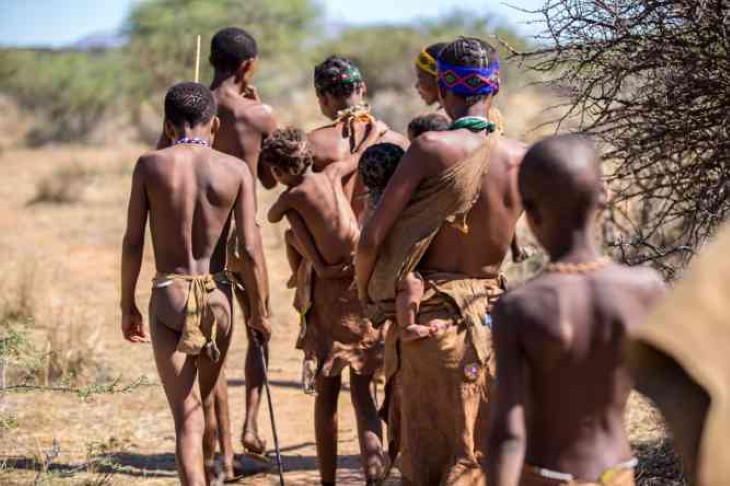
San is an umbrella term for distinct communities, including the Juǀ’hoansi and !Xun. Khoekhoe refers to peoples historically associated with herding, including the Nama. The familiar label Khoisan groups together populations with different histories and languages. Their click consonants do not make their languages a single family: linguists generally distinguish Kx’a, Tuu, and Khoe–Kwadi. [3]
Their living relatives are found among other southern African San and Khoe communities, although the relationships vary by population. Shared ancestry also extends into neighboring peoples who speak Bantu languages. Genetic research documents substantial Khoe-San contributions to populations such as the Xhosa, reflecting a long history of contact rather than complete isolation. [4]
Their later history brought severe dispossession. Expanding farming and herding societies changed access to land; European colonization added frontier violence, coerced labor, and massacres. Some communities lost both their territory and their languages. Others survived in Botswana, Namibia, South Africa, and neighboring countries, often under intense pressure to abandon their livelihoods. [3, 5]
Among the traditions that remain is the healing dance. In a community account from Xai Xai in Botswana, participants describe gathering around a fire, singing and clapping while healers dance into an altered state. The ceremony expresses spiritual beliefs about healing power and communal well-being. It is a living practice, although no evidence can establish that its present form dates to humanity’s earliest genetic divisions. [6]
Languages, tracking skills, oral narratives, and knowledge of plants also survive unevenly. San heritage projects such as !Khwa ttu work to return access to recordings, photographs, and research materials to the people whose lives they document. Cultural survival increasingly includes recovering knowledge that outsiders collected while communities themselves were being displaced. [7]
2. Aboriginal Australians and their Oceanian relatives
Aboriginal Australians have an exceptionally strong case for profound continuity in their ancestral lands. Archaeological research at Madjedbebe, a rock shelter in northern Australia, dates human occupation to about 65,000 years ago. The earliest arrival date remains debated, but settlement extending back at least around 50,000 years is well supported. Genetic research likewise reveals deep regional roots across the continent. [8, 9]
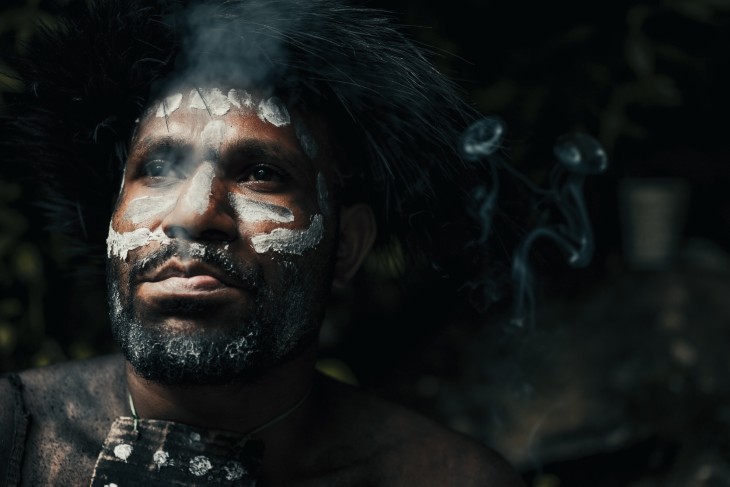
Aboriginal Australians comprise many peoples, rather than one ethnic group. Their close ancestral connections outside Australia include Indigenous Papuan populations of New Guinea. During the Ice Age, Australia and New Guinea formed parts of the larger landmass called Sahul. A major genomic study estimated that the ancestors of sampled Aboriginal Australian and Papuan populations differentiated roughly 25,000 to 40,000 years ago. [10]
This relationship does not make their cultures interchangeable. Papuan peoples developed their own exceptionally diverse languages and traditions, while Australian communities maintained distinct relationships with particular territories. Torres Strait Islander peoples also have their own identities and histories, which should not be folded into a single Aboriginal culture.
British colonization from 1788 brought land seizure, violence, disease, and policies of assimilation. The forced removal of children, remembered through the experiences of the Stolen Generations, interrupted the transmission of language and family knowledge. Authorities deliberately separated many children from the people who could teach them who they were. [11]
Nevertheless, many communities retain complex spiritual and legal traditions connected with Country. The English word Dreaming covers several Indigenous concepts linking ancestral beings, places, obligations, and the continuing order of life. In parts of central and western Australia, songlines carry this knowledge through interconnected songs, stories, places, and ceremonies. The Seven Sisters traditions are one well-documented example, maintained and interpreted by their cultural custodians. [12]
Language survival varies greatly. Some languages continue to be learned by children; others survive mainly through elders, recordings, or community revival programs. AIATSIS supports work to maintain and reawaken these languages. The phrase oldest continuous culture recognizes an extraordinary depth of connection and transmission, but it should not imply that every present-day language, painting style, or ritual existed in its current form when people first arrived. [13]
3. The Basques and Sámi of Europe
The Basques
The Basques, whose homeland spans northern Spain and southwestern France, are often described as Europe’s oldest people. Their clearest distinction is linguistic: Euskara is a language isolate, with no demonstrated living relative. Ancient Aquitanian names and inscriptions provide evidence of a closely related language in the region during Roman times. That is a remarkable survival, although the language’s deeper origins cannot be assigned a reliable prehistoric birthday. [14]
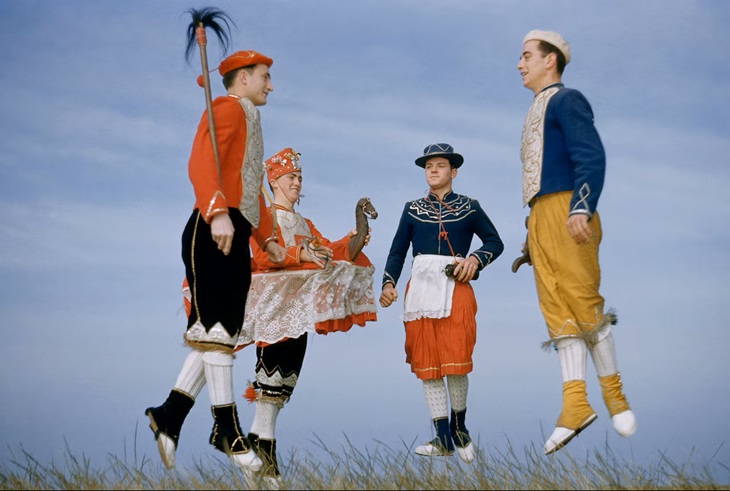
 DNA has corrected an older picture of the Basques as an untouched remnant of Europe’s first hunter-gatherers. Like neighboring populations, they carry ancestry associated with prehistoric hunter-gatherers, incoming farmers, and later migrations from the steppe. A major ancient-DNA study found that present-day Basques resemble Iron Age Iberian populations that experienced less of the subsequent mixing seen elsewhere in Iberia. [15]
Their closest connections today are to other Basque communities and, more broadly, neighboring populations around the western Pyrenees. Their genetic distinctiveness developed within this regional history. It does not point to an unrelated biological origin simply because Euskara differs so sharply from Spanish and French. [16]
Their language endured Roman influence, expanding states, and the pressures of Spanish and French. Under Franco’s dictatorship, it lost official recognition and faced severe repression. Basque schools, adult education, and the development of standardized Euskara Batua helped rebuild its public presence. Its survival now includes literature, broadcasting, and everyday schooling. [14]
The religious inheritance is less complete. Christianity profoundly changed Basque spiritual life, while older traditions survived in folklore concerning figures such as Mari, associated with mountains and caves, and other beings inhabiting the landscape. These stories remain culturally important, but they cannot establish the existence of one unchanged prehistoric Basque religion. Legends, festivals, and modern reinterpretations preserve different portions of that inheritance. [17]
The Sámi
The Sámi of northern Norway, Sweden, Finland, and Russia offer another European history of deep regional roots. Ancient DNA reveals a complex northern ancestry, including connections extending toward Siberia. Their ancestry connects them with other Sámi communities, neighboring northern Europeans, and populations farther east. Their languages belong to the Uralic family, which also includes Finnish and Estonian. Linguistic kinship and genetic ancestry are different relationships, and neither gives the Sámi a simple age of 10,000 years. [18, 19]
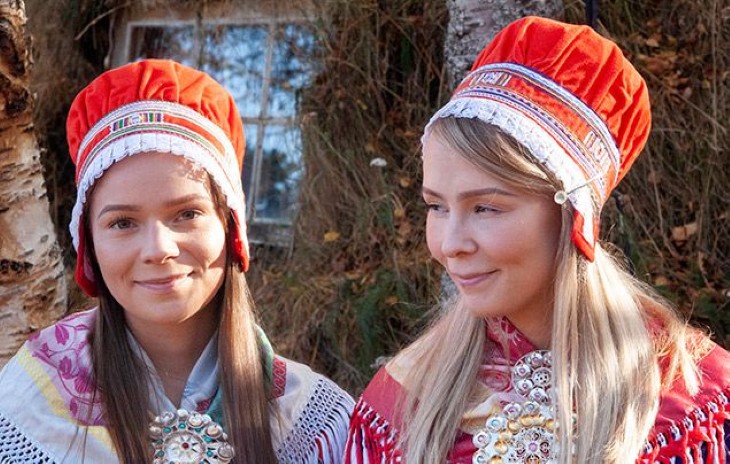
Missionary campaigns in the seventeenth and eighteenth centuries attacked traditional religious practices, confiscated or burned drums, and persecuted religious specialists known as noaidi. Much knowledge disappeared or survived privately. Today, Sámi languages, duodji crafts, and joik singing remain important expressions of identity. Spiritual traditions concerning land and living beings persist in varied forms, sometimes alongside Christianity and sometimes through renewed practices drawing on older knowledge. Survival differs among Sámi communities; reindeer herding is only one part of their diverse history. [20, 21]
4. Ancient Indigenous communities of Asia
Asia’s immense and complicated population history does not support naming one securely established oldest ethnic group. The Vedda of Sri Lanka, the Indigenous peoples of the Andaman Islands, and the Ainu of northern Japan each preserve important connections to early regional populations. Their histories also demonstrate how easily ancient ancestry can be mistaken for an unchanged culture.
The Vedda of Sri Lanka
Human occupation of Sri Lanka reaches back roughly 40,000 years, and the Vedda, also known as Adivasi or Wanniyalaeto, are associated with the island’s early inhabitants. Yet the claim that today’s Vedda form a demonstrably isolated ethnic lineage more than 30,000 years old goes beyond the evidence. A 2025 whole-genome study found both substantial ancient hunter-gatherer ancestry and strong similarities with other Sri Lankan and Indian populations. [22]
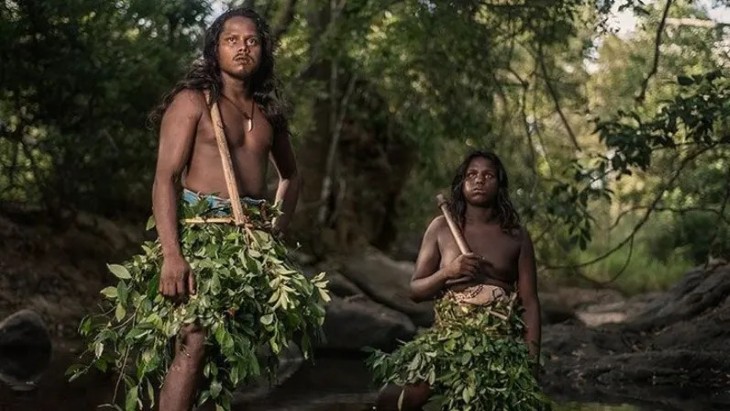
In that study, the two sampled Vedda communities were genetically closest to each other, while sharing wider connections with neighboring Sri Lankan populations and South Asians with substantial ancestry related to southern India. This supports a history of regional relationships and mixing. It also cautions against presenting the Vedda as biologically separate from the people around them. [22]
Forest clearance, development, and resettlement disrupted their livelihoods. Some adopted farming and the languages and religious identities of surrounding communities. Sinhala and Tamil have increasingly replaced ancestral Vedda speech, making the loss of language one of the central breaks in cultural transmission. [23, 22]
Ancestral spirits, often called nae yaku or ne yakun, remain important in documented Vedda traditions. Rituals such as Kiri Koraha seek protection, healing, and help with subsistence. The University of Peradeniya identifies worship of ancestral spirits as a central ritual practice. In some communities, these traditions coexist with Buddhist or Hindu affiliations. The result is a changing religious life that still carries distinctive relationships with ancestors and the forest. [24, 23, 25]
The peoples of the Andaman Islands
Great Andamanese, Onge, Jarawa, and Sentinelese are distinct peoples. Genetic studies connect sampled island communities to deep Asian population history. Onge and Jarawa share important ancestry, although findings from a single paternal lineage cannot define their complete family tree. There is no comparable genomic basis for assigning the Sentinelese a precise age or confidently identifying their closest living relatives. [26]
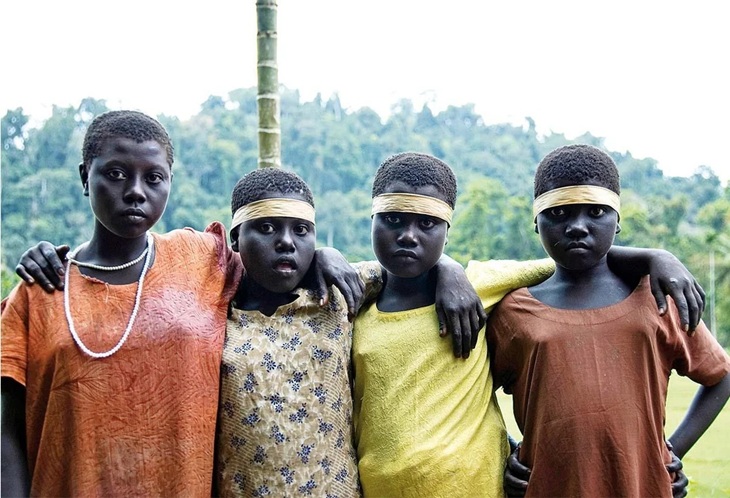
British colonization devastated Great Andamanese communities through conflict, introduced diseases, and displacement. Their once numerous languages suffered catastrophic losses. Linguist Anvita Abbi’s fieldwork documents how surviving speech combines material from several Great Andamanese languages and differs substantially from the Onge and Jarawa language group. [27, 28]
Recorded songs and oral knowledge preserve portions of the Great Andamanese inheritance, while other island communities retain their own traditions. For the Sentinelese, detailed descriptions of religion, ritual, or language remain largely unavailable. Claims that outsiders know their beliefs have stayed unchanged for tens of thousands of years are speculation. [29]
The Ainu of northern Japan
The Ainu have important ancestral connections with the Jōmon populations of prehistoric Japan. Genetic studies also identify relationships with Ryukyuan islanders and mainland Japanese, though the proportions and later histories differ. Deep Jōmon ancestry does not by itself prove that present-day Ainu culture existed unchanged 15,000 years ago. [30]
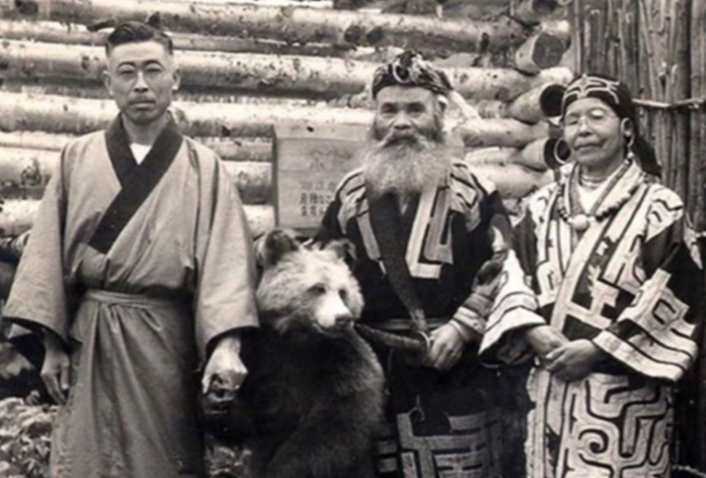
Japanese expansion and assimilation policies sharply reduced the transmission of Ainu language and traditions. The language, unrelated to Japanese, is severely endangered. Nevertheless, embroidery, woodcarving, dances, and ceremonial knowledge survive and are being taught and developed. Ainu spirituality recognizes kamuy, spirit-deities associated with animals, plants, fire, water, and other forces. Ceremonies traditionally expressed respectful exchange between humans and these beings. In iyomante, spirits are treated with hospitality before being sent back to the kamuy realm. The Upopoy National Ainu Museum and Park describes both inherited practices and contemporary revival, emphasizing a history shaped by continuing exchanges with neighboring peoples. [31]
5. Ancient peoples of the North American Northwest Coast
North America’s first inhabitants cannot be assigned to one present-day nation simply from the age of an archaeological site. Footprints at White Sands in New Mexico have been dated to approximately 21,000 to 23,000 years ago, with independent dating methods supporting that antiquity. The footprints themselves do not identify a modern language, religion, or ethnic group. [32]
The Northwest Coast provides a particularly strong example of regional continuity. A genetic study of Shuká Káa, a person who lived in southeastern Alaska about 10,300 years ago, and later ancient individuals from coastal British Columbia found evidence of continuity extending across that period. Living coastal communities, including the Tsimshian, share ancestry within this regional history. The result is evidence for enduring populations, rather than proof that every current cultural institution is equally old. [33]
Peoples such as the Tlingit and Tsimshian, alongside culturally connected neighbors including the Haida, maintain distinct identities. Their shared regional traditions do not make them one people or one language community. Within Tlingit culture, kinship, clan identity, and inherited sacred possessions link people to their ancestors. Clan crests, names, stories, and places carry responsibilities as well as historical meaning. [34]
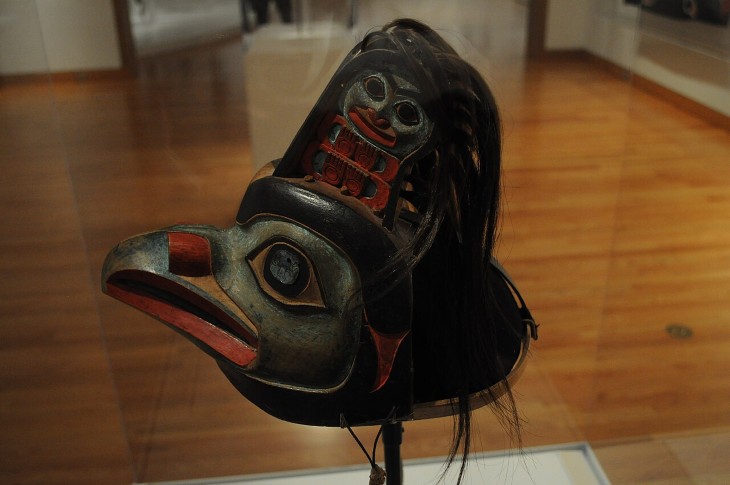
Colonial institutions directly attacked this transmission. Boarding schools sought to replace Indigenous languages, religions, and family connections. In Canada, the potlatch was prohibited under legislation introduced in 1884, with the ban removed in 1951. The U’mista Cultural Centre records how ceremonial objects were confiscated from Kwakwaka’wakw communities and how their return became part of cultural recovery. [35, 36]
Ceremonies, carving, oral histories, and language education continue today. Organizations such as Sealaska Heritage Institute support Tlingit, Haida, and Tsimshian cultural work, including the revitalization of severely endangered languages. Religious and ceremonial inheritances vary by community, but sacred relationships with ancestors and clan histories remain living sources of identity. [34, 37]
The Inuit and Yupik deserve a separate place in this history. Their ancestry reflects several Arctic population movements, including migrations much later than the initial settlement of the Americas. The ancestors associated with Thule expansion spread across much of the Arctic within roughly the past millennium. These are deeply rooted Indigenous peoples, but describing them as the oldest surviving American ethnic groups confuses different migration histories. [38]
6. Ancient Andean peoples of South America
In South America, the Andes provide unusually detailed evidence linking ancient populations with living communities. A genetic study using ancient genomes dating back 7,000 years inferred a separation between highland and lowland populations around 8,200 to 9,200 years ago. A broader ancient-DNA investigation subsequently found that present-day Indigenous people often share their closest genetic relationships with ancient people from the same region. [39, 40]
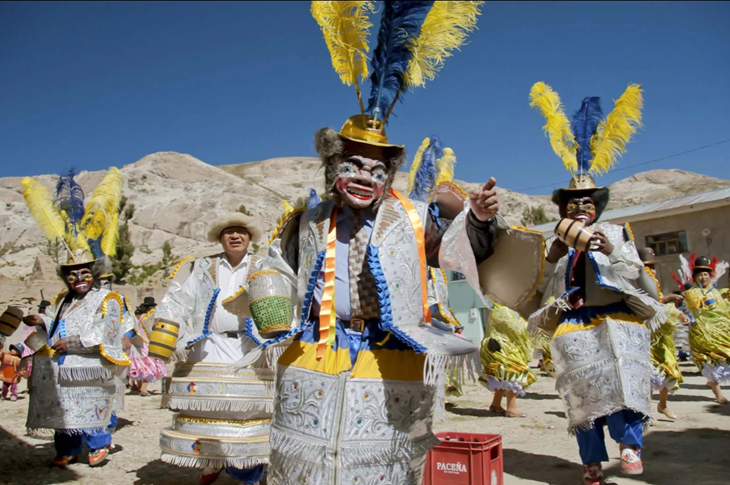
Aymara people in a ritual dance
Quechua-speaking and Aymara-speaking communities carry substantial parts of this regional inheritance. However, those language labels cannot be projected unchanged onto the earliest Andean settlers. The researchers explicitly cautioned that genetic continuity does not establish continuity of a particular language. Languages spread through political influence, migration, and colonial policy as well as through families. [40]
Their closest ancestral relationships are often with other communities of the same Andean region, while wider connections extend to Indigenous South Americans elsewhere. This picture does not identify one continent-wide oldest people. Amazonian and southern South American populations also have deep histories that require their own local evidence.
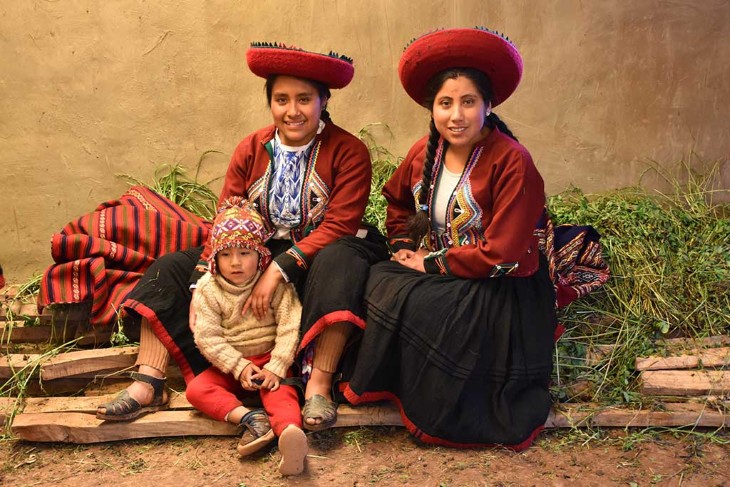
Quechua People
Spanish conquest destroyed the Inca imperial order and brought exploitation and drastic population decline. Yet the fall of that empire did not erase the communities beneath it. Quechua and Aymara speech, farming knowledge, textiles, oral traditions, and music continued across changing states. UNESCO-supported safeguarding work with Aymara communities explicitly connects language transmission with agricultural and textile knowledge. [39, 41, 42]
Ritual life also adapted. The pilgrimage to the Lord of Qoyllurit’i in Peru combines Catholic devotion with the veneration of pre-Hispanic nature deities. At Q’eswachaka, Quechua-speaking communities renew a suspension bridge using inherited skills and ceremonies that affirm their relationship with nature and their history. These practices reveal how older sacred meanings and communal obligations continue within traditions that have also absorbed later influences. [43, 44]
These are identifiable forms of cultural transmission, although they cannot be dated simply by borrowing the age of the region’s oldest genomes. A ritual inherited from the Inca period and ancestry extending thousands of years further into the past belong to different historical timelines.
What cultural survival actually means
Across these histories, some communities retained their languages while transforming their religions; others kept ceremonies after language transmission broke down. Genetic ancestry could persist through a change of empire, while a school policy severed knowledge passed from grandparents to children.
The search for the most ancient peoples becomes more revealing when it follows those specific continuities. A healing dance, a songline, a clan story, or a bridge rebuilt by neighboring communities shows how people maintain relationships with their past. Their descendants also create new music, learn from archives, adopt new beliefs, and reshape traditions. Those changes are part of the history of the cultures that survive.
If you're interested, you can read further using our source notes:
Numbers in the article refer to the sources below. Research studies support ancestry and archaeological claims; cultural institutions and community accounts document traditions and their transmission.
1. Schlebusch and colleagues 2017 Southern African ancient genomes
2. Ragsdale and colleagues 2023 A weakly structured stem for human origins in Africa
3. 2021 The genomic prehistory of peoples speaking Khoisan languages
4. 2021 Genetic substructure and complex demographic history of South African Bantu speakers
5. 2012 The forgotten killing fields San genocide and Louis Anthing’s mission
6. San community of Xai Xai and Project FUEL How we heal
7. San heritage centre !Khwa ttu Digital Archive
8. Clarkson and colleagues 2017 Human occupation of northern Australia by 65000 years ago
9. Tobler and colleagues 2017 Aboriginal mitogenomes reveal 50000 years of regionalism
10. Malaspinas and colleagues 2016 A genomic history of Aboriginal Australia
11. National Museum of Australia Aborigines Protection Act
12. National Museum of Australia Songlines Tracking the Seven Sisters
13. AIATSIS Centre for Australian Languages
14. Etxepare Basque Institute Basque language
15. Olalde and colleagues 2019 The genomic history of the Iberian Peninsula
16. 2021 Genetic origins singularity and heterogeneity of Basques
17. Eusko Ikaskuntza Auñamendi encyclopedia Mari
18. Lamnidis and colleagues 2018 Ancient Fennoscandian genomes
19. Swedish Truth Commission for the Sami People Sami languages
20. Sami Information Centre Samerna och religionen
21. Sami Information Centre The Sami An Indigenous People
22. Urban Aragon and colleagues 2025 Population histories of the Indigenous Adivasi and Sinhalese
23. Cultural Survival of Sri Lanka 1994 Sri Lanka’s Indigenous Wanniya-laeto
24. University of Peradeniya Adivasi cultural heritage
25. The Veddas of Sri Lanka Kiri Koraha and ancestral spirits
26. 2017 Y chromosomal sequences of diverse Indian populations and the ancestry of the Andamanese
27. Survival International Great Andamanese
28. Anvita Abbi Great Andamanese language structure
29. Anvita Abbi Great Andamanese Book of Letters
30. Jinam and colleagues 2015 Unique characteristics of the Ainu population
31. Upopoy National Ainu Museum and Park Ainu Culture
32. US Geological Survey 2023 Independent age estimates of the White Sands footprints
33. Lindo and colleagues 2017 Northwest Coast regional genetic continuity
34. Sealaska Heritage Institute Beginning Tlingit workbook
35. US Department of the Interior 2022 Federal Indian Boarding School report announcement
36. U’mista Cultural Centre The History of the Potlatch Collection
37. Sealaska Heritage Institute Indigenous language revitalization
38. Flegontov and colleagues 2019 Arctic migration and Palaeo Eskimo ancestry
39. Lindo and colleagues 2018 The genetic prehistory of the Andean highlands
40. Nakatsuka and colleagues 2020 A paleogenomic reconstruction of Andean population history
41. Smithsonian National Museum of the American Indian The Road to Conquest
42. UNESCO Safeguarding the intangible cultural heritage of Aymara communities
43. UNESCO Periodic report on the pilgrimage to the Lord of Qoyllurit’i
44. UNESCO Knowledge skills and rituals of the Q’eswachaka bridge