You have your blood drawn, and a few days later a document appears in your online portal or your mailbox. It is a wall of abbreviations and numbers, some with an alarming letter H or L beside them, and no explanation whatsoever. You are left squinting at terms like MCHC and eGFR, wondering whether you should be worried, and waiting anxiously for an appointment to find out.
It does not have to feel that way. While only your doctor can interpret your results properly, you can absolutely learn to read your own report and understand what each part is looking at. That knowledge takes away a great deal of unnecessary worry, and it helps you ask far better questions at your next visit. Here is a plain-language guide to the tests you are most likely to see.
First, How to Read Any Lab Report
Every line on a lab report has the same handful of parts. Once you can spot them, any panel becomes readable:
- The marker. The name of the test, such as Glucose, Hemoglobin, or TSH.
- Your result. The number the laboratory measured.
- The unit. How it is measured, such as milligrams per deciliter.
- The reference range. The span of values the laboratory considers typical.
- A flag. Usually the letter H for high or L for low, meaning your value sits outside that range.
That is the whole structure. Your number, next to the range it is being compared against.
The other hurdle is that laboratories abbreviate almost everything to save space, which is why a report can look like alphabet soup. Glucose becomes GLU, hemoglobin becomes HGB, platelets become PLT, and so on. Throughout the sections below, you will find the shorthand shown in brackets beside each test, so you can match the names to the letters on your own page.
You will also see units that look cryptic. The most common are g/dL (grams per deciliter), mg/dL (milligrams per deciliter), mmol/L (millimoles per liter), U/L (units per liter), and K/uL (thousands per microliter). You do not need to understand the mathematics behind them. They are simply the measuring stick for that particular test, and the reference range beside your result already uses the same one.
The Most Important Thing to Understand
Before we look at individual tests, please take this in, because it prevents more needless worry than anything else in this article. A flagged result is not a diagnosis.
Reference ranges are worked out from large groups of healthy people, and by their very nature a portion of perfectly healthy individuals fall slightly outside them. Ranges also differ from one laboratory to another, which is why you should always compare your result to the range printed on your own report rather than a chart you found elsewhere. What counts as expected shifts with age, sex, and the medications you take.

A few other truths worth holding onto. A value a little outside the range, with no symptoms, is frequently nothing to be concerned about. Doctors often simply repeat an unexpected result before drawing any conclusion. And the direction of travel over the years usually matters more than any single reading, which is why your doctor looks at your history rather than one number in isolation. Being inside the range is also not a guarantee that all is well, which is another good reason to leave the interpreting to your doctor.
The Complete Blood Count
Often shortened to CBC, this counts the cells floating in your blood. It is the test most often used to look for anemia, infection, and clotting problems.
- Hemoglobin (HGB or Hb) and hematocrit (HCT). Hemoglobin is the substance in red blood cells that carries oxygen around your body, and hematocrit is the proportion of your blood made up of those cells. Typical hemoglobin runs roughly 13.5 to 17.5 for men and 12 to 15.5 for women. When these are low, it usually points to anemia, which can leave you tired, pale, and short of breath, and is very common and very treatable.
- Red blood cells (RBC) and MCV. The red cell count is simply how many you have, and MCV describes their average size, typically around 80 to 100. Cell size is a useful clue: unusually small cells often suggest a shortage of iron, while unusually large ones can point to a shortage of vitamin B12 or folate.
- White blood cells (WBC). These are your infection fighters, usually numbering about 4,000 to 11,000. A raised count commonly means your body is fighting an infection or inflammation somewhere, while a low count can mean the opposite sort of problem. Certain medications affect this number too.
- Platelets (PLT). The tiny fragments that help your blood clot, typically 150,000 to 450,000. Low platelets can mean easier bruising and bleeding, while high ones are sometimes a response to inflammation.
The Metabolic Panel

This one goes by the name basic or comprehensive metabolic panel, sometimes shortened to BMP or CMP. It is a chemistry check on how well your kidneys and liver are working, along with your salts and your blood sugar.
- Glucose (GLU). Your blood sugar at the moment of the test. Taken fasting, roughly 70 to 100 milligrams per deciliter (about 3.9 to 5.6 in the units used in much of the world) is typical. From about 100 to 125 falls in the prediabetes range, and 126 or higher, confirmed on a repeat test, indicates diabetes. If you did not fast, a raised reading may simply reflect your breakfast.
- Sodium (NA), potassium (K), and chloride (CL). These are your electrolytes, the salts that keep your nerves, muscles, and fluid balance working. They sit within fairly narrow ranges, and when they drift it often reflects dehydration, a medication such as a water pill, or a kidney matter worth looking into.
- Creatinine (CREA or CRE) and eGFR. You may also see BUN, another kidney waste product. This trio is the kidney report. Creatinine is a waste product your kidneys clear, usually around 0.6 to 1.3, and eGFR is a calculated estimate of how well they are filtering. With eGFR, higher is better, and a figure above 60 is generally reassuring. Because muscle mass affects creatinine, these are read together rather than alone.
- Liver enzymes. Usually shown as ALT and AST, sometimes with ALP and total bilirubin (TBIL), with values commonly under about 40. When these rise, it means the liver is under some strain, which can come from many causes including alcohol, certain medications, and fat in the liver. Mild elevations are common and often need nothing more than a recheck.
- Albumin (ALB) and total protein (TP). Proteins that reflect nutrition and liver function.
- Calcium (CA). Important for bones, nerves, and muscles, and usually steady around 8.5 to 10.2.
The Lipid Panel: Your Cholesterol
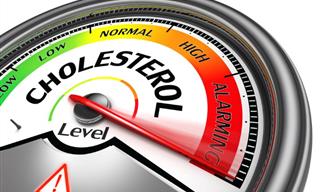
This is the familiar cholesterol test, and it is usually taken after fasting. Cholesterol is not a villain in itself, since your body needs it, but the balance matters for your heart and blood vessels.
- Total cholesterol (CHOL or TC). Under 200 (about 5.2 in international units) is considered desirable.
- LDL cholesterol (LDL-C). Often called the "bad" cholesterol, since it deposits in artery walls. Under 100 (about 2.6) is generally the goal, and your doctor may want it lower still if you have heart disease or other risk factors.
- HDL cholesterol (HDL-C). The "good" one, which helps carry cholesterol away. Here, higher is better. Above 40 for men and above 50 for women is the usual aim, and above 60 is considered protective.
- Triglycerides (TRIG or TG). Another form of fat in the blood, ideally under 150 (about 1.7). These respond noticeably to sugar, refined carbohydrates, alcohol, and weight.
One caution about the units. The figures above are the ones used on American reports. Many countries use a different scale, so always read the range printed on your own report.
The A1c: Your Three-Month Sugar Average
This test, sometimes written HbA1c, is a particularly clever one. Rather than capturing a single moment like a glucose reading, it reflects your average blood sugar over roughly the past two to three months. It is the main test for diagnosing and monitoring diabetes, and it needs no fasting.
- Below 5.7 percent is considered normal.
- From 5.7 to 6.4 percent falls in the prediabetes range, which is a valuable early warning and often reversible with changes to eating and activity.
- 6.5 percent or above, confirmed on repeat testing, indicates diabetes.
- For those already managing diabetes, a target below 7 percent is common, though the right goal is individual and may be set higher for older adults.
Thyroid: The TSH Test
TSH stands for thyroid stimulating hormone, and it is the usual first check on your thyroid, the small gland in your neck that sets the pace of your metabolism. The typical range is about 0.4 to 4.0.
The confusing part is that it works backwards from what you might expect. A high TSH generally suggests an underactive thyroid, which can bring tiredness, weight gain, feeling cold, and dry skin. A low TSH generally suggests an overactive one, which can bring a racing heart, weight loss, and anxiety. If TSH is abnormal, your doctor will usually add further thyroid tests before deciding anything.
Other Tests You May See
- Vitamin D (often shown as 25-OH vitamin D). Commonly low, particularly in those who spend little time in the sun, and easily corrected.
- Vitamin B12. Worth knowing about, because a shortage can cause fatigue, numbness or tingling, and memory trouble that is sometimes mistaken for aging itself. Absorption declines with age and with certain stomach medications.
- Iron and ferritin (FERR). Ferritin reflects your iron stores, and testing it helps explain the cause of anemia.
- CRP. A general marker of inflammation. It tells you that something is inflamed, but not where or why, so it is read alongside everything else.
- PSA. A prostate marker for men, which can be raised for several reasons besides cancer and is always interpreted in context.
A Sample Report: What "All Normal" Looks Like
Putting it all together, here is an example of a complete set of results in which everything falls comfortably within range. This is an invented sample rather than a real person's report, and the ranges shown are typical ones that will differ slightly from those your own laboratory uses. Still, it gives you a feel for how a healthy report reads, and lets you see the abbreviations in their natural habitat.
Complete Blood Count (CBC)
- WBC (white blood cells): 6.8 K/uL (range 4.0 to 11.0)
- RBC (red blood cells): 4.8 M/uL (range 4.2 to 5.8)
- HGB (hemoglobin): 14.2 g/dL (range 13.5 to 17.5)
- HCT (hematocrit): 42.5 % (range 38.8 to 50.0)
- MCV (average red cell size): 89 fL (range 80 to 100)
- MCH: 29.6 pg (range 27 to 33)
- MCHC: 33.4 g/dL (range 32 to 36)
- RDW: 13.1 % (range 11.5 to 14.5)
- PLT (platelets): 265 K/uL (range 150 to 450)
Comprehensive Metabolic Panel (CMP)
- GLU (glucose, fasting): 92 mg/dL (range 70 to 100)
- BUN (urea nitrogen): 15 mg/dL (range 7 to 20)
- CREA (creatinine): 0.9 mg/dL (range 0.6 to 1.3)
- eGFR (kidney filtering): 88 mL/min (range above 60)
- NA (sodium): 140 mmol/L (range 135 to 145)
- K (potassium): 4.2 mmol/L (range 3.5 to 5.0)
- CL (chloride): 102 mmol/L (range 98 to 107)
- CO2 (bicarbonate): 25 mmol/L (range 22 to 29)
- CA (calcium): 9.4 mg/dL (range 8.5 to 10.2)
- TP (total protein): 7.1 g/dL (range 6.0 to 8.3)
- ALB (albumin): 4.3 g/dL (range 3.5 to 5.0)
- ALT (liver enzyme): 22 U/L (range 7 to 40)
- AST (liver enzyme): 24 U/L (range 8 to 40)
- ALP (liver enzyme): 78 U/L (range 40 to 129)
- TBIL (total bilirubin): 0.7 mg/dL (range 0.2 to 1.2)
- Lipid Panel (Cholesterol)
- CHOL (total cholesterol): 178 mg/dL (range below 200)
- LDL-C (LDL cholesterol): 98 mg/dL (range below 100)
- HDL-C (HDL cholesterol): 58 mg/dL (range above 40)
- TRIG (triglycerides): 110 mg/dL (range below 150)
Additional Tests
- HbA1c (three-month sugar average): 5.4 % (range below 5.7)
- TSH (thyroid): 2.1 mIU/L (range 0.4 to 4.0)
Notice what is absent from that page: there is not a single H or L flag anywhere, because every value sits inside its range. Notice too how much of the report is simply repetition of the same idea. Once you recognize that the CBC is counting cells, the metabolic panel is checking kidneys, liver, salts, and sugar, and the lipid panel is measuring fats, those thirty-odd lines collapse into four straightforward questions about your body.
Your own report will almost certainly look a little different, and may well carry a flag or two. That is entirely ordinary and not a cause for alarm on its own.
When to Worry, and When Not To
As a general guide, a value slightly outside the range, without symptoms, is usually discussed at your next routine visit rather than treated as urgent. A borderline cholesterol or A1c, or a single mildly raised liver or kidney value, typically calls for a recheck rather than alarm.
What does warrant a prompt call to your doctor is a result flagged as markedly abnormal, any result accompanied by symptoms that concern you, or a clear change from your previous readings. If a result frightens you, telephone the office and ask rather than sitting with the worry, and please resist the urge to search each number online, since that tends to surface the rarest and most alarming explanations rather than the likeliest ones.
Good Questions to Ask
Your results are yours, and you are entitled to understand them. These questions tend to open up a useful conversation:
- Which of these numbers, if any, should I actually pay attention to?
- How does this compare with my results last time? Is anything trending in the wrong direction?
- Could any of my medications be affecting this result?
- Does this need repeating, and if so, when?
- Is there anything I can do myself, through diet or activity, that would help this number?
- What would make you want to see me sooner?
It is also worth keeping your own copies, whether in a folder or saved on your computer. Having your history to hand is genuinely useful, especially when seeing a new doctor or a specialist.