
Think about all the small things your hands do for you in a single day. They twist open a stubborn jar lid, carry the grocery bags in from the car, steady you on a stair railing, and turn the key in the front door. We rarely give these moments a second thought. Yet researchers have discovered that the strength behind your grip is one of the most revealing health signals your body has to offer, and it may say more about your future than your blood pressure or your cholesterol.
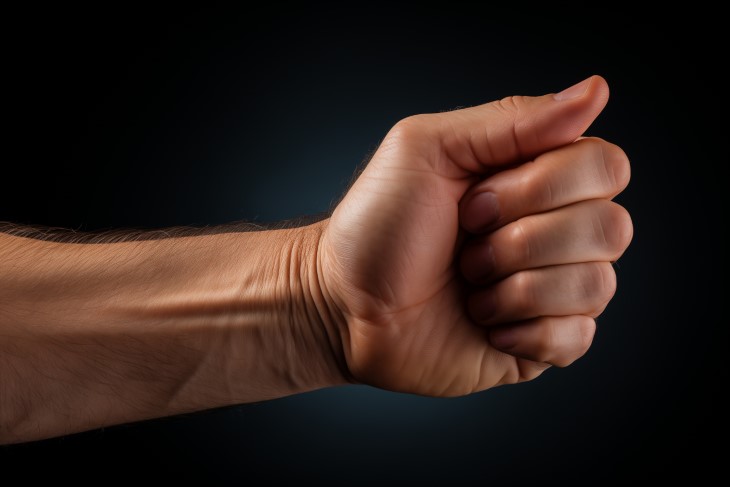
It sounds almost too simple to be true. How can the force of a handshake tell us anything important about overall health? But the science here is remarkably consistent, and the best part is that grip strength is something you can improve at any age, right at home, with no gym membership and no special equipment.
One of the largest studies on this subject followed nearly 140,000 people across 17 countries. The finding was striking. For every small drop in grip strength, the risk of dying from any cause rose measurably, along with the risk of heart attack and stroke. This held true even after accounting for age, smoking, activity level, and other health factors.
The pattern shows up again and again. When findings from dozens of studies covering millions of people are pooled together, those with weaker grips face a noticeably higher risk of poor health outcomes than those with stronger hands. In some research, grip strength has actually predicted longevity better than blood pressure does.
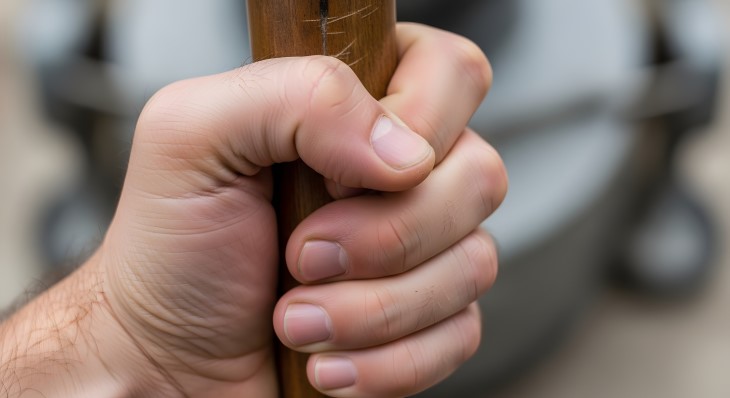
So why would the squeeze of a hand carry such weight? The answer is that your grip is a window into something much bigger. It acts as a stand-in for the overall strength and health of your entire body. Strong hands usually mean a strong, well-functioning muscular system, a healthy nervous system sending clear signals, and a body that is aging well. A weakening grip can be one of the earliest quiet signals of muscle loss, a natural process that tends to speed up after age 60 if we do nothing about it.
Here is the part worth holding onto. A weak grip is not a life sentence, and it is not something you simply have to accept as the years go by. Grip strength responds beautifully to a little consistent effort, no matter your age. Many people begin to notice a real difference within just four to eight weeks of regular practice.
You do not need to head to a gym or buy anything fancy. A few minutes a day, using items already sitting around your home, is enough to start rebuilding what time quietly takes away.
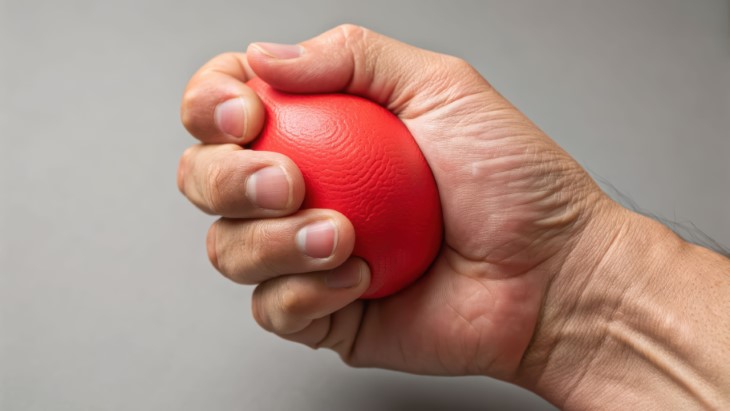
The ball squeeze. Take a tennis ball, a stress ball, or even a rolled-up pair of socks. Hold it in your palm and squeeze with slow, steady pressure. Hold for about ten seconds, then release. Aim for ten to fifteen squeezes per hand, once a day. This builds the crushing strength you rely on for opening bottles and gripping railings.
The fingertip pinch. Pinch strength is a little different from grip strength, and it matters just as much for picking up small items like buttons, coins, or silverware. Hold a thin object such as a book between your fingertips and thumb, with your arm down by your side. Hold for as long as you comfortably can, working up toward a minute, and repeat several times per hand every other day.
The rubber band stretch. This one works the often-neglected muscles that open your hand. Loop a rubber band around your fingers and thumb, then slowly spread them apart against the resistance. Do about fifteen repetitions per hand. Balancing the squeezing muscles with the opening muscles keeps your hands healthy and well-rounded.
Everyday tasks that count. Some of the best training hides in plain sight. Carrying your grocery bags by hand instead of using a cart, opening jars yourself rather than reaching for a gadget, and even kneading dough all give your hands honest work. Treat these moments as small, useful workouts rather than chores to avoid.
You can keep an eye on your progress without any special device. Notice how the everyday tasks feel. Is that jar lid easier to twist than it was a month ago? Can you carry the groceries a little farther before setting them down? These small wins are real signs that your hands, and the body they reflect, are getting stronger.
As with any new activity, the wise approach is to start gently. Begin with short sessions and build up gradually as your hands adjust. A bit of mild soreness afterward is perfectly normal, but you should never push into actual pain. If you have arthritis or any concern about your joints, a quick word with your doctor before you begin is always a good idea.
Consistency matters far more than intensity. Even five minutes a day, three or four days a week, can add up to a meaningful change over a couple of months. You might pair your hand exercises with something you already do each day, like watching the evening news or waiting for the coffee to brew, so the habit sticks.
It is a wonderful thing when caring for your health can be this simple. The next time you open a jar or shake a friend's hand, remember that you are doing more than completing a small task. You are tending to one of the clearest, most hopeful signals of a long and independent life, and that is something well within your own two hands.