
Tucked away in your wrist and neck is one of the simplest and most revealing health measurements you have, and it costs nothing at all to check. Your resting heart rate, the number of times your heart beats each minute while you are calm and still, offers a quiet window into how well your heart is working, and even hints at how long and how healthily you may live. Yet most of us have never taken a moment to measure it. Let's change that, with a friendly look at what the number means, how to check it properly, and the simple steps that can nudge it in a healthier direction.
Your resting heart rate is exactly what it sounds like: how many times your heart beats per minute when you are awake but at rest, not moving, not stressed, and not fresh from a cup of coffee or a brisk walk. It is measured in beats per minute, and it reflects how hard your heart has to work simply to keep blood flowing while your body is at ease.

Think of your heart as a pump that never takes a day off. A strong, efficient heart can push plenty of blood around your body with each beat, so it does not need to beat as often. A less conditioned heart has to beat more frequently to do the same job. That is why, in general, a lower resting heart rate is a good sign.
For most adults, a resting heart rate somewhere between 60 and 100 beats per minute is considered normal. Within that band, lower generally points to better fitness and a more efficient heart. People who are very physically fit, and trained athletes in particular, often have resting rates well below 60, sometimes down in the 40s, simply because their hearts have grown so strong and efficient.
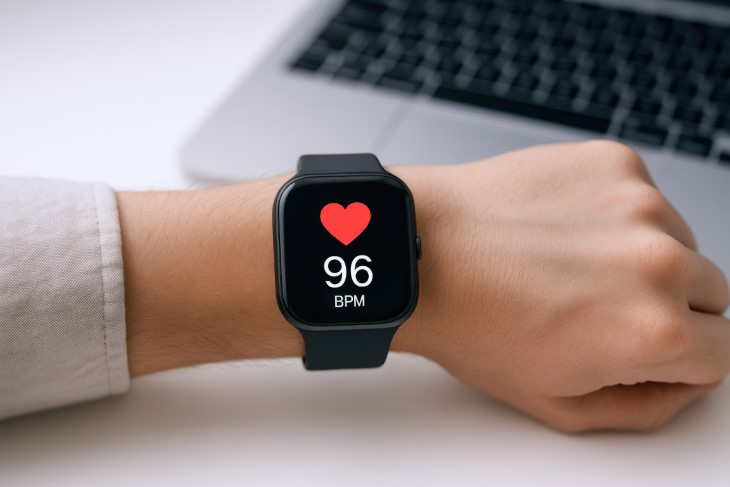
It is worth knowing that "normal" and "ideal" are not quite the same thing. Because so many people today are less active than they could be, the average is not necessarily the target. Many experts suggest that a resting rate closer to the lower half of that range, say somewhere in the 50s or 60s, is a healthier place to be. A rate that regularly sits near the top of the range, approaching or above 90, is worth paying attention to, even though it still counts as normal.
Here is where this humble number becomes genuinely fascinating. A large body of research has found that a lower resting heart rate tends to go hand in hand with better cardiovascular fitness and a longer life, while a higher resting rate is associated with a greater risk of heart disease, stroke, and even early death. Some research goes further, suggesting the link may be more than a coincidence, and that a lower rate may actually help protect health over the long term.

The idea makes intuitive sense. Every beat asks a little something of your heart, and over the years those beats add up. A heart that beats more efficiently, and therefore less often, faces less cumulative wear and tear across a lifetime. Studies have shown that even within the normal range, a resting rate near the top carries more risk than one comfortably in the 60s. So this simple measurement is not just a snapshot of today. It can be a gentle signpost toward your future health.
Many everyday things can nudge your heart rate up or down, which is why it is best measured under calm, consistent conditions. Factors that commonly raise it include:


Because of all these influences, one high or low reading means very little on its own. What matters is your typical resting rate over time, measured when you are genuinely at rest.
Checking your resting heart rate takes about a minute, and the best time is first thing in the morning, before you get out of bed, while you are still calm. Here is how:
If you happen to own a fitness tracker or a smartwatch, it likely records your resting heart rate automatically, day after day. That can be handy, not so much for any single number as for the trend over weeks and months, which shows you whether your efforts are paying off.

A resting heart rate is a useful guide, but it is your doctor who can interpret it in the context of your own health. It is worth a conversation if:
None of this is cause for alarm, but your heart is worth a little attention, and these are simply the signals worth mentioning at your next visit.
For some people, healthy habits are not the whole answer. When there is an underlying condition, a doctor may prescribe medication that deliberately slows or steadies the heartbeat. These are not for a healthy person who simply wants a lower number. They are treatments for specific problems, most often a heart rate or rhythm that is too fast or irregular, high blood pressure, chest pain, a previous heart attack, or heart failure. Here are the kinds most commonly used, in plain terms:

A few important points tie all of this together. These medicines are carefully matched to the individual, and a heart rate lowered by medication is not the same thing as a low rate earned through fitness. Above all, never start, stop, or change the dose of a heart medication on your own. Stopping some of them suddenly, beta blockers in particular, can be dangerous and cause the heart rate and blood pressure to rebound. If you are taking one of these and notice unusual tiredness, dizziness, fainting, or a very slow pulse, or if a reading ever worries you, speak with your doctor rather than making any change yourself. This article is general information, not medical advice, and the right choice for you is always a conversation to have with your own doctor.
The best news of all is that your resting heart rate is not fixed. With a few steady habits, you can often bring it down over time, and every few beats lower is a meaningful gift to your heart. Here are the most effective steps:


As useful as it is, your resting heart rate is only one guidepost among many, not the whole story of your health. There is natural variation from person to person, and a number slightly outside the usual range is not automatically a problem. The goal is not to turn it into a competition or a source of worry, but simply to know your own baseline, keep a friendly eye on it, and let it encourage the healthy habits that help your whole body, not just your heart.