
Although the founding of modern astronomy is often attributed to the great Greek scholars, Plato and Aristotle, European researchers now believe that humans that lived thousands of years earlier than they did already have a nuanced understanding of the stars.
The researchers studied cave drawings spanning Spain, France, Turkey, and Germany, and realized that what they were looking at was more than just mere depictions of nearby wildlife. It turns out that the bulls, rams, leopards, scorpions, and fish that they saw in the drawings are actually representations of constellations in the night sky.
Martin Sweatman and Alistair Coombs, from the Universities of Edinburgh and Kent respectively, published their findings in the Athens Journal of History last month. They undertook a chemical analysis of the paint used in the cave drawings and managed to date all of them back to between 12,000 and 40,000 years ago.
Furthermore, the researchers also used advanced software to calculate where the stars were positioned during the time that the cave drawings were drawn. To their astonishment, the researchers found that the cave drawings actually marked the dates of significant comet sightings, and were also correlated with star constellations visible at the time they were painted.
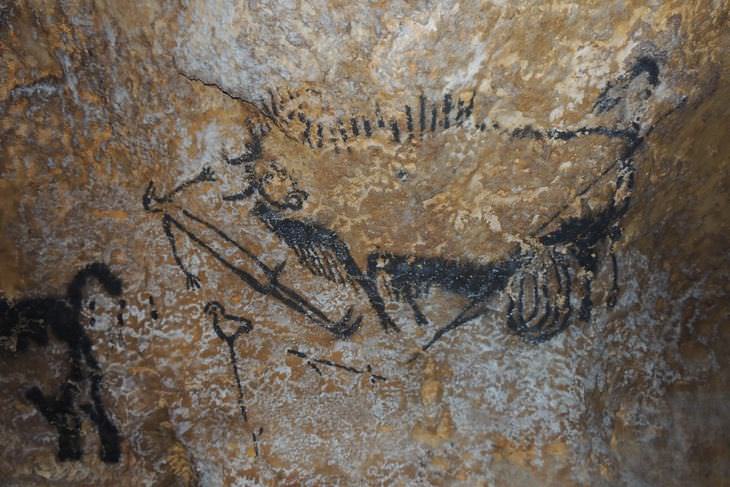
The world-famous Lascaux Shaft Scene, which was studied by the researchers, was found to depict a comet strike that occurred circa 15,200 BC. It’s hypothesized that the rhinoceros imagery contained in the painting signifies the constellation of Taurus, whereas the horse symbolizes the stars in the constellation of Leo.
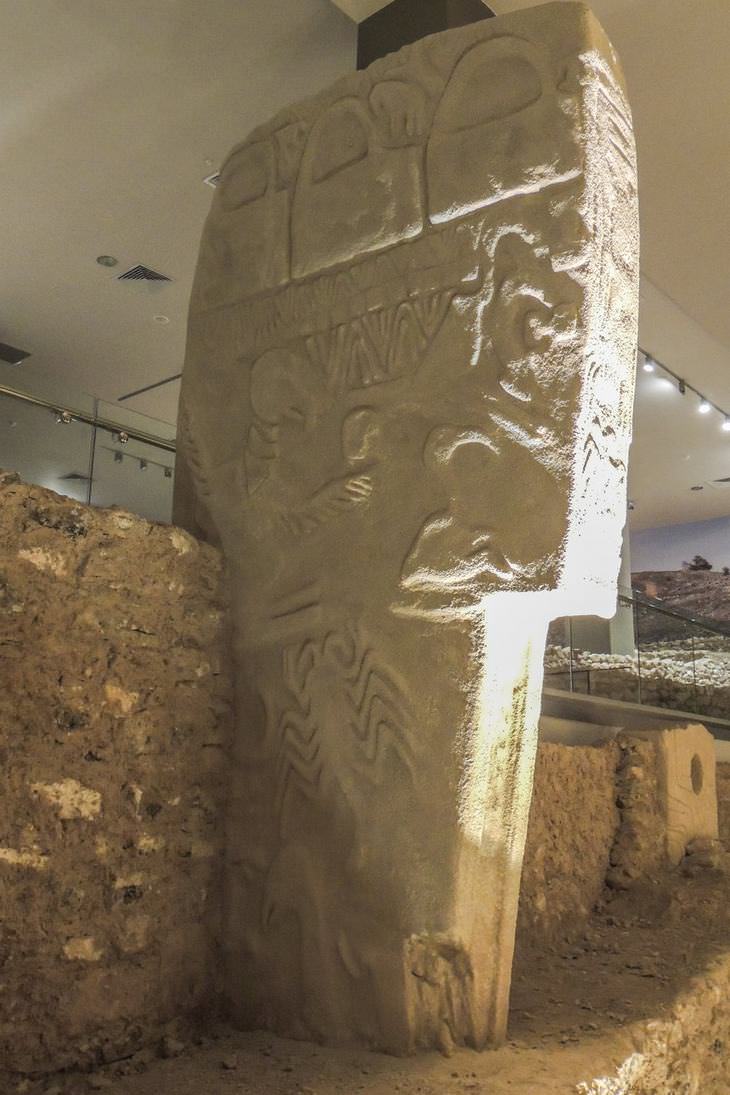
Another finding that the researchers made was that a pillar in Gobeki Tepe, Turkey’s ancient archeological site, depicts a catastrophic comet strike that took place circa 11,000 BC. It features etched designs of a scorpion, bear, and bird, and the researchers were able to determine that the carvings represented the constellations that were in view at the time they were carved. More specifically, the carvings represented the Scorpius, Virgo and Pisces constellations.
As a result of all of the above, archeologists now believe that humans were keeping track of time via the stars up to 40,000 years ago. It’s also evident that ancient peoples had an understanding of the equinoxes, which occur due to the gradual shift of Earth’s rotational axis as it orbits the sun.
This notion disputes the fact that astronomer Hipparchus discovered equinoxes in 129 BC. "Early cave art shows that people had advanced knowledge of the night sky within the last ice age. Intellectually, they were hardly any different to us today," Sweatman said in a press release.
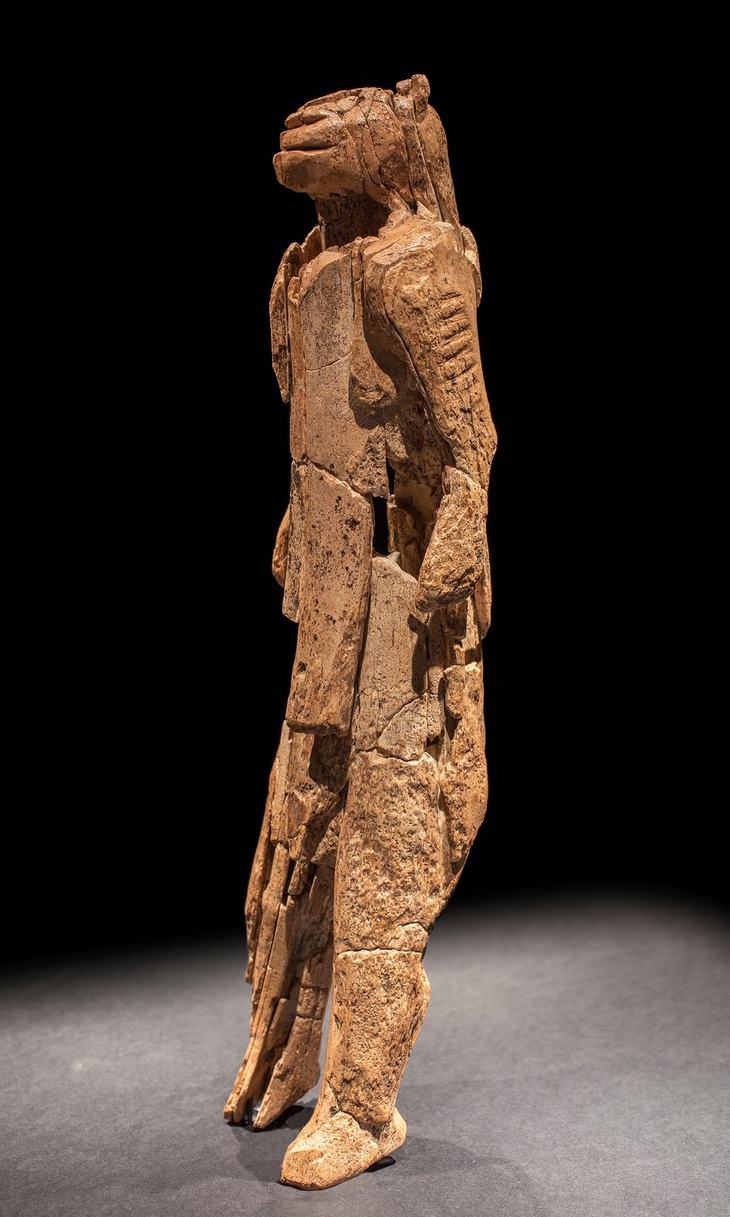
Many pieces of prehistoric art were cited in the study, not least the painting in Lascaux, France, but it also suggested that certain ancient relics were also used for recording time. For instance, The Lion-Man of Hohlenstein-Stadel Cave, the oldest known sculpture, dates back to 38,000 BCE. It is now believed to symbolize the star constellation Leo.

4:55
This Video Will Teach You About the Causes of Heartburn
Heartburn is a problem for many of us, but what actually causes it, and how can it be treated? Find out in this informative video.
Study Finds a Painless Way to Monitor Blood Sugar Levels
A new study found that continuous glucose monitors improve blood sugar control and quality of life in diabetes patients - pain-free.
Age-Related Cognitive Decline Might Be a Reversible Thing!
Age-related cognitive decline is something we've all come to accept, but a new study has shown that the process might just be reversible. Read on for more.
When You Look to the Sky at Night, Look For These Figures
Get ready to become an astronomical expert with these depictions of the stories behind the most famous constellations in the world.
I Never Knew These Stunning Facts About Our Universe
If you thought you understood the universe, you'll be completely floored by this insane facts.
This Comet Will Not Return for Another Million Years
For the amateur photographer, the hard-core space fans, and everyone else, here are the night sky events you can't miss this august!
Is Weekend Sleep as Good as Regular Sleep? Let's Check
If you thought sleeping in on the weekend was a bad habit, you're about to find out that it's quite the opposite.
10:59
Fascinating Science: How Sand is Turned Into Glass
Have you ever looked through a window and wondered how it was made from simple beach sand? This video shows you that incredible process.
2:11
Here are Some Unique Tricks You Can Do at Home With Salt!
This video shows us a few interesting magic tricks that you can do anytime using salt, ice, and other items you can find at home.
Are You Ready to Learn About the Expanse of the Universe?
If you have an interest in the unknown, then look no further than these 15 unbelievably facts discovered about space
World-Famous Psychological Experiments That Shocked Us
The human mind is a most intricate thing. It also has some quirks and idiosyncrasies that are both incredible and a little uncomfortable. Read on for more.
This New Blood Pressure Drug Could Be a Game-Changer
Zilebesiran, an investigational drug that is showing profound success in late-stage clinical trials is offering hope for millions who struggle to keep their blood pressure in check.
Why It's So Hard to Get People to Change Their Stance
You feel that your knowledge is broader because you've read and researched a lot on the topic, but the other side still isn't convinced, even when you present facts and statistics. Why isn't that enough?
13:41
The 5 Most Important Fossil Discoveries from Last Year
2024 saw some really amazing fossil discoveries!
4:57
The First 3D-Printed Hotel is Already Being Built!
s evidence of this, a groundbreaking project is nearing completion, in which a hotel is being printed, and tourists will soon be able to visit it. Curious to see what it looks like?
Hair Regeneration Could Be Possible With This New Process
Learn about an innovative new study which has revealed a novel treatment for effective hair regeneration.
8:12
How Humans Helped Cats Take Over the World
The relationship between humans and cats goes back as far as 9,500 years. How did it al start? And how did humans help cats essentially take over the world?
These Underwater Craft Are Changing Marine Science
Here's a look at the most remarkable machines currently expanding our understanding of the underwater world.
14:34
What to Do (and Avoid) When Setting Up a Smart Home
Here's how you can set up a family-friendly smart home that will last long.
4:11
This Video Will Show You Where We Are in the Universe!
Where is our galaxy in the known universe? This video will fly with you to ever-larger destinations, showing you our little planet's cosmic address from a very large viewpoint.
2:41
Trick-Mousing is Such Adorable Entertainment...
Mice are much cleverer than most people believe, and they easily respond to training, as long as you use positive reinforcement, or in other words - reward them frequently for their behavior with food.
8:48
Fascinating: What Around Us is Invisible?
The Invisible Things that Turn the World...
5:28
Just How Small is an Atom? - Fascinating!
Just how small are atoms? And what's inside them? The answers turn out to be astounding...
5:47
This Genius Child is a Better Calculator than a Computer
This ‘human calculator’ could likely outpace you entering the numbers into a calculator.
33:02
The Entire Story of Earth in 30 Minutes!
The story of our planet, from birth to the adult, ancient planet we see before us today - all in just half an hour.
22:52
Will AI Take Your Jobs? An Expert Explains the Future
Gonzaga University's AI professor Graham Morehead some of our most pertinent questions related to AI.
36:24
Ever Wonder How a Steel Locomotor Works?
Let’s take a closer look at the engineering behind these compact workhorses.
Meta Unveils New Glasses that May Change Sports Forever
META has revealed a new line of AI-powered smart glasses: Oakley Meta HSTN
10 Fascinating Facts About the Subconscious Mind
10 facts about the way the subconscious mind works
4:49
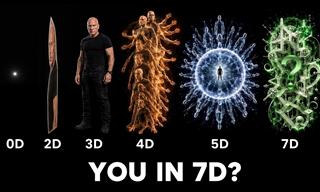
This Video Shows You a Different Way to Look at the World
You’ve heard of the fourth dimension but do you know what it is? This TED-Ed video helps uncover a bit of the mystery.
11:05
Science: Can AI Preserve Our Most Precious Memories?
Technologist Pau Aleikum Garcia talks about synthetic memories.
8:28
Could These Signals Be A Sign of Extraterrestrial Life?
Scientists have recently picked up on a mysterious radio signal from space, and it could mean a lot - maybe even a sign from extraterrestrial life forms.
7 Air Pollution Solutions That Will Help Us Breathe Easy
Let's take a look at some global initiatives that have been launched to reduce air pollution levels.
5:50
Why Do We Sometimes Hallucinate? Find Out Here!
In this informative TED-Ed video, Elizabeth Cox details the science of hallucinations.
7 Discoveries of Albert Einstein that Changed the World
The 7 biggest discoveries of Albert Einstein and how they changed the world forever.
7:21
Science: 20 Mechanical Principles Demonstrated Using Lego
In this video, we'll explore a variety of fascinating mechanical mechanisms, all demonstrated using Lego models.
TRIVIA: 25 Shocking Differences Between the Sexes
Did you know that there are some vast differences between the sexes? These 25 scientific facts will probably come as a big surprise to you, they did to me.
7 Mind Blowing Science Facts School Left Out
Put on your learning caps! We rounded up 7 surprising scientific facts you probably didn't learn at school.
Science in 2025: 8 Developments That Could Change it All
Here are some of the most exciting trends in science and healthcare to keep an eye on.
2:03:03
Full Documentary: From First to Last Dinosaur
With stunning visuals and cutting-edge science, we’ll bring their story to life—from their very first day to their last, a saga of survival, adaptation, and mystery.
4:57
Fascinating: How Does Our Digestive System Work?
This video explains how the human digestive system does its daily.
Superwood: A New Material That Could Replace Steel
After decades of relying on steel—a material that produces nearly two tons of CO2 for every ton manufactured—builders may soon have access to something far more sustainable and surprisingly stronger: Superwood.
21:24
James Webb Telescope: Redefining Our View of Space
Here's a brief look at all the amazing discoveries made by the James Webb Space Telescope so far.
21:25
How Every Nuclear Power Got Its Atomics
This video will explain how each nation earned the complex and controversial title of nuclear power.
Remembering the Life and Wisdom of Stephen Hawking
Stephen Hawking possessed one of the greatest minds the world has ever seen, but was also impaired by a debilitating disease. Here are his life ant times.
Nobody Believed These 5 Scientists, But They Were Right
These 5 scientists were shamed and ousted, or rudely ignored, although years later, their "crazy" theories turned out to be true...
34:33
Is China Number 1 in Global Technology?
In this video, we’ll take a closer look at the new developments hitting the market — and what they could mean for the future of transportation.
To enable your Ad-Free Subscription, please fill the fields below
Your subscription was successful, now you can enjoy an ad-free experience!! Note: To make sure you get no ads, please make sure to log in to your account. If you are logged in already, then refresh the page. The subscription can be cancelled at any time.