In the depths of the Alaskan winter of 1925, a tiny, frozen town at the very edge of the world found itself facing a catastrophe. A deadly disease had appeared among its children, the only medicine to stop it lay nearly 700 miles away, and every ordinary road to rescue was sealed shut by ice and storm. What happened next became one of the most stirring stories of courage in American history, a desperate relay carried not by machines, but by teams of dogs and the brave men who drove them. This is the story of the Great Race of Mercy.
Nome sits on the windswept western coast of Alaska, a former gold rush town facing the Bering Sea. In 1925 it was home to around 1,400 people, with thousands more in the surrounding communities, many of them Alaska Native families. In summer, ships could reach it. In winter, it was utterly cut off. The sea froze solid, there were no roads in, and the nearest railroad ended at the town of Nenana, 674 miles away across a vast, frozen wilderness. Even the mail, carried by dog sled, took close to a month to arrive.
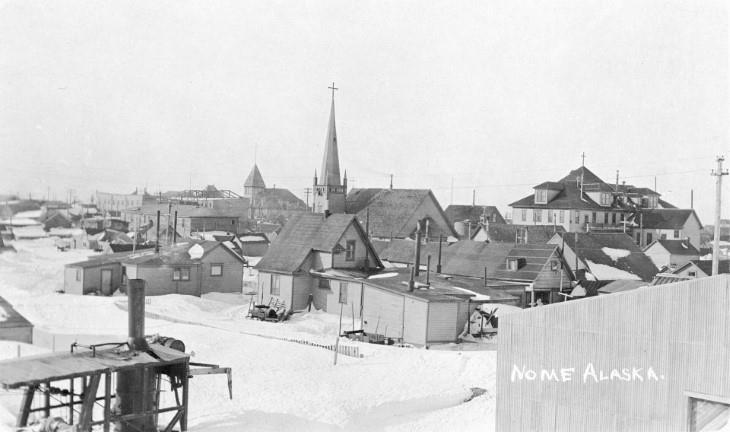
Into this isolation came a crisis that could not wait. In January, Nome's only doctor examined several gravely ill children and recognized the signs of diphtheria, a terrifying and highly contagious illness that can swell a victim's throat until they cannot breathe. It was especially lethal to the young. Worse still, the town's supply of the antitoxin that could treat it had expired, and a fresh order had never arrived before winter closed in. Without it, the doctor warned by radio telegram, an epidemic was almost certain, one that could devastate the entire region.
A supply of 300,000 units of the lifesaving serum was located and rushed by train to Nenana, the end of the railroad line. But that still left those 674 brutal miles between Nenana and Nome, with no way to cross them.
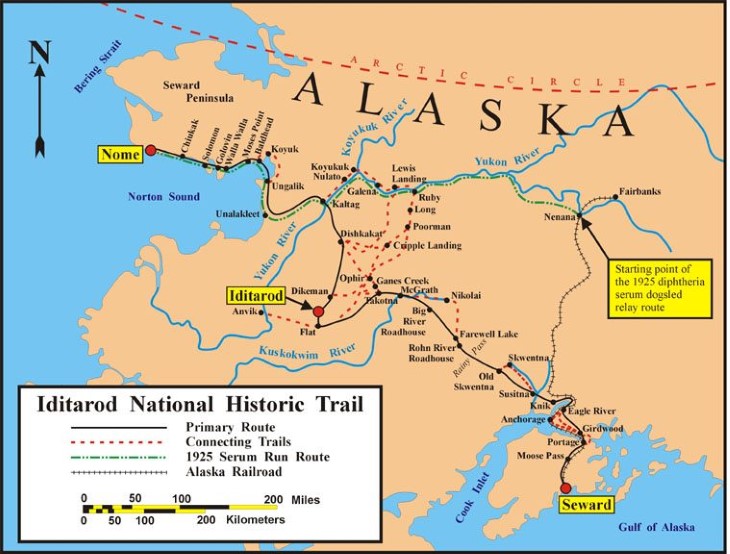
Officials considered flying the serum in, but the only available aircraft were fragile, open-cockpit machines never tested in such savage winter cold, and a blizzard was bearing down. The risk was deemed too great. That left just one option, the same method that had always carried mail and supplies through the Alaskan winter: the dog sled. The governor authorized a relay. Around 20 of the territory's finest mushers and roughly 150 sled dogs would carry the serum from hand to hand, team to team, across the frozen miles in a race against the clock and the weather.
The relay began on January 27, 1925, the moment the serum arrived in Nenana. From there it passed from one driver to the next, day and night, without pause, through some of the most punishing conditions imaginable. Temperatures plunged to 50, 60, even 70 degrees below zero. Winds howled across open country, and a great blizzard rolled in to make matters worse.
The drivers who took up this challenge were a hardy mix of Alaska Native and immigrant mushers, many of whose names history has too often forgotten. Each one drove his team as fast as the trail and the cold would allow, then handed the precious package onward and trusted the next man to do the same. Wrapped and bundled against the freeze, the serum moved steadily west, mile by frozen mile, carried forward by the legs of the dogs and the will of the men behind them.
The hardest stretch of all fell to Leonhard Seppala, a Norwegian-born musher widely regarded as the greatest in Alaska, and his remarkable lead dog Togo, a Siberian Husky already 12 years old. Seppala set out from Nome heading east to meet the oncoming relay, then turned to race the serum back over the most treacherous part of the entire route.
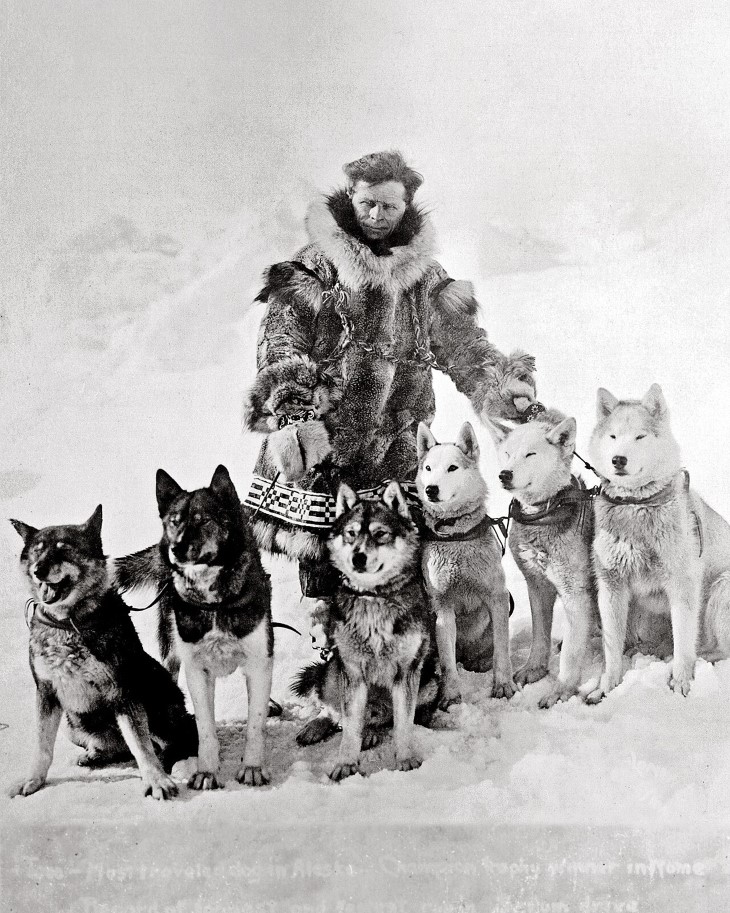
To save precious time, Seppala made a daring choice. Rather than follow the long way around, he drove his team straight across the frozen surface of Norton Sound, a wide inlet of the sea that could crack apart without warning and plunge dogs and driver into the deadly water below. Trusting Togo's extraordinary instincts to find the safe path through the dark and the wind, they crossed the ice successfully, not long before it broke up behind them. That gamble, and Togo's sure-footed guidance, saved roughly a full day. In all, Togo's team would travel farther than any other in the relay, across its most dangerous ground.
As the serum neared Nome, the blizzard reached its full fury, and officials at one point ordered the relay halted, fearing the storm might claim the medicine altogether. But the message to wait did not reach everyone in time.
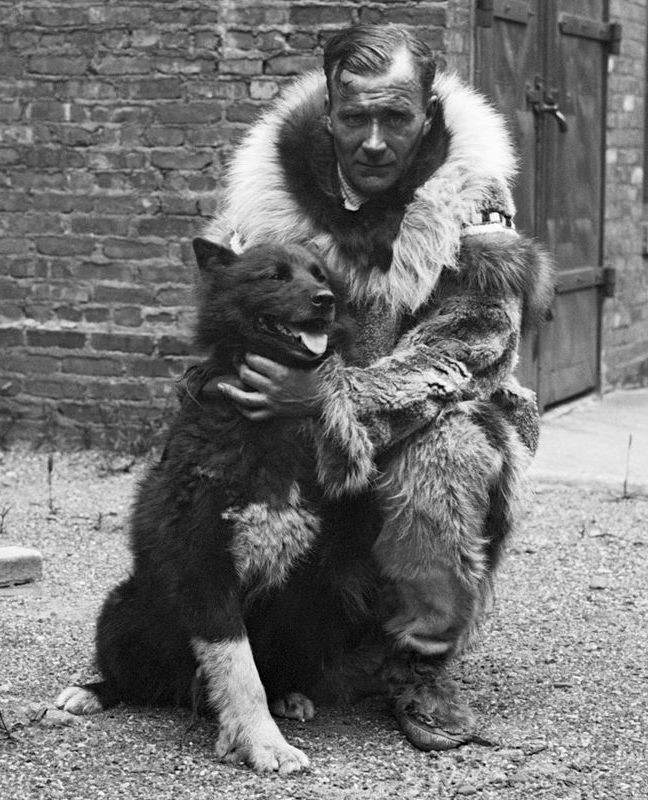
Gunnar Kaasen with Balto
The last great push fell to Gunnar Kaasen, another Norwegian driver and a close friend of Seppala, with his lead dog Balto. Kaasen pressed on into a screaming headwind and blinding snow so thick he often could not see the trail, or even the dogs pulling just ahead of him. At one point a violent gust flipped his sled and hurled the package of serum into the snow. In the whiteout he was forced to dig through the drifts with his bare hands until, to his enormous relief, he found it again. Later, Balto suddenly stopped dead and refused to go on. When Kaasen went to look, he discovered the dog had sensed thin ice giving way beneath them at a river crossing. Balto had very likely saved them all from plunging through.
Kaasen reached the final exchange point ahead of schedule, only to find the next musher asleep, certain the relay had been paused for the storm. Rather than lose time waking him and harnessing a fresh team, Kaasen decided to carry on himself for the last stretch into town. Exhausted and half frozen, he and Balto drove the final miles and arrived on the main street of Nome at half past five in the morning on February 2, 1925.
The serum had made it. Though frozen solid, all 300,000 units were intact, and by midday they had been thawed and were being used to treat the sick. The epidemic that had threatened to empty the town was stopped.
The numbers still astonish. Around 20 mushers and 150 dogs had carried the medicine 674 miles in about five and a half days, a journey that normally took a month, through blizzards and temperatures far below zero. Not a single drop of the serum was lost. A whole community, and very likely many beyond it, had been saved by the endurance of dogs and the devotion of the people who ran beside them.
Because Balto led the team that crossed the finish line into Nome, it was Balto who became famous. The new medium of radio carried the drama to a captivated nation, and within months the dog was a celebrity. Before the year was out, a bronze statue of Balto was unveiled in New York City's Central Park, where it remains a beloved landmark to this day, with children still posing beside it.
Yet there is a bittersweet twist to the tale. Seppala, who owned both dogs, had not even chosen Balto for his main racing team, considering him better suited to slow freight work. In Seppala's heart, the true hero was Togo, the aging dog who had carried him across the longest and most perilous miles, including that breathtaking gamble over the ice of Norton Sound. Seppala was quietly hurt that so much praise went to Balto while Togo's far greater feat was overlooked. Many mushers and historians have long agreed with him.
In time, Togo received his own honors, including a statue of his own in New York and, decades later, a film telling his story. Seppala never wavered in his devotion, once saying he had never known a better dog than Togo, praising his stamina, loyalty, and intelligence above all others.
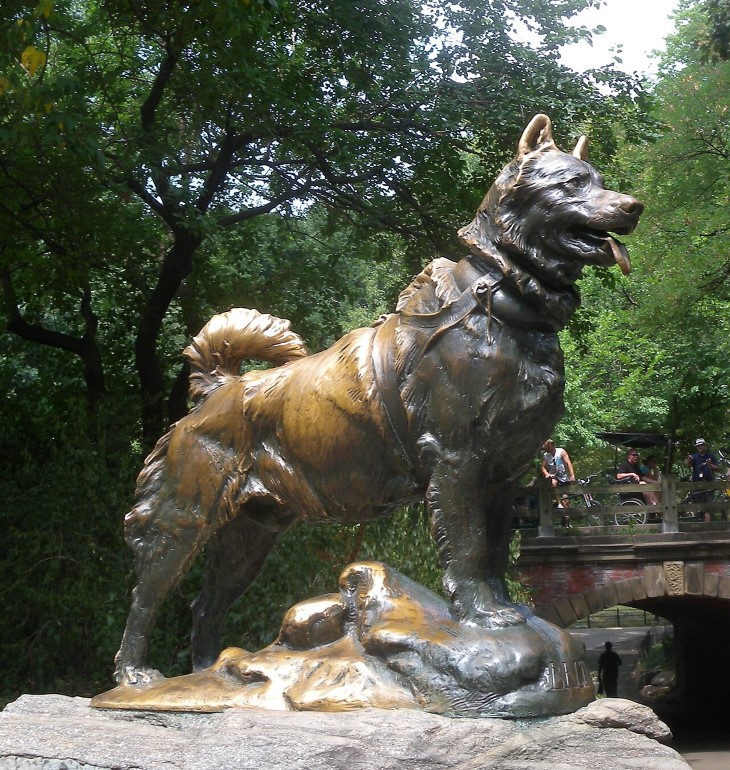
Statue of Balto, lead dog on the last relay team. The statue is located in Central Park (NYC) and is dedicated to all the dogs involved in the serum run.
The truth, of course, is that there was no single hero. The Great Race of Mercy was a triumph of teamwork, of 20 drivers and 150 dogs who each gave everything across their own stretch of frozen trail, many of them Native Alaskans and immigrants whose courage deserves to be remembered alongside the famous names. Together they achieved something that no machine of the day could manage.
That heroic journey is honored every year by the Iditarod Trail Sled Dog Race, which follows much the same route across Alaska and keeps the memory of the serum run alive. A full century has now passed since that desperate winter, yet the story has lost none of its power to move us. It remains a shining reminder of what loyalty, courage, and the ancient bond between people and their dogs can accomplish, even against the cruelest odds the world can offer.