
Some old people can remember things just as well as those nearly half their age. Due to their ability to stay sharp in old age, scientists have nicknamed them “super-agers.”
Several months ago, researchers discovered at least one physical basis for these differences that has to do with the thickness of the outer layer of their brains. However, in a small study published in October in the Journal PLOS One, Researchers decided to take a look at whether there was a social side to these differences as well.

Sure enough, after analyzing 31 super-agers over the age of 80 as well as 19 cognitively average people of the same age, they found that the super-agers tended to have more satisfying and high-quality relationships than their normal peers.
Emily Rogalski, an associate professor of cognitive neurology at Northwestern’s Feinberg School of Medicine and lead author of the study, stated that “you don’t have to be the life of the party, but this study supports the theory that maintaining strong social networks seems to be linked to slower cognitive decline.”
To come to their conclusions, the researchers had all the participants complete a standard questionnaire designed to assess their general happiness and level of life satisfaction. Despite getting similar scores to their peers, the super-agers stood out in terms of how they evaluated their friendships with others.
Rogalski goes on to state that “it’s not as simple as saying if you have a strong social network, you’ll never get Alzheimer’s disease. But if there is a list of healthy choices one can make, such as eating a certain diet and not smoking, maintaining strong social networks may be an important one on that list.”
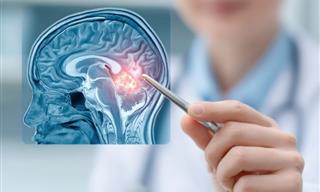
Thanks to other research, scientists were already aware that the brains of super-agers were different – physically speaking – from normal brains belonging to people of the same age group. They’re slightly larger, especially in the outer cortex – the part of the brain that consists mostly of gray matter and is rich in neurons. However, what scientists didn’t know until a few months ago was whether that was because super-agers had bigger brains to begin with or if they were somehow protected from the decay that comes with aging.
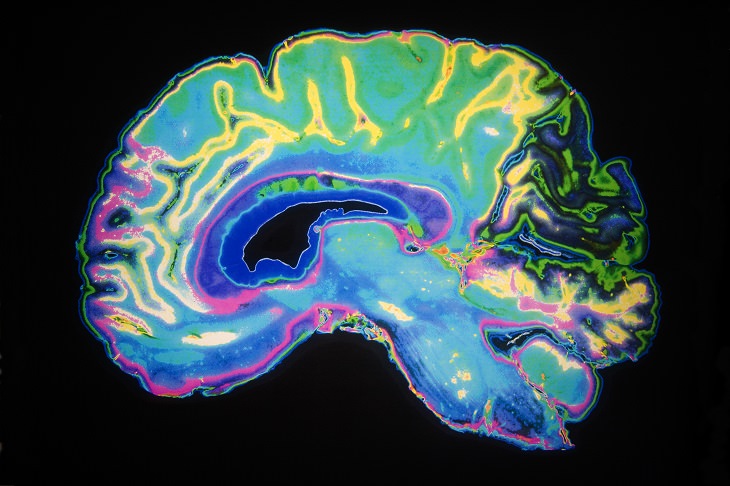
After comparing the brains of 24 super-ager men and women to those of 12 of their normal peers using MRI, the researchers found the answer came down to age-related shrinkage. Over the course of this 18-month study, the scientists saw the brains of the average study participants atrophy at more than twice the rate of the brains of the super-agers.
Together, the two recent findings add several important new pieces to the puzzle of what makes a super-ager – and provides insight into how age and social networks may affect the brains of regular people as well.
As we age, the gray matter in our brains – the stuff we rely on for seeing, hearing, processing emotions, learning new information, and exerting self-control – shrinks and degrades. So too does the brain’s white matter, which contains the complex web of twisting fibers that carry information across different parts of the brain.
A 2014 study published in the journal Nature Communications suggested that in some elderly people, white matter may act as a backup generator that can fire up when grey matter runs down. However, if this doesn’t occur, then the person experiences the typical effects of aging – fuzzy memory, difficulty learning new skills, and a harder time paying attention.
Super-agers are rare, but some research suggests that there are things we can all do to stay sharp as we age. This includes getting regular exercise, maintaining strong bonds with friends and family, quitting or not smoking, and making the effort to learn new things.
So, if you’ve been meaning to meet up with some old friends or have been putting off joining that yoga class, there’s definitely no time like the present!
Source: sciencealert
Images: depositphotos
Related Articles:
Here's How You can Live Much Longer
Four Vaccinations You Need After 50
Study Finds There’s No Age Limit to Start Strength Building Exercises

5:50
Why Do We Sometimes Hallucinate? Find Out Here!
In this informative TED-Ed video, Elizabeth Cox details the science of hallucinations.
An Alzheimer's Cure Might Just Be Around the Corner!
Impressive new research has discovered the earliest point in a neurodegenerative process that is thought to lead to dementia. Find out more here.
These 15 Things Have All Strongly Been Linked to Cancer
When it comes to deaths in the US, cancer is second only to heart disease. Here are 15 known and suspected carcinogens.
These New GMO Foods Could Soon be in a Shop Near You!
Scientists are creating new genetically modified foods all the time, and here you’ll find the latest foods that have been designed with the consumer in mind.
This is How You Can Bake the Perfect Cookies Every Time
Want to make the perfect cookie? Well, after reading this article, you'll be able to do so every single time you bake!
NASA Comes One Step Closer to Life on Mars...
NASA has recently announced that they have found organic compounds on Mars. Find out more here!
27:48
Fascinating: How are CPU Chips Made?
This is a comprehensive look at both the fabrication process and the workings of a microchip plant that makes CPUs for computers.
Uncover the Secrets of the Universe in These Documentaries
This list of riveting space documentaries will help you unlock the mysteries of the universe and beyond.
3:55
50 Years Later, We're Debunking the Moon Landing "Hoax"
How do we prove to people the moon landing was real? By answering their doubtful questions in this video.
8 Ancient Greek Scholars & Their Life-Changing Inventions
The foundations of modern medicine, engineering, biology, and astronomy were set up by these 8 stellar minds more than two thousand years ago.
Is Microsoft's "AI Doctor" Better Than a Real Doctor?
A new study presents a committee of digital doctors achieving approximately 80% accuracy in complex medical diagnoses – far beyond the average of general practitioners.

5:01
The Truth About Folding Phones You Need to Know

Don’t buy a foldable without knowing this first.

8 Biggest Mysteries Still Surrounding the Human Body
Although modern science has revealed much about the human body, there are some things that still remain unknown. Here are the 8 biggest mysteries about it.
38:55
What Happens the Deeper You Go Underground?
What happens when pressure pushes matter beyond the limits of what we thought possible?
4:57
Fascinating: How Does Our Digestive System Work?
This video explains how the human digestive system does its daily.
Whoa! Who Knew the Human Body Was Capable of So Much?
Have a look at these 17 intriguing facts about the human body that we can practically guarantee will leave you in awe.
21:51
What Will the Universe Look Like in 10 Quintillion Years?
These questions take us beyond science into the realm of imagination, as we contemplate the ultimate fate of our Universe and everything within it.
10:59
Fascinating Science: How Sand is Turned Into Glass
Have you ever looked through a window and wondered how it was made from simple beach sand? This video shows you that incredible process.
21:24
James Webb Telescope: Redefining Our View of Space
Here's a brief look at all the amazing discoveries made by the James Webb Space Telescope so far.
3:39
Magic is Only A Vibration Away With This Great Experiment
All it takes is some sand, a metal plate and carefully toned vibrations from a speaker to create stunning and complex patterns. This video shows you the amazing results!
5 Puzzling Mysteries That Science Finally Managed to Solve
These weird occurrences have puzzled humanity for decades, if not centuries. Finally, scientists solved them & the solutions are exciting...
2:39
Discover 5 Cutting Edge Humanoid Robots in 2025
Watch the video to see which robots are leading the pack in intelligence, mobility, and impact.
Earth Is So Incredible: I Was Stunned by These 50 Facts
Here's a post that will explain to you just what's truly, scientifically amazing about our planet Earth. I'm gobsmacked.
10 Declassified U.S. Military Secrets That'll Astound You
Government military secrets can range from amusing to absurd to downright terrifying, but they are all extremely intriguing. Here are 10 such secrets.
Enjoy This Fascinating Collection of NASA's Best Photos
Here are 15 of NASA's most amazing recent pictures, along with brief explanations of exactly what is going on in each one.
7:21
Science: 20 Mechanical Principles Demonstrated Using Lego
In this video, we'll explore a variety of fascinating mechanical mechanisms, all demonstrated using Lego models.
8 Important Inventions That Were a Complete Accident
It might be interesting for you to learn that some very important scientific innovations were born as a result of an accident.
10:11
10 Smart Home Gadgets You Didn’t Know You Needed
If you’ve ever wanted a smarter, more efficient home, these 10 gadgets might be exactly what you need.
11:05
Science: Can AI Preserve Our Most Precious Memories?
Technologist Pau Aleikum Garcia talks about synthetic memories.
1:14:42
Documentary: How Did Our Universe Come From Nothing?
Can “nothing” truly become “something”? In this video, we’ll dig into this mind-bending question.
10 Obscure Inventions by World Famous Inventors
We’d like to bring your attention to 10 lesser-known inventions of famous figures in history, which will reveal a new and different side of these inventors to you.
5:39
Why Are Your Ears Ringing? The Causes Explained
Nearly 15% of the human population worldwide are plagued by this strange sensation, but most people don't know the causes behind ringing in the ears...
11:43
Learn While Laughing: The Incredible Tardigrade
If you love nature and you love laughing, this incredible series of nature videos are a great way to spend a few minutes.
These 14 Forgotten Robots Promised So Much...
This collection showcases 14 cool vintage robots that were supposed to change everything.
Science Lesson: 10 Fiery Facts About the Sun You Must Know
Learn some fascinating and little-known facts about the Sun in this article.
Blood Test Breakthrough Transforms Leukemia Diagnosis
This research demonstrates that rare circulating stem cells in blood carry the same diagnostic information as bone marrow samples, enabling doctors to identify disease progression months before clinical symptoms appear.
Hubble Telescope: 35 Years of Incredible Photos
Exploring 35 years of reality-changing, universe-enhancing photos that opened the sights of outer space to us all.
Do You Have One Of These RARE Genetic Traits?
How unique are you? You might have several rare genetic traits that make you unlike most of the world's population!
What is the Troxler Effect and How Does it Affect You?
Learn about Troxler's effect and the optical illusions it creates in life.
4:05
Kirobo: First Robot in Space!
It was one small step for robot and another giant leap for mankind...
1:08
Boston Dynamics New Robot Can Move Almost Like a Human
Watch the latest in robotics in this video.
20:01
Future Tech: 19 Innovations About to Change Our World
These groundbreaking new technologies will change our world.
A Quantum Leap? Revolutionary Technique Discovered
Scientists at Singapore University have developed a groundbreaking manufacturing method powered by artificial intelligence that may revolutionize how we understand and create quantum materials at the atomic level.
10:46
Neat Life Hacks To Help You Remember Things Better
A lot of us tend to forget the simplest things at times. This video provides some neat tips to help boost your memory.
8:12
The Tallest Statues Compared, Even Those Not Built Yet...
In this 3D animated size comparison, we showcase the tallest statues in the world alongside ambitious future projects.
22:35
Neuralink Update 2025: The Most Incredible Moments
Welcome to our 2025 Neuralink update, where we’ll take you through the most incredible and groundbreaking moments from the past year.
12 Steps That Help to Explain Einstein's Famous Theory
Have you ever wondered what Einstein's Theory of Relativity is all about? If you have, here is an easy-to-understand explanation!
To enable your Ad-Free Subscription, please fill the fields below
Your subscription was successful, now you can enjoy an ad-free experience!! Note: To make sure you get no ads, please make sure to log in to your account. If you are logged in already, then refresh the page. The subscription can be cancelled at any time.