
In this post, we are going to look at just what the problems that face skyscraper building are, and how these issues are being overcome.
However, not all buildings use the same solution. The current world record holder, Burj Khalifa, Dubai, is instead constructed so that no vortices can occur. Because the structure is not built uniformly, air flow is disrupted in such a way that no eddies or vortices can become organized enough to make a difference.
The building has a Y-shape plan, with each higher tier slightly rotated from the lower one, making a spiral effect. Each floor is also smaller than the previous one. Countless computer models and tunnel tests were conducted to examine the consequences of the aerodynamic principles involved.
So, thanks to clever engineers' better understanding of aerodynamic physics, and the prestige to be gained from creating the tallest skyscraper, many new record breakers are currently in the works. For example, Jeddah Tower in Saudi Arabia is set to be the first skyscraper to be raised 1 km into the sky.
Just imagine the incredible views from future buildings like this! But try not to worry about the wind so much.
BONUS: How to Build Higher and Higher
29:21
Do You Want to See How the Universe Ends?
Take a huge journey in time with us, rushing ahead billions and trillions of years to when the universe will die.
5:10
Science Lesson: A Simple Guide to Chaos Theory
This is the story of chaos theory, and how it transformed our understanding of reality.
15:18
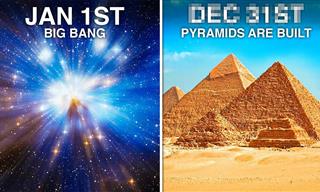
The Entire History of the Universe in One Year
Imagine compressing the entire 13.8-billion-year history of the cosmos into a single calendar year. In this cosmic calendar, the Big Bang erupts on January 1st, but our home planet and the Sun donโt even exist until late August.
27:48
Fascinating: How are CPU Chips Made?
This is a comprehensive look at both the fabrication process and the workings of a microchip plant that makes CPUs for computers.
11:08
Will We EVER See a 500-Year-Old Skyscraper?
Will high-rise buildings like the Empire State Building or the Burj Khalifa remain standing or be forever forgotten in 500 years?
21:51
What Will the Universe Look Like in 10 Quintillion Years?
These questions take us beyond science into the realm of imagination, as we contemplate the ultimate fate of our Universe and everything within it.
Could This Popular Ingredient Be a Cause of Cancer?
The chemical triclosan began to appear in a multitude of products in the early 1970s. This ingredient, found in a multitude of products has been linked to cancer.
15:18
The Entire History of the Universe in One Year
Imagine compressing the entire 13.8-billion-year history of the cosmos into a single calendar year. In this cosmic calendar, the Big Bang erupts on January 1st, but our home planet and the Sun donโt even exist until late August.
2:01
What Does the Appendix Actually DO?
Dr. Berg explains, in this video, all about the appendix and what it actually does in our body.
Hair Regeneration Could Be Possible With This New Process
Learn about an innovative new study which has revealed a novel treatment for effective hair regeneration.
9:09
Protective Measures: How Our Body Reacts to a Tattoo
In this video, weโll explore the microscopic war raging beneath your skin, where millions of your cells make the ultimate sacrifice to lock that ink in place, turning a defense mechanism into lifelong art.
Alzheimer's: What Recent Breakthroughs Have Taught Us
Now, you can discover 4 new studies that show how to do this in ways you havenโt heard of.
Earth Is So Incredible: I Was Stunned by These 50 Facts
Here's a post that will explain to you just what's truly, scientifically amazing about our planet Earth. I'm gobsmacked.
5:28
Just How Small is an Atom? - Fascinating!
Just how small are atoms? And what's inside them? The answers turn out to be astounding...
4:52
4 Super Technologies That Started Off as Failed Inventions
Check out how some of the great technological inventions of our time actually started off as failed projects.
8:44
What Does an Atom Really Look Like?
In this video, we'll try to visualize what an atom actually looks like.
The 7 Million Dollar Math Problems Facing Mathematicians
Here is a plain-English tour of all seven millennium math problems, what solving each one would mean for the rest of us, and the remarkable stories behind the two solutions so far.
38:55
What Happens the Deeper You Go Underground?
What happens when pressure pushes matter beyond the limits of what we thought possible?
The Ancient Maya - Cutting-Edge Tech Reveals Shocking Facts
An ongoing archeological project in Guatemala used novel laser technology and found over 60,000 undiscovered Ancient Maya structures.
Absolute Zero: The AI that Doesn't Need People to Develop
Imagine an AI that doesnโt need humans to teach it how to codeโit creates its own coding challenges, solves them, and gets smarter all on its own. This isnโt science fiction; itโs a groundbreaking development called Absolute Zero
Remembering the Life and Wisdom of Stephen Hawking
Stephen Hawking possessed one of the greatest minds the world has ever seen, but was also impaired by a debilitating disease. Here are his life ant times.
I Bet You Didn't Have a Clue About These Human Body Facts!
The human body is the most complex machine known to mankind, but I bet you don't know these 10 amazing facts about it...
Anti-Aging Science in 2026: What's Real and What's Hype?
Here's an honest look at where anti-aging medicine stands in 2026 - the promising, the disappointing, and the surprisingly simple things that still beat almost everything in a pill bottle.
These Ancient Inventions Have Got Scientists Stumped!
Here are 12 items from long ago which prove that our ancestors possessed knowledge and skills far more advanced than we once believed them to be.
New Research Shows Eating Sweets Won't Make You Crave More
A groundbreaking new study challenges conventional wisdom, suggesting our preference for sweet tastes may be more stable than we think.
5:50
Why Do We Sometimes Hallucinate? Find Out Here!
In this informative TED-Ed video, Elizabeth Cox details the science of hallucinations.
8:12
How Humans Helped Cats Take Over the World
The relationship between humans and cats goes back as far as 9,500 years. How did it al start? And how did humans help cats essentially take over the world?
4:49
This Video Shows You a Different Way to Look at the World
Youโve heard of the fourth dimension but do you know what it is? This TED-Ed video helps uncover a bit of the mystery.
Study Shows Seniors Still Grow New Brain Cells Daily
A new study shows that even the elderly keep on growing new brain cells, which could be the breakthrough the scientific community was waiting for...
Satisfy Your Curiosity About the Universe with These Q&As
Discover more about the universe by reading through these facts.
Wow! Who Knew That Jupiter Was So Mesmerizing?
Take a look at Jupiter like you've never seen it before!
18:14
Are These Vintage Kitchen Gadgets Any Good?
Will any of the vintage kitchen gadgets stand the test of time or outperform their contemporary alternatives?
4:05
Kirobo: First Robot in Space!
It was one small step for robot and another giant leap for mankind...

Let's Learn All About Your White Blood Cells
White blood cells (WBCs) are the part of your immune system which is responsible for fighting infection. Learn all about them here!
2:11
Here are Some Unique Tricks You Can Do at Home With Salt!
This video shows us a few interesting magic tricks that you can do anytime using salt, ice, and other items you can find at home.
This is How to Activate Your Brain's Ability to Learn
A recent study has shown that overlearning might improve performance in a particular task by altering the chemicals in the brain that "lock" in training.
5:10
Science Lesson: A Simple Guide to Chaos Theory
This is the story of chaos theory, and how it transformed our understanding of reality.
TRIVIA: 25 Shocking Differences Between the Sexes
Did you know that there are some vast differences between the sexes? These 25 scientific facts will probably come as a big surprise to you, they did to me.
20 Incredible Inventions That We Have Completely Lost
Here are some of the most amazing ideas and inventions we have ever seen. But, sadly, all of them have been lost to science in the mysterious mists of history.
The Tiny Antarctic Flower That Could Help Feed the World
This modest little plant, known as the Antarctic pearlwort, has just handed scientists something remarkable: a genetic blueprint that may one day help our crops survive a warming, drying world.
10:50
Remarkable! This Is How the Universe Developed...
Watch this time lapse of the entire universe - starting with the big bang and culminating in the appearance of homo sapiens.
5:17
How Exactly Do We Hear? All is Revealed Here!
In this informative TED-Ed video, Douglas L. Oliver explains the complete science behind hearing.
Will We Ever Solve Our Universe's Most Complex Mysteries?
Here are 8 of the biggest unsolved mysteries from the world of physics.
New Study Reveals: The Sleeping Viruses We Carry Within Us
A large new study followed more than 1,150 patients who were hospitalized with COVID-19, tracking them closely during their illness and for a full year afterward. What the researchers found sheds new light on these hidden passengers, and on why some
This New Blood Pressure Drug Could Be a Game-Changer
Zilebesiran, an investigational drug that is showing profound success in late-stage clinical trials is offering hope for millions who struggle to keep their blood pressure in check.
5:16
How The Brooklyn Bridge Narrowly Escaped Never Being Built
Learn about the fascinating, but equally tragic history of the construction of Brooklyn Bridge in this engaging and educational video
5:56
What on Earth Is a Black Hole? This Video Explains All...
What on Earth are black holes, how do they affect us, and should we be at all worried about their existence? Find out here.
To enable your Ad-Free Subscription, please fill the fields below
Your subscription was successful, now you can enjoy an ad-free experience!! Note: To make sure you get no ads, please make sure to log in to your account. If you are logged in already, then refresh the page. The subscription can be cancelled at any time.