
In a major lung cancer trial, a revolutionary blood test has been proven to diagnose the recurrence of cancer cells up to a whole year in advance of conventional scans.
This test, known as a liquid biopsy, could buy some crucial time for doctors by indicating that cancerous cells are present in the body when tumors are detectable on CT scans and long before the patient has any physical symptoms.
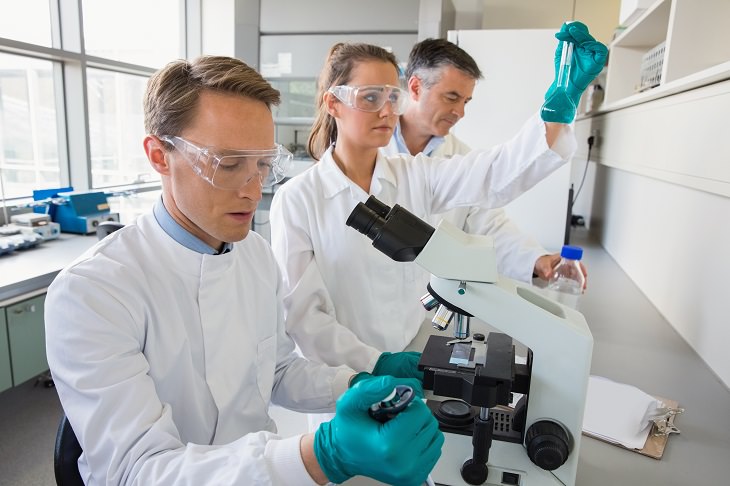
The test works by detecting free-floating mutated DNA, which has been released into the bloodstream by dying cancer cells. In the lung cancer trial, which involved 100 patients, scientists saw precipitous rises in tumor DNA in the blood of patients who relapses months, or even a whole year, later.
These findings add to the building anticipation that this technology, which is also being used to test for Down syndrome, will lead to a major breakthrough in cancer medicine.
Nitzan Rosenfield, from Cancer Research UK Cambridge Institute, who was not involved in this latest trial, has predicted that “most if not all” cancer patients will be given this test in future. He goes on to say that “even if only a fraction of cancers that are currently detected at a lethal stage will in future be detected at an early curable stage this will represent a great benefit in lives saved.”
In the latest clinical trial, 100 patients with non-small cell lung cancer were observed from diagnosis through to surgery and chemotherapy, with blood tests being taken every 6-8 weeks. By analyzing the genetic faults in cells across each tumor, the scientists created personalized genomic templates for every patient. This was then compared to the DNA floating in their blood, to see whether a fraction of it matched that of their tumor.
Professor Charlie Swanton, a cancer geneticist from the Francis Crick Institute, who led the work, explained how circulating tumor DNA tracked the patient’s disease status with extreme precision. Of patients who would stay in remission, he declared that “within 48 hours of surgery, the DNA drops down to undetectable.”
By contrast, rising tumor DNA levels were seen in patients whose disease would later return, indicating that that the cancer remained in the lung or had moved to other organs, where it was dormant.
When the tests from 24 patients were analyzed, the scientists could say with 92% accuracy who would relapse.
Swanton goes on to declare that he thinks “this is going to be very useful clinically as this allows us to identify high risk patients. We have a predictive value of 92% that your cancer is going to recur within 350 days.”
The tests even went on to reveal an apparent outlier, a patient whose cancer had not returned, but whose blood tests revealed high levels of circulating tumor DNA, had the cancer return almost a year later.
The liquid biopsies also showed whether the chemotherapy treatment was working or if the disease had become resistant, as is what happens in the majority of stage 2 and 3 cancers. In future, this could allow doctors to switch to a more effective drug and spare patients grueling treatment for nothing.

Eileen Rapley, 74, a retired art teacher from London, entered the trial after being diagnosed with lung cancer over a year ago. Since she began her treatment, doctors have discovered that she has developed a brain tumor, for which she is also being treated. Although the liquid biopsy did not guide her own care, she hopes that this new test might lead to the kind of improvements that screening techniques have brought about for breast cancer.
The test used in the study relied on building a genetic template for each patient based on analysis of tumor samples, with an estimated cost of around $1,700. However, Swanton predicts that the same kind of profile could be built using computational methods from just an initial blood test, making the technology viable outside a research setting.
Lung cancer causes more than 1 in 5 cancer deaths in the UK and, although occurrence of the disease is falling, survival has only improved by a fraction in the last 40 years. Professor Karen Vousden, chief scientist at Cancer Research UK, which funded this study, said: “These findings could help us to identify how lung cancers respond to therapy, building a bigger picture of the disease and potentially pointing the way to developing new treatments and, crucially, saving more lives.”
Source: theguardian
5:23
Why HAVEN'T We Cured Cancer Yet? An Explanation
This informative video goes over the major challenges researchers face when trying to find a perfect cure for cancer.
4:35
Have New Studies Found a Link Between Eggs & Breast Cancer?
Have studies discovered a link between eating eggs and breast cancer?
These Non-Routine Medical Tests Could Save Your Life!
Here are 8 non-routine tests that really have the potential to save your life, and some of them even need to be taken as early as 30.
Can Probiotics Improve Mental Health? Research Says YES
Studies repeatedly show that probiotics can be a potentially effective treatment for several mental health issues. This is what is currently known on the topic.

Study Finds a Painless Way to Monitor Blood Sugar Levels
A new study found that continuous glucose monitors improve blood sugar control and quality of life in diabetes patients - pain-free.
4:53
You Are Literally What You Eat: How Food Affects the Brain
What happens in the brain when we opt for honey instead of jam? And how is Mediterranean diet better memory performance? Click to find out!
2:55
I Bet You've Never Heard "Hit the Road Jack" Like This!
Get ready to hear a timeless classic like never before. In this stunning symphonic reimagining of "Hit the Road Jack".
New Study Reveals: The Sleeping Viruses We Carry Within Us
A large new study followed more than 1,150 patients who were hospitalized with COVID-19, tracking them closely during their illness and for a full year afterward. What the researchers found sheds new light on these hidden passengers, and on why some
Study Shows Seniors Still Grow New Brain Cells Daily
A new study shows that even the elderly keep on growing new brain cells, which could be the breakthrough the scientific community was waiting for...
Is Microsoft's "AI Doctor" Better Than a Real Doctor?
A new study presents a committee of digital doctors achieving approximately 80% accuracy in complex medical diagnoses โ far beyond the average of general practitioners.
Science: Can Plants That Come Back From the Dead Save Us?
These extraordinary organisms may hold the key to solving one of the world's most urgent problems: feeding a growing population on a warming, drying planet.
7 Little-Known Body Parts We Never Knew About
Here's a look at some of the weird and little-known body parts that you didnโt know you had.
4:26
Despite Looking Similar, Cats Are MORE Diverse Than Dogs!
Who's more diverse, cats or dogs? This video answers this question once and for all, the it might surprise you...
These Are the Miracles That Happen in Our Bodies Every Day
There is a lot that happens inside our bodies every single day. Did you know any of these facts?
8:44
What Does an Atom Really Look Like?
In this video, we'll try to visualize what an atom actually looks like.
7 Discoveries of Albert Einstein that Changed the World
The 7 biggest discoveries of Albert Einstein and how they changed the world forever.
4:51
The Oldest Medicines That Have Stood the Test of Time
Learn about some fascinating old medicine and general healing practices that have survived for thousands of years.
8:12
How Humans Helped Cats Take Over the World
The relationship between humans and cats goes back as far as 9,500 years. How did it al start? And how did humans help cats essentially take over the world?
I Bet You Didn't Have a Clue About These Human Body Facts!
The human body is the most complex machine known to mankind, but I bet you don't know these 10 amazing facts about it...
10:46
12 SUPER COOL Military Inventions Youโve Never Seen
Check out this list of amazing new military innovations. They will transform warfare in the near future!
33:00
Like Clockwork: A Guide to Watches for Rookies
This is the complete beginner's guide to watches - the vocabulary, how these tiny machines actually work, the centuries of history that got us here.
This New Blood Pressure Drug Could Be a Game-Changer
Zilebesiran, an investigational drug that is showing profound success in late-stage clinical trials is offering hope for millions who struggle to keep their blood pressure in check.
These 11 Brain Facts Are Enough to Boggle Your Mind
When you consider the sheer complexity of the human brain, it's difficult to wrap your head around it. Learn these 11 fascinating facts about the human brain.
17:03
What is a Ballistic Missile and is Its Purpose?
Why is the ballistic missile so feared, and what exactly qualifies it as such - will all be explained in this informative video.
2:17:01
Astronomy: What is Beyond the Edge of the Universe?
In this video, we explore what modern astronomy reveals about the universeโs boundariesโif they even exist.
6:47
7 Exciting Physics Tricks You Have to See!
Watch these seven remarkable physics tricks in this exciting and fun video.
Chronically Late? What Science Has to Say About You
There are 8 positive things that science says about late people that we all need to know.
Anti-Aging Science in 2026: What's Real and What's Hype?
Here's an honest look at where anti-aging medicine stands in 2026 - the promising, the disappointing, and the surprisingly simple things that still beat almost everything in a pill bottle.
7:56
These 6 Chemical Reactions Changed the Course of History
Although we rarely pay much attention to the chemistry that constantly surrounds us, these 6 reactions changed history.
These Materials are Strange Enough to Boggle Your Mind...
There are some materials in this world that totally defy scientific convention. From metals that melt in your hand, to a solid lighter than air, take a look.
What is the Troxler Effect and How Does it Affect You?
Learn about Troxler's effect and the optical illusions it creates in life.
9:09
Protective Measures: How Our Body Reacts to a Tattoo
In this video, weโll explore the microscopic war raging beneath your skin, where millions of your cells make the ultimate sacrifice to lock that ink in place, turning a defense mechanism into lifelong art.
Whoa! Who Knew the Human Body Was Capable of So Much?
Have a look at these 17 intriguing facts about the human body that we can practically guarantee will leave you in awe.
How AI Is Fixing Problems Humans Struggle With
Hereโs how AI is quietly reshaping the world in ways that actually matter.
Phone Overheating? Use Our Guide to End The Problem!
Is your cell phone overheating? If so, read this handy guide, which will help pinpoint the source of the problem and offer a solution for fixing it.
5:16
How The Brooklyn Bridge Narrowly Escaped Never Being Built
Learn about the fascinating, but equally tragic history of the construction of Brooklyn Bridge in this engaging and educational video
2:39
Discover 5 Cutting Edge Humanoid Robots in 2025
Watch the video to see which robots are leading the pack in intelligence, mobility, and impact.
Wow! Who Knew That Jupiter Was So Mesmerizing?
Take a look at Jupiter like you've never seen it before!
16 Interesting Things We Bet You've Never Seen Before
Once we have finished school and learned all the necessary skills at work, it may seem that no further studying is necessary. 16 interesting photos you wish you had seen in textbooks at school.
Here Are the 16 Oldest Household Objects in the World
If you think ancient life is remote, these pre-historic household items will make you think again. Just look at how old they are!
21:51
This Mind-Blowing Talk Explores the Nature of Reality
In this video, cognitive scientist, Donald Hoffman, attempts to answer this mind-blowing question in this incredible TED talk.
TRIVIA: 25 Shocking Differences Between the Sexes
Did you know that there are some vast differences between the sexes? These 25 scientific facts will probably come as a big surprise to you, they did to me.
5:28
Just How Small is an Atom? - Fascinating!
Just how small are atoms? And what's inside them? The answers turn out to be astounding...
These Ancient Inventions Have Got Scientists Stumped!
Here are 12 items from long ago which prove that our ancestors possessed knowledge and skills far more advanced than we once believed them to be.
7:15
Toilets: The Greatest Medical Advancement in Human History
While toilets make some people laugh, they are actually a deadly serious medical advancement. This video explains what toilets mean to civilization.
Let's Learn All About Your White Blood Cells
White blood cells (WBCs) are the part of your immune system which is responsible for fighting infection. Learn all about them here!
New Study Reveals: The Sleeping Viruses We Carry Within Us
A large new study followed more than 1,150 patients who were hospitalized with COVID-19, tracking them closely during their illness and for a full year afterward. What the researchers found sheds new light on these hidden passengers, and on why some
These Underwater Craft Are Changing Marine Science
Here's a look at the most remarkable machines currently expanding our understanding of the underwater world.
5:17
How Exactly Do We Hear? All is Revealed Here!
In this informative TED-Ed video, Douglas L. Oliver explains the complete science behind hearing.
Science FIRST: A Fully Created Brain Inside a Computer?
Could a Computer Ever "Run" a Human Brain? Scientists Just Took a Big Step
To enable your Ad-Free Subscription, please fill the fields below
Your subscription was successful, now you can enjoy an ad-free experience!! Note: To make sure you get no ads, please make sure to log in to your account. If you are logged in already, then refresh the page. The subscription can be cancelled at any time.