
Did you know that our sense of smell can actually regulate how much weight we gain or lose? This has been confirmed by a recent study at the University of California, Berkeley, which was conducted on mice.
A group of mice were each given the same amount of food. Some of the mice could smell normally, others could not smell at all and others still had an enhanced sense of smell. The study found that the smell-deficient mice ate the same amount of fatty food as those that retained their sense of smell, however the latter ballooned to twice their normal weight.
The same pattern was found in mice with an enhanced sense of smell, but they put on even more weight than the mice with a normal sense of smell. The findings suggest that food smells play an important role in how the body processes calories.
It appears that there’s a link between the olfactory (smell) system and regions of the brain that regulate metabolism, such as the hypothalamus, however it remains unknown whether smell has an impact on neural circuits.
The study is one of the very first that shows that olfactory manipulation can have an effect on how the brain perceives energy balance, as well as how it regulates it.

Humans tend to lose their sense of smell due to aging, injury or diseases such as Parkinson’s, and often become anorexic as a result of doing so. This is due to the loss of pleasure in eating, which in turn can lead to depression and a further loss of appetite.
Published in the Cell Metabolism journal, the study implies that the loss of smell itself plays a role in dramatic weight fluctuations, and also suggests possible interventions for those who are experiencing a loss of their sense of smell, as well as those having trouble losing weight.
Researchers are theorizing that a lack of smell tricks the body into thinking it has already eaten. While searching for food, the body stores up calories, and then burns them off once a new supply of food has been secured.
In order to destroy the smell neurons in the mice’s noses, the researchers used gene therapy to disable it temporarily, however spare stem cells were retained so that the mice’s sense of smell could be returned to normal after a period of about three weeks.
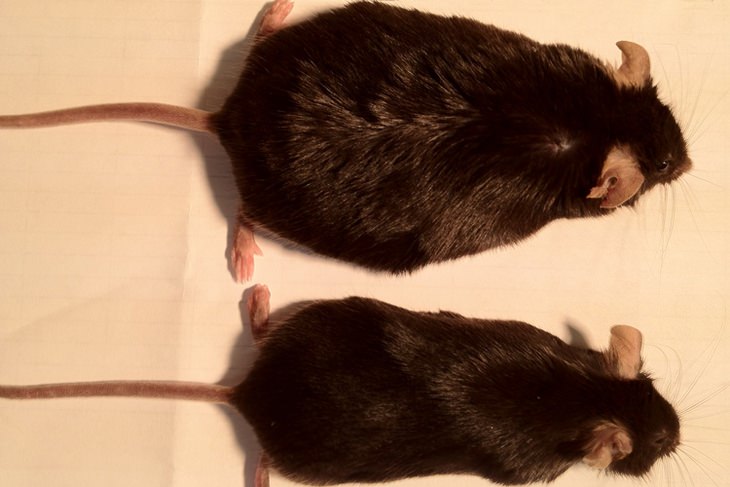
The smell-deficient mice burned calories by turning their beige fat cells, which accumulate around thighs and midriffs in humans, into brown fat cells. This type of fat cell burns fatty acids to produce heat. Some turned almost all of their beige fat into brown fat to become lean, mean fat burning machines.
A downside found to the research was the large increases in noradrenaline levels seen in the mice. This is a stress hormone tied to the sympathetic nervous system, which could lead to a heart attack in humans when elevated levels of it are sustained over a period of time.
Although removing a human being’s sense of smell seems extreme, it might prove to be a viable alternative for those considering having stomach stapling or bariatric surgery to lose weight. The researchers have suggested wiping out an individual’s sense of smell for a period of six months, then allowing the olfactory neurons to regrow following the rewiring of their metabolic program.
People with eating disorders can have a hard time controlling the amount of food they eat, because they have a lot of craving. As a result, gaining control over the olfactory neurons is vital for modulating the neural pathway that regulates their cravings.
Content source: UC Berkeley
Images (including cover) by Deposit Photos.

7 Myths About Burning Calories
Burning calories is something we all want, but we need to know what we're doing first, and that means disproving these 7 common but misguided myths about calorie burning.
The Dash Diet is Perfect for Healthy Weight Loss!
The DASH diet has been on the list of the world’s best diets for a number of years. Find out more here!
13:33
Before Refrigerators, How Did People Keep Food Fresh?
Ever wondered how people kept stuff cool before the invention of the refrigerator? Let's find out.
New Study: There is a Sure Way to Slow Aging
This new study confirms what has long been suspected: The less calories we consume, the slower we age.
5:05
The Meticulous Path of a Grain of Rice to Your Plate
How is rice harvested, processed, and packed? The entire operation is fascinating, to say the least. Here's how it's done.
13:29
What Makes Sandwich Bread so Different than Bakery Bread?
The imminent differences between sandwich bread and bakery bread has an effect on your health.
4:26
Despite Looking Similar, Cats Are MORE Diverse Than Dogs!
Who's more diverse, cats or dogs? This video answers this question once and for all, the it might surprise you...
6:47
7 Exciting Physics Tricks You Have to See!
Watch these seven remarkable physics tricks in this exciting and fun video.
6:05
The Real Reason Companies Prevent You from Fixing Things
Ever felt like you should be able to fix that broken gadget, but something's holding you back? Watch this to know more.
1:29
A Must See: White Cells Devouring Bad Bacteria!
A real look at how white cells identify and consume harmful bacteria.
These 14 Forgotten Robots Promised So Much...
This collection showcases 14 cool vintage robots that were supposed to change everything.
Alzheimer's: What Recent Breakthroughs Have Taught Us
Now, you can discover 4 new studies that show how to do this in ways you haven’t heard of.
14 Times Nature Inspired Groundbreaking Technology
Let’s explore 14 remarkable examples of how nature has shaped modern technology.
PayPal Versus Credit Cards: Here's the Lowdown!
Just how safe is PayPal? Should you have a PayPal account or should you pay for all online purchases using a credit card? All is revealed here!
5:39
Why Are Your Ears Ringing? The Causes Explained
Nearly 15% of the human population worldwide are plagued by this strange sensation, but most people don't know the causes behind ringing in the ears...
36:24
Ever Wonder How a Steel Locomotor Works?
Let’s take a closer look at the engineering behind these compact workhorses.
Study: New Link Found Between Parkinson's and the Gut
A recent study has identified gut microbes likely involved and linked them to decreased riboflavin (vitamin B2) and biotin (vitamin B7), suggesting a potential treatment
11:15
These Paradoxes Continue to Mystify Scientists
Take a look at 7 scientific paradoxes that may never get solved.
6:15
K2-18b: The Exoplanet That Might Host Alien Life
Astronomers have detected signs of posisble life in the atmosphere of exoplanet K2-18b.
3:07
The Speed of Light Visualized in a Magnificent Video
Have you got the patience? Watch, in scale, just how long it takes light to travel from Earth to Mars
10 Obscure Inventions by World Famous Inventors
We’d like to bring your attention to 10 lesser-known inventions of famous figures in history, which will reveal a new and different side of these inventors to you.
8:46
Science: What is Reality? Dive in and Find Out!
What if everything you see, feel, and experience isn’t real? The simulation argument suggests that our reality might be nothing more than an advanced computer program.
4:22
eSIM vs Traditional SIM: What’s the Big Difference?
Are eSIMs and iSIMs the future of connectivity?
38:55
What Happens the Deeper You Go Underground?
What happens when pressure pushes matter beyond the limits of what we thought possible?
Is Weekend Sleep as Good as Regular Sleep? Let's Check
If you thought sleeping in on the weekend was a bad habit, you're about to find out that it's quite the opposite.
11:05
Science: Can AI Preserve Our Most Precious Memories?
Technologist Pau Aleikum Garcia talks about synthetic memories.
9:34
Was Roman Concrete Really Superior to Our Own?
How did Ancient Romans make such durable concrete that it still lasts today?
3:39
Magic is Only A Vibration Away With This Great Experiment
All it takes is some sand, a metal plate and carefully toned vibrations from a speaker to create stunning and complex patterns. This video shows you the amazing results!
14:34
What to Do (and Avoid) When Setting Up a Smart Home
Here's how you can set up a family-friendly smart home that will last long.
12 Bizarre Scientific Facts You Never Learned at School
The scientific facts we collected in this list aren't the kind of stuff you'll see in a school curriculum.
A Quantum Leap? Revolutionary Technique Discovered
Scientists at Singapore University have developed a groundbreaking manufacturing method powered by artificial intelligence that may revolutionize how we understand and create quantum materials at the atomic level.
Let's Learn All About Your White Blood Cells
White blood cells (WBCs) are the part of your immune system which is responsible for fighting infection. Learn all about them here!
11:43
Learn While Laughing: The Incredible Tardigrade
If you love nature and you love laughing, this incredible series of nature videos are a great way to spend a few minutes.
Study Says: With Age, Come Certain Cognitive Abilities
a study published in August 2021 in the journal *Nature Human Behavior reveals surprising findings that challenge this assumption and may be of great interest to all of us.
10 Fascinating Facts About the Subconscious Mind
10 facts about the way the subconscious mind works
4:45
Woah! Learning to Play Music Has This Effect on Your Brain
Learning how to play an instrument can do wonders for our brain...here's how!
8 Jaw-Dropping Black Hole Facts to Warp Your Mind
These black hole facts will bend your mind!
15 Beautiful Carl Sagan Quotes on the Stars and the Cosmos
A look at some profound quotes on the universe by famous astronomer and cosmologist Carl Sagan.
8:12
The Tallest Statues Compared, Even Those Not Built Yet...
In this 3D animated size comparison, we showcase the tallest statues in the world alongside ambitious future projects.
4:52
Neon Lights: a Beautiful Union of Science and Art
Neon signs are a beautiful blend or artistry and science, and knowing the history and the science behind them make them even more exciting
5:28
Just How Small is an Atom? - Fascinating!
Just how small are atoms? And what's inside them? The answers turn out to be astounding...
These 18 Photos Capture the Universe Like Never Before!
See the universe in a new light with these astonishing photos.

10:59
Fascinating Science: How Sand is Turned Into Glass
Have you ever looked through a window and wondered how it was made from simple beach sand? This video shows you that incredible process.

7 Discoveries of Albert Einstein that Changed the World
The 7 biggest discoveries of Albert Einstein and how they changed the world forever.

5:16
Fascinating: How Fast Does Our Brain Operate?
Ever wonder at what speeds our thoughts move?
16 Interesting Things We Bet You've Never Seen Before
Once we have finished school and learned all the necessary skills at work, it may seem that no further studying is necessary. 16 interesting photos you wish you had seen in textbooks at school.
Has Modern Technology Changed Our Cognitive Abilities?
Modern digital technology is everywhere and it’s changing how we think, how we behave and even how we feel about things.
To enable your Ad-Free Subscription, please fill the fields below
Your subscription was successful, now you can enjoy an ad-free experience!! Note: To make sure you get no ads, please make sure to log in to your account. If you are logged in already, then refresh the page. The subscription can be cancelled at any time.