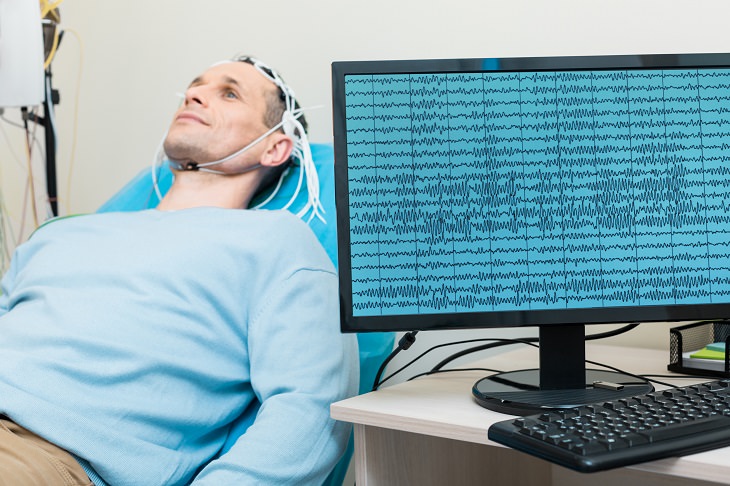
As one can imagine, this isn’t fun at all. In fact, recently, scientists have called for improved safety guidelines and better research into how these electrodes destroy brain cells, as well as how they trigger the brains’ inflammatory immune system response.
Now, researchers from Carnegie Mellon University, funded by the Department of Defense’s research wing, DARPA, may have found a way around this. They’ve developed a flexible, squishy-silicon-based hydrogel that sticks to neural tissue, bringing non-invasive electrodes to the brain’s surface.
This hydrogel, which was tested on a cat’s dorsal root ganglion – a cluster of spinal nerve cells – can conform and adhere to cells. This lets the enclosed electrodes record brain activity without actually exposing the brain to the electrodes.
The researchers are hoping that their work will lead to a new era of safer neural implants, while also giving rise to better, more accurate neural readings that could help us better understand diseases and other brain conditions.
In a press release, Chris Bettinger, a Carnegie Mellon University engineer who worked on the hydrogel said: “Imagine you have a bowl of Jell-O, and you insert a rigid plastic fork into the bowl and move it around.” This is what it’s like when a conventional electrode is inserted into the brain.
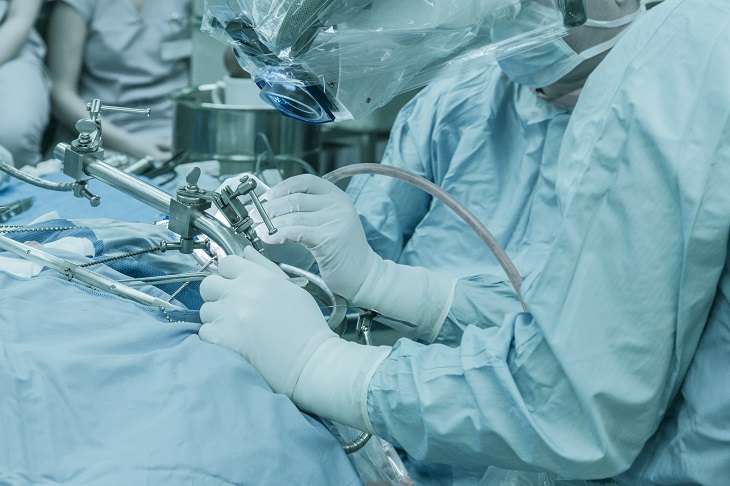
While this is an over exaggeration, electrodes do cause a tiny amount of structural damage on their way down through the cortex. While scientists are still split on whether or not the adult human brain can grow new cells, it’s probably best to minimize the number of holes that you drill into it.
Furthermore, the brain knows that electrodes don’t belong there, so it calls on the immune system to fight them off. This leads to the eventual degradation of electrodes, meaning they give off inaccurate cell recordings and hamper neuroscientific research. Since the hydrogel can pass as brain-like, the body is much less likely to try to fight it off.
It’s far too early to say exactly how this new neural implant hydrogel will affect the realm of medical neuroscience, but if human trials work as well as the experiments on cats, then the brain-computer interfaces of the future could become much more seamless and a lot less harmful.
Source: futurism
Images: depositphotos

Not Only Covid-19: 5 Historically Significant Vaccines
Infectious diseases were a problem long before Covid-19. These are 5 of the most historically important vaccines that made the world safer.
7:17
Vaccinations SHOULD Trigger Side Effects, Here’s Why
Once you watch this video and understand why vaccine side effects happen, you may even be happy to get that headache.
These Non-Routine Medical Tests Could Save Your Life!
Here are 8 non-routine tests that really have the potential to save your life, and some of them even need to be taken as early as 30.
11:04
Not all Viruses Are Bad, Some Are Actually Necessary
Some viruses are beneficial to humans. In fact, they are an inseparable part of human anatomy and have even shaped the evolution of humanity!
Study Finds a Painless Way to Monitor Blood Sugar Levels
A new study found that continuous glucose monitors improve blood sugar control and quality of life in diabetes patients - pain-free.
11:58
Myths in Medicine and Health That We MUST Stop Believing
In this video, Dr. Seema Yasmin helps debunk (and confirm) some common myths about medicine and health.
These Ancient Inventions Have Got Scientists Stumped!
Here are 12 items from long ago which prove that our ancestors possessed knowledge and skills far more advanced than we once believed them to be.
1:17
The Age of the Affordable Android Robots is Here...
Meet the Unitree R1 – the game-changing humanoid robot that just shattered every price expectation in robotics.
10:46
Neat Life Hacks To Help You Remember Things Better
A lot of us tend to forget the simplest things at times. This video provides some neat tips to help boost your memory.
10 Declassified U.S. Military Secrets That'll Astound You
Government military secrets can range from amusing to absurd to downright terrifying, but they are all extremely intriguing. Here are 10 such secrets.
Extraordinary Inventions By Tesla That Were Never Built!
Nikola Tesla was a scientist too advanced for his time. Here are some of the inventions he never had a chance to build.
A Quantum Leap? Revolutionary Technique Discovered
Scientists at Singapore University have developed a groundbreaking manufacturing method powered by artificial intelligence that may revolutionize how we understand and create quantum materials at the atomic level.
These Underwater Craft Are Changing Marine Science
Here's a look at the most remarkable machines currently expanding our understanding of the underwater world.
11:40
6 Of the Earliest Known Parasites Ever Found
Get to understand and learn about the earliest parasites discovered by scientists.
16:31
Why Building a Perpetual Motion Machine Is Impossible
Since the Middle Ages, scholars have been trying to build the mythical perpetual motion machine. Was it all in vain? Is it even possible to build such a machine?
New Study: Dopamine Does Way More Than We Thought!
How the brain's reward system physically rewires the motor cortex during skill learning — and what happens when that reward signal gets cut off.
Are You Ready to Learn About the Expanse of the Universe?
If you have an interest in the unknown, then look no further than these 15 unbelievably facts discovered about space
Science FIRST: A Fully Created Brain Inside a Computer?
Could a Computer Ever "Run" a Human Brain? Scientists Just Took a Big Step
1:08
Boston Dynamics New Robot Can Move Almost Like a Human
Watch the latest in robotics in this video.
8 Biggest Mysteries Still Surrounding the Human Body
Although modern science has revealed much about the human body, there are some things that still remain unknown. Here are the 8 biggest mysteries about it.
8:46
Science: What is Reality? Dive in and Find Out!
What if everything you see, feel, and experience isn’t real? The simulation argument suggests that our reality might be nothing more than an advanced computer program.
21:51
This Mind-Blowing Talk Explores the Nature of Reality
In this video, cognitive scientist, Donald Hoffman, attempts to answer this mind-blowing question in this incredible TED talk.
I Never Knew These Stunning Facts About Our Universe
If you thought you understood the universe, you'll be completely floored by this insane facts.
9:54
Neo: The New Tele-Robot that "Cleans" Your Home
Neo is a new robot that has great capabilities and is designed to clean your home. Sounds perfect right? Well, there's a catch.
9:09
Protective Measures: How Our Body Reacts to a Tattoo
In this video, we’ll explore the microscopic war raging beneath your skin, where millions of your cells make the ultimate sacrifice to lock that ink in place, turning a defense mechanism into lifelong art.
Find Out How Some Elderly People Stay Sharp into Old Age
Some old people have better memories than people half their age. This could be the reason why...
Science History: 17 Math Equations that Changed the World
In this article, we'll journey through 17 of these monumental formulas, demystifying the symbols to reveal the revolutionary ideas they contain and the immense impact they have had on the course of history.
Science in 2025: 8 Developments That Could Change it All
Here are some of the most exciting trends in science and healthcare to keep an eye on.
21:24
James Webb Telescope: Redefining Our View of Space
Here's a brief look at all the amazing discoveries made by the James Webb Space Telescope so far.
5:28
Just How Small is an Atom? - Fascinating!
Just how small are atoms? And what's inside them? The answers turn out to be astounding...
13:11
What's Directly Above And Below The Sun?
In this video, we explore the Sun's hidden poles, daring missions like Ulysses and Solar Orbiter, and the bold ideas scientists are weighing today.
Science Proves: These 10 Bible Stories Probably Did Happen
The Bible describes many seemingly supernatural cases, but today, science can show that they might have indeed happened.
Has Modern Technology Changed Our Cognitive Abilities?
Modern digital technology is everywhere and it’s changing how we think, how we behave and even how we feel about things.
22:52
Will AI Take Your Jobs? An Expert Explains the Future
Gonzaga University's AI professor Graham Morehead some of our most pertinent questions related to AI.
4:49
This Video Shows You a Different Way to Look at the World
You’ve heard of the fourth dimension but do you know what it is? This TED-Ed video helps uncover a bit of the mystery.
Hair Regeneration Could Be Possible With This New Process
Learn about an innovative new study which has revealed a novel treatment for effective hair regeneration.
Superwood: A New Material That Could Replace Steel
After decades of relying on steel—a material that produces nearly two tons of CO2 for every ton manufactured—builders may soon have access to something far more sustainable and surprisingly stronger: Superwood.
3:07
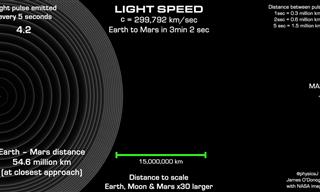
The Speed of Light Visualized in a Magnificent Video
Have you got the patience? Watch, in scale, just how long it takes light to travel from Earth to Mars
Remembering the Life and Wisdom of Stephen Hawking
Stephen Hawking possessed one of the greatest minds the world has ever seen, but was also impaired by a debilitating disease. Here are his life ant times.
Here Are the 16 Oldest Household Objects in the World
If you think ancient life is remote, these pre-historic household items will make you think again. Just look at how old they are!
1:14:42
Documentary: How Did Our Universe Come From Nothing?
Can “nothing” truly become “something”? In this video, we’ll dig into this mind-bending question.
27:25
This Man Gave ChatGPT a Body. This is What Happened.
What if you could build a robot that learns everything from scratch, for just eighty dollars?
9:13
Want to Travel Quickly Through Space? Try Using a Wormhole
If you want to know what a wormhole is and how it is supposed to work, then you've come to the right place!
Blood Test Breakthrough Transforms Leukemia Diagnosis
This research demonstrates that rare circulating stem cells in blood carry the same diagnostic information as bone marrow samples, enabling doctors to identify disease progression months before clinical symptoms appear.
These 14 Forgotten Robots Promised So Much...
This collection showcases 14 cool vintage robots that were supposed to change everything.
0:55
China's G1 Robot is Showing Some Incredible Moves
The G1 is a new robot developed in China and in this video shows some amazing moves.
17:03
What is a Ballistic Missile and is Its Purpose?
Why is the ballistic missile so feared, and what exactly qualifies it as such - will all be explained in this informative video.
To enable your Ad-Free Subscription, please fill the fields below
Your subscription was successful, now you can enjoy an ad-free experience!! Note: To make sure you get no ads, please make sure to log in to your account. If you are logged in already, then refresh the page. The subscription can be cancelled at any time.