
Learning to play the piano, swing a golf club, or juggle requires more than just practice. It requires your brain to want to get better. A new study from the Technion (Israel Institute of Technology) has revealed, in remarkable detail, exactly how the brain's reward system physically rewires the motor cortex during skill learning — and what happens when that reward signal gets cut off.
The primary motor cortex — the region of the brain that controls voluntary movement — has long been known to change during motor learning. But scientists didn't fully understand how it changes at the network level, or why those changes require dopamine, the brain's famous "feel-good" chemical associated with reward and motivation.
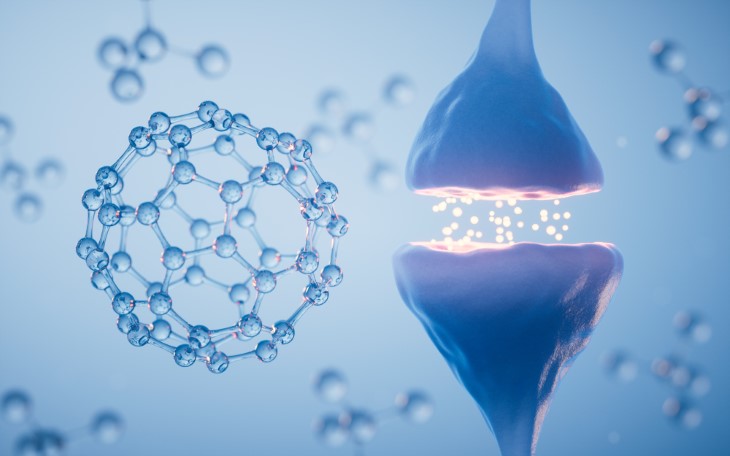
Dopamine is released by a deep brain region called the VTA (ventral tegmental area), which sends chemical signals to many parts of the brain, including the motor cortex. Previous research had shown that if you destroy the dopamine connections to the motor cortex, animals can't learn new motor skills. But no one had watched, in real time, what dopamine was actually doing to the network of neurons involved.
This study set out to watch it happen.
The researchers trained mice to perform a delicate task: reaching out a forelimb, grabbing a small food pellet from a rotating platform, and bringing it to their mouth. It sounds simple, but for a mouse it's genuinely challenging — requiring coordination, timing, and fine motor control, much like a human learning to pick up an object with chopsticks.
To watch the brain in action, the team used two-photon calcium imaging — a technique that uses laser light to detect when individual neurons fire, by making them glow. They implanted tiny windows in the skulls of the mice and watched the same neurons, in the same spot in the motor cortex, across seven training sessions.
To test the role of dopamine, they used a clever molecular tool called DREADDs — designer molecules that act like a remote control for specific neurons. They injected a virus into the VTA that made dopamine neurons there sensitive to a normally inert drug (CNO). When CNO was dripped directly onto the motor cortex, it silenced only the dopamine signals arriving there — leaving everything else untouched. This allowed the team to essentially "mute" the dopamine signal in the motor cortex for specific training sessions and observe what happened.
Mice in the control group steadily improved at the pellet-grabbing task over seven sessions, nearly doubling their success rate. Mice whose dopamine signals to the motor cortex were blocked during sessions two through four barely improved at all during those sessions. Once the dopamine block was lifted, they started catching up — but they needed several extra sessions to reach the same proficiency as the unblocked mice.
Crucially, when dopamine was blocked in already expert mice, their performance didn't suffer. This is a key finding: dopamine isn't needed to execute a learned skill. It's needed to acquire one.
Here's where it gets fascinating. When researchers looked at the overall average activity of neurons in the motor cortex, it barely changed across training sessions. If you just counted how many neurons were firing and how much, the brain looked roughly the same on day one as on day seven.
But when they looked more carefully at the pattern of activity — how neurons fired relative to each other, the rhythm and timing of their responses, and the web of correlations between them — a very different picture emerged.
The network was quietly reorganizing. Neurons were gradually adopting new firing patterns. The specific connections between neurons were changing — some strengthening, some weakening — converging toward a distinct "expert" configuration. It was like a symphony orchestra that plays with the same number of instruments and the same overall volume, but whose musicians have completely rearranged their parts.
When dopamine was blocked, this reorganization stopped. The network essentially froze in its "beginner" state.
At the beginning of training, the neurons in the motor cortex responded mainly to the sensory cue — the tone that signaled the pellet was available. By the time mice became experts, those same neurons had shifted to responding primarily to outcome — whether the trial ended in success or failure.
A small but reliable subpopulation of neurons became what the researchers called "indicative neurons" — cells that could, on their own, predict whether a given trial had succeeded or failed. These cells only appeared during learning, and they depended entirely on dopamine: when dopamine was blocked, no such outcome-signaling cells emerged.
This is significant because it suggests that the motor cortex isn't just a mechanical output device. It actively learns what success feels like — and uses that knowledge to guide future improvement.
The study paints a coherent picture of how dopamine-driven reward signals physically reshape the brain during learning. Dopamine, released when things go well, appears to directly trigger the synaptic changes that gradually tune the motor cortex network toward an expert configuration. Without it, the brain can go through the motions of practice but can't consolidate the experience into lasting improvement.
This has implications well beyond mice grabbing pellets. The same motor cortex mechanisms are at work when humans learn any new physical skill — and the same dopamine system is implicated in conditions like Parkinson's disease, depression, and addiction, all of which disrupt motor learning and motivation in profound ways.
Understanding precisely how dopamine remodels neural networks — not just at the level of individual synapses but across entire functional circuits — brings scientists closer to understanding why some people recover motor function after stroke or injury while others plateau, and how therapies might one day be designed to boost the brain's natural capacity to rewire itself.
The study's bottom line is elegant: your brain doesn't just record practice. It needs to care about the outcome — and the chemical that makes it care is dopamine.