
Meet our newest neighbor in the galaxy - a black hole was discovered, and it is the closest one to our solar system yet! The exciting findings were published in a study in the journal Astronomy & Astrophysics, as recently as this Wednesday. The black hole is about 1,000 light-years away, and each light year is 5.9 trillion miles away (or 9.5 trillion kilometers). It may not sound all that close but in terms of the cosmos and even the galaxy, it’s considered practically next door according to European Southern Observatory astronomer Thomas Rivinius, who led the study.
For proportion, the black hole that was previously considered the closest one is about three times further - 3,200 light-years away. The black hole at the center of the Milky Way lies more than 25,000 light-years away, and another black hole which astronomers managed to capture in unprecedented detail in April last year is a whopping 55 million light-years away, in another galaxy altogether.
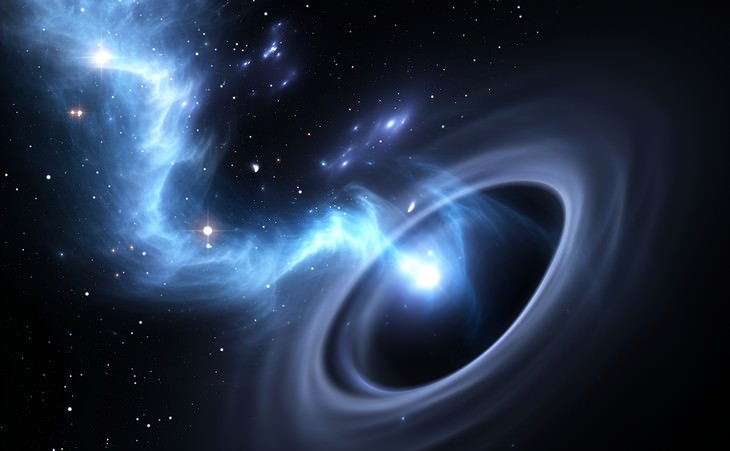
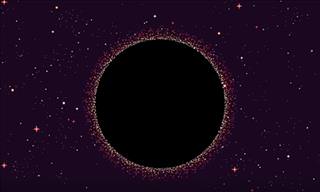
So if this newly discovered black hole is so close, how come it was wasn’t known to us until now? Black holes are regions in space that exert a force of gravity so strong that nothing can escape, not even light. Because no light is reflected, black holes are invisible, and the only way for astronomers to discover them is by noting the luminous bodies that orbit them. Most of the black holes we know of were detected because they were devouring nearby stars. Astronomers believe most black holes don’t have anything close enough to swallow, and so they remain undetected.
Related Article: 15 Pictures of Space From Different Observatories
Interestingly, this was exactly the case for the newly discovered back hole. It is a part of a two-star system called HR 6819, which has been examined by astronomers for years. When they analyzed the data, they noticed that there was something unusual about the behavior of the inner star of HR6819. Its velocity was so extreme, the team started suspecting that a third object existed in the system, which was flinging the inner star around.
They concluded it could only be a black hole. It was powerful enough to change the star's course, but not close enough to swallow it. “An invisible object with a mass at least 4 times that of the sun can only be a black hole," Rivinius explained in a press release.

Another unusual aspect is that this star system is actually close enough for people in the southern hemisphere to actually be able to spot it on a clear night. This is the first-ever stellar system containing a black hole that can be seen with an unaided eye.
The video below shows what the astronomers saw: a star (blue) orbiting an invisible black hole (red), with another star (also blue) orbiting the inner pair. That makes this star system, called HR 6819, a triple system, and not double-system, as was believed thus far.
This discovery could help scientists progress and expand the knowledge of black holes immensely. "There must be hundreds of millions of black holes out there, but we know about only very few. Knowing what to look for should put us in a better position to find them," Rivinius said. Dietrich Baade, another astronomer on the research team called it “the tip of an exiting iceberg”.
The more we learn about the universe surrounding us, the more we realize how vast and mysterious it is, and despite being difficult, the process of studying it is certainly gratifying.

16 Fascinating Facts About the Red Planet
Let's have a look at what we already know about the red planet.
8:28
Could These Signals Be A Sign of Extraterrestrial Life?
Scientists have recently picked up on a mysterious radio signal from space, and it could mean a lot - maybe even a sign from extraterrestrial life forms.
Take an Interactive Tour of Our Colossal Milky Way Galaxy
Fly Through the Milky Way Galaxy!
5:08
Experience the True Scale of Heavenly Bodies
Witness the true scale of planets, stars and galaxies in this incredible video that sheds light on size in our universe.
10:02
All the Fascinating Space Discoveries Made in 2019
2019 has seen quite a few eye-opening discoveries about space and astronomy. Learn about 26 of them in this video.
15:34
This Stunning Video Visualizes the Size of the Universe
This video visualizes the number of galaxies in the world, giving you a look into the true size of our enormous universe.
9:13
Want to Travel Quickly Through Space? Try Using a Wormhole
If you want to know what a wormhole is and how it is supposed to work, then you've come to the right place!
8 Biggest Mysteries Still Surrounding the Human Body
Although modern science has revealed much about the human body, there are some things that still remain unknown. Here are the 8 biggest mysteries about it.
What is the Troxler Effect and How Does it Affect You?
Learn about Troxler's effect and the optical illusions it creates in life.
20 Peculiar Microscope Photos That You Really Must See
An unseen world exists at our fingers, and thanks to these wonderful micrographs, we can get a glimpse into that dimension.
Is Weekend Sleep as Good as Regular Sleep? Let's Check
If you thought sleeping in on the weekend was a bad habit, you're about to find out that it's quite the opposite.
5:47
This Genius Child is a Better Calculator than a Computer
This ‘human calculator’ could likely outpace you entering the numbers into a calculator.
8:46
Science: What is Reality? Dive in and Find Out!
What if everything you see, feel, and experience isn’t real? The simulation argument suggests that our reality might be nothing more than an advanced computer program.
10:30
China's Crazy Plan to Dig a Canal in the Middle of EUROPE
China is setting out a plan to dig a canal through the middle of Europe in the nearest future, but why?
Stunning 2024 Images from the James Webb Space Telescope
Marvel at the new images revealed by the James Webb Space Telescope.
8:12
The Tallest Statues Compared, Even Those Not Built Yet...
In this 3D animated size comparison, we showcase the tallest statues in the world alongside ambitious future projects.
5:17
How Exactly Do We Hear? All is Revealed Here!
In this informative TED-Ed video, Douglas L. Oliver explains the complete science behind hearing.

1:14:42
Documentary: How Did Our Universe Come From Nothing?
Can “nothing” truly become “something”? In this video, we’ll dig into this mind-bending question.
Nobody Believed These 5 Scientists, But They Were Right
These 5 scientists were shamed and ousted, or rudely ignored, although years later, their "crazy" theories turned out to be true...
8:19
You Won't Believe What Passes for a Phone in North Korea
You won't believe what phones look like in North Korea!
3:39
Magic is Only A Vibration Away With This Great Experiment
All it takes is some sand, a metal plate and carefully toned vibrations from a speaker to create stunning and complex patterns. This video shows you the amazing results!
5:14
Earth 2125: A Vision of the Future of Our Planet
Exploring what Earth could look like in 2125 reveals exciting potential.
8 Ancient Greek Scholars & Their Life-Changing Inventions
The foundations of modern medicine, engineering, biology, and astronomy were set up by these 8 stellar minds more than two thousand years ago.
I Bet You Didn't Have a Clue About These Human Body Facts!
The human body is the most complex machine known to mankind, but I bet you don't know these 10 amazing facts about it...
5 Puzzling Mysteries That Science Finally Managed to Solve
These weird occurrences have puzzled humanity for decades, if not centuries. Finally, scientists solved them & the solutions are exciting...
A Quantum Leap? Revolutionary Technique Discovered
Scientists at Singapore University have developed a groundbreaking manufacturing method powered by artificial intelligence that may revolutionize how we understand and create quantum materials at the atomic level.
10:31
Science Predicts These 10 Technologies Will Rule 2025
These upcoming tech innovations will reshape our world.
2:17:01
Astronomy: What is Beyond the Edge of the Universe?
In this video, we explore what modern astronomy reveals about the universe’s boundaries—if they even exist.
4:26
Despite Looking Similar, Cats Are MORE Diverse Than Dogs!
Who's more diverse, cats or dogs? This video answers this question once and for all, the it might surprise you...
These 14 Forgotten Robots Promised So Much...
This collection showcases 14 cool vintage robots that were supposed to change everything.

4:40
How to Make a Floating Chair
If you have some rope and wood - you too can build this floating chair!
3:55
50 Years Later, We're Debunking the Moon Landing "Hoax"
How do we prove to people the moon landing was real? By answering their doubtful questions in this video.

6:47
7 Exciting Physics Tricks You Have to See!
Watch these seven remarkable physics tricks in this exciting and fun video.
1:29
A Must See: White Cells Devouring Bad Bacteria!
A real look at how white cells identify and consume harmful bacteria.
Learn Chemistry Easily with This Interactive Periodic Table
This interactive table of elements has video lectures about every element, including experiments
21:51
What Will the Universe Look Like in 10 Quintillion Years?
These questions take us beyond science into the realm of imagination, as we contemplate the ultimate fate of our Universe and everything within it.
8:48
Fascinating: What Around Us is Invisible?
The Invisible Things that Turn the World...
11:43
Learn While Laughing: The Incredible Tardigrade
If you love nature and you love laughing, this incredible series of nature videos are a great way to spend a few minutes.
0:55
China's G1 Robot is Showing Some Incredible Moves
The G1 is a new robot developed in China and in this video shows some amazing moves.
10 Obscure Inventions by World Famous Inventors
We’d like to bring your attention to 10 lesser-known inventions of famous figures in history, which will reveal a new and different side of these inventors to you.
8:12
How Humans Helped Cats Take Over the World
The relationship between humans and cats goes back as far as 9,500 years. How did it al start? And how did humans help cats essentially take over the world?
Has Modern Technology Changed Our Cognitive Abilities?
Modern digital technology is everywhere and it’s changing how we think, how we behave and even how we feel about things.
15:34
This Stunning Video Visualizes the Size of the Universe
This video visualizes the number of galaxies in the world, giving you a look into the true size of our enormous universe.
Superwood: A New Material That Could Replace Steel
After decades of relying on steel—a material that produces nearly two tons of CO2 for every ton manufactured—builders may soon have access to something far more sustainable and surprisingly stronger: Superwood.
Meta Unveils New Glasses that May Change Sports Forever
META has revealed a new line of AI-powered smart glasses: Oakley Meta HSTN
Find Out How Some Elderly People Stay Sharp into Old Age
Some old people have better memories than people half their age. This could be the reason why...
7:21
Science: 20 Mechanical Principles Demonstrated Using Lego
In this video, we'll explore a variety of fascinating mechanical mechanisms, all demonstrated using Lego models.
To enable your Ad-Free Subscription, please fill the fields below
Your subscription was successful, now you can enjoy an ad-free experience!! Note: To make sure you get no ads, please make sure to log in to your account. If you are logged in already, then refresh the page. The subscription can be cancelled at any time.