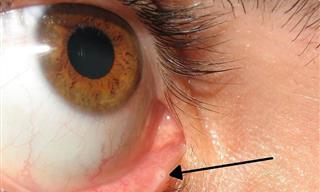

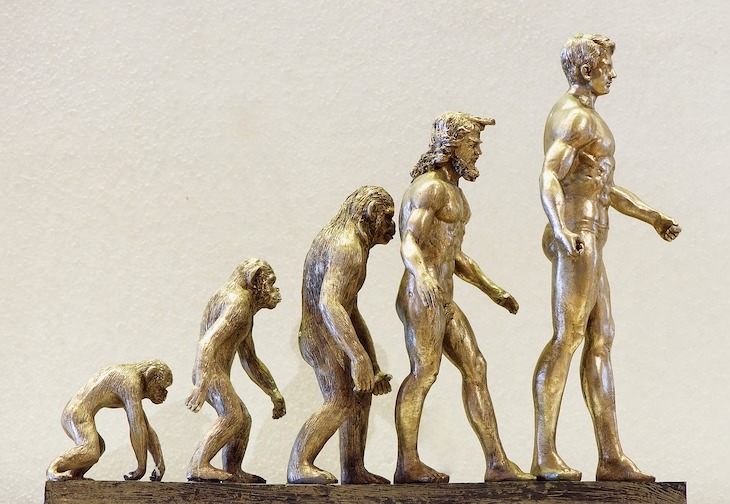
Did you think humans reached their final form and stopped evolving? If so, it turns out you were wrong. Researchers in Australia recently published a study that provides concrete proof of the recent appearance of an extra artery in our arms. Though evolution is so slow that it is hard to notice changes within one lifetime, these exciting findings prove that humans constantly develop.
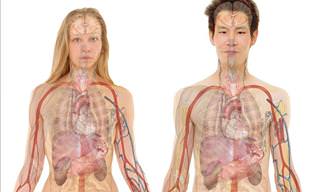
The median artery is the main vessel that supplies blood to the human forearm while in the womb. However, it typically disappears around the eighth week of gestation, or once two other arteries develop. The researchers wanted to look into the prevalence of this artery sticking around after birth, and what they learned was remarkable. When studying the cadavers of 80 Australians of European descent, ranging in age from 50 to 100 years old, the study demonstrated a steady increase in adults with this third artery intact.

“Since the 18th century, anatomists have been studying the prevalence of this artery in adults and our study shows it’s clearly increasing,” stated Dr. Teghan Lucas of Flinders University. “The prevalence was around 10% in people born in the mid-1880s compared to 30% in those born in the late 20th century, so that’s a significant increase in a fairly short period of time when it comes to evolution.”
The scientists predict that people born 80 years from now will all carry a median artery if the trend continues. It would be considered a “normal human structure” once it becomes prevalent in more than 50% of adults.
“This is macroevolution in modern humans and the median artery is a perfect example of how we’re still evolving because people born more recently have a higher prevalence of this artery when compared to humans from previous generations,” explained the senior author of the study Professor Maciej Henneberg.
While the presence of the median artery can be a risk factor for carpal tunnel syndrome, Henneberg claims it offers benefits as well. Not only could this additional artery increase blood supply, but it can also be used as a replacement in surgical procedures in other parts of the body.
This is not the first anatomical evolutionary change to be recognized in recent years. Previous examples include the increasing absence of wisdom teeth and the resurgence of the fabella, a small bone in the back of the knee joint. Similarly to the median artery, the fabella is now three times more common in humans than it was a hundred years ago. According to Dr. Lucas, modern humans are currently evolving at a faster rate than at any point in the past 250 years. The prospects for future developments are certainly fascinating.
Found this article interesting? Share it with family and friends!

This is How to Activate Your Brain's Ability to Learn
A recent study has shown that overlearning might improve performance in a particular task by altering the chemicals in the brain that "lock" in training.
New Research Shows Eating Sweets Won't Make You Crave More
A groundbreaking new study challenges conventional wisdom, suggesting our preference for sweet tastes may be more stable than we think.
Why Do We Have Eyebrows? Science Has the Answer!
Ever wondered what purpose your eyebrows fulfill? Science has the answer!
Forget Apples! It's an Egg a Day That Keeps the Doc Away...
According to new research, it could actually be an egg a day that keeps the doctor away.Find out more here!
How Drinking Too Little Alcohol May Also Cause Dementia
A new study shows that drinking too much or too little alcohol can affect your chances of getting dementia. Read all about it here.
Alcohol Linked To More Cancer Types Than Previously Known
A new study found a clear correlation between alcohol consumption and more types of cancer than previously known.
33:02
The Entire Story of Earth in 30 Minutes!
The story of our planet, from birth to the adult, ancient planet we see before us today - all in just half an hour.
4:26
Despite Looking Similar, Cats Are MORE Diverse Than Dogs!
Who's more diverse, cats or dogs? This video answers this question once and for all, the it might surprise you...
14:58
Why IS Fentanyl So Dangerously Addictive?
In this video, we break down what opioids really do to your brain and body, what using them actually feels like, and why so many people are dying from Fentanyl overdoses.
6:25
Do You Like the Smell of Rain? This Is Why
One of the best things about rain and thunderstorms is that clean fresh smell afterward. But what actually causes that distinct scent?
10:04
11 Practical Technologies That Will Help Fight Flooding
These amazing innovations will be real handy during a flood.
12:34
The World You See Doesn't Really Exist...
his video reveals how your brain constructs reality instead of simply perceiving it.
Blood Test Breakthrough Transforms Leukemia Diagnosis
This research demonstrates that rare circulating stem cells in blood carry the same diagnostic information as bone marrow samples, enabling doctors to identify disease progression months before clinical symptoms appear.
11:02
Ever Wonder What Ancient Egyptian Sounded Like?
Researchers have used all the information we know to create what they think it may have sounded like.
8:46
Science: What is Reality? Dive in and Find Out!
What if everything you see, feel, and experience isn’t real? The simulation argument suggests that our reality might be nothing more than an advanced computer program.
These Theories About Reality & the Universe Will Stun You
You will be shocked to discover these 10 surprising theories of the universe and reality.
These Materials are Strange Enough to Boggle Your Mind...
There are some materials in this world that totally defy scientific convention. From metals that melt in your hand, to a solid lighter than air, take a look.
1:08
Boston Dynamics New Robot Can Move Almost Like a Human
Watch the latest in robotics in this video.
12 Steps That Help to Explain Einstein's Famous Theory
Have you ever wondered what Einstein's Theory of Relativity is all about? If you have, here is an easy-to-understand explanation!
8:12
How Humans Helped Cats Take Over the World
The relationship between humans and cats goes back as far as 9,500 years. How did it al start? And how did humans help cats essentially take over the world?
Will We Ever Solve Our Universe's Most Complex Mysteries?
Here are 8 of the biggest unsolved mysteries from the world of physics.
The Wildest Meteorites Ever Found on Our Planet - 15 Pics
Check out 15 of the most fascinating meteorites ever found on earth.
11:05
Science: Can AI Preserve Our Most Precious Memories?
Technologist Pau Aleikum Garcia talks about synthetic memories.
24:11
25 Game-Changing Megaprojects That Will Change Our World
These incredible megaprojects that are set to redefine our world in 2025.
2:17:01
Astronomy: What is Beyond the Edge of the Universe?
In this video, we explore what modern astronomy reveals about the universe’s boundaries—if they even exist.
20 Peculiar Microscope Photos That You Really Must See
An unseen world exists at our fingers, and thanks to these wonderful micrographs, we can get a glimpse into that dimension.
Study Says: With Age, Come Certain Cognitive Abilities
a study published in August 2021 in the journal *Nature Human Behavior reveals surprising findings that challenge this assumption and may be of great interest to all of us.
14:34
What to Do (and Avoid) When Setting Up a Smart Home
Here's how you can set up a family-friendly smart home that will last long.
Has Modern Technology Changed Our Cognitive Abilities?
Modern digital technology is everywhere and it’s changing how we think, how we behave and even how we feel about things.
NVIDIA CEO Reveals Which Degree Is Worth Studying
Electrical Engineering, Computer Science, or Physics? Nvidia's CEO has a surprising answer to which area should be studied nowdays.
These Underwater Craft Are Changing Marine Science
Here's a look at the most remarkable machines currently expanding our understanding of the underwater world.
8 Biggest Mysteries Still Surrounding the Human Body
Although modern science has revealed much about the human body, there are some things that still remain unknown. Here are the 8 biggest mysteries about it.
9:34
Was Roman Concrete Really Superior to Our Own?
How did Ancient Romans make such durable concrete that it still lasts today?
15 Beautiful Carl Sagan Quotes on the Stars and the Cosmos
A look at some profound quotes on the universe by famous astronomer and cosmologist Carl Sagan.
Hair Regeneration Could Be Possible With This New Process
Learn about an innovative new study which has revealed a novel treatment for effective hair regeneration.
12 Bizarre Scientific Facts You Never Learned at School
The scientific facts we collected in this list aren't the kind of stuff you'll see in a school curriculum.
15:41
Keep Your Home Safe with These Handy Gadgets
These 13 devices will transform your home security.
20:01
Future Tech: 19 Innovations About to Change Our World
These groundbreaking new technologies will change our world.
58:37
Science: Here's Everything We Know About Pluto
Join us as we unravel the mysteries of far off Pluto, 3.7 billion miles from our Sun.
Find Out How Some Elderly People Stay Sharp into Old Age
Some old people have better memories than people half their age. This could be the reason why...
Learn Chemistry Easily with This Interactive Periodic Table
This interactive table of elements has video lectures about every element, including experiments
10 Obscure Inventions by World Famous Inventors
We’d like to bring your attention to 10 lesser-known inventions of famous figures in history, which will reveal a new and different side of these inventors to you.
50:02
Take a Trip Through the Universe and Witness its Beauty
Since its launch, the Hubble Telescope returned images of unprecedented beauty of a dynamic and changing universe. Take a look!
17:03
What is a Ballistic Missile and is Its Purpose?
Why is the ballistic missile so feared, and what exactly qualifies it as such - will all be explained in this informative video.
3:07
The Speed of Light Visualized in a Magnificent Video
Have you got the patience? Watch, in scale, just how long it takes light to travel from Earth to Mars
Chronically Late? What Science Has to Say About You
There are 8 positive things that science says about late people that we all need to know.
16:26
Neanderthals Had Strength and Skills Beyond Our Limits
Neanderthals possessed truly exceptional, almost unbelievable, traits.
To enable your Ad-Free Subscription, please fill the fields below
Your subscription was successful, now you can enjoy an ad-free experience!! Note: To make sure you get no ads, please make sure to log in to your account. If you are logged in already, then refresh the page. The subscription can be cancelled at any time.