
A team of researchers from the university of Boston have reported their results to the New England Journal of Medicine, in which a new clinical trial successfully tested an artificial pancreas.
This test involved using a device implanted in type 1 diabetes patients that received both insulin and Glucagon (a hormone that elevates the blood sugar levels). To their delight, the device passed their expectations for its ability to automatically regulate blood sugar levels (preventing the 'sugar dump'), while also adjusting for both adults and teens, who require a larger amount of insulin.
"There is no treatment today capable of giving the results we've seen," says Dr. Edward Damiano of the University of Boston's Bio-Medical school of Engineering, and Head Researcher.
Protecting diabetes patients during the night
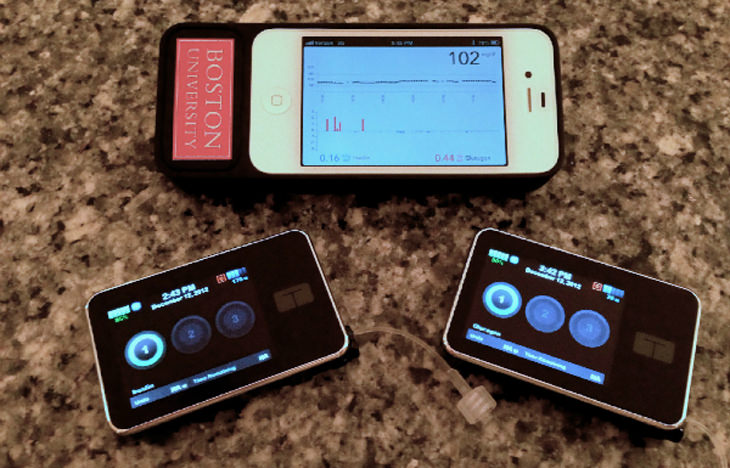
Ed has a personal stake in this. His 15-year-old son, David, has type 1 diabetes, and often his blood sugar drops in the middle of the night while sleeping, which can be deadly. This is why he and a colleague developed the 'bionic pancreas'. The device uses a sensor, an iPhone app and a special pump to deliver two materials: insulin, to lower blood sugar levels; and glucagon, which raises it. The pump, according to Damiano, works 24/7. "This is a relentless device, it doesn't take a vacation, it never goes to sleep," he adds.
Watch a video about the Bionic Pancreas' creation:
Protecting diabetes patients during the night
Ed has a personal stake in this. His 15-year-old son, David, has type 1 diabetes, and often has blood sugar drops, in the middle of the night while sleeping, which can be deadly. This is why he and a colleague developed the 'bionic pancreas'. The device uses a sensor, an iPhone app and a special pump to deliver one of two materials: Insulin, to lower the blood sugar levels, and glucagon, which raises it. The pump, according to Damiano, works 24/7. "This is a relentless device, it doesn't take a vacation, it never goes to sleep," he adds.
Ariana Koster has had type 1 diabetes since she was 11, and she is now getting outfitted for a bionic pancreas for the next phase of testing. "Just not having to worry about diabetes during the night is going to feel wonderful," she says.
Phase two of the test began yesterday and will take a year to complete. If all goes well, the device will be available to the public within 4 years. As for type II diabetes, the researchers believe it's definitely possible that it will help them as well, something they hope to look into during this year of testing.
Three parts
The bionic pancreas is made of three parts: two pumps, about cellphone size, that pump insulin and glucagon by need, and an iPhone wired to continuously monitor glucose levels. The components can be kept in a pocket or a fanny pack, and connect with three little needles that go under the skin, usually in the area of the belly.
The main advantage of the device, say the researchers, is its ability to free the patient from worrying about their disease all the time, and especially going to sleep without knowing if their blood sugar levels will drop to dangerous lows during the night.

Ariana Koster has had type 1 diabetes since she was 11, and she is now getting outfitted for a bionic pancreas for the next phase of testing. "Just not having to worry about diabetes during the night is going to feel wonderful," she says.
Phase two of the test began yesterday and will take a year to complete. If all goes well, the device will be available to the public within 4 years. As for type 2 diabetes, the researchers believe it's definitely possible that it will help them as well, something they hope to look into during this year of testing.
Three parts
The bionic pancreas is made of three parts: two pumps, about cellphone size, that pump insulin and glucagon by need, and an iPhone wired to continuously monitor glucose levels. The components can be kept in a pocket or a fanny-pack, and connect with three little needles that go under the skin, usually in the area of the belly.
The main advantage of the device, say the researchers, is its ability to free the patient from worrying about their disease all the time, and especially going to sleep without knowing if their blood sugar levels will drop to dangerous lows during the night.

Breakthrough: Lion's Mane Mushrooms Boost Memory & Nerves!
Researchers have recently uncovered the mushroom's potent compounds, particularly hericene A, that could help nerve cells grow and better interact with each other.
The Whole Truth About GLP-1 Drugs for Heart and Brain
GLP-1 medications, widely prescribed for weight loss, show promise in improving brain and heart health, but may pose risks to the kidneys, pancreas, and gastrointestinal (GI) system.
New Study Reveals: Cinnamon Lowers Blood Sugar!
New study confirms that cinnamon can blance blood sugar levels, which could lead to a transformation in deabetes treatment.
A Smart New Way to Kill Cancer Cells That Resist Treatment
In lab dishes, these molecules killed aggressive, treatment-resistant melanoma and sarcoma cells within just a few hours, while leaving healthy cells largely untouched.
The Musical Test That Could Detect Dementia Early
Researchers have developed a promising new approach: using music to detect the early signs of cognitive decline.
Why Dancing is the Single Best All-Round Activity After 60
Here is what the research actually shows about dancing after age 60, and how to get started.
The 10 Most Elaborate Scientific Hoaxes In History!
Some hoaxes throughout history have been so believable, they managed to fool the entire world. Here are 10 of the most elaborate scientific hoaxes in history.
Nobody Believed These 5 Scientists, But They Were Right
These 5 scientists were shamed and ousted, or rudely ignored, although years later, their "crazy" theories turned out to be true...
10:48
Cutting Edge: Translating Thought to Speech is Here!
As a pioneer in Neuralink’s VOICE clinical trial, Kenneth is testing a breakthrough brain-computer interface designed to translate thoughts directly into speech.
36:24
Ever Wonder How a Steel Locomotor Works?
Let’s take a closer look at the engineering behind these compact workhorses.
12 Earliest Versions of Tech Inventions We Use Every Day
Witness the evolution of 11 popular devices we use all the time by looking at how they all started...
2:01
What Does the Appendix Actually DO?
Dr. Berg explains, in this video, all about the appendix and what it actually does in our body.
33:02
The Entire Story of Earth in 30 Minutes!
The story of our planet, from birth to the adult, ancient planet we see before us today - all in just half an hour.
Let's Learn All About Your White Blood Cells
White blood cells (WBCs) are the part of your immune system which is responsible for fighting infection. Learn all about them here!
11:40
6 Of the Earliest Known Parasites Ever Found
Get to understand and learn about the earliest parasites discovered by scientists.
12 Steps That Help to Explain Einstein's Famous Theory
Have you ever wondered what Einstein's Theory of Relativity is all about? If you have, here is an easy-to-understand explanation!
There are Some Great Secrets Found in Mathematics...
Numbers hold some great secrets - they even tell us about life!
Alzheimer's: What Recent Breakthroughs Have Taught Us
Now, you can discover 4 new studies that show how to do this in ways you haven’t heard of.
5:28
Just How Small is an Atom? - Fascinating!
Just how small are atoms? And what's inside them? The answers turn out to be astounding...
17:03
What is a Ballistic Missile and is Its Purpose?
Why is the ballistic missile so feared, and what exactly qualifies it as such - will all be explained in this informative video.
3:55
50 Years Later, We're Debunking the Moon Landing "Hoax"
How do we prove to people the moon landing was real? By answering their doubtful questions in this video.
10:30
China's Crazy Plan to Dig a Canal in the Middle of EUROPE
China is setting out a plan to dig a canal through the middle of Europe in the nearest future, but why?
10 Nifty Tips and Tricks For Using Your Smartphone
Smartphones are so powerful, and that's why you might like know some of its functions. Here is a guide for things you can do on iPhones and Android Phones.
7 Little-Known Body Parts We Never Knew About
Here's a look at some of the weird and little-known body parts that you didn’t know you had.
21:25
How Every Nuclear Power Got Its Atomics
This video will explain how each nation earned the complex and controversial title of nuclear power.
6:47
7 Exciting Physics Tricks You Have to See!
Watch these seven remarkable physics tricks in this exciting and fun video.
These 11 Brain Facts Are Enough to Boggle Your Mind
When you consider the sheer complexity of the human brain, it's difficult to wrap your head around it. Learn these 11 fascinating facts about the human brain.
The Tiny Antarctic Flower That Could Help Feed the World
This modest little plant, known as the Antarctic pearlwort, has just handed scientists something remarkable: a genetic blueprint that may one day help our crops survive a warming, drying world.
8:11
Fascinating: What is the Deepest Hole Humanity Has Dug?
This video explains how low humanity has dug down so far.
8 Important Inventions That Were a Complete Accident
It might be interesting for you to learn that some very important scientific innovations were born as a result of an accident.
2:11
Here are Some Unique Tricks You Can Do at Home With Salt!
This video shows us a few interesting magic tricks that you can do anytime using salt, ice, and other items you can find at home.
This Research Shows How Fasting Can Slow Down Aging
A recent study has found that a molecule produced while fasting has an anti-aging effect on vascular system. Learn all about it here.
Superwood: A New Material That Could Replace Steel
After decades of relying on steel—a material that produces nearly two tons of CO2 for every ton manufactured—builders may soon have access to something far more sustainable and surprisingly stronger: Superwood.
Chronically Late? What Science Has to Say About You
There are 8 positive things that science says about late people that we all need to know.
The Newest Innovations in Brain Surgery and the Near Future
Here is a clear, friendly look at the most exciting recent breakthroughs, followed by what experts expect in the decade ahead.
7:56
These 6 Chemical Reactions Changed the Course of History
Although we rarely pay much attention to the chemistry that constantly surrounds us, these 6 reactions changed history.
9:09
Protective Measures: How Our Body Reacts to a Tattoo
In this video, we’ll explore the microscopic war raging beneath your skin, where millions of your cells make the ultimate sacrifice to lock that ink in place, turning a defense mechanism into lifelong art.
Blood Test Breakthrough Transforms Leukemia Diagnosis
This research demonstrates that rare circulating stem cells in blood carry the same diagnostic information as bone marrow samples, enabling doctors to identify disease progression months before clinical symptoms appear.
This New Blood Pressure Drug Could Be a Game-Changer
Zilebesiran, an investigational drug that is showing profound success in late-stage clinical trials is offering hope for millions who struggle to keep their blood pressure in check.
5:41
Witness the Leading New Electronic Devices of 2026
The experts at CNET and PCMag were on the floor, and they've got their favorites. Let's dive in.
These Optical Illusions Will Shock Your Mind!
Optical illusions create miscommunication between our eyes and brain making, us see things that are not really there or not see things that are right in front of us. See for yourself.
Science Lesson: 10 Fiery Facts About the Sun You Must Know
Learn some fascinating and little-known facts about the Sun in this article.
These Materials are Strange Enough to Boggle Your Mind...
There are some materials in this world that totally defy scientific convention. From metals that melt in your hand, to a solid lighter than air, take a look.
5 Puzzling Mysteries That Science Finally Managed to Solve
These weird occurrences have puzzled humanity for decades, if not centuries. Finally, scientists solved them & the solutions are exciting...
7:00
How To Be Sure Your Dog Adores You
10 scientific ways to know if your dog loves you
14:13
Physics Explained Simply: From 0 to 7 Dimensions
Using physics, geometry, and Flatland-style experiments, discover why our universe is stranger than it appears - and why our brains struggle to see it.
4:26
Despite Looking Similar, Cats Are MORE Diverse Than Dogs!
Who's more diverse, cats or dogs? This video answers this question once and for all, the it might surprise you...
To enable your Ad-Free Subscription, please fill the fields below
Your subscription was successful, now you can enjoy an ad-free experience!! Note: To make sure you get no ads, please make sure to log in to your account. If you are logged in already, then refresh the page. The subscription can be cancelled at any time.