
Does Your Home Have Asbestos Hiding Under the Floor? Here's What Every Homeowner Needs to Know
If your home was built before 1990, there's something potentially lurking beneath your floor tiles that you may never have thought about — asbestos. Once one of the most widely used materials in the construction industry, asbestos was prized for its fire resistance and durability. But decades of research revealed a darker truth: it's also a serious health hazard. Here's what homeowners need to understand about asbestos in floor tiles, and what to do if you suspect it's in your home.
What Exactly is Asbestos?
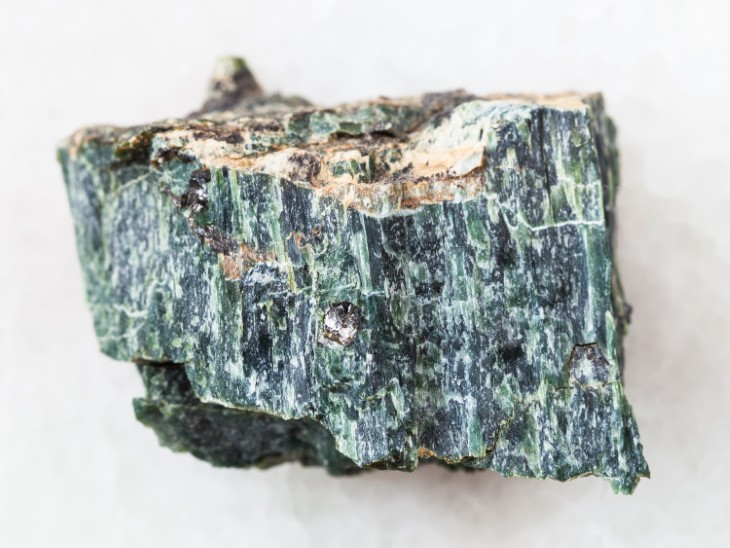
Asbestos is a group of naturally occurring fibrous silicate minerals found in metamorphic rock across North America, Russia, China, Brazil, and other parts of the world. Its fire-resistant, non-conductive, and chemically stable properties made it enormously attractive to manufacturers throughout much of the 20th century. It was used in insulation, roofing materials, cement, drywall, paint — and yes, floor tiles and the adhesives used to install them.
There are two main classes of asbestos. The first, Serpentine, contains a single variety called chrysotile, or white asbestos. It accounts for roughly 95% of all industrial asbestos use and features long, curly fibers that resemble cotton. The second class, Amphibole, includes five varieties — crocidolite, tremolite, amosite, anthophyllite, and actinolite — which appear as needle-like fibers in brown, blue, or off-white clumps. Both classes are health hazards.
Why Is It So Dangerous?
The danger of asbestos lies in what happens when its fibers become airborne and are inhaled. Once lodged in the lungs, the fibers don't break down or leave — they accumulate, causing chronic irritation that can develop into inflammation, scarring, and serious diseases including lung cancer, laryngeal cancer, ovarian cancer, and mesothelioma. According to the Mesothelioma Center, asbestos-related lung disease claims around 6,000 lives every year in the United States alone.
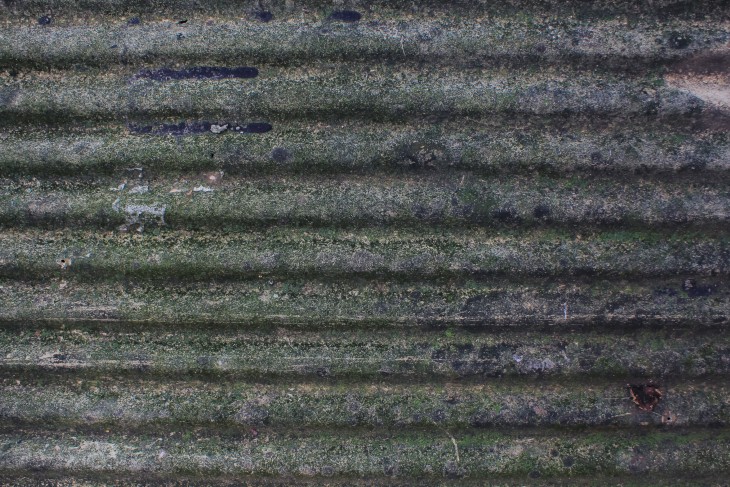
Crucially, asbestos is only dangerous when it becomes airborne. Intact, undisturbed asbestos — say, sealed beneath a floor tile — poses little immediate risk. The danger arises when it is broken, crumbled, or disturbed.
Could It Be in Your Home?
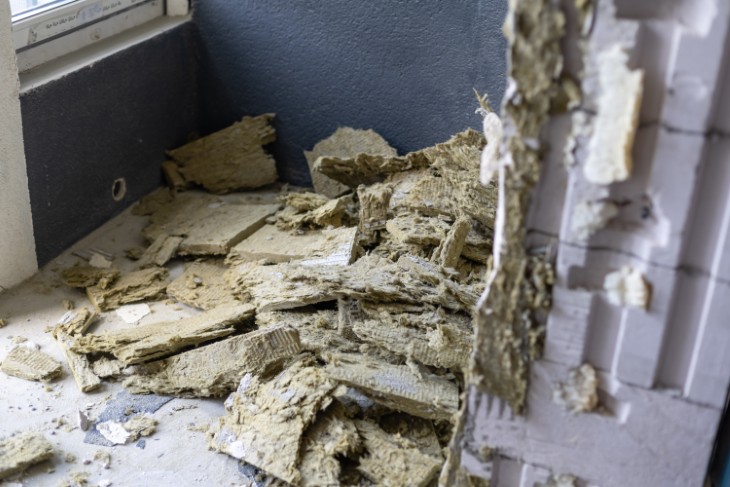
The U.S. banned new uses of asbestos in building materials in 1989, so homes built after that point are generally safe. But if your home was constructed — or had flooring installed — before the late 1990s, it's worth treating the situation with caution. Landscaper and builder Tom Polkinghorne advises that asbestos could be present not just in floor tiles themselves, but also in the adhesive underneath, the paper backing, or leveling compounds.
The tiles most likely to contain asbestos are nine-by-nine-inch vinyl or asphalt tiles installed before 1989. The black rubber mastic commonly used to glue them to the floor is also a known suspect. The only way to know for certain whether asbestos is present is through professional laboratory testing.
It's also worth noting that while there is no worldwide ban on asbestos, some imported building materials may still contain it — so even newer renovations using imported products aren't entirely without risk.
What Should You Do If You Suspect Asbestos?
The most important rule is simple: don't disturb it. "If you think there's a chance that asbestos is in your home, it is absolutely critical that you do not disturb it," warns injury attorney Stephen M. Wagner. "Asbestos requires professional removal, and trying to do it yourself puts your health at serious risk."
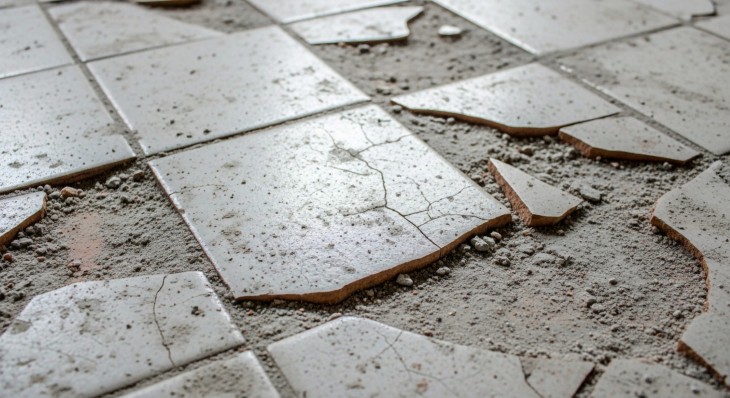
If the tiles containing asbestos are in good condition — not cracking, crumbling, or fraying — the recommended approach is actually to leave them alone entirely. Sealed and intact, they present minimal danger. If you plan to sell your home, be aware that most states legally require you to disclose environmental hazards like asbestos-containing tiles to potential buyers.
The Safest Solution for Flooring Upgrades
If you want new flooring but suspect asbestos under your existing tiles, the good news is that you don't necessarily have to remove them. In most cases, the best and safest solution is simply to install new flooring directly on top of the old tiles, effectively encapsulating the asbestos and preventing it from ever becoming airborne. This is, in fact, the approach most abatement professionals recommend.
If the tiles are damaged and removal is unavoidable, that work must legally be performed by a licensed asbestos abatement professional. This is not a DIY project under any circumstances — both for the sake of your health and to avoid potential legal liability to others in or around your home.
Asbestos in floor tiles isn't a reason to panic, but it is a reason to be informed. Knowing what's in your home — and how to handle it responsibly — is one of the most important things a homeowner can do.