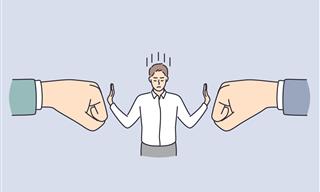

We all have at least one — a person in our life who consistently stirs up drama, creates friction, or leaves us feeling drained after every interaction. Maybe it's a family member who always finds something to complain about, a coworker who makes every project unnecessarily stressful, or a neighbor who seems to thrive on conflict. You might chalk it up to personality clashes or bad luck. But a remarkable new study suggests these relationships may be doing something far more serious than ruining your mood — they could actually be speeding up how fast your body ages.
Researchers have coined a term for people like this: "hasslers." Defined as those who often cause problems, create difficulties, or simply make life harder for the people around them, hasslers are the subject of a striking new study published in the prestigious journal Proceedings of the National Academy of Sciences. The findings are hard to ignore.
Your Cells Are Keeping Score

To understand the study's findings, it helps to know the difference between two kinds of aging. Chronological age is simply how many years you've been alive. Biological age, on the other hand, reflects the actual condition of your cells and tissues — the real wear and tear happening inside your body, measurable through specific markers in your DNA.
The researchers collected saliva samples from 2,345 participants in Indiana, ranging in age from 18 to 103, with an average age of around 46. Participants answered detailed questions about their close relationships over the previous six months, identifying anyone they considered a hassler in their social circle.
What they found was sobering. For every additional hassler in a person's life, their biological aging rate increased by approximately 1.5%. In practical terms, that means someone with an extra difficult person in their world may be aging about 1.015 biological years for every single year that passes on the calendar. Multiply that over a decade or two, and the difference becomes significant.
It's worth noting that the study identified an association — not a direct cause-and-effect relationship. But the pattern was consistent and clear enough to take seriously.
Hasslers Are More Common Than You'd Think

The average participant had a social network of just over five people. Of those, about 8% were identified as hasslers. Nearly 29% of participants reported having at least one hassler in their close circle, and about 10% reported having two or more. That means persistently difficult relationships are not some rare misfortune — they're a surprisingly common feature of everyday life.
"Those around us can either increase or decrease our stress levels," explains Dr. Menije Boduryan-Turner, a licensed psychologist and founder of Embracing You Therapy. "We are wired for social connection, and our relationships significantly influence and shape our mood, perspectives, motivation, and energy — on a daily basis and for our long-term goals."
So who tends to end up in the hassler role? The study found that family members were the most commonly named — parents and children more so than spouses. Outside the family, co-workers, neighbors, and roommates were more likely to be flagged as hasslers than friends. In other words, the people we're most stuck with tend to cause us the most trouble.
Who Is Most Vulnerable?
The research also revealed that hassler exposure is far from random. Certain groups appear to be at greater risk. Women were more likely than men to report having hasslers in their lives. People who had experienced adverse childhood events were also more likely to have difficult people in their current social networks. Those with larger social networks, daily smokers, and individuals in poorer health were similarly more likely to report hasslers — suggesting that stress and hardship tend to cluster together.
The Toll on Your Mental and Physical Health

Beyond biological aging, the study found that the presence of hasslers was linked to a wide range of health concerns. The mental health effects were the most pronounced. Each additional hassler was associated with increased severity of both depression and anxiety, along with poorer overall mental health self-ratings.
"Dealing with a hassler definitely takes a toll on mental health, and I see that in my work every day," says Dr. Alex Dimitriu, double board-certified in psychiatry and sleep medicine. "When stress becomes too hard to manage, it creates insomnia, poor concentration, depression, anxiety, irritability, changes in appetite, and isolation."
The physical effects were more modest but still meaningful. More hasslers in one's life were linked to higher BMI, a less favorable waist-to-hip ratio, and poorer physical and overall health. "Stress can increase our blood pressure and affect our gastrointestinal and immune systems, among many other organ systems in the body," adds Dr. Nissa Keyashian, a board-certified psychiatrist.
You Can't Always Walk Away — But You Can Protect Yourself

The obvious solution might seem to be cutting these people out of your life entirely. But the reality is that many hasslers are people we can't simply avoid — a parent, a sibling, a long-time coworker. So what can actually be done?
Experts point to several strategies that can make a real difference.
Control what you can — which is mostly yourself
Dr. Dimitriu recommends a strong emphasis on self-care: time to journal, meditate, or exercise. These aren't indulgences. When someone in your life is a chronic source of stress, these practices become essential.
Set value-based boundaries. "The keyword here is value-based, because often we make fear-based decisions," says Dr. Boduryan-Turner. "When setting boundaries, we want to keep our values in mind and communicate our needs from that place." And these boundaries don't have to feel like a confrontation. "We can set our limits lovingly and compassionately," she adds. "It doesn't have to feel like a fight."
Give yourself permission to step back. Taking breaks from difficult relationships and engaging in activities that restore your sense of calm are not signs of weakness — they're healthy and necessary coping tools.
Practice boundary-setting as a skill. "Practicing healthy boundaries is one of the most important skills in our lives," says Dr. Keyashian. Like any skill, it gets easier with time and repetition.
The people closest to us shape our health in ways science is only beginning to fully understand. But the message from this research is clear: the quality of our relationships isn't just an emotional matter — it's a biological one. And taking steps to protect yourself from chronic stress, even in small ways, may be one of the most powerful things you can do for your long-term health.