
Once regarded as the stuff of science fiction, the integration of artificial intelligence into prosthetics has shattered previously held limitations, offering unparalleled autonomy to individuals facing limb loss. Let's turn our attention to a groundbreaking case: Karin, a 50-year-old Swedish woman whose life has been dramatically transformed by a bionic hand unlike any other.
The story of Karin
Karin had been living without her right hand for two decades, the aftermath of a debilitating farming accident. She had managed, but her daily activities were severely restricted. The absence of her hand was also haunted by phantom pain, a sensation she described as feeling as though her missing hand was being churned through a meat grinder.
A confluence of minds from Sweden, Italy, and Australia united to redefine what was possible in prosthetic technology. Spearheaded by robotics engineer Max Ortiz Catalán, this international team was affiliated with prestigious institutes like the Bionics Institute in Melbourne, Australia, and the Center for Bionics and Pain Research in Sweden. They recently broadcasted Karin's uplifting tale in the esteemed journal, Science Robotics, heralding a new era in the realm of prosthetics.
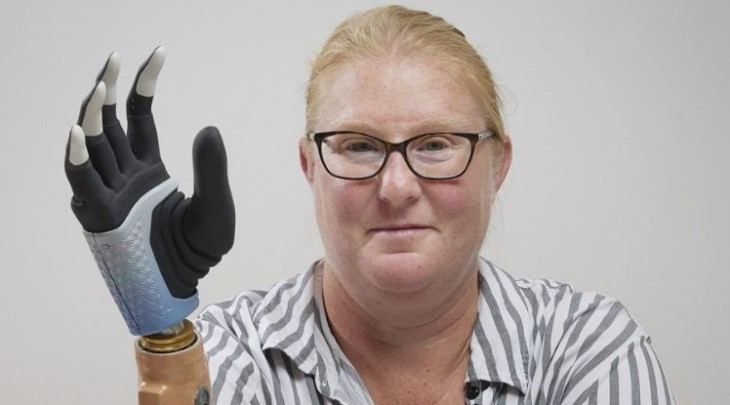
Image: (Bionics Institute)
What sets Karin's bionic hand apart? This prosthetic marvel uses pioneering technology that connects directly to a user’s bones, muscles, and nerves. This nexus establishes a human-machine interface, enabling artificial intelligence to translate brain signals into precise movements. Karin’s prosthetic hand is equipped with internal electrodes, a feat declared as the first of its kind for robotic hands designed for amputations below the elbow.
This isn’t just about dexterity and motor functions; the bionic hand has significantly diminished Karin's phantom pain. The result? She now requires far fewer medications than before. Her quality of life has improved manifold; she can perform 80% of her daily tasks without any hindrance, whether it's preparing a meal or fastening a zipper.
The development of such technology does not come without its financial implications. Though the specific numbers were not disclosed for Karin’s case, it's worth noting that advancements of this nature often require enormous investment. That said, when set against the monumental leaps in user experience and potential applications, many would argue that the investment is more than justified.
Ortiz Catalán explained that one of the groundbreaking techniques employed in Karin's case was ‘osseointegration.’ This involves planting an implant into the bone in such a way that the bone cells grow tightly around it. Once in place, the artificial limb can be attached directly to the skeleton. Importantly, muscle grafts containing electrodes are also incorporated, ensuring amplified signals for the interface.
Even three years ago, when Karin was initially fitted with her prosthesis, this was a one-of-a-kind innovation. Most available prosthetics at that time had sensory electrodes on the exterior, situated just under the synthetic 'skin.' This traditional setup invariably dilutes the quality and quantity of sensory signals between the robotic hand and the human neural system.
Looking forward, it’s evident that this technology can be a cornerstone in the future of prosthetic development. "The fact that [Karin] has been able to use her prosthesis comfortably and effectively in daily activities for years is a promising testament to the potential life-changing capabilities of this novel technology," opined Ortiz Catalán. In particular, its efficacy in alleviating phantom limb pain poses exciting possibilities. The Bionics Institute's CEO, Robert Klupacs, echoed similar enthusiasm for what lies ahead.
In conclusion...
The evolution of prosthetic technology, fueled by international collaboration and sheer ingenuity, has opened doors once thought permanently closed. And while one cannot put a price on autonomy and the relief from chronic pain, one thing is clear: we are merely at the precipice of what is possible when human endeavor meets artificial intelligence in the quest to enrich lives.

19:01
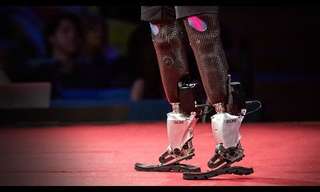
Where is the Future of Artifical Limbs Taking Us?
A fascinating talk about the future of prosthetic limbs.
The Hidden Side Effects of GLP-1 Medication
A major new study suggests there may be quite a bit more going on beneath the surface - side effects that patients are experiencing but that rarely come up in the doctor's office.
3 Inventions that Improve Upon Our Regular Senses
Check out these impressive artificial organs which are completely changing the worlds of science and medicine for good.
4:01
New VR Technology Makes 'Paralyzed For Life' Person Stand!
New successful clinical trial leads to amazing results.
Anti-Aging Science in 2026: What's Real and What's Hype?
Here's an honest look at where anti-aging medicine stands in 2026 - the promising, the disappointing, and the surprisingly simple things that still beat almost everything in a pill bottle.
Is Microsoft's "AI Doctor" Better Than a Real Doctor?
A new study presents a committee of digital doctors achieving approximately 80% accuracy in complex medical diagnoses – far beyond the average of general practitioners.
8 Biggest Mysteries Still Surrounding the Human Body
Although modern science has revealed much about the human body, there are some things that still remain unknown. Here are the 8 biggest mysteries about it.
Six Inventions Da-Vinci Made Ahead of Their Time
He created and envisioned many inventions that were sometimes even centuries ahead of their time. Was there ever a genius as great as Da-Vinci?
58:37
Science: Here's Everything We Know About Pluto
Join us as we unravel the mysteries of far off Pluto, 3.7 billion miles from our Sun.
How AI Is Fixing Problems Humans Struggle With
Here’s how AI is quietly reshaping the world in ways that actually matter.
8:12
The Tallest Statues Compared, Even Those Not Built Yet...
In this 3D animated size comparison, we showcase the tallest statues in the world alongside ambitious future projects.
8:12
How Humans Helped Cats Take Over the World
The relationship between humans and cats goes back as far as 9,500 years. How did it al start? And how did humans help cats essentially take over the world?
11:02
Ever Wonder What Ancient Egyptian Sounded Like?
Researchers have used all the information we know to create what they think it may have sounded like.
22:35
Neuralink Update 2025: The Most Incredible Moments
Welcome to our 2025 Neuralink update, where we’ll take you through the most incredible and groundbreaking moments from the past year.
6:15
K2-18b: The Exoplanet That Might Host Alien Life
Astronomers have detected signs of posisble life in the atmosphere of exoplanet K2-18b.
5:16
How The Brooklyn Bridge Narrowly Escaped Never Being Built
Learn about the fascinating, but equally tragic history of the construction of Brooklyn Bridge in this engaging and educational video
42:14
Physicist Michio Kaku: The Universe in a Nutshell...
Physicist Michio Kaku explains the fundamental nature of our universe
TRIVIA: 25 Shocking Differences Between the Sexes
Did you know that there are some vast differences between the sexes? These 25 scientific facts will probably come as a big surprise to you, they did to me.
Uncover the Secrets of the Universe in These Documentaries
This list of riveting space documentaries will help you unlock the mysteries of the universe and beyond.
I Bet You Didn't Have a Clue About These Human Body Facts!
The human body is the most complex machine known to mankind, but I bet you don't know these 10 amazing facts about it...
2:41
Trick-Mousing is Such Adorable Entertainment...
Mice are much cleverer than most people believe, and they easily respond to training, as long as you use positive reinforcement, or in other words - reward them frequently for their behavior with food.
These Materials are Strange Enough to Boggle Your Mind...
There are some materials in this world that totally defy scientific convention. From metals that melt in your hand, to a solid lighter than air, take a look.
4:01
What Lies Within the Planet's Deepest Hole? Find Out Here
Learn all about Russia's Kola Superdeep Borehole, which at a depth of around 12km, makes it the deepest hole that mankind has ever dug into our planet.
Science: Can Plants That Come Back From the Dead Save Us?
These extraordinary organisms may hold the key to solving one of the world's most urgent problems: feeding a growing population on a warming, drying planet.
22:52
Will AI Take Your Jobs? An Expert Explains the Future
Gonzaga University's AI professor Graham Morehead some of our most pertinent questions related to AI.
4:51
Watch These Chinese Robots Amaze the World
In this video, you're going to see just how far these robots can go, as they've been programmed with some truly amazing dance moves,
Hubble Telescope: 35 Years of Incredible Photos
Exploring 35 years of reality-changing, universe-enhancing photos that opened the sights of outer space to us all.
Are You Ready to Learn About the Expanse of the Universe?
If you have an interest in the unknown, then look no further than these 15 unbelievably facts discovered about space
Science in 2025: 8 Developments That Could Change it All
Here are some of the most exciting trends in science and healthcare to keep an eye on.
Hair Regeneration Could Be Possible With This New Process
Learn about an innovative new study which has revealed a novel treatment for effective hair regeneration.
11:40
6 Of the Earliest Known Parasites Ever Found
Get to understand and learn about the earliest parasites discovered by scientists.
5:06
The Only Manmade Object That Will Last Forever
This copper discus contains 116 images we launched into space for aliens to see
What is the Troxler Effect and How Does it Affect You?
Learn about Troxler's effect and the optical illusions it creates in life.
11:28
India Built a Monster Dam That Controls the Weather!
The Polavaram Dam doesn't just control floods - it moves water between regions and much more!
25 Pics Showing How People in the Past Imagined the Future
Let’s see how the people of the past imagined the future and find out if their fun predictions came true with these 25 vintage pictures
19:39
Lecture: What is the Future of Humanoid Robots?
Get ready to meet the humanoid partners that will redefine how we live and work.
18:21
Fascinating: How Do Cats TRULY See Humans?
Understanding a cat's world is the key to strengthening your bond. Let's decode your cat's mind!
34:33
Is China Number 1 in Global Technology?
In this video, we’ll take a closer look at the new developments hitting the market — and what they could mean for the future of transportation.
Remembering the Life and Wisdom of Stephen Hawking
Stephen Hawking possessed one of the greatest minds the world has ever seen, but was also impaired by a debilitating disease. Here are his life ant times.

13:55
WATCH: What Is the Fingerprint of God's Creation?
The golden pattern, describes the mathematical code of the universe. Is this the scientific evidence of God's will and plan?
Blood Test Breakthrough Transforms Leukemia Diagnosis
This research demonstrates that rare circulating stem cells in blood carry the same diagnostic information as bone marrow samples, enabling doctors to identify disease progression months before clinical symptoms appear.
Explore the Most Bizarre Planets We've Discovered So Far
The search for stars, planets, and extraterrestrial life has led to quite a number of extraordinary discoveries, and here are 10 of the strangest!
10:19
What a Bullet Blast Looks Like Underwater!
The slow motion kings are back with incredible effects.
8:11
Fascinating: What is the Deepest Hole Humanity Has Dug?
This video explains how low humanity has dug down so far.
21:24
James Webb Telescope: Redefining Our View of Space
Here's a brief look at all the amazing discoveries made by the James Webb Space Telescope so far.
NVIDIA CEO Reveals Which Degree Is Worth Studying
Electrical Engineering, Computer Science, or Physics? Nvidia's CEO has a surprising answer to which area should be studied nowdays.
5:17
How Exactly Do We Hear? All is Revealed Here!
In this informative TED-Ed video, Douglas L. Oliver explains the complete science behind hearing.
To enable your Ad-Free Subscription, please fill the fields below
Your subscription was successful, now you can enjoy an ad-free experience!! Note: To make sure you get no ads, please make sure to log in to your account. If you are logged in already, then refresh the page. The subscription can be cancelled at any time.