
Breathing is essential to almost all living beings. Of course, you knew that already. However, while we have all become so conscious about our health today, how many of us actually give a second thought to the process of breathing and respiration?
Breathing is the most normal and regular activity we perform every minute of the day; even when we are sleeping. The process of breathing is fascinating across living beings. Here, we can take a detailed look at different ways of breathing in three different living beings – humans, birds and grasshoppers. Each of them has a respiratory system that is unique and will give a glimpse of nature’s curious ways.
1. Human Lungs:
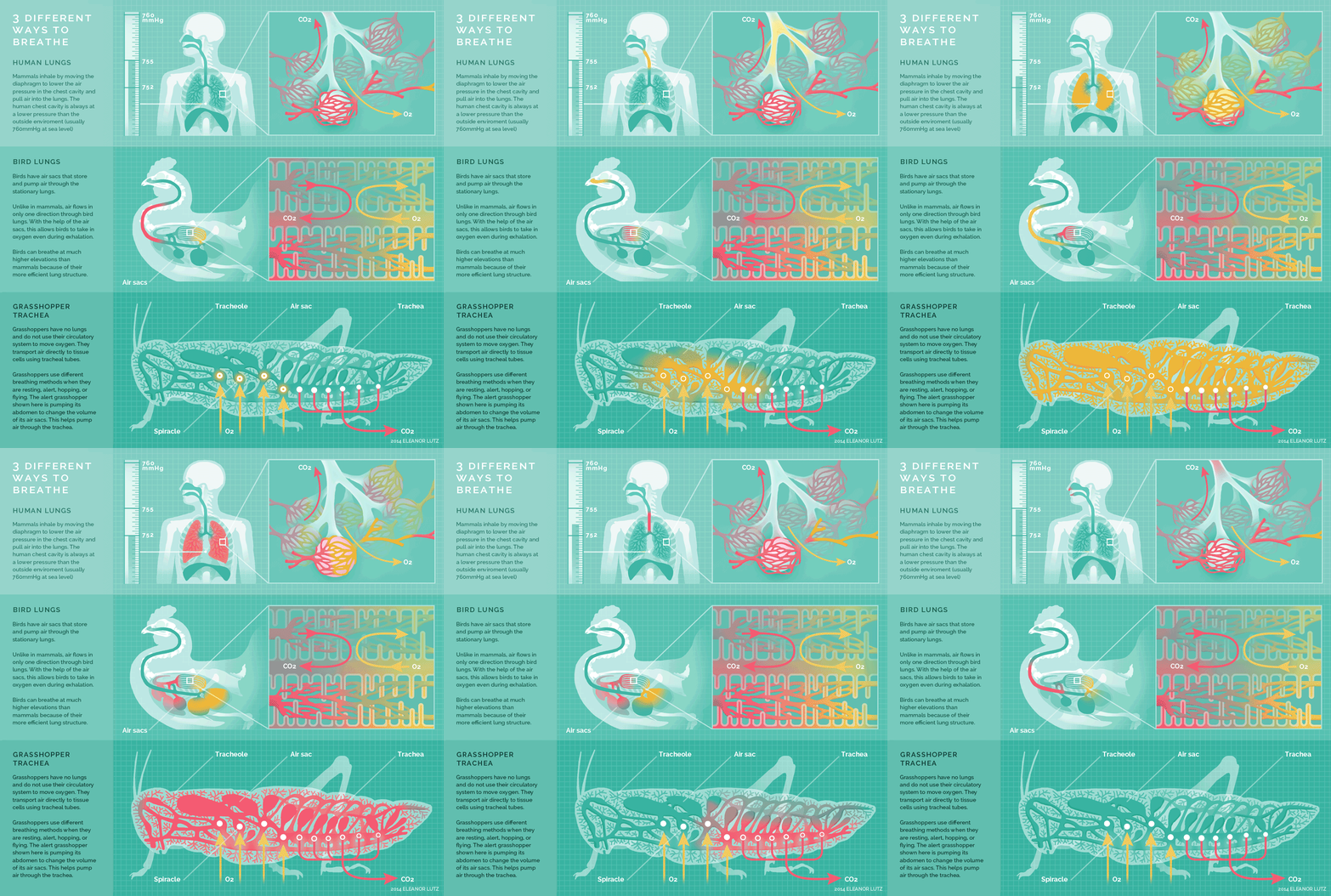
Human lungs are part of the body’s respiratory system. The primary function of the lungs is to process the gas exchange for respiration. The lungs take oxygen from the environment and transfer it to the bloodstream. To breathe properly, humans use structures outside of the lungs - the diaphragm, the intercostal muscles (located between the ribs), the abdominal muscles, and sometimes, neck muscles as well.
The diaphragm, a muscle that sits below the lungs, does the majority of the work involved. When the diaphragm contracts, it moves down and provides more space in the chest cavity and enhances the lungs' ability to expand. The pressure inside goes down when the chest cavity volume increases. Then the air is sucked in through the nose or mouth and moves down into the lungs.
Another point worth noting is that the human chest cavity is always at a lower pressure than the outside environment. This is usually 760 mmHg (millimeters of mercury) at sea level.
2. Bird Lungs:
The respiratory system of birds is quite different from that of mammals. Birds do have lungs, but they do not have a diaphragm. The air moves in and out of their bodies through pressure changes in the air sacs. While the air sacs are not directly related to gas exchange, they do help in directing airflow through the lungs in one direction. The muscles in their chest cause the sternum to be pushed outward. Because of this, negative pressure in the air sacs is created which leads the air to enter the respiratory system.
The lungs of birds do not expand or contract like the lungs of mammals. They have thin-walled, tubular structures called parabronchi that are located throughout the lungs between the secondary bronchi. While the air moves in one direction through the lungs, it also flows in one direction through the parabronchi. Basically, from one secondary bronchus into another.
The respiratory system of birds transfers more oxygen with each breath. It is the remarkable air sacs, though, which really make the respiratory system of birds unique. They enable regular, one-way flow during both inspiration and expiration.
3. Grasshopper Trachea:
You would be surprised to know that grasshoppers have no lungs. Like all insects, they breathe through a complex network of tubules called the tracheae. While the exchange of gases happens through the tracheal system, it is the spiracles where the air is taken in first. This system is comprised of ten spiracles that are located along the length of the grasshopper’s abdomen in eight pairs. They also have two more pairs in the thoracic region.
Oxygen disperses into their cells directly and then into the atmosphere. This completes the grasshopper’s respiration process. Their spiracles take in air with the control of their brains. Furthermore, they also have a few spiracles that perform the job of expiration of air as well. The tracheae inside humans do the role of cleaning the air. For grasshoppers, this system works as an independent operation and is not involved with the circulatory system.
Health Tip: What's Riskier, Sweet Drinks or Sweet Foods?
Why are sweet drinks more risky and harmful than sweet foods are?
A Simple Blood Test Could Detect Alzheimer Years Earlier
A few years ago, researchers have discovered a gene that could revolutionize how we diagnose Alzheimer's disease - and they found it by asking a simple question: Why do some people's brains succumb to the disease while others don't?
40 Wonderful and Beneficial Advantages of Having a Cat
Enjoy a visual representation of the 40 different benefits humans get from having a cat.
Blood Test Breakthrough Transforms Leukemia Diagnosis
This research demonstrates that rare circulating stem cells in blood carry the same diagnostic information as bone marrow samples, enabling doctors to identify disease progression months before clinical symptoms appear.
4:44
Itchy? This Might Be Why...
Do you suffer from itches? Of course, we all do! Do you want to scratch right now? Probably. But instead why not learn the science behind why we itch?!
4:22
How Can Parrots Speak Like Humans?
How can parrots speak like humans, despite being super under-equipped for the task?
These Materials are Strange Enough to Boggle Your Mind...
There are some materials in this world that totally defy scientific convention. From metals that melt in your hand, to a solid lighter than air, take a look.
17:03
What is a Ballistic Missile and is Its Purpose?
Why is the ballistic missile so feared, and what exactly qualifies it as such - will all be explained in this informative video.
4:52
Neon Lights: a Beautiful Union of Science and Art
Neon signs are a beautiful blend or artistry and science, and knowing the history and the science behind them make them even more exciting
11:05
Science: Can AI Preserve Our Most Precious Memories?
Technologist Pau Aleikum Garcia talks about synthetic memories.
15:34
This Stunning Video Visualizes the Size of the Universe
This video visualizes the number of galaxies in the world, giving you a look into the true size of our enormous universe.
10 Tech Products You Must Double-Check Before Buying
Beware! These tech products are most commonly faked.
Meta Unveils New Glasses that May Change Sports Forever
META has revealed a new line of AI-powered smart glasses: Oakley Meta HSTN
Study: New Link Found Between Parkinson's and the Gut
A recent study has identified gut microbes likely involved and linked them to decreased riboflavin (vitamin B2) and biotin (vitamin B7), suggesting a potential treatment
10 Declassified U.S. Military Secrets That'll Astound You
Government military secrets can range from amusing to absurd to downright terrifying, but they are all extremely intriguing. Here are 10 such secrets.
1:17
The Age of the Affordable Android Robots is Here...
Meet the Unitree R1 – the game-changing humanoid robot that just shattered every price expectation in robotics.
6:15
K2-18b: The Exoplanet That Might Host Alien Life
Astronomers have detected signs of posisble life in the atmosphere of exoplanet K2-18b.
38:55
What Happens the Deeper You Go Underground?
What happens when pressure pushes matter beyond the limits of what we thought possible?
7 Mind Blowing Science Facts School Left Out
Put on your learning caps! We rounded up 7 surprising scientific facts you probably didn't learn at school.
7:21
Science: 20 Mechanical Principles Demonstrated Using Lego
In this video, we'll explore a variety of fascinating mechanical mechanisms, all demonstrated using Lego models.
See the World From Up Close - 17 Fascinating Macro Photos
Seeing ordinary objects like honey, paracetamol, and snow through a microscopic lens teaches us how beautiful and intricate they really are!
2:11
Here are Some Unique Tricks You Can Do at Home With Salt!
This video shows us a few interesting magic tricks that you can do anytime using salt, ice, and other items you can find at home.
These 14 Forgotten Robots Promised So Much...
This collection showcases 14 cool vintage robots that were supposed to change everything.
2:41
Trick-Mousing is Such Adorable Entertainment...
Mice are much cleverer than most people believe, and they easily respond to training, as long as you use positive reinforcement, or in other words - reward them frequently for their behavior with food.
3:07
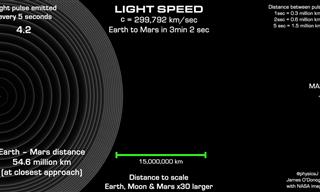
The Speed of Light Visualized in a Magnificent Video
Have you got the patience? Watch, in scale, just how long it takes light to travel from Earth to Mars
34:33
Is China Number 1 in Global Technology?
In this video, we’ll take a closer look at the new developments hitting the market — and what they could mean for the future of transportation.
24:11
25 Game-Changing Megaprojects That Will Change Our World
These incredible megaprojects that are set to redefine our world in 2025.
5:14
Earth 2125: A Vision of the Future of Our Planet
Exploring what Earth could look like in 2125 reveals exciting potential.
6:05
The Real Reason Companies Prevent You from Fixing Things
Ever felt like you should be able to fix that broken gadget, but something's holding you back? Watch this to know more.
3:39
Magic is Only A Vibration Away With This Great Experiment
All it takes is some sand, a metal plate and carefully toned vibrations from a speaker to create stunning and complex patterns. This video shows you the amazing results!
Superwood: A New Material That Could Replace Steel
After decades of relying on steel—a material that produces nearly two tons of CO2 for every ton manufactured—builders may soon have access to something far more sustainable and surprisingly stronger: Superwood.
Stunning 2024 Images from the James Webb Space Telescope
Marvel at the new images revealed by the James Webb Space Telescope.
4:26
Despite Looking Similar, Cats Are MORE Diverse Than Dogs!
Who's more diverse, cats or dogs? This video answers this question once and for all, the it might surprise you...
6 Harmful Toxins You Didn’t Know You Encounter Daily
These toxic chemicals can be found in everyday products and can be extremely dangerous to us.
58:37
Science: Here's Everything We Know About Pluto
Join us as we unravel the mysteries of far off Pluto, 3.7 billion miles from our Sun.
Has Modern Technology Changed Our Cognitive Abilities?
Modern digital technology is everywhere and it’s changing how we think, how we behave and even how we feel about things.
0:55
China's G1 Robot is Showing Some Incredible Moves
The G1 is a new robot developed in China and in this video shows some amazing moves.
Are You Ready to Learn About the Expanse of the Universe?
If you have an interest in the unknown, then look no further than these 15 unbelievably facts discovered about space
5:01
The Truth About Folding Phones You Need to Know
Don’t buy a foldable without knowing this first.
12 Earliest Versions of Tech Inventions We Use Every Day
Witness the evolution of 11 popular devices we use all the time by looking at how they all started...
Find Out How Some Elderly People Stay Sharp into Old Age
Some old people have better memories than people half their age. This could be the reason why...
I Bet You Didn't Have a Clue About These Human Body Facts!
The human body is the most complex machine known to mankind, but I bet you don't know these 10 amazing facts about it...
8 Biggest Mysteries Still Surrounding the Human Body
Although modern science has revealed much about the human body, there are some things that still remain unknown. Here are the 8 biggest mysteries about it.
4:11
This Video Will Show You Where We Are in the Universe!
Where is our galaxy in the known universe? This video will fly with you to ever-larger destinations, showing you our little planet's cosmic address from a very large viewpoint.
7 Overlooked Scientists Who Should Be Household Names
Meet seven scientists who never got the credit they deserved.
21:51
What Will the Universe Look Like in 10 Quintillion Years?
These questions take us beyond science into the realm of imagination, as we contemplate the ultimate fate of our Universe and everything within it.
9 of the Greatest Unsolved Mysteries About the Universe!
The universe has been around for close to 14 billion years, but it still holds many mysteries that continue to perplex scientists. Here's 9 of them!
To enable your Ad-Free Subscription, please fill the fields below
Your subscription was successful, now you can enjoy an ad-free experience!! Note: To make sure you get no ads, please make sure to log in to your account. If you are logged in already, then refresh the page. The subscription can be cancelled at any time.