
Breathing is essential to almost all living beings. Of course, you knew that already. However, while we have all become so conscious about our health today, how many of us actually give a second thought to the process of breathing and respiration?
Breathing is the most normal and regular activity we perform every minute of the day; even when we are sleeping. The process of breathing is fascinating across living beings. Here, we can take a detailed look at different ways of breathing in three different living beings – humans, birds and grasshoppers. Each of them has a respiratory system that is unique and will give a glimpse of nature’s curious ways.
1. Human Lungs:
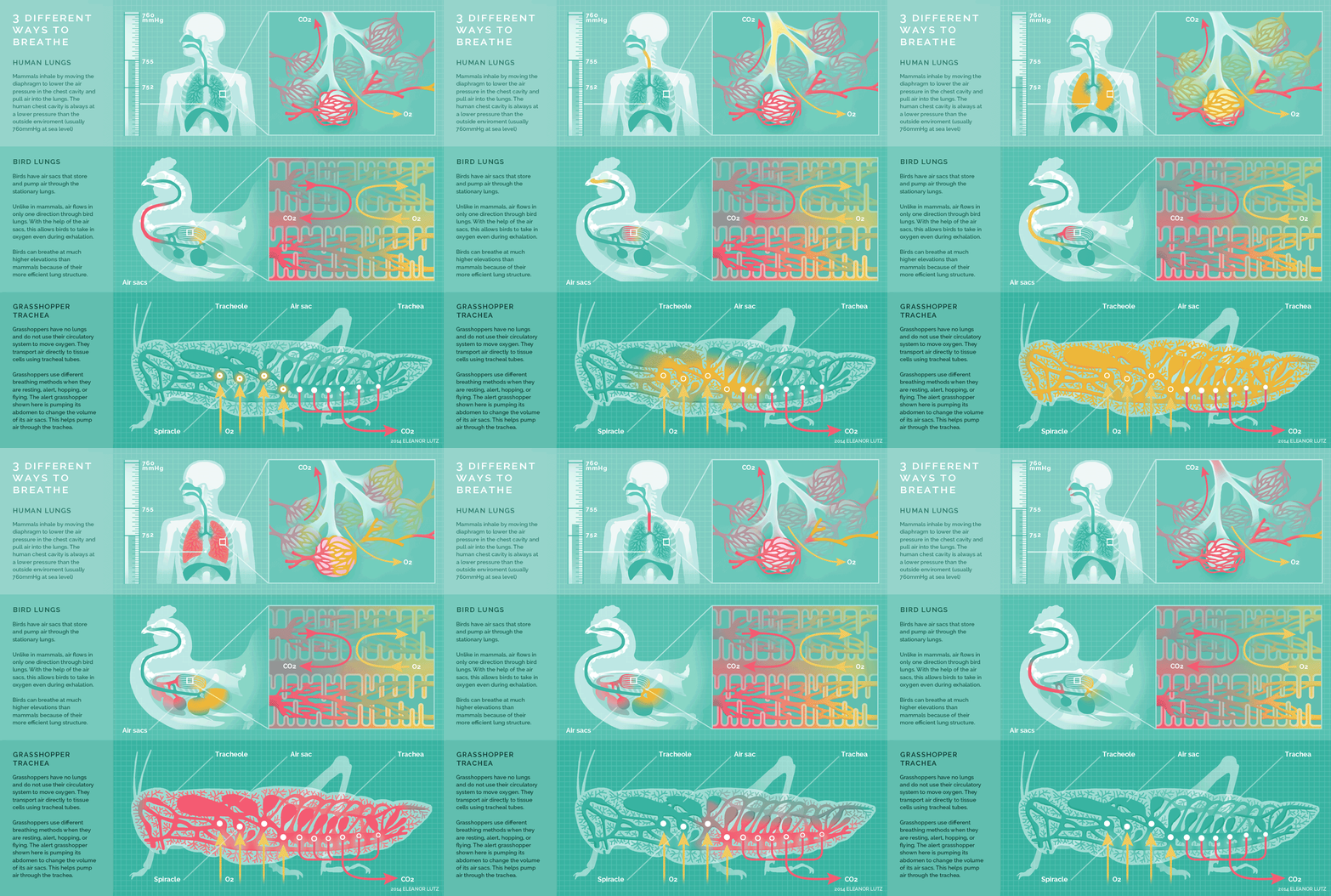
Human lungs are part of the body’s respiratory system. The primary function of the lungs is to process the gas exchange for respiration. The lungs take oxygen from the environment and transfer it to the bloodstream. To breathe properly, humans use structures outside of the lungs - the diaphragm, the intercostal muscles (located between the ribs), the abdominal muscles, and sometimes, neck muscles as well.
The diaphragm, a muscle that sits below the lungs, does the majority of the work involved. When the diaphragm contracts, it moves down and provides more space in the chest cavity and enhances the lungs' ability to expand. The pressure inside goes down when the chest cavity volume increases. Then the air is sucked in through the nose or mouth and moves down into the lungs.
Another point worth noting is that the human chest cavity is always at a lower pressure than the outside environment. This is usually 760 mmHg (millimeters of mercury) at sea level.
2. Bird Lungs:
The respiratory system of birds is quite different from that of mammals. Birds do have lungs, but they do not have a diaphragm. The air moves in and out of their bodies through pressure changes in the air sacs. While the air sacs are not directly related to gas exchange, they do help in directing airflow through the lungs in one direction. The muscles in their chest cause the sternum to be pushed outward. Because of this, negative pressure in the air sacs is created which leads the air to enter the respiratory system.
The lungs of birds do not expand or contract like the lungs of mammals. They have thin-walled, tubular structures called parabronchi that are located throughout the lungs between the secondary bronchi. While the air moves in one direction through the lungs, it also flows in one direction through the parabronchi. Basically, from one secondary bronchus into another.
The respiratory system of birds transfers more oxygen with each breath. It is the remarkable air sacs, though, which really make the respiratory system of birds unique. They enable regular, one-way flow during both inspiration and expiration.
3. Grasshopper Trachea:
You would be surprised to know that grasshoppers have no lungs. Like all insects, they breathe through a complex network of tubules called the tracheae. While the exchange of gases happens through the tracheal system, it is the spiracles where the air is taken in first. This system is comprised of ten spiracles that are located along the length of the grasshopper’s abdomen in eight pairs. They also have two more pairs in the thoracic region.
Oxygen disperses into their cells directly and then into the atmosphere. This completes the grasshopper’s respiration process. Their spiracles take in air with the control of their brains. Furthermore, they also have a few spiracles that perform the job of expiration of air as well. The tracheae inside humans do the role of cleaning the air. For grasshoppers, this system works as an independent operation and is not involved with the circulatory system.
7 Incredible Animal Senses That Humans Would Love To Have
Some animals have the most unusual and remarkable abilities that help them survive. Here is a look at a few of the most notable cases...
9:09
Protective Measures: How Our Body Reacts to a Tattoo
In this video, we’ll explore the microscopic war raging beneath your skin, where millions of your cells make the ultimate sacrifice to lock that ink in place, turning a defense mechanism into lifelong art.
Health Tip: What's Riskier, Sweet Drinks or Sweet Foods?
Why are sweet drinks more risky and harmful than sweet foods are?
4:54
Pigeons Have Played a Massive Role in World History
Pigeons are one of the most common birds in the world, but they're utterly underrated. In fact, they have played a huge role in world history. Find out more...
Here's How Much Sleep You Need To Be Healthy
Learn how sleep affects your body and mind, thanks to this informative infographic.
4:44
Itchy? This Might Be Why...
Do you suffer from itches? Of course, we all do! Do you want to scratch right now? Probably. But instead why not learn the science behind why we itch?!
16:26
Neanderthals Had Strength and Skills Beyond Our Limits
Neanderthals possessed truly exceptional, almost unbelievable, traits.
14 Retro Inventions That Stunned Crowds Back in the Day
These inventions were the talk of the town back in the day.
Hubble Telescope: 35 Years of Incredible Photos
Exploring 35 years of reality-changing, universe-enhancing photos that opened the sights of outer space to us all.
17:03
What is a Ballistic Missile and is Its Purpose?
Why is the ballistic missile so feared, and what exactly qualifies it as such - will all be explained in this informative video.
3:39
Magic is Only A Vibration Away With This Great Experiment
All it takes is some sand, a metal plate and carefully toned vibrations from a speaker to create stunning and complex patterns. This video shows you the amazing results!
Absolute Zero: The AI that Doesn't Need People to Develop
Imagine an AI that doesn’t need humans to teach it how to code—it creates its own coding challenges, solves them, and gets smarter all on its own. This isn’t science fiction; it’s a groundbreaking development called Absolute Zero
16 Interesting Things We Bet You've Never Seen Before
Once we have finished school and learned all the necessary skills at work, it may seem that no further studying is necessary. 16 interesting photos you wish you had seen in textbooks at school.
The Most Remarkable Medical Breakthroughs of 2024
Here’s a look at some breakthroughs in medical innovation this year.
9:54
Neo: The New Tele-Robot that "Cleans" Your Home
Neo is a new robot that has great capabilities and is designed to clean your home. Sounds perfect right? Well, there's a catch.
Meta Unveils New Glasses that May Change Sports Forever
META has revealed a new line of AI-powered smart glasses: Oakley Meta HSTN
15:41
Keep Your Home Safe with These Handy Gadgets
These 13 devices will transform your home security.
6 Harmful Toxins You Didn’t Know You Encounter Daily
These toxic chemicals can be found in everyday products and can be extremely dangerous to us.
14:58
Why IS Fentanyl So Dangerously Addictive?
In this video, we break down what opioids really do to your brain and body, what using them actually feels like, and why so many people are dying from Fentanyl overdoses.
4:57
The First 3D-Printed Hotel is Already Being Built!
s evidence of this, a groundbreaking project is nearing completion, in which a hotel is being printed, and tourists will soon be able to visit it. Curious to see what it looks like?
Has Modern Technology Changed Our Cognitive Abilities?
Modern digital technology is everywhere and it’s changing how we think, how we behave and even how we feel about things.
Blood Test Breakthrough Transforms Leukemia Diagnosis
This research demonstrates that rare circulating stem cells in blood carry the same diagnostic information as bone marrow samples, enabling doctors to identify disease progression months before clinical symptoms appear.
13 Forgotten Phone Designs That Were Too Odd to Survive
From pen-shaped dialers to phones that clipped onto your clothes, here’s a look at the most unusual phones ever made.
1:44
You Won't Believe What the Human Body Does in One Minute
How much do you think it is capable of doing in a single minute? Watch this video and you'll have your answer!
Stunning 2024 Images from the James Webb Space Telescope
Marvel at the new images revealed by the James Webb Space Telescope.
11:05
Science: Can AI Preserve Our Most Precious Memories?
Technologist Pau Aleikum Garcia talks about synthetic memories.
58:37
Science: Here's Everything We Know About Pluto
Join us as we unravel the mysteries of far off Pluto, 3.7 billion miles from our Sun.
Why It's So Hard to Get People to Change Their Stance
You feel that your knowledge is broader because you've read and researched a lot on the topic, but the other side still isn't convinced, even when you present facts and statistics. Why isn't that enough?
56:12
What's the Largest Thing in the Universe?
In this video, we look into some of the mightiest structures in the known universe.
10 Tech Products You Must Double-Check Before Buying
Beware! These tech products are most commonly faked.
PayPal Versus Credit Cards: Here's the Lowdown!
Just how safe is PayPal? Should you have a PayPal account or should you pay for all online purchases using a credit card? All is revealed here!
5:14
Earth 2125: A Vision of the Future of Our Planet
Exploring what Earth could look like in 2125 reveals exciting potential.
5:01
The Truth About Folding Phones You Need to Know
Don’t buy a foldable without knowing this first.
8 Ancient Greek Scholars & Their Life-Changing Inventions
The foundations of modern medicine, engineering, biology, and astronomy were set up by these 8 stellar minds more than two thousand years ago.
20:32
History: Did the Trojan War REALLY Happen?
The Trojan War, the most famous of the ancient wars, fought by thousands of men for ten long years on the beaches of the famed city of Troy. Was all that real?
9:34
Was Roman Concrete Really Superior to Our Own?
How did Ancient Romans make such durable concrete that it still lasts today?
10:46
Neat Life Hacks To Help You Remember Things Better
A lot of us tend to forget the simplest things at times. This video provides some neat tips to help boost your memory.
27:48
Fascinating: How are CPU Chips Made?
This is a comprehensive look at both the fabrication process and the workings of a microchip plant that makes CPUs for computers.
21:24
James Webb Telescope: Redefining Our View of Space
Here's a brief look at all the amazing discoveries made by the James Webb Space Telescope so far.
These 14 Forgotten Robots Promised So Much...
This collection showcases 14 cool vintage robots that were supposed to change everything.
The Wildest Meteorites Ever Found on Our Planet - 15 Pics
Check out 15 of the most fascinating meteorites ever found on earth.
7 Discoveries of Albert Einstein that Changed the World
The 7 biggest discoveries of Albert Einstein and how they changed the world forever.
See the World From Up Close - 17 Fascinating Macro Photos
Seeing ordinary objects like honey, paracetamol, and snow through a microscopic lens teaches us how beautiful and intricate they really are!
Chronically Late? What Science Has to Say About You
There are 8 positive things that science says about late people that we all need to know.
8:10
Taller Doesn't Mean Bigger - the True Size of Skyscrapers
If you were to compare skyscrapers by area rather than height, which skyscraper would end up on top?
7:56
These 6 Chemical Reactions Changed the Course of History
Although we rarely pay much attention to the chemistry that constantly surrounds us, these 6 reactions changed history.
4:26
Despite Looking Similar, Cats Are MORE Diverse Than Dogs!
Who's more diverse, cats or dogs? This video answers this question once and for all, the it might surprise you...
To enable your Ad-Free Subscription, please fill the fields below
Your subscription was successful, now you can enjoy an ad-free experience!! Note: To make sure you get no ads, please make sure to log in to your account. If you are logged in already, then refresh the page. The subscription can be cancelled at any time.