We are all used to seeing plastic in the environment. There is hardly a place where we won’t find a bottle or a plastic wrapper. Out of the enormous amounts of plastic produced every year, only 9% of the total amount of plastic is recycled. Another 19% is incinerated and pollutes the air, 49% is buried, and another 23% is scattered everywhere. Fragments of plastic are found in almost every cell in our bodies. Even babies in their mother's womb contain tiny nanoplastics in their bodies. This extraordinary durability has helped make plastic a material that is hard to live without and hard to live with. It has created a massive waste problem that the world has not yet solved.
Now, scientists are looking for help in some unusual places: in the guts of beetle larvae, in fungi growing on rotting trees, and in microscopic organisms living in the soil and seawater. Some are capable of attacking plastic or the chemicals associated with it. Researchers are even examining whether carbon originating from waste could become a raw material for new food ingredients. The ability to "eat" plastic is currently one of the holy grails of environmental biology, as this ability could help us get rid of one of the greatest pollutions in human history.
The possibilities are exciting. But what does "eating plastic" mean in practice, and how far are these organisms from making a significant impact on our waste?
A problem that keeps piling up
It is hard to imagine the scale. According to the OECD, the world generated about 353 million metric tons of plastic waste in 2019, more than twice the amount produced in 2000. Our appetite for plastic only grows, while the recycling percentage does not rise along with it.
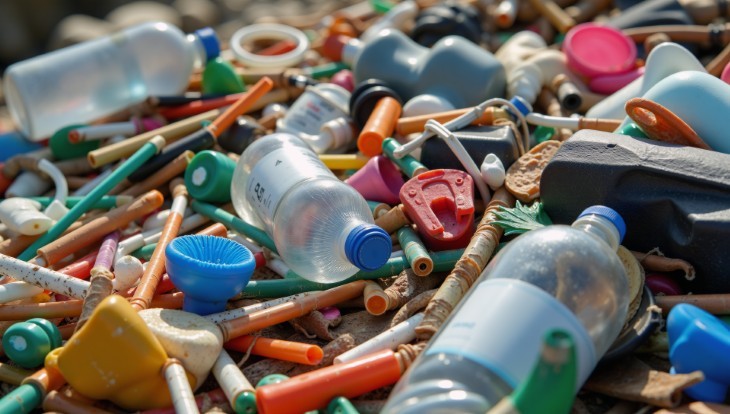
The UN Environment Programme estimates that 19 to 23 million metric tons of plastic waste enter aquatic ecosystems every year, polluting lakes, rivers, and seas. Part of the difficulty stems from the fact that plastic does not necessarily disappear when it becomes brittle or breaks down. It can turn into smaller fragments, including microplastics and nanoplastics, while remaining... plastic.
This distinction is central to biological cleanup. A successful treatment must do more than just leave a shopping bag full of holes. Scientists must determine what the material turns into and whether the process leaves behind durable fragments or harmful substances. In other words, they don't just need to get organisms to eat plastic; they need to do it in a way that doesn't cause other damage to the environment.
Nature may already hold some useful tools
Microorganisms use enzymes, proteins that carry out chemical reactions, to break down materials around them. Researchers are checking whether some of these biological tools can also work on plastic. A study from back in 2021 published in the journal mBio investigated just how widespread this potential might be. Scientists searched environmental DNA from ocean and soil samples for sequences similar to known enzymes involved in breaking down plastic or plastic additives.
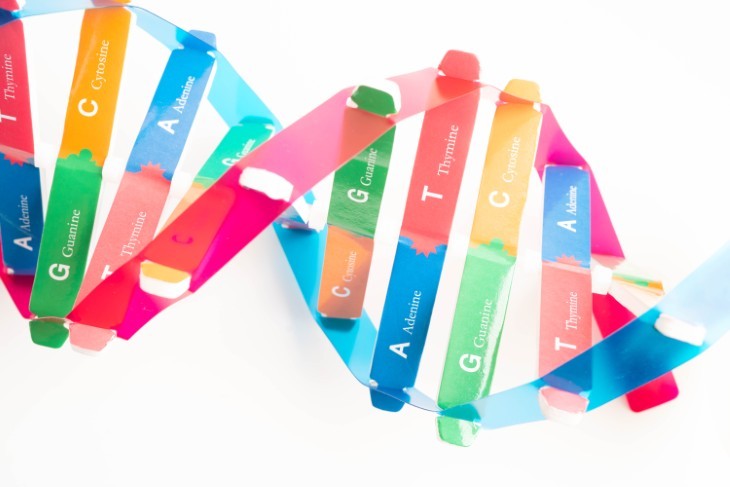
They identified more than 30,000 potential enzyme sequences, covering six plastic polymers and four additives. More polluted environments tended to contain more such candidates. This suggests that plastic pollution may favor microorganisms with useful chemical abilities. However, the researchers identified promising genetic clues, and did not test 30,000 active plastic-destroying enzymes. The study also did not prove that microbes had recently developed new abilities because of the pollution. Organisms with existing abilities may have simply become more common.
For researchers, the findings offered an important starting point: a much larger collection of potential tools for investigation. They do not show that nature is getting rid of our garbage fast enough to keep pace.
The surprising helpers inside "superworms"
One promising source for microbes is the digestive system of "superworms", the large beetle larvae familiar to many reptile owners.
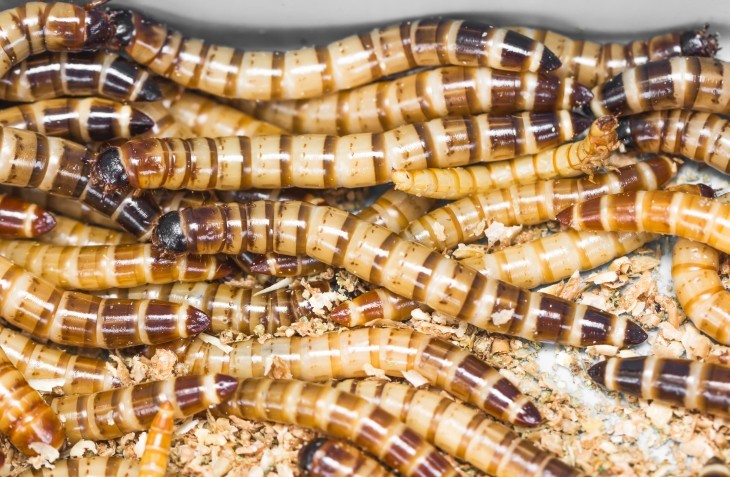
Researchers from Nanyang Technological University in Singapore wanted to find out whether bacteria from these larvae could be cultured outside the animals. This would make it easier to develop a controlled treatment process without constantly maintaining large populations of worms. First, they fed the larvae three types of plastic: high-density polyethylene (HDPE), polypropylene, and polystyrene. They then extracted the gut bacteria and grew them alongside these plastics in lab cultures for six weeks. The bacterial communities changed, with groups containing known plastic-degrading strains becoming more prominent. Eventually, the communities stabilized and formed layers on the surface of the plastic.
The plastic changed as well. Chemical tests showed signs of oxidation, their surfaces became easier to wet, and they became less thermally stable. Together, these findings supported the fact that degradation of the material had occurred. The achievement lay in creating communities that can act on plastic outside the worms. The study did not determine how much plastic was completely eliminated or whether the resulting products are harmless. It provided a foundation for future development, not a ready-to-use disposal system.
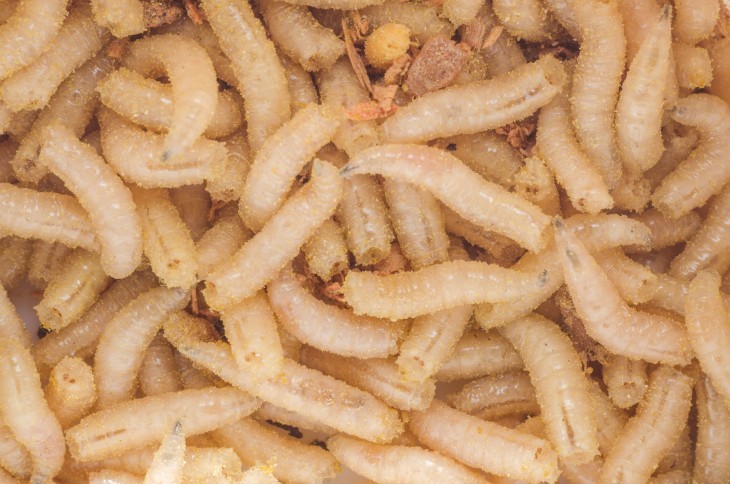
At the same time, new studies have focused on the saliva of wax worms (Galleria mellonella). It was discovered that their saliva contains specific enzymes (named "Ceres" and "Demetra") capable of breaking down polyethylene at room temperature. Since the industrial breeding of worms is not practical, efforts are currently directed toward the synthetic production of these saliva enzymes in laboratories. These artificial enzymes can oxidize polymers within hours without the need for pre-heating or UV radiation, which removes a significant energy barrier in the recycling process.
Fungi that attack plastic when wood is off the menu
Wood-decaying fungi offer another possibility. They already have tools for dealing with tough natural materials, making them interesting candidates for working on stubborn waste. In a 2023 study published in PLOS ONE, researchers in Sri Lanka screened fungi collected from rotting hardwood and selected 22 isolated samples for testing on thin sheets of low-density polyethylene (LDPE).
They also asked a practical question: would providing wood help the fungi attack the plastic?
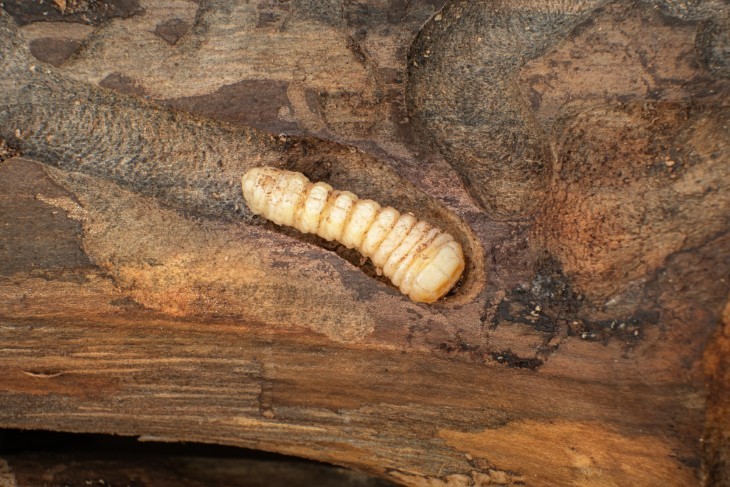
The results generally pointed to the opposite. Plastic degradation was greater when the wood was absent, indicating that the fungi's response to the plastic depended on what other type of food was available. The best-performing fungus, Phlebiopsis flavidoalba, was associated with a loss of about 24% of the mass of the plastic sheets after 45 days and 47% after 88 days. The sheets also weakened and developed chemical and surface changes.
These figures sound dramatic, but caution is required. A loss of almost half the mass of the sheet does not mean that nearly half of the plastic was completely destroyed. Material can break off as fragments or enter the surrounding liquid. The researchers' estimate regarding the breakdown into carbon dioxide was much smaller: about 3% after 88 days. Even this estimate requires careful interpretation, because the control setup did not fully account for the carbon dioxide produced by the fungal culture itself.
Therefore, the study offers both encouragement and a useful lesson: impressive damage to plastic is only part of the evidence needed to demonstrate effective cleanup.
In the sea, the picture is no less fascinating. A groundbreaking 2024 study led by the Royal Netherlands Institute for Sea Research (NIOZ) identified the marine fungus Parengyodontium album, which lives alongside plastic waste in the ocean. The researchers discovered that this fungus efficiently breaks down polyethylene (PE), but with a necessary condition: the plastic must first be exposed to UV radiation from the sun. The radiation initiates a partial breakdown, which the fungus exploits to convert the plastic into fungal biomass and carbon dioxide at a rate of about 0.04% per day. This finding provided a critical understanding of how plastic naturally breaks down in ocean currents.
Could waste turn into something useful... even food?
Another research effort, known as μBites, asks what might happen after waste materials break down. The system, developed at Southern Illinois University Carbondale, combines chemistry with biology. Water, oxygen, heat, and pressure break down suitable materials into small, soluble compounds. Then, special yeast uses these compounds to produce biological ingredients.
The project grew out of NASA's "Deep Space Food Challenge," with the ambition of helping feed astronauts on long missions. Its researchers plan to produce ingredients like proteins and fats from carbon originating in plant material and suitable plastic. In a 2024 university report, the team described prototype cookies containing ingredients produced using the process, along with preliminary safety, nutritional, and sensory tests. A fully integrated and automated system remains a development goal.

The idea is impressive, but the concept of "plastic-to-food" needs explaining. The intended ingredients are new biological molecules created using recycled carbon. Establishing a safe process will require proof that unwanted substances are removed, and that the final ingredients consistently meet food safety requirements. This approach also has a different goal than simply making the plastic disappear: it aims to extract value from the waste.
What still stands between these discoveries and a cleaner planet?
The studies point to several possibilities, but none of them establish a complete solution. Turning lab successes into a useful waste treatment requires progress on several practical fronts.
First, the process must work fast enough and at a sufficient scale. A microorganism that alters a thin sheet over a period of several weeks might be scientifically interesting without yet being suitable for treating truckloads of waste.
Second, it must deal with real garbage. Plastic is a family of materials with different properties. Everyday waste also contains dyes, additives, food scraps, labels, and mixtures of materials. Success with one carefully chosen plastic does not guarantee success with all of them.
Third, researchers must account for what comes out at the end. They must measure the remaining plastic, detached particles, dissolved compounds, gases, and new microbial material. Otherwise, a treatment might make the pollution less visible without properly solving it.
Finally, the environmental and financial costs must make sense. Heating, sorting, cleaning, fermentation, and purification all require resources. Biological treatment must be weighed against other options, including reuse and established recycling methods.
Controlled processing facilities offer a reasonable environment for this work. There, operators can maintain appropriate conditions, collect useful products, and manage residues. Releasing organisms into the environment would raise a separate set of questions and would not guarantee effective cleanup.
Reasons for hope, without waiting for a miracle
These findings reveal useful possibilities on several levels. Environmental surveys identify potential enzymes. Lab experiments show that selected microbes can attack plastic. Systems like μBites explore how recycled carbon could turn into a resource.
The final result may be a number of specialized technologies, each suited to specific waste streams. Some may help in recovering materials; others might deal with plastics that are difficult to recycle using existing methods.
This would be significant progress. But it will work best alongside producing less unnecessary plastic, products designed for reuse and recycling, and better collection systems. The organisms being studied may help us cope with the waste we produce. They do not give us a reason to continue producing waste unrestrained.