
Every once in a while, paleontologists make a discovery that rewrites part of the prehistoric map. A new one has just emerged from the red soil of northeastern Thailand, and it is a true giant. Researchers have announced the discovery of a brand new species of long-necked, plant-eating dinosaur, and at roughly 27 meters long and 27 tons in weight, it stands as the largest dinosaur ever found in Southeast Asia. The find offers a remarkable window into a world that flourished here more than 100 million years ago.
A Giant From the Early Cretaceous
The newly identified dinosaur belongs to the sauropods, the famous group of long-necked, long-tailed plant eaters that includes household names like Diplodocus and Brontosaurus. This particular giant lived during the Early Cretaceous period, somewhere between 120 and 100 million years ago, when the landscape that is now Thailand looked nothing like it does today.
The fossilized remains were uncovered in Chaiyaphum Province in northeastern Thailand. The study, published in the journal Scientific Reports, examined bones from the spine, ribs, pelvis, and legs of the animal, including a single front leg bone measuring 1.78 meters in length. Based on these proportions, scientists estimate the creature weighed about 27 tons, which is roughly the weight of nine adult Asian elephants, and stretched approximately 27 meters from nose to tail.
The new species has been given the evocative name Nagatitan chaiyaphumensis. The first part combines two mythologies. "Naga" refers to a serpent-like deity from Hindu and Buddhist tradition, often depicted as a vast sea serpent, while "Titan" comes from the giants of Greek mythology. The second part of the name honors Chaiyaphum Province, where the fossils were found. This is the 14th dinosaur species ever to be named in Thailand.
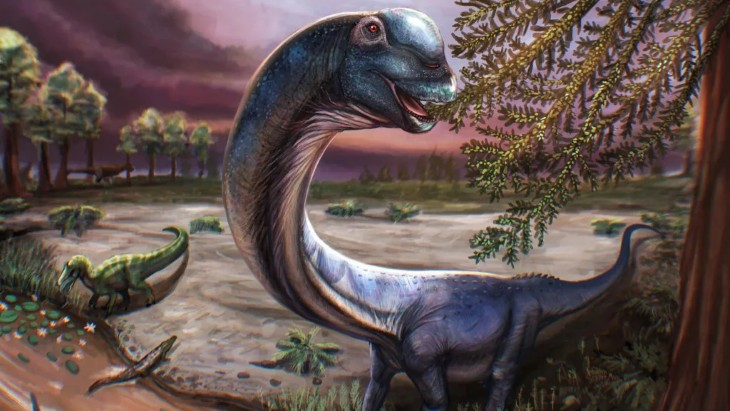
Thitiwoot (Pratt) Sethapanichsakul, a paleontologist from the Department of Earth Sciences at University College London and a member of the research team, explained that the new dinosaur weighed at least 10 tons more than the well-known Diplodocus carnegii. Still, compared to true heavyweights like Patagotitan, which tipped the scales at around 60 tons, or Ruyangosaurus at about 50 tons, this Thai giant is considered relatively lightweight.
"We refer to it as 'the last titan' of Thailand," Sethapanichsakul said. "It was found in the youngest rock formation that contains dinosaur fossils in the region. That means this may well be the last large sauropod ever to roam Southeast Asia."
The environment in which Nagatitan lived was arid to semi-arid, a habitat that sauropods seemed to thrive in. Scientists believe these enormous animals used the broad surface area of their long necks and tails to release heat and regulate their body temperature, much like an oversized natural radiator. The area was also threaded with a meandering river system, home to fish, freshwater sharks, and crocodiles.
Nagatitan chaiyaphumensis did not live alone. It shared its landscape with smaller plant-eating dinosaurs, predatory dinosaurs that hunted them, and flying reptiles overhead. The new species belongs to a subgroup of sauropods known as somphospondylans, which spread around the world about 120 million years ago. More specifically, the researchers placed it within a smaller family called the Euhelopodidae, a group of sauropods that roamed only across Asia. What sets Nagatitan apart from its relatives is a unique combination of features in its spine, hips, and legs. A life-sized reconstruction of the dinosaur is now on display at the Thainosaurs Museum in Bangkok.
For Sethapanichsakul, naming this new species is the realization of a lifelong ambition. "This research is not just about describing a new species," he said. "It also fulfills a childhood dream of mine to give a dinosaur a name."
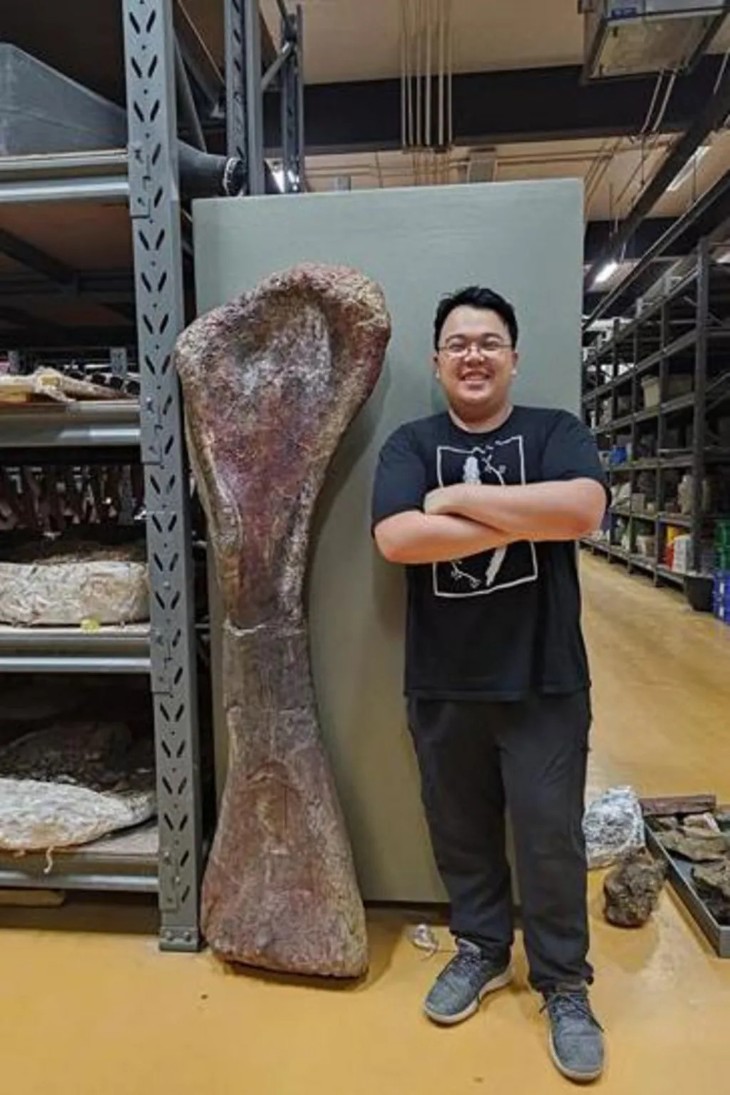
Professor Paul Upchurch, a paleontologist also from University College London and part of the research team, added that international collaboration has been key. "We have had a long-standing interest in the evolution of these giant plant eaters, which has led to connections with researchers across continents. It is wonderful to work with Thai colleagues and start to gain real insights into what was happening in Southeast Asia during the Jurassic and Cretaceous periods."
Dr. Sita Manitkoon, a vertebrate paleontologist at the Paleontological Research and Education Centre of Mahasarakham University, emphasized the rich variety of dinosaur fossils being uncovered in Thailand, which may rank as the third most diverse country for dinosaur finds in Asia. "We have only been studying dinosaurs in Thailand for about 40 years, ever since the first one was named in 1986, and we already have a new wave of young paleontologists actively conducting research and pushing the field forward in our country," Dr. Manitkoon said.
As digs continue and more fossils come to light, "the last titan" of Southeast Asia may turn out not to be the last surprise from Thailand's ancient soil after all.