
They are so small that we step over them without a second thought, yet ants have been quietly solving some of life's hardest problems for tens of millions of years. Long before we built cities, fought wars, planted crops, or designed computer networks, ants were already doing all of these things, and doing them astonishingly well. In recent decades scientists and engineers have started paying very close attention, and what they have discovered is humbling. The lowly ant, it turns out, has been our teacher all along. Here are seven of the most surprising lessons we have learned from these tiny giants.
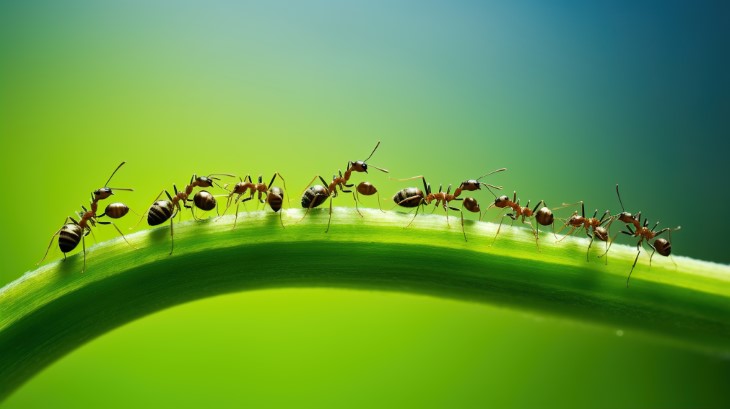
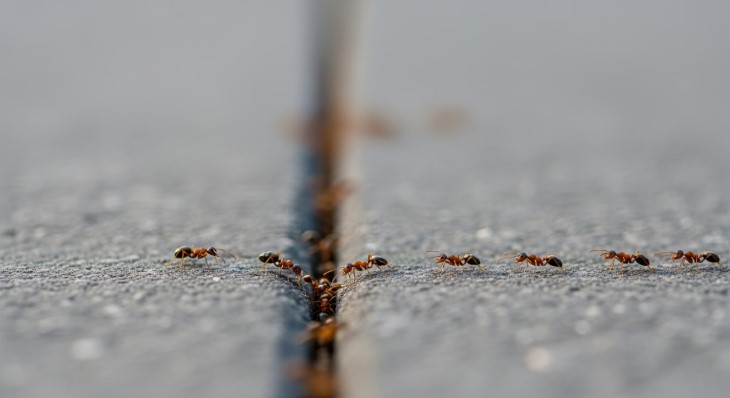
Picture a single ant wandering away from the nest in search of food. It has no map, no leader barking directions, and a brain smaller than a grain of sand. Yet within hours, a whole colony can zero in on the shortest possible path between home and a food source, and they do it with uncanny reliability. The secret is a chemical called a pheromone. As an ant walks, it leaves a faint scented trail behind it. When it finds food and hurries back, it reinforces that trail. Shorter routes get traveled more often, so their scent grows stronger faster, while longer routes fade as the chemical evaporates. Before long, the entire colony is funneling along the most efficient path, guided by nothing more than the accumulated wisdom of thousands of tiny decisions.
This humble trick has quietly revolutionized the way our modern world moves. In the 1990s, computer scientists turned the ants' behavior into a problem-solving method now known as ant colony optimization. The idea is simple but powerful: send out a swarm of digital "ants" to explore countless possible routes, let them lay virtual pheromone on the good ones, and watch the best solution rise to the top on its own. Today this approach helps delivery companies plan the order in which trucks visit dozens of stops, saving fuel, time, and money. It helps route phone calls and data across crowded networks, schedule deliveries within tight time windows, and even arrange the layout of warehouses so workers walk less. The next time a package arrives at your door faster than you expected, there is a fair chance a colony of imaginary ants helped chart its way. Not bad for a creature that cannot even see the big picture it is solving.
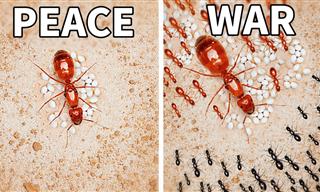
It may be uncomfortable to admit, but when it comes to organized warfare, humans have more in common with ants than with any of our fellow primates. Ant colonies wage real wars, complete with tactics that would not look out of place in a military history book. Army ants, for example, march forward in tight, surging columns hundreds of thousands strong, sometimes spreading across a swath of ground a hundred feet wide. They overwhelm everything in their path through sheer coordinated force, much the way ancient armies advanced in disciplined ranks. Weaver ants take a different approach entirely, holding fixed territory across whole stretches of forest canopy and guarding the key choke points where rivals might slip in, a strategy of defense and control rather than relentless attack.
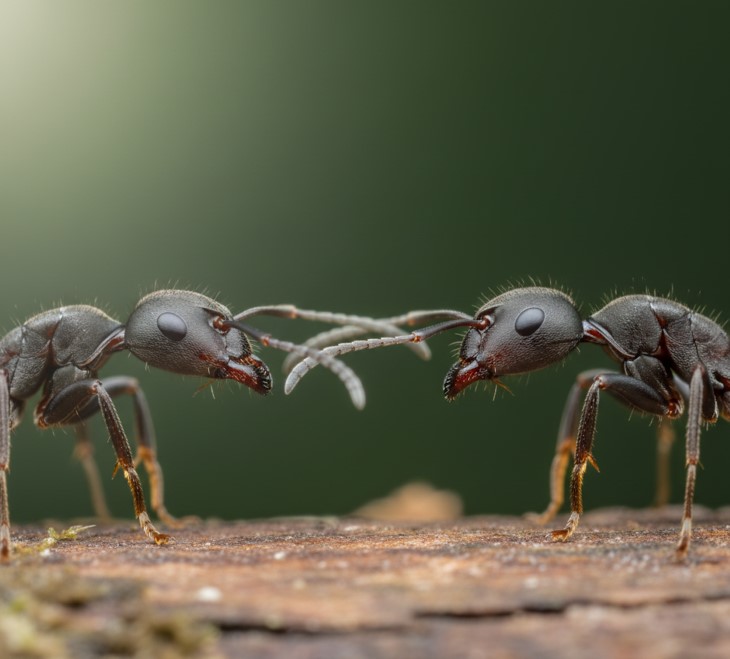
The brutal cleverness does not stop there. Some species send their smallest and most expendable workers to the front lines first, absorbing the initial clash before the heavier fighters move in for the decisive blow. Certain ants raid rival nests to carry off the young and press them into labor, a behavior researchers compare to taking captives. Others form temporary alliances against a common enemy. What fascinates military thinkers most, though, is that no general directs any of this. There is no command tent and no battle plan handed down from above. Each ant knows almost nothing on its own, yet the colony as a whole makes effective decisions through countless small local interactions. This is called swarm intelligence, and it has become a serious model for modern defense. The idea of overwhelming an opponent with many small, cheap, autonomous units, now seen in drone swarms, draws directly on the same principle ants perfected long ago: that a crowd of simple agents, acting on simple rules, can outthink a single powerful mind.
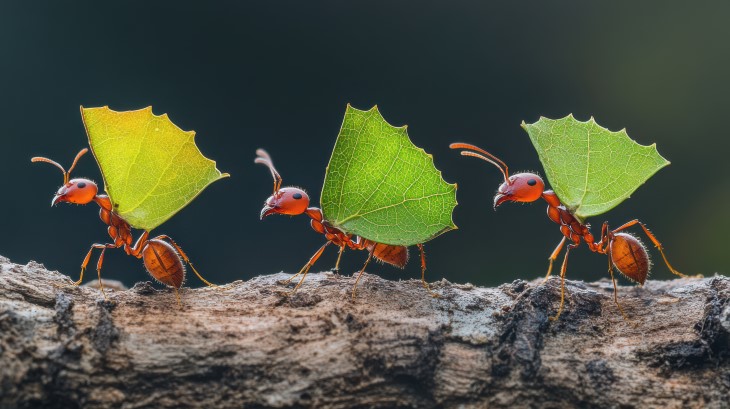
We tend to think of agriculture as humanity's great invention, the breakthrough that let us settle down and build civilization around ten thousand years ago. Ants beat us to it by a staggering margin. Leafcutter ants and their relatives have been farming for roughly fifty to sixty million years, beginning not long after the asteroid that ended the age of dinosaurs. Their crop of choice is not wheat or corn but fungus. The ants slice leaves into tiny fragments, haul them underground in those famous marching columns, and use them to feed sprawling fungus gardens that serve as the colony's only source of food. Neither the ant nor the fungus can survive without the other anymore, a partnership so deep that the two have reshaped each other's very genes over the eons.
What makes this story so instructive is how sophisticated their farming actually is. These ants do not just grow a crop, they manage it like seasoned agronomists. They apply fertilizer in the form of helpful bacteria that supply nitrogen to the garden. They weed out pests and contamination, keeping their underground farms scrupulously clean and even maintaining separate waste chambers far from the food. Most striking of all, they wage chemical warfare on the molds and parasites that threaten their crops by cultivating antibiotic-producing bacteria on their own bodies, a living pesticide they have used for millions of years without it losing its punch. That last detail has scientists especially intrigued. Human antibiotics tend to fail us within a few decades as germs evolve resistance, yet the ants' approach has stayed effective across an almost unimaginable span of time. Researchers studying these colonies hope to learn how to grow disease-resistant crops at industrial scale and how to keep our own medicines working longer. The leafcutters, in other words, may help us farm and heal better, using lessons they worked out before the first human ever planted a seed.
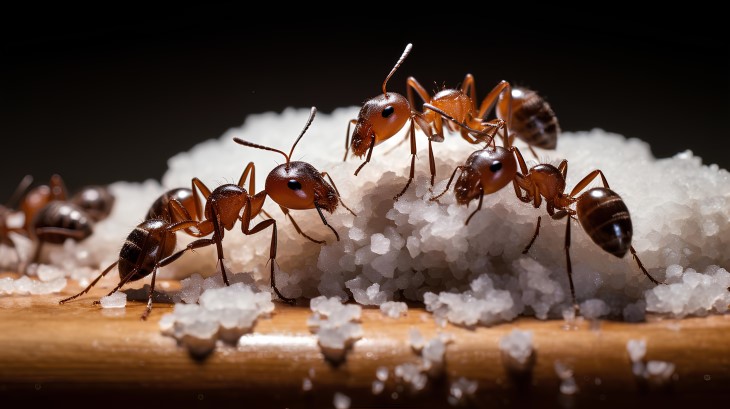
Of all the discoveries about ants in recent years, one of the most jaw-dropping concerns a fierce sub-Saharan species called the Matabele ant. These ants live almost entirely by raiding termites, a dangerous diet that leaves many of them wounded, sometimes with legs bitten clean off by termite jaws. In the natural world, a serious wound usually means a slow death by infection. But Matabele ants do something that, until recently, scientists believed only humans could manage. They run a working medical system. After a raid, nurse ants carry the injured back to the nest and clean their wounds. More remarkably still, they can tell the difference between a wound that is merely injured and one that has become infected, and they treat the infected ones with antibiotics.
The ants produce these medicines themselves, drawing on a gland on the side of the body whose secretion contains well over a hundred separate compounds, around half of which fight microbes or help wounds heal. They detect infection by sensing subtle chemical changes on the wounded ant's body, essentially diagnosing the patient before deciding on treatment. The results are extraordinary. Infected ants left untreated die at very high rates, but those tended by their nestmates survive at around ninety percent. For humans, the implications reach well beyond curiosity. One of the main germs that infects these ants is also a leading cause of dangerous, drug-resistant infections in people, the kind that fill hospital wards and resist our strongest medicines. As antibiotic resistance grows into one of medicine's gravest threats, researchers are racing to identify the exact compounds these ants use, hoping to uncover entirely new antibiotics for human patients. A creature smaller than a paperclip, it seems, may help us solve a crisis our most advanced laboratories have struggled with for years.
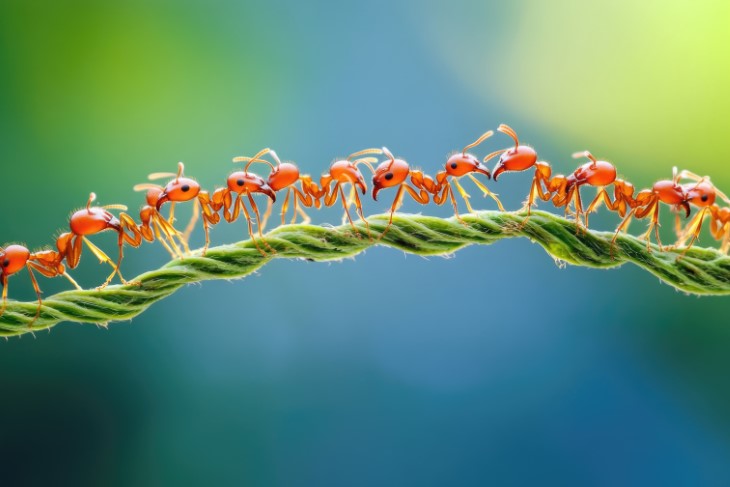
Anyone who has crawled along a packed highway knows the misery of gridlock. Add too many cars to a road and the whole thing seizes up, with everyone slowing to a frustrating creep. Ants face the very same challenge. A busy foraging trail can carry hundreds of ants per minute, streaming back and forth between the nest and food in two directions at once, which is exactly the kind of bidirectional flow that ties human roads in knots. And yet, remarkably, ants almost never jam. Researchers who packed ant trails to extreme densities found something that simply does not happen with cars: as the crowd grew thicker, the overall flow held steady rather than collapsing into a standstill. Ants, it turns out, may be effectively immune to traffic jams.
How do they pull it off? The answer comes down to a kind of selfless discipline that human drivers rarely show. When a trail gets crowded, ants adjust their speed and hold back from squeezing into already congested areas rather than pushing forward at all costs. They do not jostle for position or try to overtake one another. They keep small, regular gaps and move in smooth, cooperative platoons, each ant prioritizing the steady progress of the whole stream over its own desire to go faster. The contrast with human behavior is telling. Our jams are often caused by exactly the things ants avoid: cutting in, braking suddenly, racing to fill every gap. Traffic engineers and the designers of self-driving cars have taken note. If vehicles could communicate and coordinate the way ants do, accepting a small individual sacrifice for the good of overall flow, the chaotic stop-and-go of our roads could give way to something far smoother. The future of congestion-free commuting may well be modeled on a line of insects marching to dinner.
When ants reach an obstacle too large to cross, they do something that sounds like science fiction. They become the bridge. Army ants traveling over the rough forest floor will link their bodies together, legs hooked to legs, to span gaps and smooth out the path so the rest of the colony can flow across without slowing down. Along a single foraging trip they may build hundreds of these living structures, plugging potholes and stretching bridges across open ground, then dismantling them just as quickly once they are no longer needed. Fire ants take the same trick to water. When floods strike, an entire colony can weave itself into a floating raft of thousands of insects, riding out the high water for days until they reach dry land, then breaking apart to go back to being ordinary ants.
What captivates engineers is not just the spectacle but the principle behind it. No ant is in charge of designing the bridge or the raft. Each one follows only simple local rules about when to hold on and when to let go, and out of those small choices a complex, flexible, self-repairing structure emerges. Scientists describe the moving mass as something like neurons in a single roving brain, with the intelligence spread across the whole rather than housed in any individual. This has become a goldmine for the field of swarm robotics. Researchers are designing fleets of small, cheap, identical robots that could assemble themselves into bridges, towers, or platforms on demand, then come apart and reconfigure for the next task, perfect for exploring disaster zones or other places too dangerous for people. The ants have also inspired a new generation of smart materials, polymers that can bind together, change shape, and release on cue, much as the ants link and unlink their bodies. In learning to build with nothing but cooperation, ants have shown us how to construct things that no blueprint could.
Perhaps the deepest lesson of all is also the most counterintuitive. We naturally assume that any well-run organization needs a boss, a chain of command, someone with the big picture giving orders. An ant colony shatters that assumption completely. There is no manager, no committee, no master plan. The queen, despite her royal title, gives no commands at all; she simply lays eggs. No ant tells another ant what to do. And yet the colony as a whole behaves with breathtaking competence, finding food, raising young, building and repairing the nest, defending its territory, and shifting its workforce from one job to another as conditions change. How can so much get done when nobody is steering?
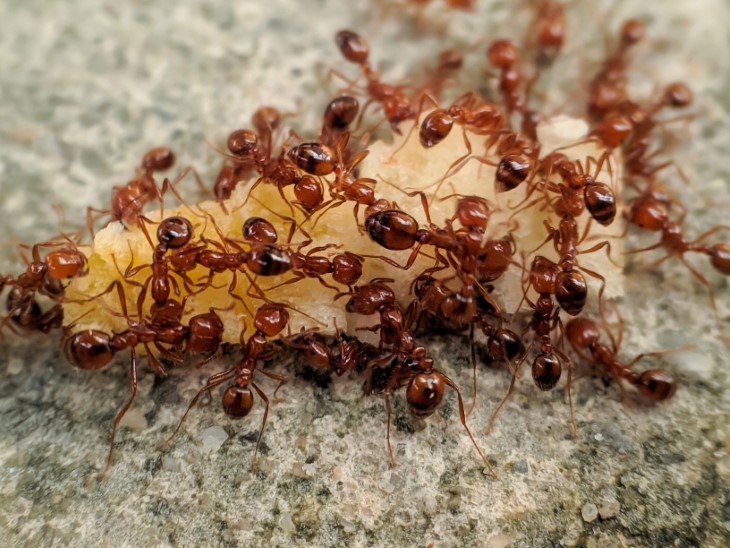
The answer lies in countless tiny interactions. Ants make decisions based on simple local cues, such as how often they bump into other ants and what scents those ants carry. When foragers return quickly and frequently, it signals that food is plentiful, prompting more ants to head out. When they trickle back slowly, activity winds down. Out of millions of these small encounters, intelligent group behavior simply emerges, with no central authority required. Scientists have found that this same pattern of organization shows up in some of the most important systems we know, including the neurons in our brains and the flow of data across the internet. The way ants regulate their foraging traffic so closely mirrors the way the internet manages its data that researchers nicknamed it the "anternet." For human organizations, the implications are profound. The most resilient networks, the ones that recover fastest from failure and adapt best to change, often turn out to be decentralized, just like a colony. Ants teach us that control does not have to come from the top to be effective, and that sometimes the smartest systems are the ones where everyone is simply doing their small part. After tens of millions of years of practice, the ants have it figured out. We are only beginning to catch up.