
Some old people can remember things just as well as those nearly half their age. Due to their ability to stay sharp in old age, scientists have nicknamed them “super-agers.”
Several months ago, researchers discovered at least one physical basis for these differences that has to do with the thickness of the outer layer of their brains. However, in a small study published in October in the Journal PLOS One, Researchers decided to take a look at whether there was a social side to these differences as well.

Sure enough, after analyzing 31 super-agers over the age of 80 as well as 19 cognitively average people of the same age, they found that the super-agers tended to have more satisfying and high-quality relationships than their normal peers.
Emily Rogalski, an associate professor of cognitive neurology at Northwestern’s Feinberg School of Medicine and lead author of the study, stated that “you don’t have to be the life of the party, but this study supports the theory that maintaining strong social networks seems to be linked to slower cognitive decline.”
To come to their conclusions, the researchers had all the participants complete a standard questionnaire designed to assess their general happiness and level of life satisfaction. Despite getting similar scores to their peers, the super-agers stood out in terms of how they evaluated their friendships with others.
Rogalski goes on to state that “it’s not as simple as saying if you have a strong social network, you’ll never get Alzheimer’s disease. But if there is a list of healthy choices one can make, such as eating a certain diet and not smoking, maintaining strong social networks may be an important one on that list.”
Thanks to other research, scientists were already aware that the brains of super-agers were different – physically speaking – from normal brains belonging to people of the same age group. They’re slightly larger, especially in the outer cortex – the part of the brain that consists mostly of gray matter and is rich in neurons. However, what scientists didn’t know until a few months ago was whether that was because super-agers had bigger brains to begin with or if they were somehow protected from the decay that comes with aging.
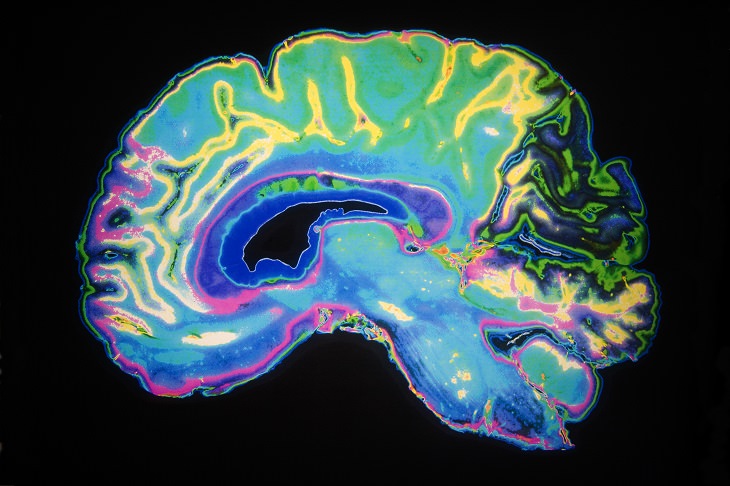
After comparing the brains of 24 super-ager men and women to those of 12 of their normal peers using MRI, the researchers found the answer came down to age-related shrinkage. Over the course of this 18-month study, the scientists saw the brains of the average study participants atrophy at more than twice the rate of the brains of the super-agers.
Together, the two recent findings add several important new pieces to the puzzle of what makes a super-ager – and provides insight into how age and social networks may affect the brains of regular people as well.
As we age, the gray matter in our brains – the stuff we rely on for seeing, hearing, processing emotions, learning new information, and exerting self-control – shrinks and degrades. So too does the brain’s white matter, which contains the complex web of twisting fibers that carry information across different parts of the brain.
A 2014 study published in the journal Nature Communications suggested that in some elderly people, white matter may act as a backup generator that can fire up when grey matter runs down. However, if this doesn’t occur, then the person experiences the typical effects of aging – fuzzy memory, difficulty learning new skills, and a harder time paying attention.
Super-agers are rare, but some research suggests that there are things we can all do to stay sharp as we age. This includes getting regular exercise, maintaining strong bonds with friends and family, quitting or not smoking, and making the effort to learn new things.
So, if you’ve been meaning to meet up with some old friends or have been putting off joining that yoga class, there’s definitely no time like the present!
Source: sciencealert
Images: depositphotos
Related Articles:
Here's How You can Live Much Longer
Four Vaccinations You Need After 50
Study Finds There’s No Age Limit to Start Strength Building Exercises

5:04
Ever Wondered How Hormones Work? Well, Wonder No More!
Ever wondered how hormones work? Well, wonder no more as this informative TED-Ed video explains all!
An Alzheimer's Cure Might Just Be Around the Corner!
Impressive new research has discovered the earliest point in a neurodegenerative process that is thought to lead to dementia. Find out more here.
These New GMO Foods Could Soon be in a Shop Near You!
Scientists are creating new genetically modified foods all the time, and here you’ll find the latest foods that have been designed with the consumer in mind.
5:04
Ever Wondered How Hormones Work? Well, Wonder No More...
Ever wondered how hormones work? Well, wonder no more as this informative TED-Ed video explains all!
Here Are Some Medical Advances That We Can Expect in 2018!
Things move fast in the medicine world, but if predictions about what to expert in this coming year prove to be true, things might move a lot faster than usual!
5:17
How Exactly Do We Hear? All is Revealed Here!
In this informative TED-Ed video, Douglas L. Oliver explains the complete science behind hearing.
2:11
Here are Some Unique Tricks You Can Do at Home With Salt!
This video shows us a few interesting magic tricks that you can do anytime using salt, ice, and other items you can find at home.
13:41
The 5 Most Important Fossil Discoveries from Last Year
2024 saw some really amazing fossil discoveries!
11:05
Science: Can AI Preserve Our Most Precious Memories?
Technologist Pau Aleikum Garcia talks about synthetic memories.
15:41
Keep Your Home Safe with These Handy Gadgets
These 13 devices will transform your home security.
Enjoy This Fascinating Collection of NASA's Best Photos
Here are 15 of NASA's most amazing recent pictures, along with brief explanations of exactly what is going on in each one.
Science Proves: These 10 Bible Stories Probably Did Happen
The Bible describes many seemingly supernatural cases, but today, science can show that they might have indeed happened.
15 Beautiful Carl Sagan Quotes on the Stars and the Cosmos
A look at some profound quotes on the universe by famous astronomer and cosmologist Carl Sagan.
7 Overlooked Scientists Who Should Be Household Names
Meet seven scientists who never got the credit they deserved.
Meta Unveils New Glasses that May Change Sports Forever

META has revealed a new line of AI-powered smart glasses: Oakley Meta HSTN
The Most Remarkable Medical Breakthroughs of 2024
Here’s a look at some breakthroughs in medical innovation this year.
4:57
The First 3D-Printed Hotel is Already Being Built!
s evidence of this, a groundbreaking project is nearing completion, in which a hotel is being printed, and tourists will soon be able to visit it. Curious to see what it looks like?
The Wildest Meteorites Ever Found on Our Planet - 15 Pics

Check out 15 of the most fascinating meteorites ever found on earth.
PayPal Versus Credit Cards: Here's the Lowdown!
Just how safe is PayPal? Should you have a PayPal account or should you pay for all online purchases using a credit card? All is revealed here!
12:34
The World You See Doesn't Really Exist...
his video reveals how your brain constructs reality instead of simply perceiving it.
5:50
Why Do We Sometimes Hallucinate? Find Out Here!
In this informative TED-Ed video, Elizabeth Cox details the science of hallucinations.
The First Valentine's Day Was Not That Long Ago...
Let us take you on a fun history lesson with these 10 first-ever things that started way back in history and remain to this day.
1:44
You Won't Believe What the Human Body Does in One Minute
How much do you think it is capable of doing in a single minute? Watch this video and you'll have your answer!
38:55
What Happens the Deeper You Go Underground?
What happens when pressure pushes matter beyond the limits of what we thought possible?
4:57
Mjøstårnet - The World’s First Wooden Skyscraper
Mjøstårnet is an 18 story tall skyscraper towering over the Norwegian countryside. What makes it so special is that it's made entirely out of wood...
9:34
Was Roman Concrete Really Superior to Our Own?
How did Ancient Romans make such durable concrete that it still lasts today?
21:25
How Every Nuclear Power Got Its Atomics
This video will explain how each nation earned the complex and controversial title of nuclear power.
12 Bizarre Scientific Facts You Never Learned at School
The scientific facts we collected in this list aren't the kind of stuff you'll see in a school curriculum.
7:56
These 6 Chemical Reactions Changed the Course of History
Although we rarely pay much attention to the chemistry that constantly surrounds us, these 6 reactions changed history.
8:11
Fascinating: What is the Deepest Hole Humanity Has Dug?
This video explains how low humanity has dug down so far.
6 Signs That Someone is Listening on Your Cellphone Calls!
With technology advancing all the time, there is the ever-increasing chance of our phones being tapped. Here are 6 signs that your phone could be tapped.
2:41
Trick-Mousing is Such Adorable Entertainment...
Mice are much cleverer than most people believe, and they easily respond to training, as long as you use positive reinforcement, or in other words - reward them frequently for their behavior with food.
4:26
Despite Looking Similar, Cats Are MORE Diverse Than Dogs!
Who's more diverse, cats or dogs? This video answers this question once and for all, the it might surprise you...
Absolute Zero: The AI that Doesn't Need People to Develop
Imagine an AI that doesn’t need humans to teach it how to code—it creates its own coding challenges, solves them, and gets smarter all on its own. This isn’t science fiction; it’s a groundbreaking development called Absolute Zero
Chronically Late? What Science Has to Say About You
There are 8 positive things that science says about late people that we all need to know.
11:02
Ever Wonder What Ancient Egyptian Sounded Like?
Researchers have used all the information we know to create what they think it may have sounded like.
7:21
Science: 20 Mechanical Principles Demonstrated Using Lego
In this video, we'll explore a variety of fascinating mechanical mechanisms, all demonstrated using Lego models.
Is Weekend Sleep as Good as Regular Sleep? Let's Check
If you thought sleeping in on the weekend was a bad habit, you're about to find out that it's quite the opposite.
10:50
Remarkable! This Is How the Universe Developed...
Watch this time lapse of the entire universe - starting with the big bang and culminating in the appearance of homo sapiens.
These Materials are Strange Enough to Boggle Your Mind...
There are some materials in this world that totally defy scientific convention. From metals that melt in your hand, to a solid lighter than air, take a look.
Study Says: With Age, Come Certain Cognitive Abilities
a study published in August 2021 in the journal *Nature Human Behavior reveals surprising findings that challenge this assumption and may be of great interest to all of us.
36:24
Ever Wonder How a Steel Locomotor Works?
Let’s take a closer look at the engineering behind these compact workhorses.
4:22
eSIM vs Traditional SIM: What’s the Big Difference?
Are eSIMs and iSIMs the future of connectivity?
8:48
Fascinating: What Around Us is Invisible?
The Invisible Things that Turn the World...
21:51
What Will the Universe Look Like in 10 Quintillion Years?
These questions take us beyond science into the realm of imagination, as we contemplate the ultimate fate of our Universe and everything within it.
10:59
Fascinating Science: How Sand is Turned Into Glass
Have you ever looked through a window and wondered how it was made from simple beach sand? This video shows you that incredible process.
33:02
The Entire Story of Earth in 30 Minutes!
The story of our planet, from birth to the adult, ancient planet we see before us today - all in just half an hour.
To enable your Ad-Free Subscription, please fill the fields below
Your subscription was successful, now you can enjoy an ad-free experience!! Note: To make sure you get no ads, please make sure to log in to your account. If you are logged in already, then refresh the page. The subscription can be cancelled at any time.