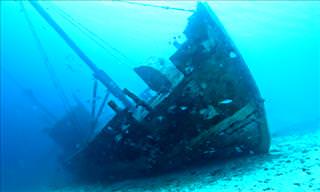

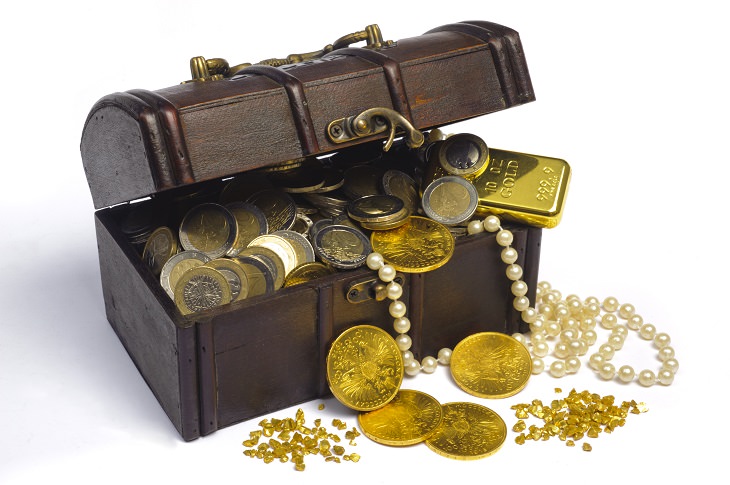
For centuries, sailors, squires, and treasure hunters have dreamed about finding the untold riches of silver, gold, and jewels that sank with the World’s most valuable shipwreck. But, when eyes were finally laid upon the “Holy Grail” of shipwrecks – the Spanish galleon San José, which capsized off the Colombian coast in 1708 – they were not human eyes.
This doomed vessel was discovered back in 2015, after more than three centuries lying at the bottom of the Caribbean Sea and, this week, for the first time, researchers have revealed how they made their famous find.
Marine scientists from the Woods Hole Oceanographic Institution (WHOI) in Massachusetts say that that ship – whose sunken riches are estimated to be worth around $17 billion – was discovered by an autonomous underwater vehicle called Remus 6000, during a survey off Colombia’s Barú Peninsula.
Rob Munier, WHOI’s vice president for marine facilities and operations, said that “we’ve been holding this under wraps out of respect for the Colombian government.” But, why the need for such secrecy? Usually, general explanations of the technology involved in the discovery of long-lost shipwrecks like this don’t take three years to come to the fore.
However, the San José is no ordinary case, due to the staggering level of riches that was estimated to have sunk with it. When the Spanish vessel sank in battle with a British squadron in 1708, it wasn’t just full of treasure: the 60-gun galleon was also armed with a large arsenal of gunpowder, which was detonated in the fray, killing almost everyone on board.
A couple of centuries later, in the 1980s, a consortium called “Sea Search Armada” (SSA) claimed to have found the wreck, but Colombia refused to grant them permission to salvage the San José, and they have, for decades, legally contested the company’s rights to any of the treasure, since it’s in Colombian waters.
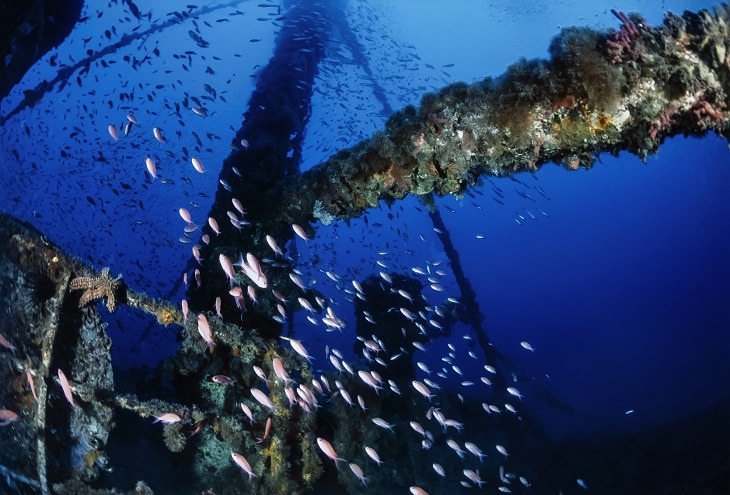
However, Spain might also now want its share of the spoils since the San José was flying under the Spanish flag when it sank. Many contend that since much of the wealth aboard the ship resulted from the conquest of the Americas, it ought not leave Colombia, while others suggest that other nations might still be entitled to a share of the treasure, based on historical arguments that a lot of Spanish cargo in the late 17th century rightfully belonged to England, France, or Holland.
With these potential disputes in mind, the United Nations asked Colombia not to commercially exploit the discovered wreck and the cultural heritage it represents. So far, the Colombian government has kept the exact location a secret – not clarifying whether it’s the same site that SSA claimed decades ago – but they have said that the wreck has not been looted, meaning the full cargo is expected to be recoverable.
In terms of new details of the vessel’s discovery, WHOI – which acts in collaboration with the Colombian government, in addition to other parties – says the wreck was located more than 600 meters (around 2,000 feet) deep, in an area that the REMUS 6000 began surveying in June 2015.
Mike Purcell, the WHOI expedition leader, explains that “during a November expedition, we got the first indications of the find from side scan sonar images of the wreck. From those images, we could see strong sonar signal returns, so we sent REMUS back down for a closer look to collect camera images.
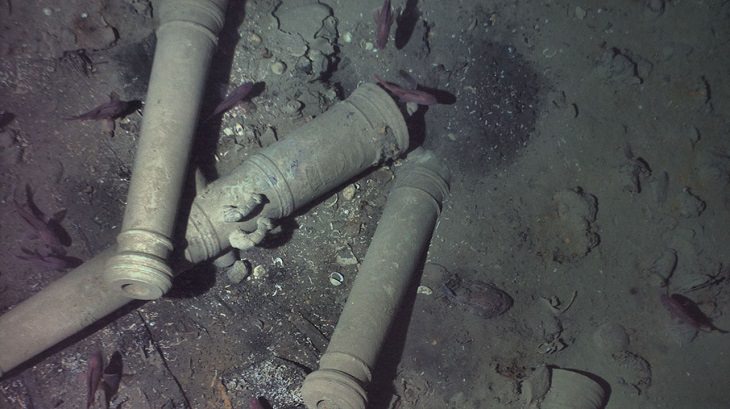
Photographs that were taken just 9 meters (30 feet) above the wreck captured the vessel’s cannons, and later dives uncovered details such as engraved dolphins carved into the cannons’ bronze, in addition to scattered teacups, ceramics, and other artifacts on the seabed.
“The wreck was partially sediment-covered, but with the camera images from the lower altitude missions, we were able to see new details in the wreckage and the resolution was good enough to make out the decorative carving on the canons,” said Purcell.
At the moment, there’s no official word on when or how these items will be recovered, but with all the violence and intrigue in the galleon’s pasts, we’re guessing that this tale of long-lost plunder is far from over.
Source: sciencealert
Images: depositphotos

12:14
Did You Know That Once Upon a Time Antarctica Was Green?
Watch this video to explore Antarctica’s little-known and green past.
Learn How to Spot Fake Jewelry With This Guide
Fake jewelry has been around for a long time, with silver being sold as white gold and fake hallmarks being engraved into pieces of jewelry. Unsure if your jewelry is real or fake? This guide explains all.
Broccoli Lattes Made With Broccoli Powder Could Soon Exist
Australian scientists have developed a broccoli powder that can help you get your recommended daily dosage of vegetables. Take a look.
Viagra May Hold the Key to Preventing Colorectal Cancer...
A new study shows that Viagra may be able to help prevent the onset of colorectal cancer. Find out all about it here.
8 Shocking Items Unearthed During a Home Renovation
If you’re planning a home renovation, be prepared for the unexpected, as you may dig up some pretty surprising things, like the people in these 8 cool stories
Scientists Find Enzyme That Could End Aging and Cancer
Scientists have found an enzyme that they reckon could be used to slow down the aging process and eradicate cancer!
6 Signs That Someone is Listening on Your Cellphone Calls!
With technology advancing all the time, there is the ever-increasing chance of our phones being tapped. Here are 6 signs that your phone could be tapped.
2:41
Trick-Mousing is Such Adorable Entertainment...
Mice are much cleverer than most people believe, and they easily respond to training, as long as you use positive reinforcement, or in other words - reward them frequently for their behavior with food.
Enjoy This Fascinating Collection of NASA's Best Photos
Here are 15 of NASA's most amazing recent pictures, along with brief explanations of exactly what is going on in each one.
8:12
How Humans Helped Cats Take Over the World
The relationship between humans and cats goes back as far as 9,500 years. How did it al start? And how did humans help cats essentially take over the world?
5:14
Earth 2125: A Vision of the Future of Our Planet
Exploring what Earth could look like in 2125 reveals exciting potential.
7 Mind Blowing Science Facts School Left Out
Put on your learning caps! We rounded up 7 surprising scientific facts you probably didn't learn at school.
Absolute Zero: The AI that Doesn't Need People to Develop
Imagine an AI that doesn’t need humans to teach it how to code—it creates its own coding challenges, solves them, and gets smarter all on its own. This isn’t science fiction; it’s a groundbreaking development called Absolute Zero
Remembering the Life and Wisdom of Stephen Hawking
Stephen Hawking possessed one of the greatest minds the world has ever seen, but was also impaired by a debilitating disease. Here are his life ant times.
Science History: 17 Math Equations that Changed the World
In this article, we'll journey through 17 of these monumental formulas, demystifying the symbols to reveal the revolutionary ideas they contain and the immense impact they have had on the course of history.
What Your Phone Habits Say About Your Mental Health
These phone habits might indicate underlying anxiety—and paying attention to them could help you better understand your mental health.
Space Looks Breathtaking in These Amazing Photographs
There are some absolutely stunning photographs of space out there today, You won't believe how incredible it is!
11:02
Ever Wonder What Ancient Egyptian Sounded Like?
Researchers have used all the information we know to create what they think it may have sounded like.
10 Obscure Inventions by World Famous Inventors
We’d like to bring your attention to 10 lesser-known inventions of famous figures in history, which will reveal a new and different side of these inventors to you.
Hubble Telescope: 35 Years of Incredible Photos
Exploring 35 years of reality-changing, universe-enhancing photos that opened the sights of outer space to us all.


These 14 Forgotten Robots Promised So Much...
This collection showcases 14 cool vintage robots that were supposed to change everything.
13 Forgotten Phone Designs That Were Too Odd to Survive
From pen-shaped dialers to phones that clipped onto your clothes, here’s a look at the most unusual phones ever made.
Blood Test Breakthrough Transforms Leukemia Diagnosis
This research demonstrates that rare circulating stem cells in blood carry the same diagnostic information as bone marrow samples, enabling doctors to identify disease progression months before clinical symptoms appear.
10:50
Remarkable! This Is How the Universe Developed...
Watch this time lapse of the entire universe - starting with the big bang and culminating in the appearance of homo sapiens.
0:55
China's G1 Robot is Showing Some Incredible Moves
The G1 is a new robot developed in China and in this video shows some amazing moves.
38:55
What Happens the Deeper You Go Underground?
What happens when pressure pushes matter beyond the limits of what we thought possible?
11:15
These Paradoxes Continue to Mystify Scientists
Take a look at 7 scientific paradoxes that may never get solved.
Meta Unveils New Glasses that May Change Sports Forever
META has revealed a new line of AI-powered smart glasses: Oakley Meta HSTN
There are Some Great Secrets Found in Mathematics...
Numbers hold some great secrets - they even tell us about life!
NVIDIA CEO Reveals Which Degree Is Worth Studying
Electrical Engineering, Computer Science, or Physics? Nvidia's CEO has a surprising answer to which area should be studied nowdays.
22:35
Neuralink Update 2025: The Most Incredible Moments
Welcome to our 2025 Neuralink update, where we’ll take you through the most incredible and groundbreaking moments from the past year.
22:52
Will AI Take Your Jobs? An Expert Explains the Future
Gonzaga University's AI professor Graham Morehead some of our most pertinent questions related to AI.
5:47
This Genius Child is a Better Calculator than a Computer
This ‘human calculator’ could likely outpace you entering the numbers into a calculator.
7:56
These 6 Chemical Reactions Changed the Course of History
Although we rarely pay much attention to the chemistry that constantly surrounds us, these 6 reactions changed history.
2:17:01
Astronomy: What is Beyond the Edge of the Universe?
In this video, we explore what modern astronomy reveals about the universe’s boundaries—if they even exist.
10:11
10 Smart Home Gadgets You Didn’t Know You Needed
If you’ve ever wanted a smarter, more efficient home, these 10 gadgets might be exactly what you need.
The First Valentine's Day Was Not That Long Ago...
Let us take you on a fun history lesson with these 10 first-ever things that started way back in history and remain to this day.
6:25
Do You Like the Smell of Rain? This Is Why
One of the best things about rain and thunderstorms is that clean fresh smell afterward. But what actually causes that distinct scent?
Science Proves: These 10 Bible Stories Probably Did Happen
The Bible describes many seemingly supernatural cases, but today, science can show that they might have indeed happened.
24:11
25 Game-Changing Megaprojects That Will Change Our World
These incredible megaprojects that are set to redefine our world in 2025.
10:59
Fascinating Science: How Sand is Turned Into Glass
Have you ever looked through a window and wondered how it was made from simple beach sand? This video shows you that incredible process.
2:03:03
Full Documentary: From First to Last Dinosaur
With stunning visuals and cutting-edge science, we’ll bring their story to life—from their very first day to their last, a saga of survival, adaptation, and mystery.
Alzheimer's: What Recent Breakthroughs Have Taught Us
Now, you can discover 4 new studies that show how to do this in ways you haven’t heard of.
8:11
Fascinating: What is the Deepest Hole Humanity Has Dug?
This video explains how low humanity has dug down so far.
Why It's So Hard to Get People to Change Their Stance
You feel that your knowledge is broader because you've read and researched a lot on the topic, but the other side still isn't convinced, even when you present facts and statistics. Why isn't that enough?
13:55
WATCH: What Is the Fingerprint of God's Creation?
The golden pattern, describes the mathematical code of the universe. Is this the scientific evidence of God's will and plan?
Is Microsoft's "AI Doctor" Better Than a Real Doctor?
A new study presents a committee of digital doctors achieving approximately 80% accuracy in complex medical diagnoses – far beyond the average of general practitioners.
To enable your Ad-Free Subscription, please fill the fields below
Your subscription was successful, now you can enjoy an ad-free experience!! Note: To make sure you get no ads, please make sure to log in to your account. If you are logged in already, then refresh the page. The subscription can be cancelled at any time.