
A new study reveals that a blood test typically used to detect heart attacks could help identify who might develop dementia decades in the future. Dr. Michael Yonash, a specialist in internal medicine and cardiology, emphasizes: "The central importance of this research is in highlighting the close connection between cardiovascular disease and brain health and cognitive function."
Middle-aged people with unusually high blood levels of troponin—a protein released when heart muscle is damaged—were found to be at significantly higher risk of developing dementia later in life, according to a new study published in the European Heart Journal.

Troponin is one of the key markers for heart attacks, but according to researchers, even in people with no symptoms of heart disease, elevated levels of this protein in midlife can predict dementia onset up to 25 years before diagnosis. In simple terms: silent, ongoing heart damage may affect the brain long before memory problems appear.
Dr. Yonash explains that this is a large, rigorous study based on numerous participants and extended follow-up, published in one of the world's leading cardiology journals. According to him, its main significance lies in emphasizing the close relationship between cardiovascular disease and brain health and cognitive function.
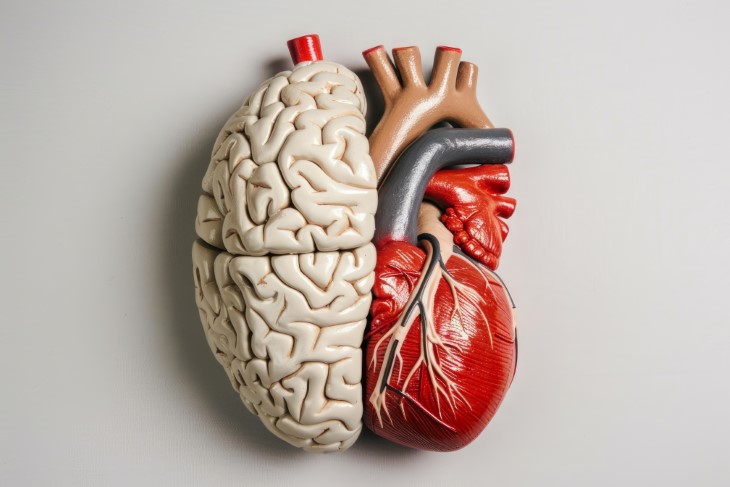
"Heart health directly impacts brain health," he says. "Cardiovascular diseases and brain conditions like dementia and Alzheimer's share many common risk factors—chronic high blood pressure, diabetes, elevated blood lipids, atrial fibrillation, and more." According to him, the core message of the study is proof that heart muscle damage may be linked to future dementia development.
According to researchers, high troponin levels in the blood—even in people without any signs of heart disease—can indicate ongoing, silent damage to heart muscle. This damage, they explain, may impair blood flow to the brain and subsequently significantly increase dementia risk.
"Brain damage in people with dementia accumulates slowly over decades, long before symptoms appear," Professor Eric Brunner, one of the study's authors from University College London (UCL), told Euronews. According to him, there's now a need for further research to examine whether blood troponin testing can serve as a tool for predicting future dementia risk in early years.
The study tracked nearly 6,000 people in Britain without dementia or heart disease. Participants underwent highly sensitive troponin testing when they were aged 45 to 69, then were followed for approximately 25 years on average. During this period, 695 participants were diagnosed with dementia. Among those diagnosed, consistently higher troponin levels were found 7 to 25 years before disease onset.
According to researchers, people with the highest troponin levels had approximately 38% higher risk of developing dementia compared to those with the lowest levels. They also showed faster decline in thinking abilities, memory, and problem-solving. The connection between troponin levels and dementia remained significant even after adjusting for factors like sex, ethnicity, and education level.

Researchers noted that elevated troponin levels could in the future serve as an early warning for people at increased risk of developing dementia. However, Dr. Yonash clarifies there's no need to rush to your family doctor requesting troponin tests: "This isn't a test designed for early community diagnosis, and you can't request it from a family physician. It's performed urgently in emergency rooms when ruling out a heart attack. One study won't create new policy."
According to him, the bottom line for the public is the need for regular checkups and maintaining cardiovascular health from a relatively young age: "You need to check blood lipids, blood pressure, sugar levels, identify atherosclerosis, and monitor risk factors starting from age 40 and up. People aren't always aware of how important this is."
According to Dr. Yonash, a significant part of maintaining cardiovascular and brain health also depends on proper lifestyle choices: "Physical activity—even moderate—has been proven to reduce dementia risk. You need to avoid a sedentary lifestyle, get up and move throughout the day, take the stairs, maintain a balanced diet, and not smoke. A healthy lifestyle not only protects the heart and blood vessels but also reduces the risk of cognitive decline and dementia."