
"I'm just bad at math." It's a phrase many of us adopted early in our school careers, a self-imposed label that followed us into adulthood. For those of us who excelled with words but struggled with numbers, math became the subject we endured rather than enjoyed.
But it doesn't have to be this way for our children. As national math scores continue to decline at alarming rates, parents are searching for ways to help their kids not just tolerate math, but actually love it. The good news? It's entirely possible - and it often starts with changing how we approach the subject at home.
Sometimes, all it takes is the right teacher to transform a child's relationship with math. Andy Kubis, a Pittsburgh mom, experienced this firsthand with her son. Despite practicing math at home regularly, it still felt like a chore - until he met Katherine Blandino-Nienhuis at the Pittsburgh Science and Technology Academy.

Blandino-Nienhuis connected math to real-world social issues, making it relevant and interesting. When she assigned problems about the Efficiency Gap Index and voting district fairness in Missouri, dinner table conversations suddenly sparked with mathematical excitement. "It's not like he's a huge math kid now," Kubis admits, "but he doesn't hate it, which I see as a total win."
Kubis was so impressed that she nominated Blandino-Nienhuis for Pennsylvania Teacher of the Year - and she became a finalist. "Mrs. Nienhuis gave us a way to talk about math as a family," Kubis says. "Otherwise, how would you talk about math?"
This fresh approach reflects a growing trend in math education. According to Dr. Josh Prieur, Director of Educator Enablement at Prodigy Education, "There should be no reason that learning math can't be as fun and engaging as playing a video game." Just as children become comfortable with challenges in gaming - trying again and again to reach that milestone - they can develop the same resilience with math.
The key to engaging children with math? Show them it's everywhere in their daily lives, not just on worksheets and tests.
Chrissy Chen, National Director of Youth Development Programs at Boys & Girls Clubs of America, emphasizes this point: "Math is part of baking and building, card games, and keeping score." When playing Monopoly with her own children, she highlights how making change and running the bank involves addition and subtraction. "When kids realize that activities they enjoy and excel in include math, they see math as more relevant and themselves as more competent."
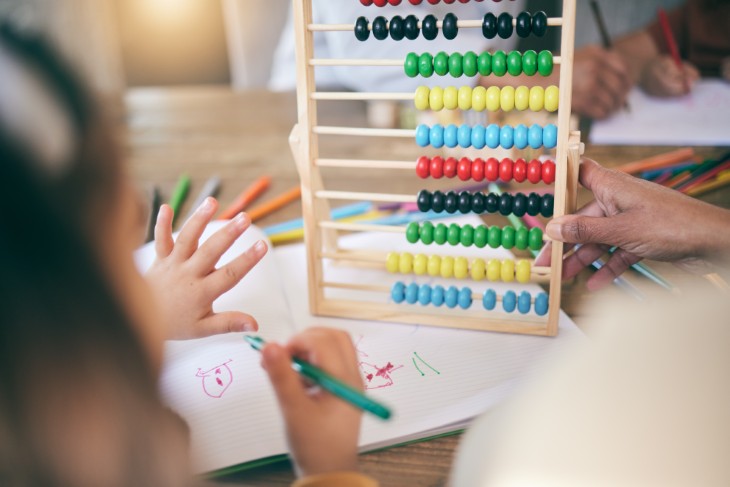
Count everything. Make counting a game with younger children. How many steps did you just climb? How many red cars passed on the highway? Are there more big dogs or little dogs at the park? As skills grow, add in more complicated computations.
Shop together. Money management is one of the primary ways adults use math daily. Set a budget for a craft project and shop for supplies within that limit. At the grocery store, compare prices - one box may cost less, but which offers more servings? Use division to calculate the price per serving.
Look for patterns. From floor tiles in a waiting room to the chorus of a favorite song, pattern recognition builds foundational math skills that help children learn sequencing and prediction.
Many reward systems in schools rely on external motivation - do well on a test, pick a prize from the box. While not inherently harmful, this transactional approach doesn't cultivate a genuine love of learning.
Chen recommends focusing on "The Three Cs": confidence, competence, and connection. "Confidence grows through encouragement and celebrating progress," she explains. "Competence through practice and skill-building; and connection through showing how math applies to kids' interests or social experiences."
When your child correctly calculates how to buy supplies for a family art project, completes it with you, and everyone celebrates the results together, you're building intrinsic motivation that will last far longer than any prize from a box.
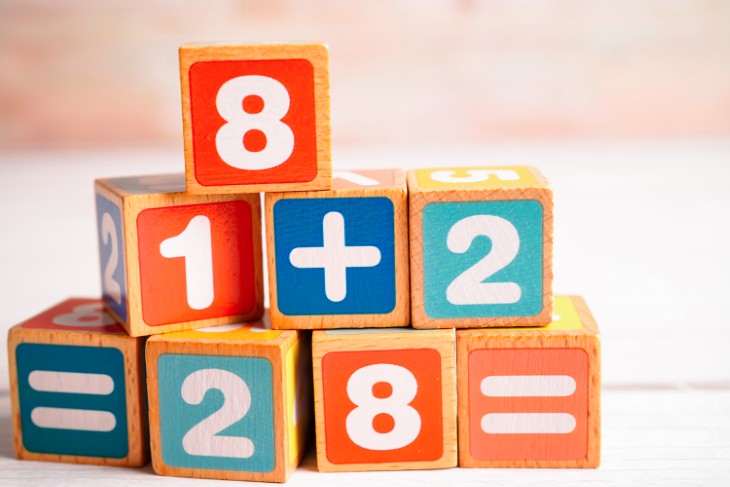
After a few bad grades, math anxiety can easily take hold. This negative feedback loop is exactly what keeps many people claiming "I'm bad at math" throughout their lives. Breaking this cycle requires addressing anxiety head-on from an early age.
"We know that 'fear of failure' has been described as the top trigger for math anxiety," Dr. Prieur notes. "So you have to find ways to remove that fear factor from an early age." When mistakes feel less catastrophic - more like losing health points in a video game - children become more willing to try again.
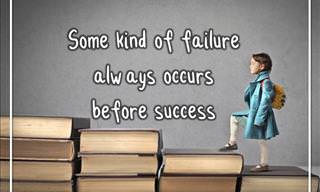
How we talk about failure matters enormously. While our own feelings about report cards may trigger childhood anxiety, we need to normalize failure as part of learning.
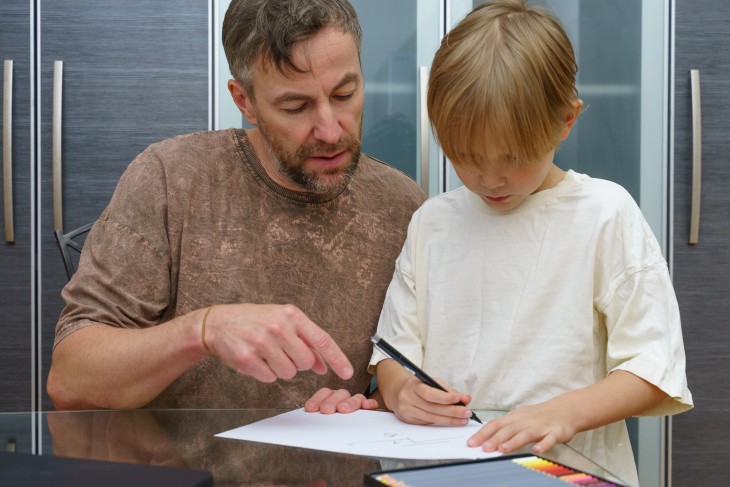
Many parents express frustration with today's math instruction methods - they're different from what we learned. But rather than lamenting these changes, we can use them as an opportunity to learn alongside our children.
"Any new way of teaching math that doesn't match how parents learned it will naturally raise eyebrows," Dr. Prieur acknowledges. "That's been true for generations. The key is helping parents understand why these new methods exist."
Today's approaches often focus on helping children develop number sense and conceptual understanding rather than just memorizing procedures. While it may look different, if research shows these methods help kids truly grasp mathematical concepts, they're worth exploring.
"At the end of the day, innovation in education is a good thing," Dr. Prieur says. "If research shows a new approach helps kids truly understand math, we owe it to them to explore it even if it looks a little different from what we remember."
Raising a child who loves math isn't about drilling facts or bribing with rewards. It's about making math relevant, celebrating the learning process over perfect answers, and showing children that math is woven throughout the activities they already enjoy. With patience, encouragement, and a willingness to see math through fresh eyes, we can help the next generation avoid the math anxiety that haunted so many of us - and maybe even fall in love with numbers along the way.