
Picture this: it's 2001, just past midnight. A teenager is hunched over a glowing desktop screen, typing furiously on AOL Instant Messenger under some embarrassing username. Their parents - who still aren't entirely sure what the internet is for - are fast asleep down the hall, blissfully unaware of online predators, screen time debates, or cyberbullying. That teenager was a classic "bedroom kid."
Now fast forward two decades. That same person is a parent, and most evenings you'll find them planted on the couch surrounded by their children during yet another "movie night." When the kids drift off to their rooms, a familiar anxiety creeps in. What are they doing in there? Are they stumbling into dark corners of the internet despite all the filters and safety apps? Are they lonely?
This is the quiet tension playing out in homes across the country: a generation of bedroom kids is now raising living room kids - and trying to figure out whether that shift is protective parenting or a projection of their own fears.
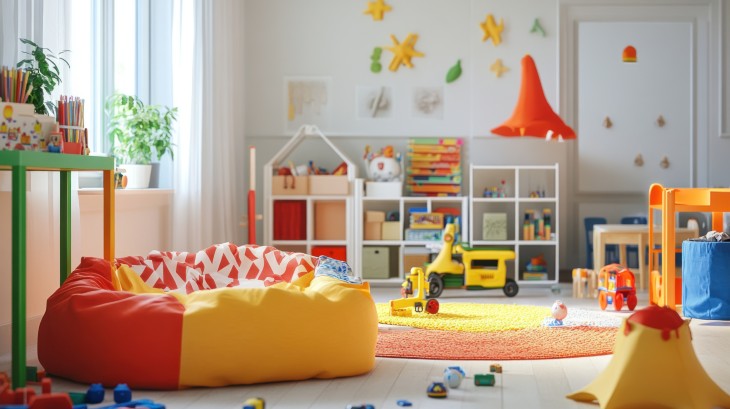
The concept is pretty intuitive. A "living room kid" gravitates toward shared spaces. They do homework on the couch, snack in the kitchen, hover while you cook, and generally like being near the action. They're drawn to the hum of family life.
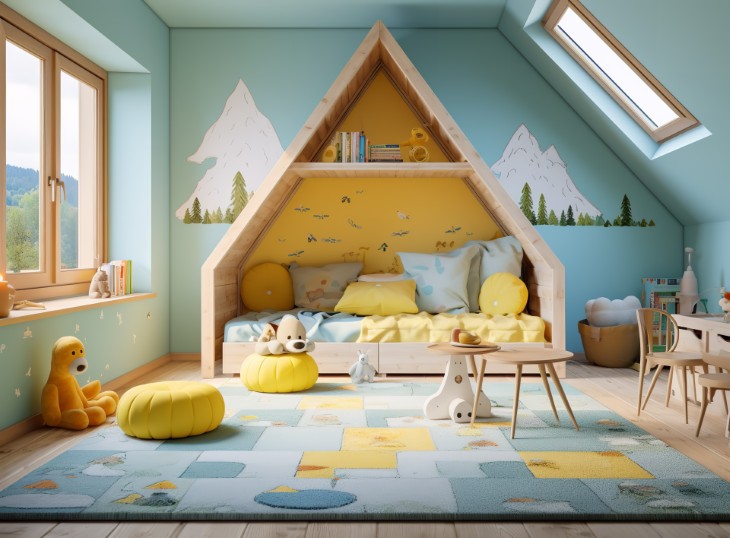
A "bedroom kid," on the other hand, retreats to their own space. Their room is where they recharge, decompress, and feel most like themselves. Their nervous system tends to settle when they have control over their environment - the door closed, the music on, the world held at arm's length.
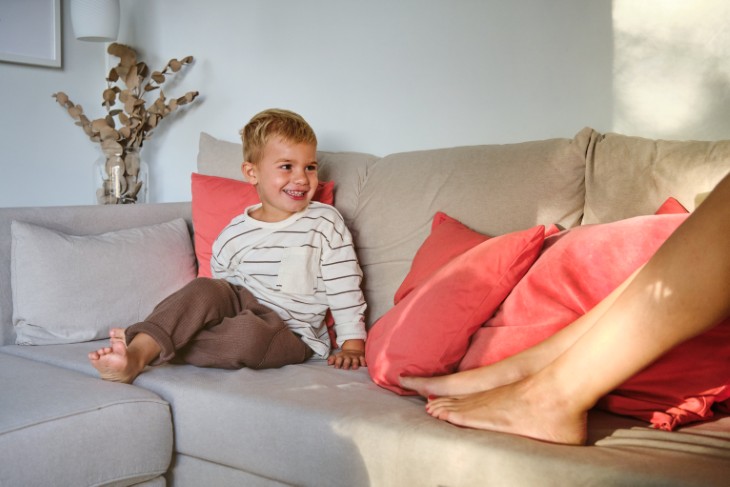
Neither type is inherently better or worse. It comes down to temperament, household structure, and whatever is going on in a child's world at any given time. Living room kids may seem more accessible simply because they're physically nearby. Bedroom kids might look disengaged, but they could simply be recovering from a long day of school, social pressure, or sensory overload.
For Gen Xers and Millennials, bedrooms were sacred ground. That's where you chatted with your crush on a corded phone, journaled without anyone reading over your shoulder, or stayed up late messaging friends. Privacy was the whole point.
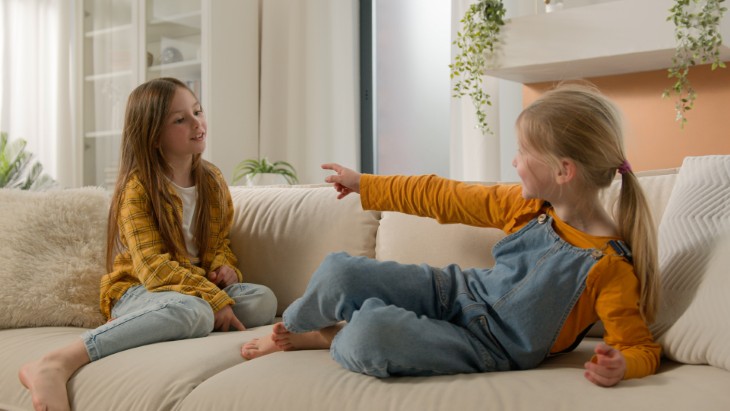
But today's kids don't need to retreat to a bedroom for privacy. With smartphones, tablets, and laptops, they can privately message friends from the middle of the living room. So while their bodies may be in shared spaces, their minds can be entirely elsewhere - one kid deep in Minecraft, another group-chatting with classmates.
Still, many parents find comfort in physical proximity. There's something reassuring about having everyone in the same room, even if no one is technically interacting. And there's some truth to it: a kid playing a video game on the main TV, for example, might call out for help when they're losing - and a sibling jumps in. These micro-moments of connection simply don't happen when everyone is isolated behind closed doors.
But that instinct to draw kids out of their rooms and into the family space? It's worth examining. Is it about what the kids need, or about what we needed - and didn't get - when we were their age?
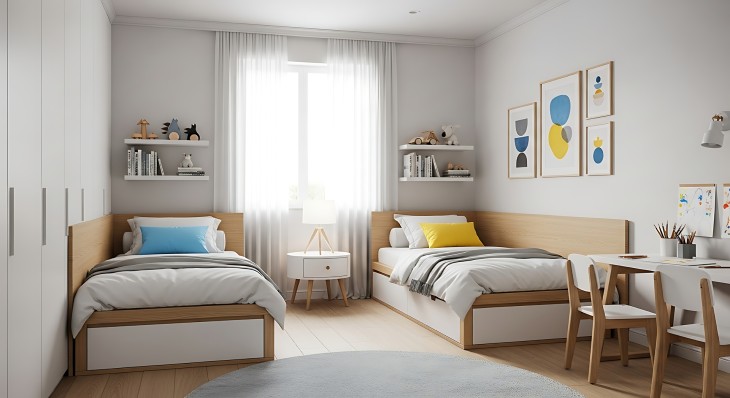
Here's a reality check: according to sleep research, more than 70% of children in multi-kid families share a bedroom. So whether a child becomes a bedroom kid or a living room kid might have less to do with personality and more to do with logistics. If your bedroom is also your sibling's bedroom, it's not exactly a retreat.
Household layout, family size, temperament, neurodiversity, birth order, even stress levels at home - all of these shape where a child feels most comfortable. It's rarely as simple as introvert vs. extrovert.
Many parents carry an unspoken assumption: a kid who's always in their room must be struggling. It's an easy connection to make, especially for a generation that grew up hearing about the dangers of isolation.
But child psychologists push back on this firmly. Being in a bedroom doesn't automatically signal depression or withdrawal. And being in the living room doesn't automatically mean a child is emotionally healthy or connected. What actually matters is whether the child maintains healthy relationships, functions well at school, and strikes a reasonable balance between connection and independence.
Even shared screen time in a communal space can carry emotional weight. Presence, proximity, the ambient sense of "we're all here together" - these things matter. Think of it as parallel play for older kids: sitting in the same sandbox, doing different things, but drawing comfort from the nearness.
There's also a broader cultural shift at work. Previous generations often operated under the philosophy that children should be seen and not heard. Today's parents tend to be more intentional about closeness, shared routines, and emotional availability. Kids are invited into home offices, kitchens, and living rooms in ways that would have seemed unusual a generation ago.
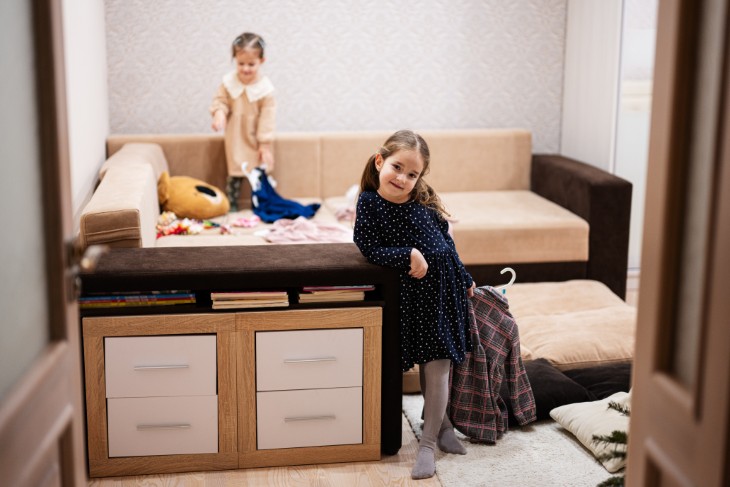
This shift creates what psychologists call "micro-moments of connection." A child looks up from their screen and comments on something. A parent laughs. Someone else chimes in. These interactions are small, almost invisible - but they add up over time into something meaningful.
Whether your child is a bedroom kid or a living room kid, the real questions aren't about location. They're about function:
If the answers are mostly yes, there's probably nothing to worry about. The distinction between healthy alone time and problematic isolation is important - especially during adolescence, when kids often feel like they're performing all day and desperately need a space where they can just be.
If your child can be with people and also be comfortable with themselves, something is going right. The bedroom vs. living room debate says more about parental anxiety than it does about child development. Kids need both connection and solitude. They need the couch and the closed door.
So if you're a former bedroom kid nervously watching your children retreat down the hallway - take a breath. They're probably fine. And so are you.