
Once regarded as the stuff of science fiction, the integration of artificial intelligence into prosthetics has shattered previously held limitations, offering unparalleled autonomy to individuals facing limb loss. Let's turn our attention to a groundbreaking case: Karin, a 50-year-old Swedish woman whose life has been dramatically transformed by a bionic hand unlike any other.
The story of Karin
Karin had been living without her right hand for two decades, the aftermath of a debilitating farming accident. She had managed, but her daily activities were severely restricted. The absence of her hand was also haunted by phantom pain, a sensation she described as feeling as though her missing hand was being churned through a meat grinder.
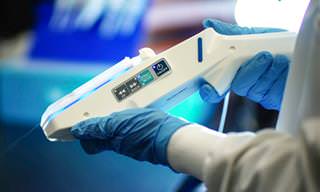
A confluence of minds from Sweden, Italy, and Australia united to redefine what was possible in prosthetic technology. Spearheaded by robotics engineer Max Ortiz Catalán, this international team was affiliated with prestigious institutes like the Bionics Institute in Melbourne, Australia, and the Center for Bionics and Pain Research in Sweden. They recently broadcasted Karin's uplifting tale in the esteemed journal, Science Robotics, heralding a new era in the realm of prosthetics.
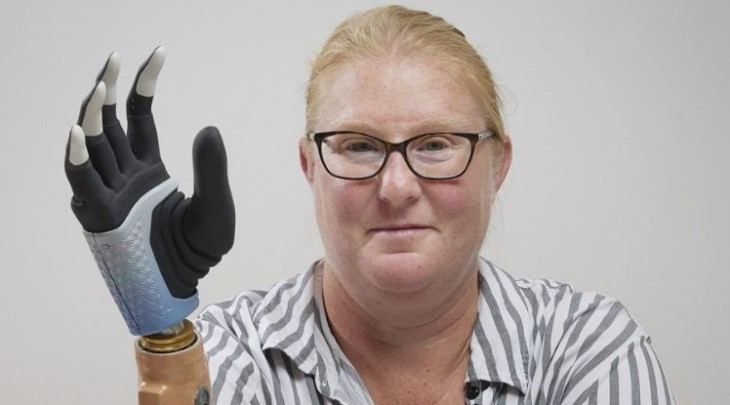
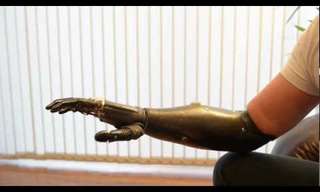
Image: (Bionics Institute)
What sets Karin's bionic hand apart? This prosthetic marvel uses pioneering technology that connects directly to a user’s bones, muscles, and nerves. This nexus establishes a human-machine interface, enabling artificial intelligence to translate brain signals into precise movements. Karin’s prosthetic hand is equipped with internal electrodes, a feat declared as the first of its kind for robotic hands designed for amputations below the elbow.
This isn’t just about dexterity and motor functions; the bionic hand has significantly diminished Karin's phantom pain. The result? She now requires far fewer medications than before. Her quality of life has improved manifold; she can perform 80% of her daily tasks without any hindrance, whether it's preparing a meal or fastening a zipper.
The development of such technology does not come without its financial implications. Though the specific numbers were not disclosed for Karin’s case, it's worth noting that advancements of this nature often require enormous investment. That said, when set against the monumental leaps in user experience and potential applications, many would argue that the investment is more than justified.
Ortiz Catalán explained that one of the groundbreaking techniques employed in Karin's case was ‘osseointegration.’ This involves planting an implant into the bone in such a way that the bone cells grow tightly around it. Once in place, the artificial limb can be attached directly to the skeleton. Importantly, muscle grafts containing electrodes are also incorporated, ensuring amplified signals for the interface.
Even three years ago, when Karin was initially fitted with her prosthesis, this was a one-of-a-kind innovation. Most available prosthetics at that time had sensory electrodes on the exterior, situated just under the synthetic 'skin.' This traditional setup invariably dilutes the quality and quantity of sensory signals between the robotic hand and the human neural system.
Looking forward, it’s evident that this technology can be a cornerstone in the future of prosthetic development. "The fact that [Karin] has been able to use her prosthesis comfortably and effectively in daily activities for years is a promising testament to the potential life-changing capabilities of this novel technology," opined Ortiz Catalán. In particular, its efficacy in alleviating phantom limb pain poses exciting possibilities. The Bionics Institute's CEO, Robert Klupacs, echoed similar enthusiasm for what lies ahead.
In conclusion...
The evolution of prosthetic technology, fueled by international collaboration and sheer ingenuity, has opened doors once thought permanently closed. And while one cannot put a price on autonomy and the relief from chronic pain, one thing is clear: we are merely at the precipice of what is possible when human endeavor meets artificial intelligence in the quest to enrich lives.

Why Are Cancer Patients Less at Risk of Alzheimer's?
Doctors and researchers began noticing something strange: people who had been diagnosed with cancer seemed less likely to develop Alzheimer's later in life. And conversely, Alzheimer's patients seemed to have lower rates of cancer.
Is Microsoft's "AI Doctor" Better Than a Real Doctor?
A new study presents a committee of digital doctors achieving approximately 80% accuracy in complex medical diagnoses – far beyond the average of general practitioners.
3 Inventions that Improve Upon Our Regular Senses
Check out these impressive artificial organs which are completely changing the worlds of science and medicine for good.
Science FIRST: A Fully Created Brain Inside a Computer?
Could a Computer Ever "Run" a Human Brain? Scientists Just Took a Big Step
5 World-Changing Medical Advances From the Past Decade
Perhaps the most important technological advancements are those related to healthcare. Here are 5 such incredible medical breakthroughs from the past decade.
3:15
The Most Advanced Hand in the World!
It wasn't that long ago that losing your hand meaning you are now handicapped, and will never be able to use more than the remaining hand. Now meet Nigel Ackland, 53, who lost his arm in an accident six years ago, and has been given a new lease of li
7:34
Watch a Historic Beatles Performance in New York
An unforgettable and classic concert by The Beatles in New York's Shea Stadium
The Viral Egg Poaching Hack That Actually Works
Poached eggs have a reputation for being tricky. The swirling water, the wispy whites floating everywhere, the timing - it's enough to put anyone off. But a simple trick that's been making the rounds online might just change all of that.
Meta Unveils New Glasses that May Change Sports Forever
META has revealed a new line of AI-powered smart glasses: Oakley Meta HSTN
9:03
24 Unbelievable Abilities Your Body Has
The human body is a complex and endlessly fascinating machine, and it might be even more sophisticated than you know...
What Your Phone Habits Say About Your Mental Health
These phone habits might indicate underlying anxiety—and paying attention to them could help you better understand your mental health.
6:15
K2-18b: The Exoplanet That Might Host Alien Life
Astronomers have detected signs of posisble life in the atmosphere of exoplanet K2-18b.
Remembering the Life and Wisdom of Stephen Hawking
Stephen Hawking possessed one of the greatest minds the world has ever seen, but was also impaired by a debilitating disease. Here are his life ant times.

20:32
History: Did the Trojan War REALLY Happen?
The Trojan War, the most famous of the ancient wars, fought by thousands of men for ten long years on the beaches of the famed city of Troy. Was all that real?
11:15
These Paradoxes Continue to Mystify Scientists
Take a look at 7 scientific paradoxes that may never get solved.
9 of the Greatest Unsolved Mysteries About the Universe!
The universe has been around for close to 14 billion years, but it still holds many mysteries that continue to perplex scientists. Here's 9 of them!
42:14
Physicist Michio Kaku: The Universe in a Nutshell...

Physicist Michio Kaku explains the fundamental nature of our universe
4:22
eSIM vs Traditional SIM: What’s the Big Difference?
Are eSIMs and iSIMs the future of connectivity?
Science News: AI-Designed Drugs Move to Human Trials
Isomorphic Labs, is positioning itself to begin human clinical trials of medications designed entirely through artificial intelligence, marking a potentially transformative shift in how we develop life-saving treatments.
33:02
The Entire Story of Earth in 30 Minutes!
The story of our planet, from birth to the adult, ancient planet we see before us today - all in just half an hour.
Is Microsoft's "AI Doctor" Better Than a Real Doctor?
A new study presents a committee of digital doctors achieving approximately 80% accuracy in complex medical diagnoses – far beyond the average of general practitioners.
8:12
How Humans Helped Cats Take Over the World
The relationship between humans and cats goes back as far as 9,500 years. How did it al start? And how did humans help cats essentially take over the world?
What is the Troxler Effect and How Does it Affect You?
Learn about Troxler's effect and the optical illusions it creates in life.
These Materials are Strange Enough to Boggle Your Mind...
There are some materials in this world that totally defy scientific convention. From metals that melt in your hand, to a solid lighter than air, take a look.
2:01
What Does the Appendix Actually DO?
Dr. Berg explains, in this video, all about the appendix and what it actually does in our body.
10:48
Cutting Edge: Translating Thought to Speech is Here!
As a pioneer in Neuralink’s VOICE clinical trial, Kenneth is testing a breakthrough brain-computer interface designed to translate thoughts directly into speech.
The First Valentine's Day Was Not That Long Ago...
Let us take you on a fun history lesson with these 10 first-ever things that started way back in history and remain to this day.
4:49
This Video Shows You a Different Way to Look at the World
You’ve heard of the fourth dimension but do you know what it is? This TED-Ed video helps uncover a bit of the mystery.
15 Beautiful Carl Sagan Quotes on the Stars and the Cosmos
A look at some profound quotes on the universe by famous astronomer and cosmologist Carl Sagan.
These Are the Miracles That Happen in Our Bodies Every Day
There is a lot that happens inside our bodies every single day. Did you know any of these facts?
18:14
Are These Vintage Kitchen Gadgets Any Good?
Will any of the vintage kitchen gadgets stand the test of time or outperform their contemporary alternatives?
This New Blood Pressure Drug Could Be a Game-Changer
Zilebesiran, an investigational drug that is showing profound success in late-stage clinical trials is offering hope for millions who struggle to keep their blood pressure in check.
10 Declassified U.S. Military Secrets That'll Astound You
Government military secrets can range from amusing to absurd to downright terrifying, but they are all extremely intriguing. Here are 10 such secrets.
2:03:03
Full Documentary: From First to Last Dinosaur
With stunning visuals and cutting-edge science, we’ll bring their story to life—from their very first day to their last, a saga of survival, adaptation, and mystery.
21:51
What Will the Universe Look Like in 10 Quintillion Years?
These questions take us beyond science into the realm of imagination, as we contemplate the ultimate fate of our Universe and everything within it.
4:05
Kirobo: First Robot in Space!
It was one small step for robot and another giant leap for mankind...
2:41
Trick-Mousing is Such Adorable Entertainment...
Mice are much cleverer than most people believe, and they easily respond to training, as long as you use positive reinforcement, or in other words - reward them frequently for their behavior with food.
New Study: Dopamine Does Way More Than We Thought!
How the brain's reward system physically rewires the motor cortex during skill learning — and what happens when that reward signal gets cut off.
22:35
Neuralink Update 2025: The Most Incredible Moments
Welcome to our 2025 Neuralink update, where we’ll take you through the most incredible and groundbreaking moments from the past year.
8 Important Inventions That Were a Complete Accident
It might be interesting for you to learn that some very important scientific innovations were born as a result of an accident.
I Bet You Didn't Have a Clue About These Human Body Facts!
The human body is the most complex machine known to mankind, but I bet you don't know these 10 amazing facts about it...
3:55
50 Years Later, We're Debunking the Moon Landing "Hoax"
How do we prove to people the moon landing was real? By answering their doubtful questions in this video.
Extraordinary Inventions By Tesla That Were Never Built!
Nikola Tesla was a scientist too advanced for his time. Here are some of the inventions he never had a chance to build.
7 Discoveries of Albert Einstein that Changed the World
The 7 biggest discoveries of Albert Einstein and how they changed the world forever.
4:52
Neon Lights: a Beautiful Union of Science and Art
Neon signs are a beautiful blend or artistry and science, and knowing the history and the science behind them make them even more exciting
Hubble Telescope: 35 Years of Incredible Photos
Exploring 35 years of reality-changing, universe-enhancing photos that opened the sights of outer space to us all.
Absolute Zero: The AI that Doesn't Need People to Develop
Imagine an AI that doesn’t need humans to teach it how to code—it creates its own coding challenges, solves them, and gets smarter all on its own. This isn’t science fiction; it’s a groundbreaking development called Absolute Zero
17:03
What is a Ballistic Missile and is Its Purpose?
Why is the ballistic missile so feared, and what exactly qualifies it as such - will all be explained in this informative video.
11:05
Science: Can AI Preserve Our Most Precious Memories?
Technologist Pau Aleikum Garcia talks about synthetic memories.
8:46
Science: What is Reality? Dive in and Find Out!
What if everything you see, feel, and experience isn’t real? The simulation argument suggests that our reality might be nothing more than an advanced computer program.
To enable your Ad-Free Subscription, please fill the fields below
Your subscription was successful, now you can enjoy an ad-free experience!! Note: To make sure you get no ads, please make sure to log in to your account. If you are logged in already, then refresh the page. The subscription can be cancelled at any time.